This self-study collection groups lucid-dreaming reading material, introductory recordings and community technique notes. It includes a Dream Notes PDF and discussions of WILD and wake-back-to-bed, alongside subjective accounts that should not be confused with established facts.
Course Overview
Lucid Dreaming Study Collection: Video Audio and PDF Resources is a digital study resource in the Lucid Dreaming collection. This English product guide explains the listed material; the original recordings and documents are in Chinese. English subtitles or translated full lessons are not included unless separately stated.
Course Contents and Learning Focus
- PDF reading: Dream Notes, lucid-dreaming introductions and awareness training
- Audio introductions, autobiographical accounts and questions
- WILD, wake-back-to-bed and dream-recognition discussions
- Dream recall, terminology and beginner questions
- Community accounts of sleep paralysis and subjective out-of-body experiences
- Video and audio study resources; no fixed total lesson count is asserted
What You Will Learn
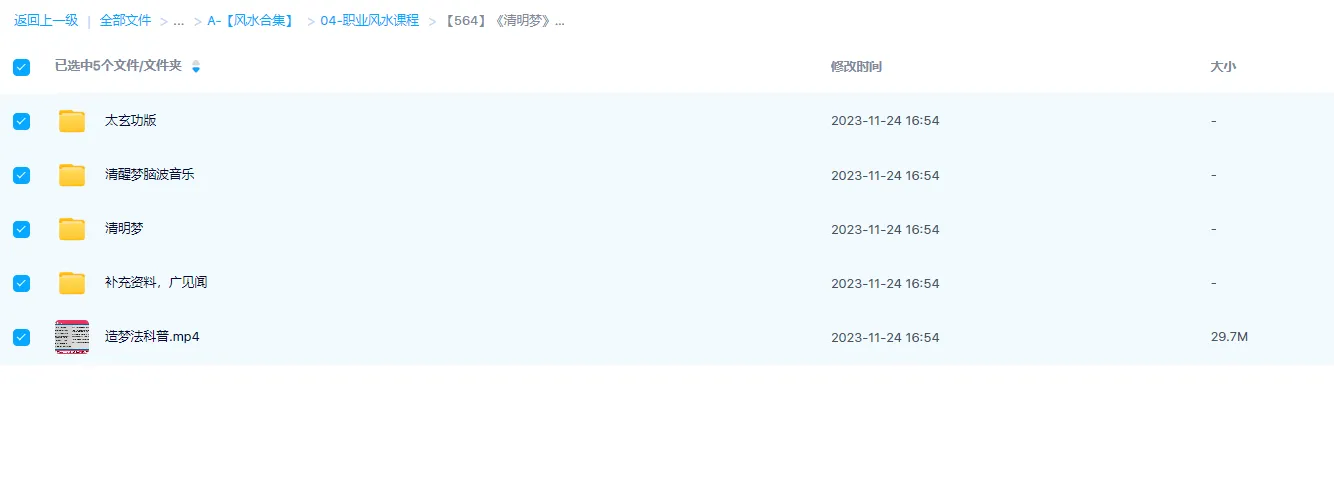
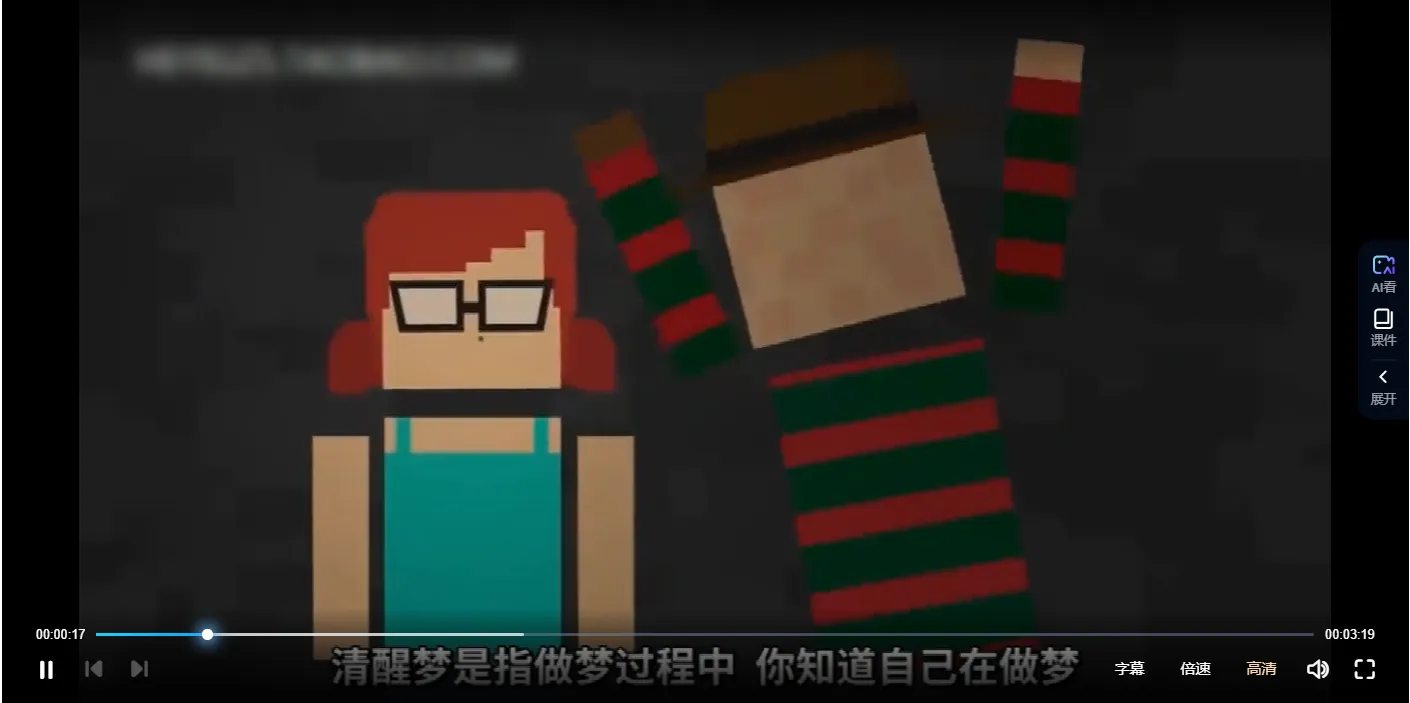
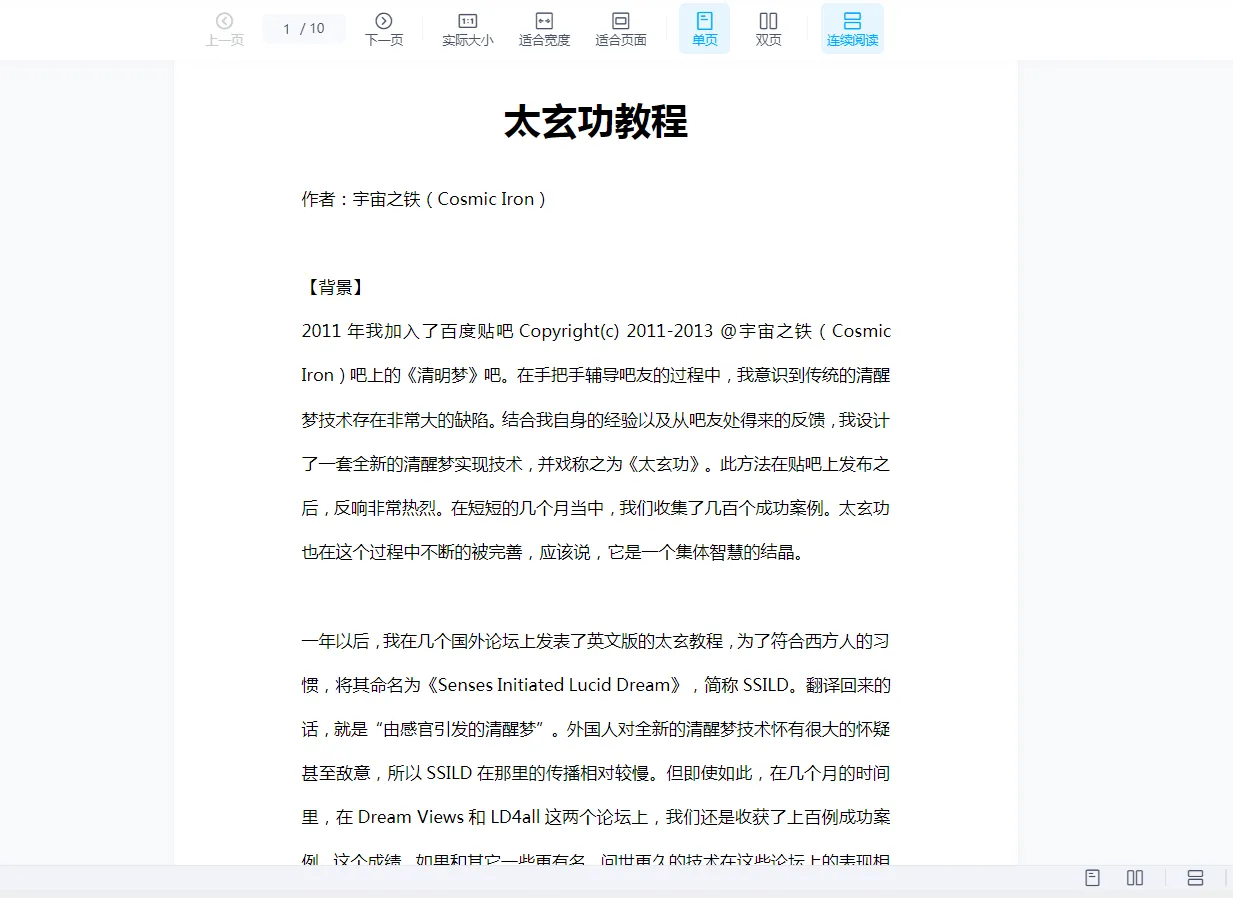
Use the listed topics to identify the scope of this resource, follow its recorded sequence and compare the original diagrams with your study notes. Where individual lesson names are not supplied, the preview images are provided instead of an invented syllabus.
Original Course Previews




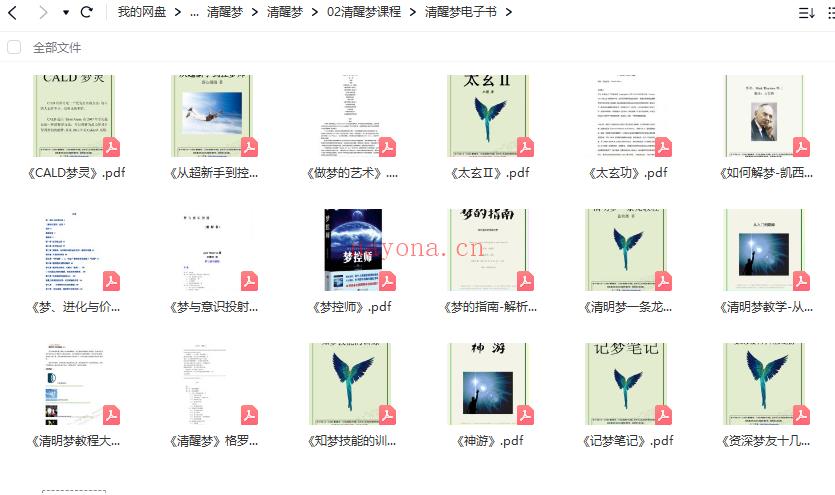
Who This Course Is For
For learners who can follow Chinese-language material and want to study Lucid Dreaming. Check the format and previews before buying. Intermediate or continuation courses assume familiarity with the relevant foundations and do not imply that prerequisite courses are included.
Learning Format and Digital Delivery
Format: A mixed collection of videos, audio, PDF books and text guides. Price: USD 9.00. This is a virtual, downloadable product; no physical shipment is required. The download link has not yet been attached to this listing and will be added by the store. Contact us before ordering if you need to confirm delivery timing; immediate automatic file access is not promised.
Frequently Asked Questions
Is the course taught in English?
No English-language recording or subtitle track is confirmed. This description is in English; the underlying course material is Chinese.
What is included?
A mixed collection of videos, audio, PDF books and text guides. Review the course contents and original previews for the stated scope.
Will a physical item be shipped?
No. This is a digital learning resource.
Is a certificate or personal consultation included?
No certificate, accreditation or individual consultation is promised by this listing.
Editorial Note and Disclaimer
Karma Kismet has organized the course listing and available directory into this English guide. Lesson counts refer to the supplied listing, not an independent review of every recording. For educational and personal-reflection purposes, not psychological diagnosis or treatment. Dream interpretations and subjective accounts are not universal facts. Do not sacrifice normal sleep to practice techniques.
Related Courses
- Dream Yoga Workshop: Two Video Sessions
- Lao Qin Dream Interpretation Training: First Cohort
- Wang Huan Dream Interpretation and Personality Types
Browse Lucid Dreaming, review course and delivery questions, or learn about Karma Kismet.
Finding Your Way Through a Mixed Lucid Dreaming Collection
The defining feature of this listing is its mixture of formats. The source directory brings together PDF books, introductory audio, videos, and community text discussions. That makes it a study collection rather than a single, uniformly sequenced course. A useful first task is to create an inventory by format and topic, preserving each original filename. You can then choose a small path through the material without assuming that every document shares the same terminology, evidence, or approach. The suggestions below are a reading framework for this collection, not a claim that its authors supplied a coordinated curriculum.
Distinguish Awareness, Recall, and Control
The filenames and description refer to lucid dreaming, dream recognition, and control methods. Keep these ideas separate when taking notes. Remembering a dream afterward is different from reporting awareness during the dream, and either is different from reporting an ability to change what happens. A community account may move between all three without defining the transition. Label the experience being described before comparing it with another account. This avoids treating every vivid recollection as the same kind of event or measuring ordinary dream recall against a dramatic story about deliberate dream control.
Use the listed Dream Notes PDF as a point of comparison with other reading rather than assuming that its title specifies an exact journaling system. If you keep your own notes, record the remembered scene first and your interpretation afterward. Preserve uncertainty about missing details. A short fragment is still a record; adding a plausible ending makes it a reconstruction. This separation becomes especially valuable when a later text offers a technique or explanation that could influence how you remember an earlier experience.
Read Technique Names as Topics to Investigate
WILD and wake-back-to-bed appear in the listing as discussion topics. Their presence shows what the collection covers, but it does not establish that a method is suitable for every reader or that a particular success rate is credible. Begin by noting how each document defines its terms, what conditions it assumes, and whether it describes personal experience or gives a general claim. Do not combine instructions from different files merely because their titles contain the same acronym. A personal routine described by one writer is not automatically a transferable protocol.
Some filenames use emphatic language about success, extraordinary experience, or special states. Treat those words as part of the source’s presentation. They do not supply independent verification. In a comparison notebook, create separate columns for the author’s claim, the steps actually described, and the limits the author acknowledges. If a limit is not discussed, mark it as missing. This gives you a more accurate view of the collection than choosing only the most confident sounding passages or assuming that several similar anecdotes amount to a controlled comparison.
Use Audio and Text for Different Study Tasks
The introductory audio titles include an explanation of lucid dreaming, an autobiographical account, and questions and answers. Those are different kinds of material. An introductory explanation may help with vocabulary, while an autobiography primarily tells you how one person frames their own experiences. A question and answer recording can reveal practical uncertainties, but an answer given to one question should not be detached from its context. Keep timestamps for statements you want to revisit and compare them with the written resources before treating them as the collection’s shared position.
The directory also includes audio described using brain or synchronization language. The existence of such a title is not evidence that listening produces a specified neurological change. Evaluate what is actually provided and what claims are being made without inferring a measured effect from the label. There is no need to listen during sleep or interrupt normal rest merely to study the material. Reading descriptions and listening while awake can be sufficient for understanding a resource’s vocabulary and the kind of experience its author is discussing.
Handle Extraordinary Accounts Carefully
Sleep paralysis and subjective out-of-body experiences appear among the listed community topics. When reading these accounts, preserve the difference between a person’s report and an explanation of what caused it. A vivid report can be meaningful to its writer without establishing that an event occurred outside ordinary experience or that everyone will interpret it in the same way. Avoid using the collection to diagnose yourself or another person. If a passage is unsettling, you can set it aside; finishing every file is not a requirement for understanding the collection’s scope.
A useful question is what the account actually lets you compare. Does it describe a remembered sensation, an emotion, a sequence of images, or a belief reached afterward? Those elements can be recorded separately. This makes room for personal meaning while preventing a narrative from becoming a factual claim about invisible places or external beings. The same approach applies to references to consciousness, projection, or spiritual practice: identify the writer’s framework and distinguish it from what the account directly reports.
Create a Selective Reading Route
For an initial pass, select one introductory item, one terminology resource, and one account that illustrates how the vocabulary is used. Summarize each in a few sentences before opening more files. Ask whether the definitions agree, where they differ, and which questions remain unanswered. This method can reveal whether you are learning a consistent vocabulary or moving among several communities with different assumptions. It also keeps the large directory from encouraging hurried consumption of material whose ideas need careful comparison.
Before purchasing, confirm the delivery arrangements and whether you can use the Chinese language files in the formats listed. The English guide is a description of the resource, not an English edition of every book or recording. Neither the quantity of files nor the range of topics promises a lucid dream, a clinical benefit, or personal guidance. The collection is most usefully approached as a set of perspectives to organize, question, and compare while keeping ordinary rest and personal comfort ahead of any desire to reproduce another person’s account.