
XZFS0912 Xuan Kong Da Gua: Xie Zi Methods Study PDF
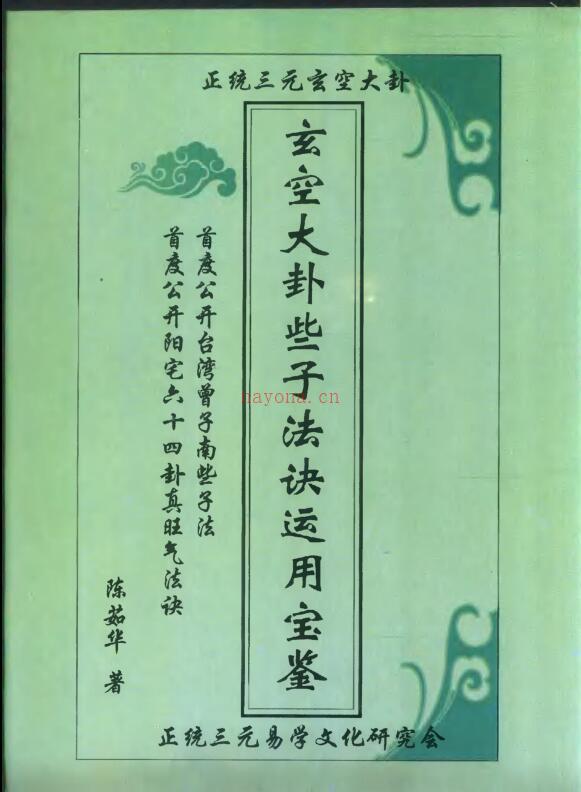
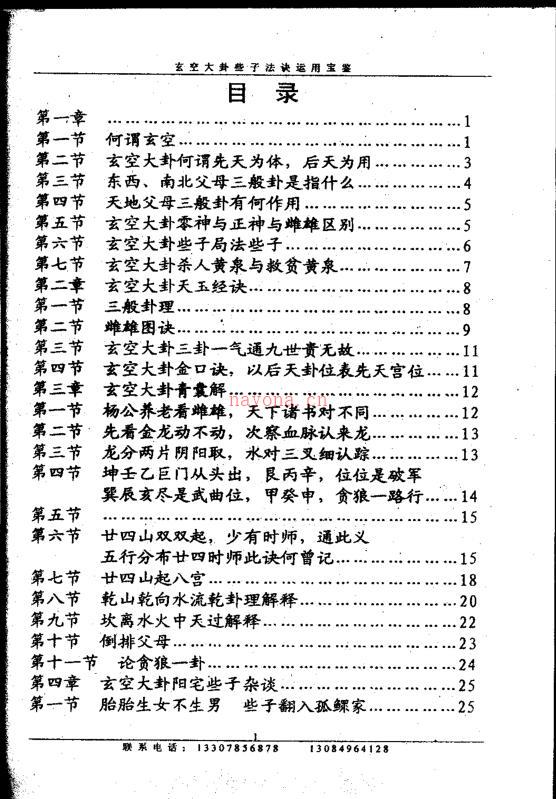
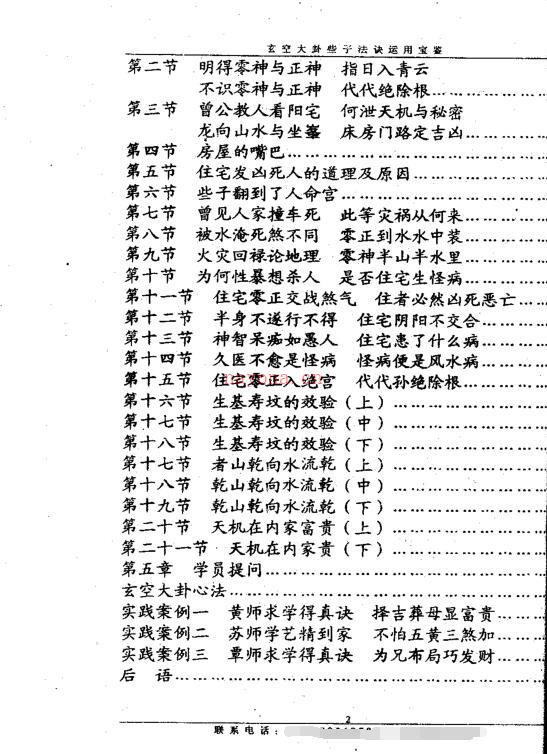
Reading a title about Xuan Kong Da Gua practice
The title identifies a PDF named Xuan Kong Da Gua Xie Zi Fa Jue Yun Yong Bao Jian. The original listing supplies the filename and a catalog-like code, XZFS0912, but no table of contents, author information, sample pages, or description of its arguments. The Chinese words in the title point toward a reference concerned with using a method associated with Xuan Kong Da Gua. That is a useful starting point for study, yet it does not establish which procedures the PDF actually teaches or how deeply it explains them.
Xuan Kong Da Gua is commonly encountered within traditional Chinese metaphysical discussions of patterns, trigrams, hexagrams, direction, and timing. Such systems have their own vocabulary and interpretive rules. The title’s phrase xie zi fa jue suggests a named method or formula within that broader context. Because the listing does not give the document’s contents, a reader should treat those terms as a subject to investigate, rather than assume that any particular chart, calculation, or case study appears in the file.
Start with the exact words
A careful approach begins by separating the title into its parts. Xuan Kong Da Gua names the broad subject. Xie Zi Fa Jue points to a more specific method or set of sayings. Yun Yong concerns application, while Bao Jian presents the work as a useful guide or reference. Translating a title gives orientation, but traditional technical terms rarely map perfectly onto one English phrase. Keep the Chinese terms beside any English notes so that a later reference can be checked against the wording actually used.
The PDF extension indicates a document format. It does not tell us whether the pages are searchable text, scans, diagrams, or a combination. It does not establish page count or language beyond what the Chinese filename suggests. If the ability to search, enlarge diagrams, or copy text is essential to your study, inspect a legitimate preview or request those format details. Avoid assuming that a file format alone guarantees an accessible reading experience.
Building a foundation before applied material
Traditional systems can become confusing when a specialized rule is introduced before its base terms are clear. A learner new to Xuan Kong Da Gua may first need a working familiarity with the eight trigrams, the sixty-four hexagrams, and the way a given school uses directional or temporal labels. Different sources may use similar words while arranging their rules differently. A short personal glossary can prevent the reader from treating an unfamiliar term as if it were already understood.
When reading applied material, write down the rule in the form the source gives it, then list each input the rule appears to require. Note whether the text provides a definition, an example, a diagram, or only an assertion. If the document uses symbols or compact phrases, expand them in your notes without silently changing their meaning. This makes it possible to return to the source and see exactly where an interpretation came from.
A practical study sequence
- Confirm the PDF’s legibility and identify its headings, diagrams, and references.
- Record the Chinese terms used for the central method before translating them.
- Identify any basic concepts the text assumes the reader already knows.
- Work through one example at a time, recording each step and its stated rule.
- Compare your reconstruction with the source and mark any unexplained jumps.
- Keep traditional interpretations separate from observations that can be independently checked.
This sequence is useful whether the PDF proves to be an introductory discussion or a dense reference. If it is advanced, the glossary and step-by-step notes reveal where background study is needed. If it is brief, the same notes reveal where the text leaves important assumptions unstated. Either way, the goal is to understand the reasoning presented, not merely to memorize a conclusion.
What application can mean in a traditional text
A title about applying a method often invites readers to look for worked situations. In a traditional metaphysical setting, application may involve following an inherited interpretive framework and seeing how its categories are used. That is distinct from demonstrating a reliable prediction or proving that the framework can determine an outcome. A thoughtful reader can study the internal logic, historical language, and cultural role of a method without treating its interpretations as factual guarantees.
If an example in the PDF concerns a home, direction, schedule, or personal decision, record it as an example within that source. Do not use it as a substitute for building safety advice, legal guidance, health care, or financial planning. Decisions in those areas require relevant evidence and qualified judgment. Traditional reading can be part of cultural inquiry or personal reflection, but it should not be the sole basis for consequential action.
It is also useful to notice what the source does not show. Does an example state all inputs, or only its conclusion? Does it explain why a rule applies to one case and not another? Are there alternative readings acknowledged? The present listing does not answer these questions. They are prompts for evaluating the document once it is available, and they help prevent confidence from growing faster than understanding.
Who may find this document relevant
The PDF may interest readers already exploring Chinese metaphysical texts, especially those who recognize Xuan Kong Da Gua and want to investigate a title focused on xie zi methods. It may also serve a reader comparing terminology across schools or collecting references for textual study. A complete beginner may need preparatory material before a specialized title becomes useful. Someone seeking a verified outcome for a real-world problem should not treat an unexplained traditional reference as a professional service.
Knowledge of Chinese may matter. The title and original body are Chinese, and the listing does not claim an English translation. A reader relying on translation software should expect technical vocabulary to need manual checking. Keep uncertain renderings marked as uncertain, and consult a knowledgeable language source where a small difference in a term changes the rule being described.
Evaluating the document responsibly
Before drawing conclusions about quality, inspect what is actually present. A clear set of definitions, consistent notation, and traceable examples would make a reference easier to study. Missing page numbers, unexplained symbols, or abrupt conclusions would call for slower reading. These are evaluation criteria, not claims about this particular PDF. The current listing is too sparse to certify its completeness, originality, or instructional level.
The code XZFS0912 appears in the existing body. It can help distinguish this record from another file with a similar name, but the listing does not define what the code means. Do not use it to infer a publication date, edition, author, or school. If two versions are encountered, compare their visible titles and pages directly rather than assuming a match from a code alone.
Frequently asked questions
Is this an English guide? The supplied filename and existing body are Chinese. No English translation is identified.
Does the title prove that particular formulas are included? It signals a subject, but the listing provides no contents page or sample text. Specific procedures must be verified in the PDF itself.
Is XZFS0912 a date or edition number? Its meaning is not provided. It is safest to treat it as a record code.
Will the PDF teach a beginner from the start? The available information does not establish its level. Beginners may want to learn basic terms before studying a specialized method.
Can the method guarantee a personal result? No such guarantee is supported. Traditional interpretations should be approached as cultural and educational material.
Are diagrams or searchable text included? The listing does not say. Check a preview or file details if those features are necessary for your reading.
How can I use the document in a study group? Agree on the exact passage being discussed, preserve the Chinese terms, and distinguish what the source states from each participant’s interpretation. This supports a clearer discussion even when readers disagree.
The document’s value to a reader will depend on the actual pages and the reader’s background. The title offers a specific direction for inquiry; careful inspection and disciplined notes are what turn that direction into an informed study plan.