
Green fluorite within expressive wirework
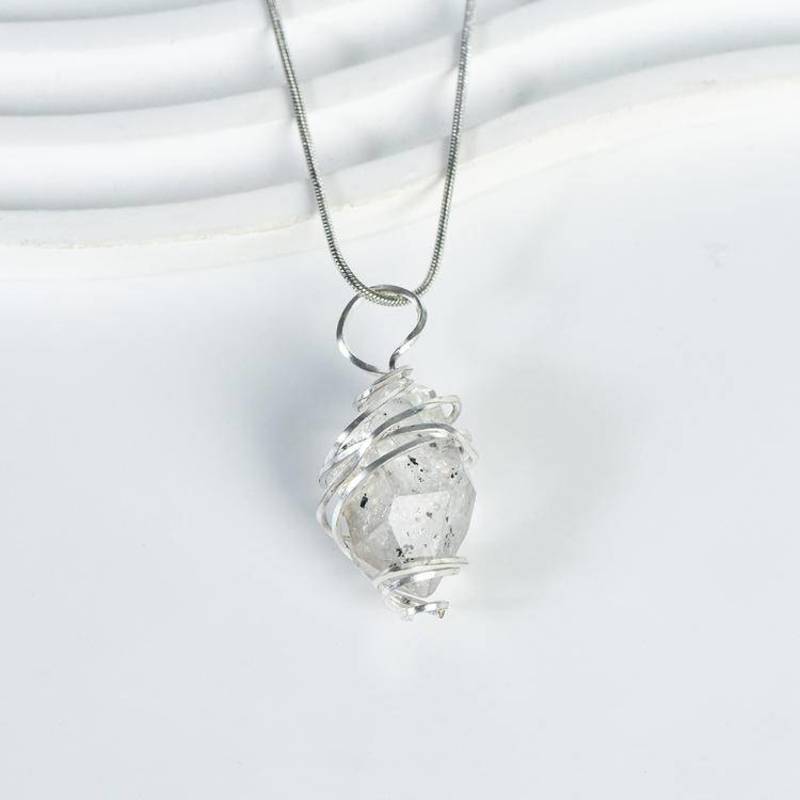
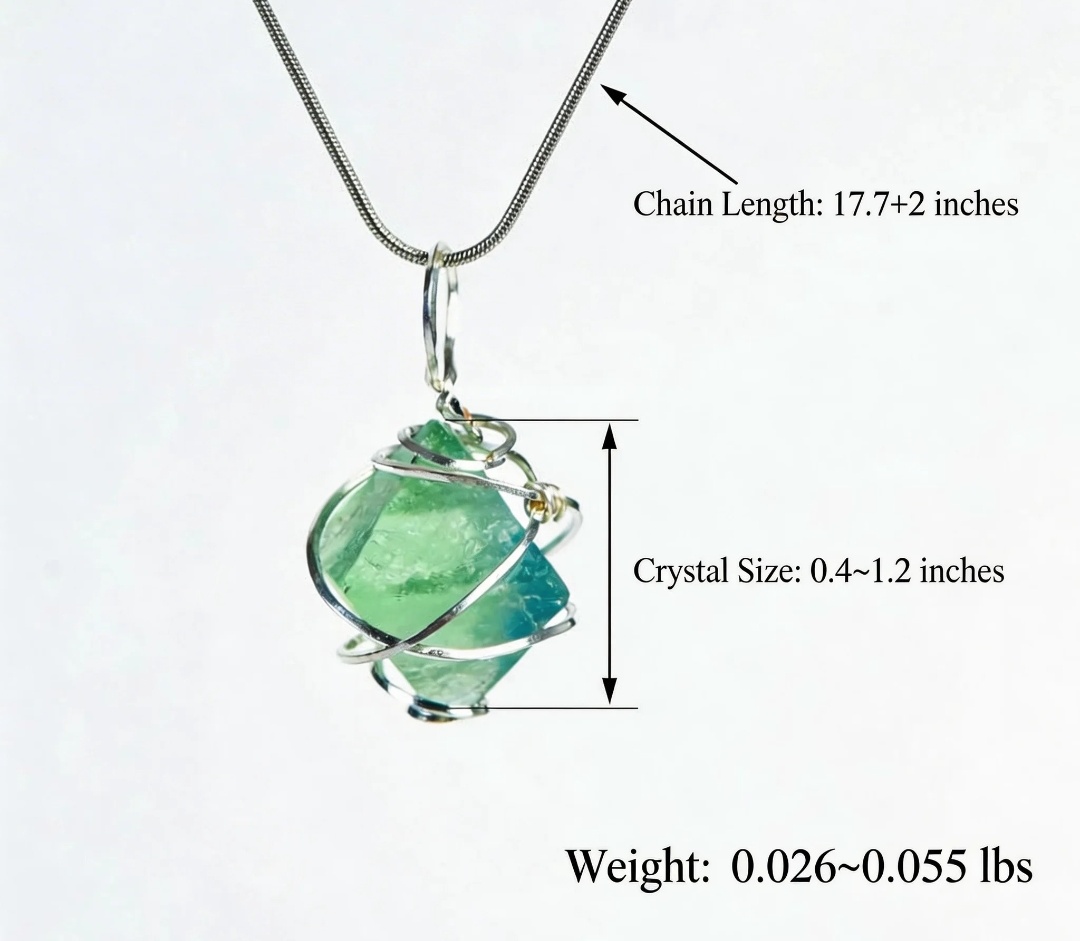
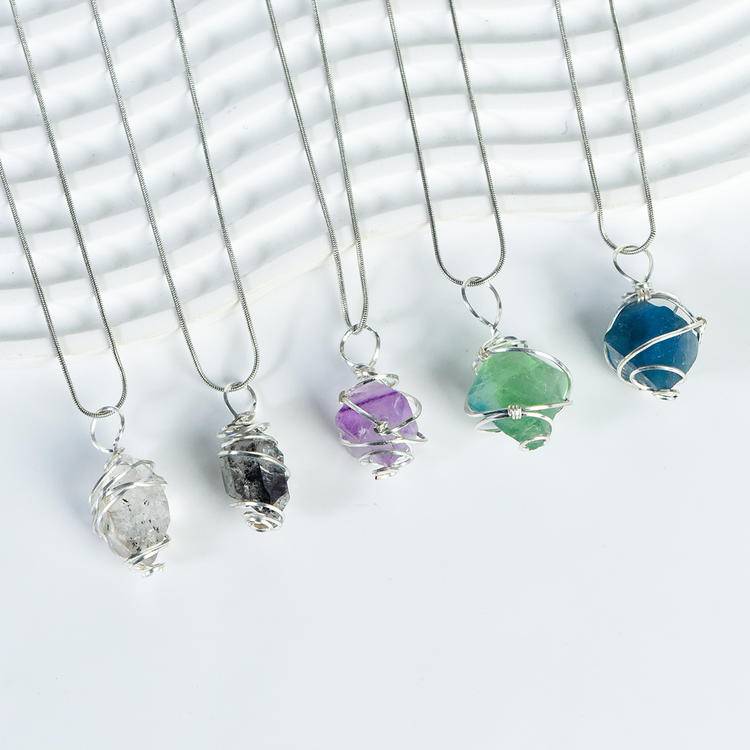
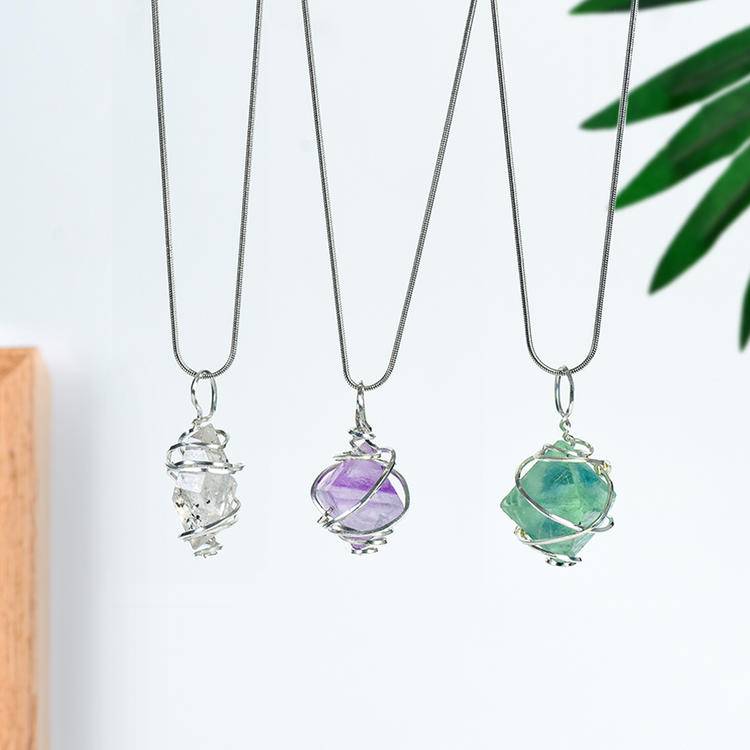
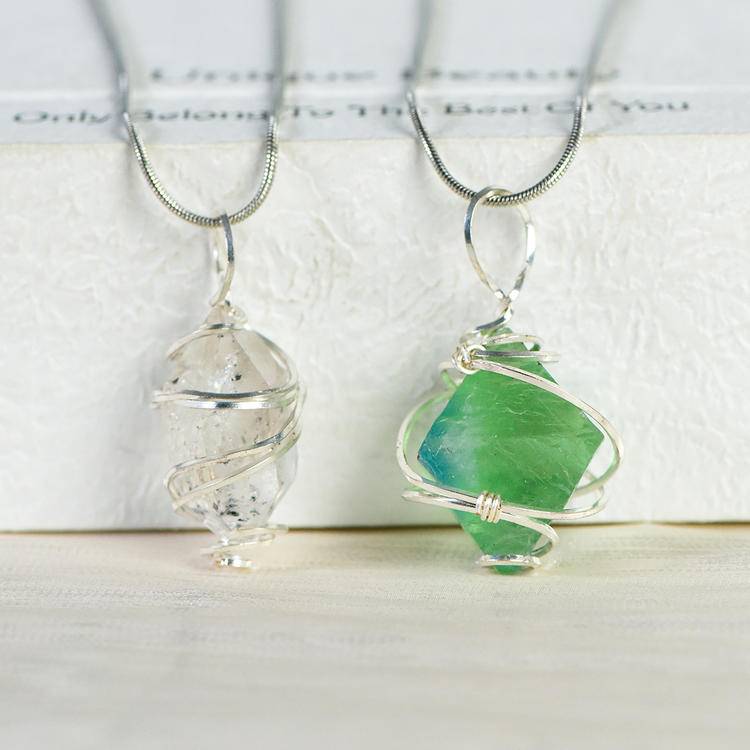
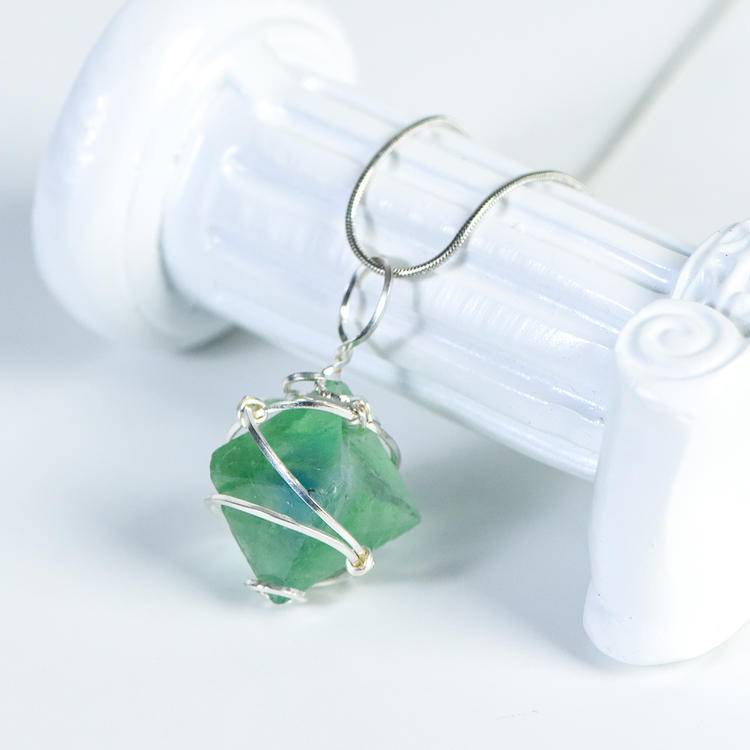
This statement necklace centers on the relationship between vibrant green fluorite and artisan wire wrapping. The short description highlights visible flash-like inclusions in the fluorite, while the title brings in the phrase Flash Diamond. Together, those terms point to a design meant to catch attention through shifts in color, surface, and light. The wirework gives the stone an outline and adds visual movement without asking the stone to appear perfectly regular.
A statement pendant is often chosen for the view it presents at first glance, yet this one invites a closer look. Wire can frame a stone in curves or crossings, drawing attention to the areas where its internal pattern changes. Inclusions are part of the described appearance. They may look different when the pendant moves or when lighting changes. Examine the product photographs for the individual piece to decide whether the visible pattern is the one you want to wear.
Understanding the listed material
The attribute supplied for this product lists the material value as Flash Diamond. The short description, however, specifically describes green fluorite and its flash inclusions. Those words do not establish that the pendant contains a separately identified diamond, nor do they explain whether Flash Diamond is a variation name or a descriptive label. If exact gem identification matters, request clarification about the selected piece and any documentation offered for it. The necklace can be appreciated for its stated green fluorite and wire-wrapped appearance without making assumptions about an additional stone.
The phrase hand-forged in the title and the reference to artisan wire wrapping both draw attention to the metalwork. They do not specify the metal, its finish, or its composition. Consider the wire as a visible design element: it can make the pendant feel more sculptural than a stone held in a plain, hidden mount. The pattern of the wrap also changes how much of the fluorite remains visible. Photos from more than one angle are useful for assessing that balance.
Choosing the pendant for your wardrobe
Green provides a clear starting point for styling. Against black, cream, or another quiet background, the stone can stand out sharply. Alongside earthy colors, its tone may feel more integrated. If you wear patterned clothing, compare the scale of the pattern with the pendant: a small, dense print may compete with the wirework, while a broad or subdued pattern may leave room for it. What matters is whether you want the stone to be the first detail people notice.
The wire-wrapped form can also connect to other jewelry. Smooth, simple pieces allow its curves to remain distinct. More textured rings or earrings can create a layered look, but too many intricate shapes close to the face may make the pendant harder to read. Try the necklace with the necklines you actually wear. The setting may appear more prominent over fabric than against skin, and the green may shift visually depending on what sits behind it.
This piece may suit someone who likes mineral textures presented in an expressive setting, or someone seeking a single accessory that can carry an outfit. It may be less appealing to a person who wants a completely symmetrical, barely visible pendant. A statement necklace is a matter of taste and context. You can wear it for a special outing, make it part of an everyday uniform, or reserve it for moments when you want its detail to be noticed.
What variation can mean here
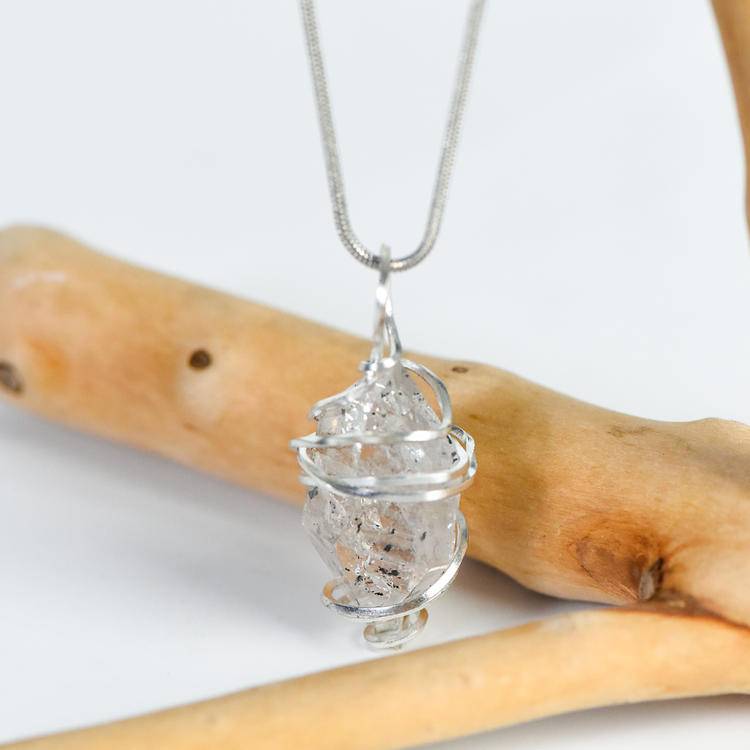
The description calls the necklace one of a kind. That phrase makes photographs especially important: the position of inclusions, the apparent shade of green, and the relation between stone and wire can define the specific piece. Natural-looking internal patterns should be viewed as visual traits, not as evidence of a special effect. A photographed highlight might come from lighting; a darker area might be part of the stone’s visible structure. Check the available views under different angles before deciding.
Screen settings can also change how green appears. A bright product image may emphasize translucency or reflective points that are less obvious indoors. Conversely, ordinary daylight may reveal details a single photograph misses. The sensible expectation is a pendant with its own changing appearance, not a fixed glow under all conditions. No gem grade, size, or metal specification is provided in the supplied details, so those should be verified separately if they determine whether the necklace will work for you.
Handling a wire-wrapped necklace
Wire wrapping creates exposed detail that benefits from careful use. Put the necklace on after clothing and remove it before pulling a narrow garment over your head. Keep loose threads, scarves, and hair away from any projecting parts while fastening it. Avoid pressing or bending the wire to change its shape yourself; an adjustment could affect how the stone is held. If the setting ever feels loose, stop wearing it until it can be checked.
Store the pendant separately from harder pieces that could rub against the fluorite or snag the wrap. A soft cloth can remove ordinary surface marks, but cleaning methods should follow the confirmed metal and stone information for the actual item. Avoid prolonged contact with water, cosmetics, and cleaning products when those materials have not been specified. Handle the necklace by its secure connection points instead of lifting it by a decorative curve in the wire.
Personal meaning without promised effects
Some people use green stones as symbols of growth, renewal, or connection to nature. Wirework can add another personal association: it visibly surrounds the stone while leaving much of it exposed. These are ways to interpret the design, not claims that wearing the necklace will change circumstances or well-being. You can also enjoy it purely for the green color, the inclusions, and the contrast between organic pattern and shaped metal.
As a gift, the pendant may work well for someone who already chooses bold accessories or has a particular liking for green. The individual pattern deserves attention before gifting: an inclusion that one person finds captivating may not match another person’s preference. If possible, compare this pendant with pieces the recipient wears repeatedly. That offers a more grounded guide than relying on a broad symbolic meaning assigned to the stone.
Questions about the Fluorite Flash Diamond Pendant
Does Flash Diamond confirm a diamond component? The supplied attribute uses that phrase, but the short description identifies green fluorite with flash inclusions. The available details do not establish a separate diamond component. Confirm the materials of the exact item if that distinction affects your decision.
Will the flash look the same in every light? Light, viewing angle, and background can change how inclusions and reflective areas appear. Product photographs are a guide to the design, not a promise of an identical effect in every room.
Is the wire made from a particular metal? The supplied details describe wire wrapping and metalwork without naming a metal. Ask for the material specification if you need it for personal preference or care.
Can this be an everyday necklace? It can be worn whenever it suits your clothing and activity. Regular use calls for attention to snags and for periodic checks that the stone remains secure.
How do I make the green stone stand out? A simple neckline and a fairly quiet color behind the pendant can put the focus on the fluorite. You can choose a stronger color contrast or a softer pairing according to your style.
What makes this a statement design? The described combination of vivid green stone, visible inclusions, and prominent wirework creates several points of interest. Its impact comes from those features rather than from a stated size, which is not supplied here.
What should I examine before buying? Look at the selected pendant from available angles, check how the wire relates to the stone, and clarify any material term that is important to you. The title and attribute should be read with the fluorite description, since they use different wording.