
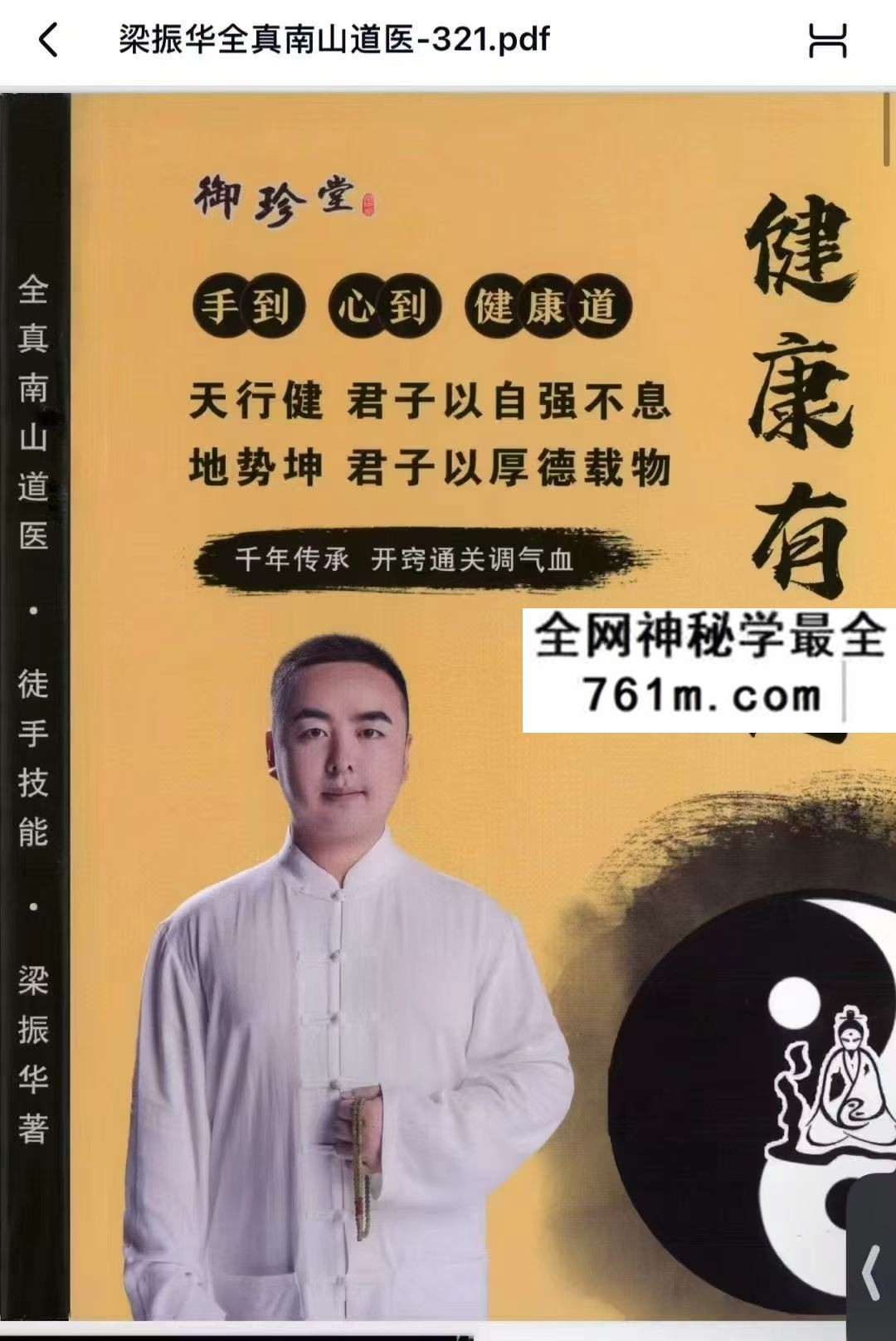
A Chinese-language 321-page PDF study resource on Liang Zhenhua's Quanzhen Nanshan Daoist medicine material, with QR-linked companion video references stated in the source.
Course Overview
This page organizes the verifiable facts from the original nayona.cn listing for English readers. The source is a Chinese-language traditional medicine study resource. It is presented for historical, cultural, and educational study, not as clinical instruction.
What You Will Learn
- Quanzhen Nanshan Daoist medicine as a historical study topic
- Organization of the 321-page Chinese PDF
- Traditional medicine and wellness concepts in the source
- QR-linked companion video references
- Responsible cultural study without clinical claims
Course Contents
Chinese-language 321-page PDF with QR-linked companion video references. The linked videos and their continued availability must be verified from the supplied material.
Original Source Images
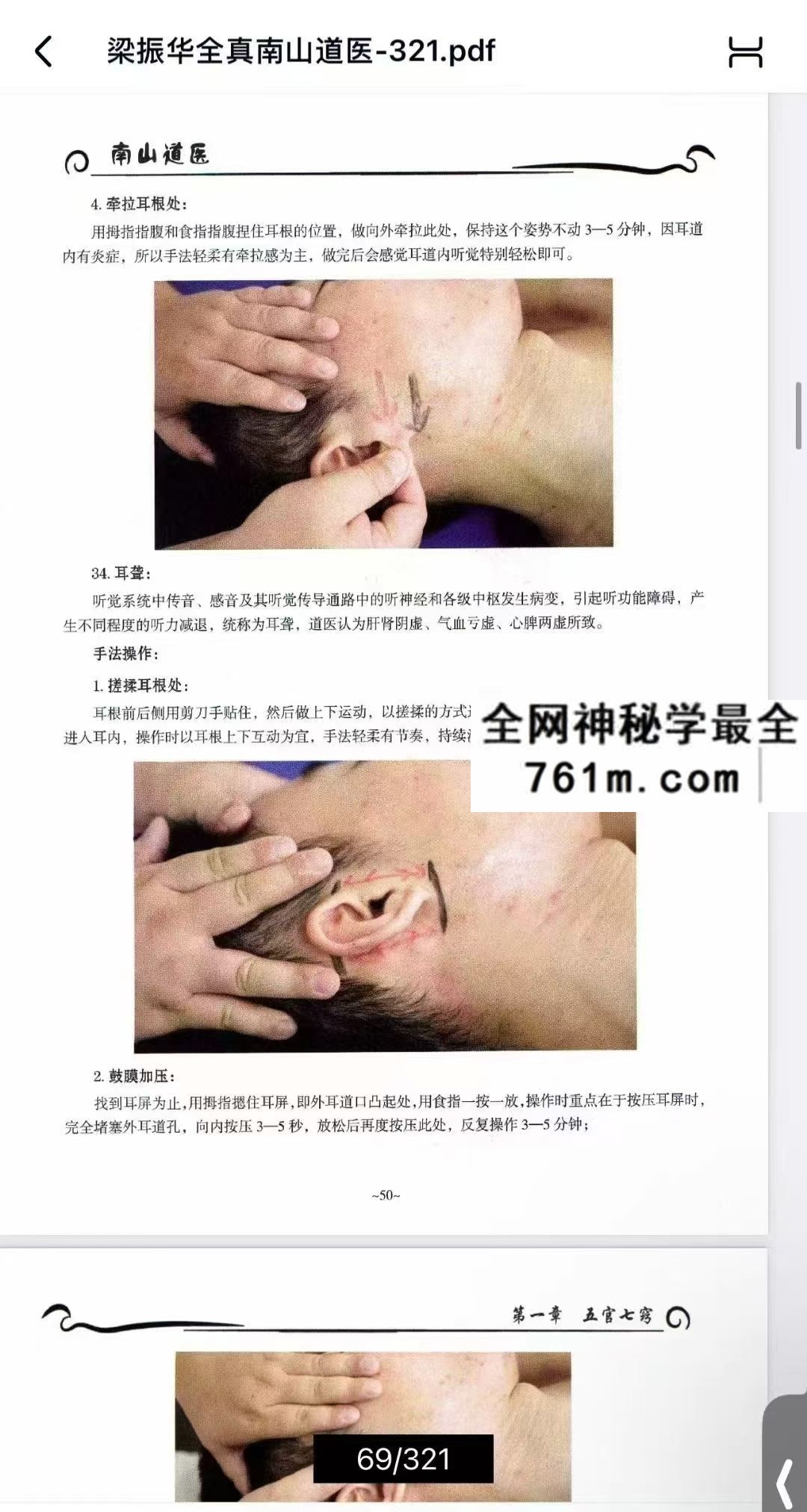
Who This Resource Is For
For readers who can use Chinese-language materials and want to study Daoist medicine and Zhuyou-related traditions in their historical and cultural context.
Learning Format and Digital Delivery
Chinese-language 321-page PDF with QR-linked companion video references. The linked videos and their continued availability must be verified from the supplied material. This is a virtual, downloadable product with no physical shipment. A download file is not yet attached. Review the digital delivery policy and contact Karma Kismet before ordering; immediate automated access is not promised.
FAQ
Is this medical treatment or professional training?
No. This is an educational resource and does not provide diagnosis, treatment, licensure, or a substitute for qualified health care.
Is the material fully translated into English?
No complete English translation is confirmed. The source material is Chinese-language.
Disclaimer
Do not use this material to diagnose, treat, or delay professional care. Historical and traditional claims are presented as subjects of study, not verified medical outcomes.
Related Courses and Site Links
Reading the Liang Zhenhua Resource with Care
This resource is identified as a Chinese-language, 321-page PDF concerning Liang Zhenhua and Quanzhen Nanshan Daoist medicine. Its title places it within traditional medicine study, while the source description also mentions QR codes in the document that point toward companion video references. Those facts give a useful starting point, but they do not establish the contents of every page, the availability of every linked recording, or the practical value of any particular technique. A careful reader can treat the document as material to examine, compare, and contextualize.
The name of a tradition can tell you how a resource is presented without proving a direct institutional connection or a particular historical lineage. Likewise, a person’s name in the title identifies the subject associated with the listing; it does not by itself establish credentials, authorship of every component, or endorsement by a wider community. Keep those distinctions visible while making notes. They help prevent a searchable title from being mistaken for evidence about the document’s provenance.
A Practical First Pass Through the PDF
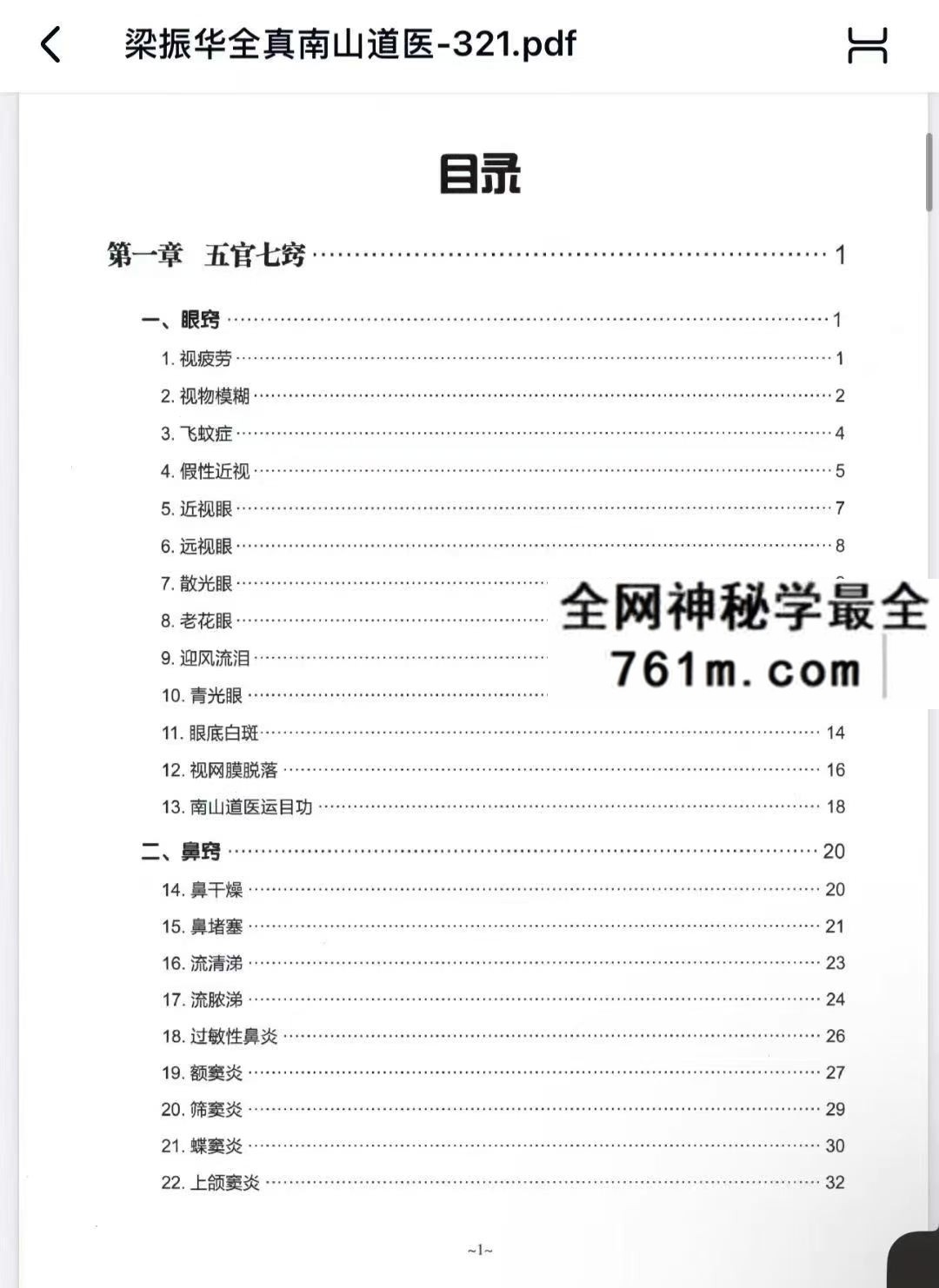
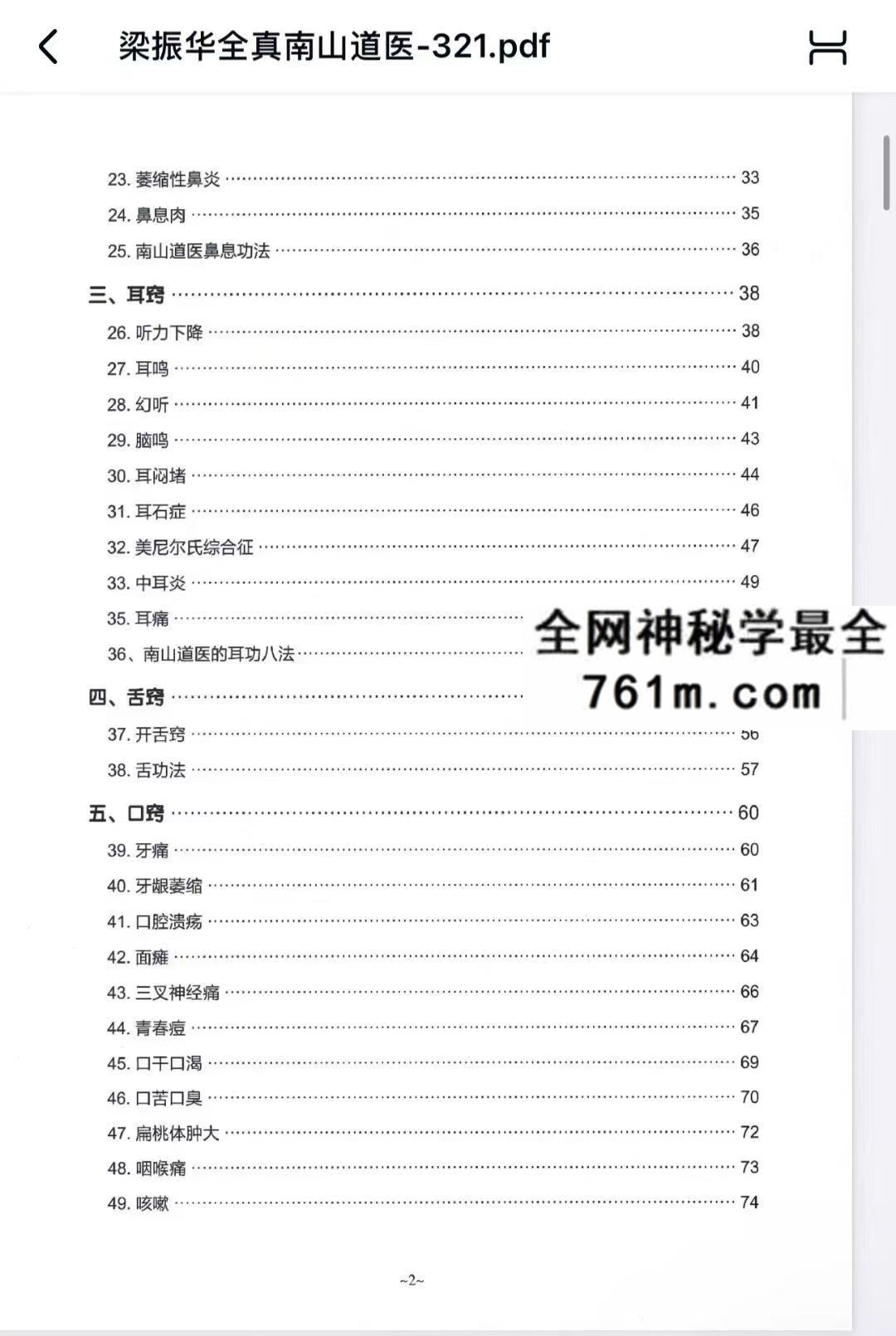
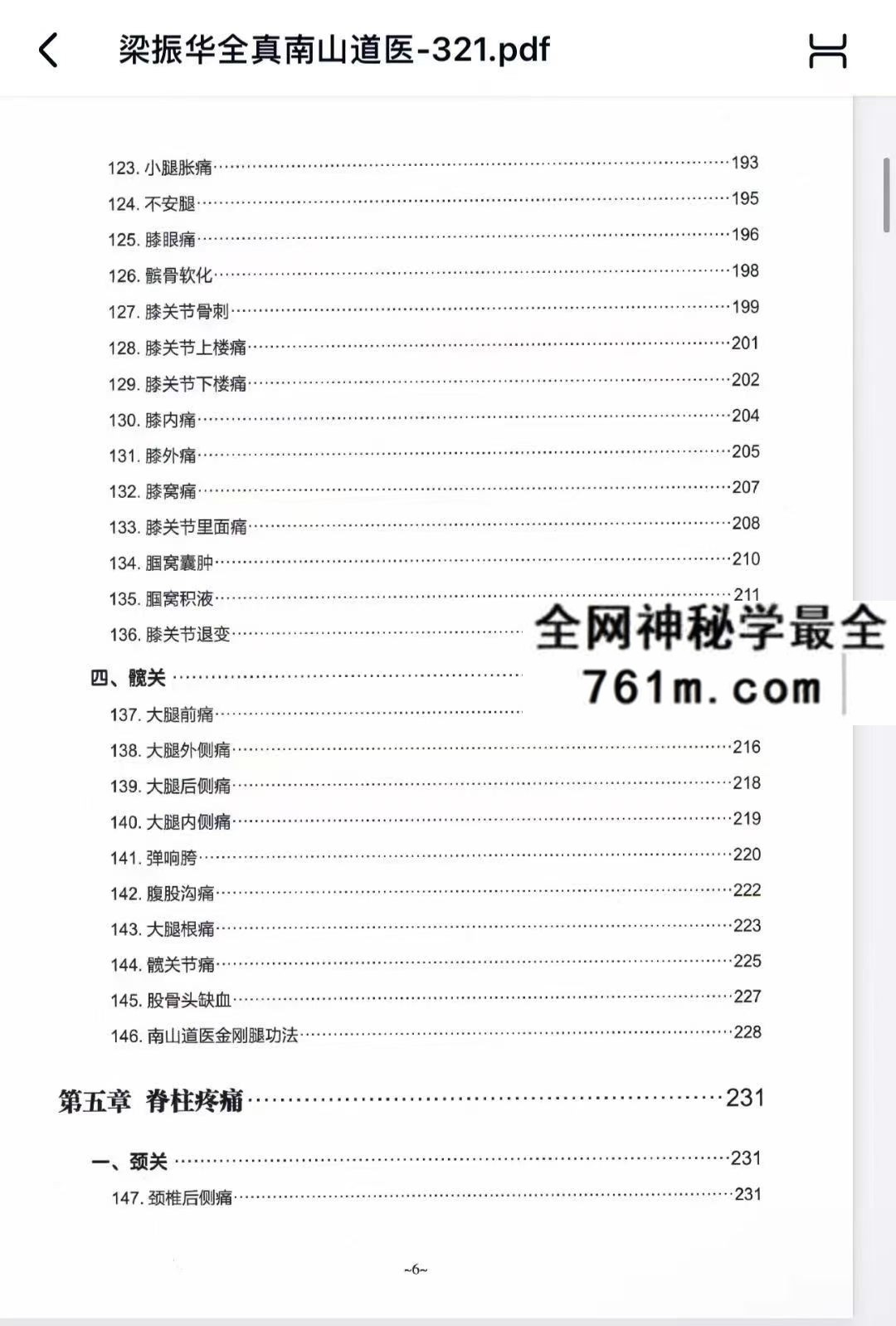
A long Chinese-language document is easier to assess in stages. Begin with any visible cover, contents pages, headings, image captions, and introductory matter. Record what the PDF itself actually says about its scope. Then check whether its sections follow a clear order or gather different kinds of material together. The source listing uses broad terms associated with traditional medicine, wellness, folk remedies, and manual skills; those labels are a reason to inspect the document closely, not a substitute for inspecting it.
- Confirm that the displayed document matches the title and that the page count corresponds to the file you are viewing.
- Identify any sections that explain concepts, any sections that describe practices, and any sections that cite earlier texts or other sources.
- Note unfamiliar Chinese terms in their original form before choosing an English rendering. One term can carry different meanings in different contexts.
- Mark claims that would require outside evidence, especially claims about health effects or the suitability of a practice for a particular person.
- Revisit the contents after sampling several sections; the actual organization may be clearer once you know how the author or compiler uses key terms.
This process works even if your purpose is only bibliographic. You can learn whether the resource belongs in a collection on Daoist cultural history, traditional medical writing, manual practices, or contemporary teaching materials without adopting its instructions. A short record of verified features is more valuable than a broad description assembled from promotional wording.
How to Handle the QR-Linked References
The source description says that QR codes in the PDF are associated with companion videos. A code on a page is a reference mechanism, not confirmation that the destination still works. If you choose to inspect a link, note the page where the code appears and what topic surrounds it. Check the destination’s identity before relying on it. A linked video may clarify a term or show how a movement is represented, but the video should still be assessed as a separate source with its own context.
It is useful to distinguish three things in your notes: what the PDF states, what a linked recording shows, and what you infer from comparing them. If the linked material is unavailable, the PDF can still be studied as a document; simply mark the missing reference rather than filling the gap from assumption. If a video appears to contradict written wording, preserve both observations. Avoid treating a brief demonstration as enough information to perform a hands-on procedure safely.
Traditional Vocabulary and Evidence
Daoist medicine, Zhuyou-related traditions, and Chinese medical vocabulary belong to histories of texts, communities, and practices. Their terms can be meaningful within those traditions without functioning as modern clinical diagnoses or independently verified explanations of the body. A productive reading asks what a term means in this particular passage, whether the document defines it, and whether another source uses it in the same way. Translation should preserve uncertainty when the meaning is uncertain.
For example, a description of a channel, point, formula, or manual method should be recorded as a description within the source. It should not be converted into a claim that the method is effective, harmless, or appropriate for all readers. The source listing includes language around folk remedies and health maintenance. Those broad categories can cover very different levels of specificity and evidence. Read the actual passage before assigning it to a precise subject area.
Questions for Close Reading
- Does the document distinguish historical explanation from instructions directed at the reader?
- When a method is named, does the text explain its setting, terminology, and limits?
- Are statements attributed to a named text or speaker, or presented without a visible source?
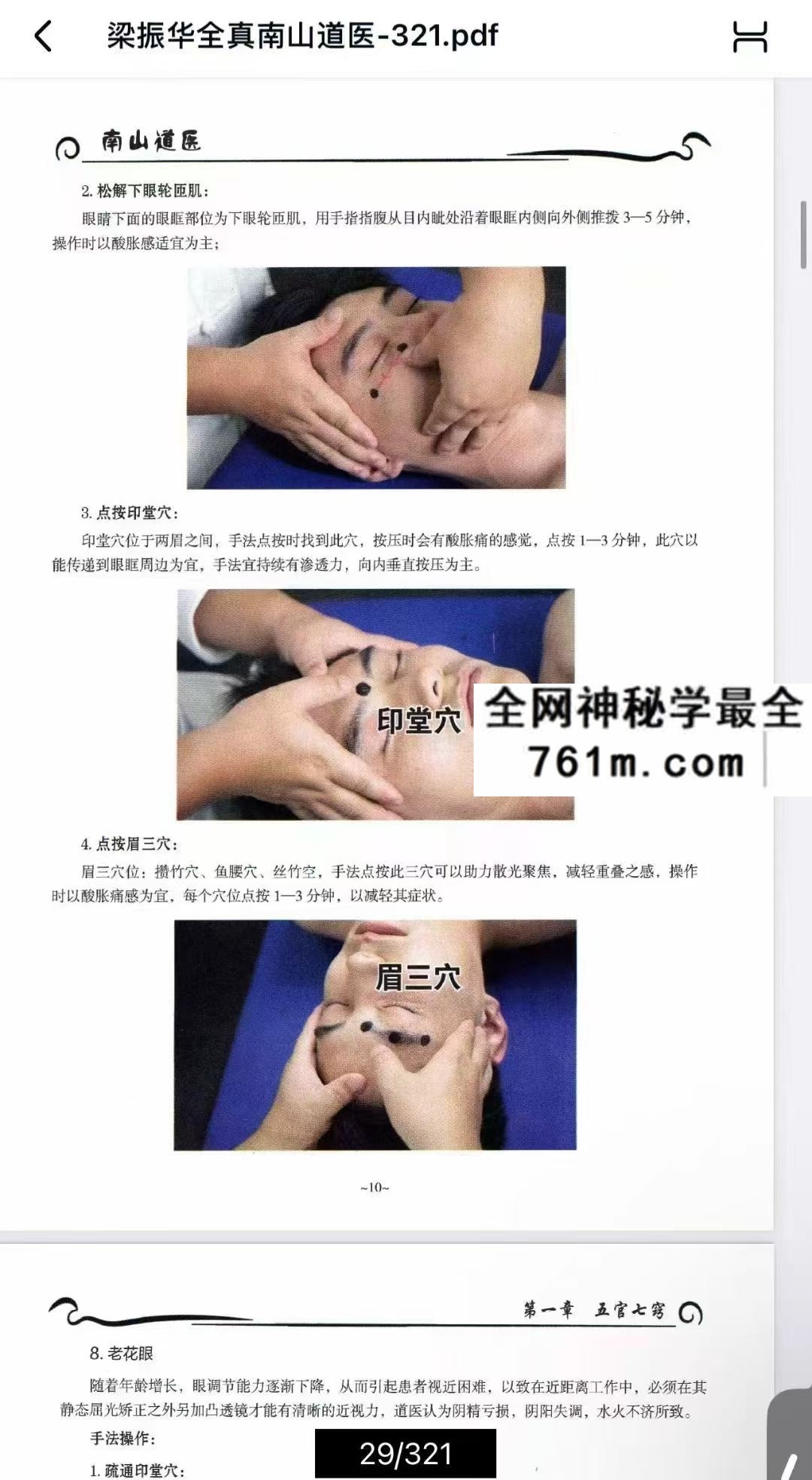
- Do images clarify the text, or do they leave steps open to interpretation?
- Is the same term used consistently across the document and its linked references?
These questions support cultural and textual study. They also expose places where a reader should withhold judgment. A source can be interesting without being complete, and a detailed illustration can still omit information needed for safe practice.
Who May Find This Guide Useful
The PDF may interest readers who can work with Chinese text and want to examine how a contemporary resource presents Quanzhen Nanshan Daoist medicine. It may also suit researchers organizing source descriptions, readers comparing traditional terminology, or students looking at the relationship between written explanations and video references. A reader seeking a fully verified English translation should not assume one is included. A reader seeking professional clinical instruction should use appropriately qualified education and supervision instead of a document listing.
Study pace matters with a resource of this length. Choose a small section, make a glossary of its key terms, and write a neutral summary in your own words. Compare that summary against the page before moving on. Where the document mentions a practice, focus first on what the text claims, what it demonstrates, and what it leaves unstated. This approach gives you a useful understanding of the material without turning a reading exercise into an unsupervised intervention.
Limits and Responsible Use
The available description establishes a subject, a language, a page count, and the presence of QR-linked video references. It does not independently verify the PDF’s full contents, the status of its links, the qualifications of anyone shown, or the safety and effectiveness of a procedure. Do not use a passage from this resource to diagnose a condition, choose a remedy, or replace care from a qualified health professional. If you are studying it for cultural history, identify traditional claims as claims made within a tradition and evaluate factual assertions using appropriate independent sources.
Manual methods deserve particular caution because written names and images rarely convey every relevant detail. Avoid trying a described technique on another person from a PDF or video alone. If a passage appears to address a health concern you have, bring that concern to a qualified professional who can assess your circumstances. The document can remain a subject of inquiry without becoming a personal care plan.
Questions About This Specific Resource
Does 321 pages mean that every topic is covered in depth?
No. Page count describes length, not completeness. Check the contents, headings, and actual passages to determine the scope and depth of the material that matters to you.
Are the QR-linked videos part of the PDF text?
They are references described as accessible through codes in the document. Their content and continued availability should be checked separately. Keep notes on the PDF and any linked recordings as distinct sources.
Can the title confirm an official lineage or medical qualification?
No. The title identifies how the resource is listed. Any claim about affiliation, authorship, or professional qualification needs its own evidence.
Is this suitable for someone who does not read Chinese?
The described PDF is Chinese-language. A reader with limited Chinese may be able to identify headings or images, but should not assume that a partial translation captures the meaning of technical passages.
What is the safest way to study passages about remedies or hands-on methods?
Read them as source material, record their wording and context, and separate traditional explanations from established evidence. Do not use them as personal treatment instructions or as a basis for working on someone else.