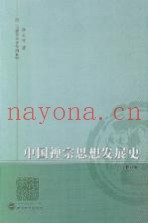
A 2011 introductory Buddhism book edited by Zeng Biao and published by China Women's Publishing House. The source record lists 363 pages and identifies Buddhist history, schools, teachings and texts among its subjects.
Resource Overview
Talking About Buddhism: 600 Introductory Topics is a digital learning resource about Buddhism for Beginners. The English description summarizes the available source listing; the underlying recordings or books are in Chinese. An English translation of the full material is not confirmed.
What You Will Learn
Use the sequence and preview material below to identify the course’s scope, terminology and teaching approach. Compare each card interpretation with the original lesson rather than treating a short listing as a complete transcript.
Course Contents
- Historical development and traditions of Buddhism
- Introductory teachings and schools
- Buddhist scriptures and related literature
- Bibliographic scope: 2011 edition and 363 pages
Original Course Images

Who This Resource Is For
This resource is for readers or learners who can use Chinese-language materials and want a named resource on Buddhism for Beginners. Compare the stated scope and previews before ordering; a fixed level of prior experience is not assumed unless the source directory says so.
Learning Format and Digital Delivery
Chinese-language digital book; 363 pages in the source bibliographic record Virtual and downloadable; there is no physical shipment. Price: USD 9.00. A file link is not yet attached to this product. Please contact Karma Kismet before ordering to confirm delivery arrangements; immediate automated access is not promised.
Frequently Asked Questions
Is the full material in English?
No English edition, recording or subtitle track is confirmed. The source material is Chinese-language.
Is a personal consultation included?
No individual consultation is listed with this resource.
Does this resource guarantee an outcome?
No. It is for educational and cultural study, not a guaranteed result or substitute for professional advice.
Editorial Note
Karma Kismet translated and organized the course facts and original previews for English readers. Lesson counts and formats follow the available source listing; unspecified contents, certificates and instructor credentials are not asserted.
Related Courses
Browse Buddhism for Beginners and read digital delivery information.
The scope of the introductory reference
Talking About Buddhism is identified in the source as a 2011 book edited by Zeng Biao and published by China Women’s Publishing House. The bibliographic record gives 363 pages and ISBN 9787512701625. Its title refers to six hundred introductory topics, rather than six hundred video lessons. The description names thirteen subject areas, while the available excerpt of the directory shows a substantial range of questions, terms, history, schools, figures, teachings, and literature. Because the displayed directory ends within the literature section, it should not be treated as a complete transcription of every chapter in the book.
This kind of reference can be read in two ways. A beginner may follow the early explanatory chapters to establish a vocabulary; a reader with a specific question may use the headings to locate an entry. Neither approach requires treating a short entry as the final answer to a complex religious or historical question. The title promises introductory coverage in the bibliographic sense, not a personal initiation, a qualification, or a guaranteed level of understanding. The Chinese language text remains necessary for learning what each entry actually argues and which sources it cites.
Questions about Buddhist life
The first displayed chapter includes questions about what Buddhism is, the purpose of learning, practice, images, destiny, life and death, compassion, and adapting to circumstances. It also names questions about becoming a Buddhist, monastic procedures, lay life, vegetarianism, sitting practice, marriage, alcohol, gambling, occupation, and study at home. This opening signals that the book considers practical and social questions alongside abstract concepts. It is particularly useful for identifying questions you may have overlooked. The answers should still be read in their own context rather than reconstructed from the headings alone.
When studying those entries, distinguish descriptions of practice from prescriptions that you intend to adopt. A book may describe a rule or custom without establishing how every community interprets it. Ask whether an entry addresses lay readers, monastics, or a particular tradition. If a passage describes an activity at home, record what it actually says and whether it assumes guidance or a community setting. A introductory volume can orient a reader, but it cannot speak on behalf of every Buddhist teacher or determine someone’s religious commitments from a brief question and answer.
Building a vocabulary from the second chapter
The glossary section lists terms including beings, Pure Land, refuge, affliction, bodhi, generosity, rebirth, merit, Buddha nature, compassion, Chan, offerings, the Three Jewels, and titles for religious roles. It also contains language associated with daily observances, chanting, relics, and death. This is a good place to create a personal bilingual index. Write the Chinese expression, the explanation given in the entry, and a tentative English equivalent. A familiar English word may carry a different emphasis in Buddhist usage, so retain the original term when an equivalent seems too broad.
For example, an everyday meaning of compassion may not capture everything discussed under a religious definition. Similarly, a title for a monastic role does not necessarily correspond neatly to an office in another religion. Rather than forcing an analogy, note the function described in the book. Return to the glossary as later chapters introduce new terms. Learning vocabulary in context can reduce the temptation to treat an unfamiliar concept as mysterious simply because its translation sounds unusual. It also helps prevent a single English rendering from being mistaken for the only possible interpretation.
Historical overview and schools
The historical overview headings name the setting in which Buddhism emerged, Shakyamuni, the development of schools, the rise of Mahayana, Madhyamaka, transmission into China, and Tibetan Buddhist origins. The school chapter lists Chinese traditions including Tiantai, Sanlun, Faxiang, Huayan, Vinaya, Pure Land, and Chan, as well as several Tibetan schools. These are explicit subjects in the directory. Their inclusion does not establish that every tradition receives equal space or that the book resolves disagreements among them. Compare the discussion length and wording in the actual text before forming an impression of its emphasis.
A timeline and a school map can be useful reader made aids. Keep them modest: add only dates, relationships, and locations supported by passages you have read, and mark unanswered questions. Do not assume that a list of schools is a single chronological sequence or that every school originated independently of the others. An introductory entry may simplify a larger history. Recording its scope allows you to use the book as an orientation point while remaining alert to distinctions that may require more detailed sources later.
Figures, images, and biographical entries
The chapter on sacred figures includes Buddhas, bodhisattvas, protectors, arhats, and named disciples. The next chapter lists teachers and translators such as Nagarjuna, Kumarajiva, Xuanzang, Bodhidharma, Huineng, and Tsongkhapa. These sections provide different kinds of material: religious iconography and tradition on one hand, and accounts of historical or traditionally remembered people on the other. Keep those categories visible in your notes. A sacred image, a devotional account, and a biographical claim do not all function as the same kind of evidence.
If you recognize a name from a temple image or another book, locate the relevant entry and compare the descriptions. Note the source context before deciding that two depictions must mean exactly the same thing. Images may represent different forms or emphases, and a short biographical entry may focus on one aspect of a person’s significance. The listed illustrations can assist orientation, but neither an image nor a name alone establishes the complete story. A useful reading outcome is knowing what further question to ask, rather than collecting names without a sense of their role.
Teachings and literature as connected sections
The teachings chapter names karma, rebirth, emptiness, form, the middle way, impermanence, no self, the aggregates, the Four Noble Truths, the Eightfold Path, dependent arising, and nirvana, among other numbered and unnumbered topics. The literature section includes Agama collections, the Diamond Sutra, Heart Sutra, Lotus Sutra, Avatamsaka Sutra, Pure Land texts, Vinaya works, and treatises. These lists allow you to connect a conceptual entry with a named textual tradition. They do not establish that the volume reproduces every scripture in full or supplies a complete translation of the works it describes.
One optional reading sequence is to choose a single teaching, read its entry, then locate one related text named in the literature chapter. Record whether the book itself connects them and how. If it does not, leave the relationship as a question rather than presenting your association as the editor’s conclusion. This method suits an introductory reference because it turns breadth into a manageable path. Confirm the delivered digital book and its Chinese language before ordering; the bibliographic page count identifies the source edition, while actual file pagination and readability should be checked in the file you receive.