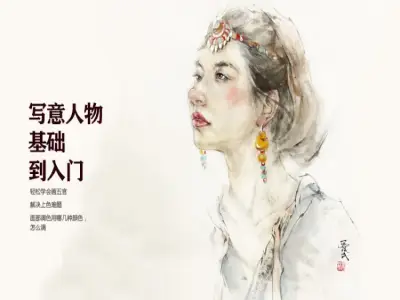
A beginner figure-painting course in the freehand Chinese painting tradition. It focuses on painting instruction; seal carving is not claimed as part of this course.
Resource Overview
Chinese Freehand Figure Painting for Beginners is a digital learning resource about Chinese Painting & Seal Carving. The English description summarizes the available source listing; the underlying recordings or books are in Chinese. An English translation of the full material is not confirmed.
What You Will Learn
Use the sequence and preview material below to identify the course’s scope, terminology and teaching approach. Check each topic against the original lesson rather than treating a short listing as a complete transcript.
Course Contents
- Freehand figure painting
- Beginner practice
- Chinese painting tradition
Original Course Images
Who This Resource Is For
This resource is for readers or learners who can use Chinese-language materials and want a named resource on Chinese Painting & Seal Carving. Compare the stated scope and previews before ordering; a fixed level of prior experience is not assumed unless the source directory says so.
Learning Format and Digital Delivery
Chinese-language painting course; complete lesson count not confirmed Virtual and downloadable; there is no physical shipment. Price: USD 9.00. A file link is not yet attached to this product. Please contact Karma Kismet before ordering to confirm delivery arrangements; immediate automated access is not promised.
Frequently Asked Questions
Is the full material in English?
No English edition, recording or subtitle track is confirmed. The source material is Chinese-language.
Is a personal consultation included?
No individual consultation is listed with this resource.
Does this resource guarantee an outcome?
No. It is for educational and cultural study, not a guaranteed result or substitute for professional advice.
Editorial Note
Karma Kismet translated and organized the course facts and original previews for English readers. Lesson counts and formats follow the available source listing; unspecified contents, certificates and instructor credentials are not asserted.
Related Courses
Browse Chinese Painting & Seal Carving and read digital delivery information.
Building a freehand figure from the listed exercises
The source directory for this beginner Chinese freehand figure-painting resource names tool use, separate facial features, hands, feet, skin-color mixing, portrait proportion and a multi-stage demonstration involving a figure wearing a hat. These concrete entries make it possible to plan study around the actual sequence of problems. The collection is about painting; the listing does not establish seal-carving instruction as part of it. Begin with a small exercise that can be assessed clearly. A complete portrait combines placement, line, color and expression, so difficulty in the whole image is easier to understand when those elements are examined separately.
Tool behavior before subject detail
The directory includes a tools-use video. Watch it with attention to what the demonstrated tool does in the mark, not simply to the name of the tool. Notice the relation between a line’s width, its edge and the surface shown. A material list cannot replace observation of behavior. If you practice with different materials, record the difference and avoid judging the result as if the conditions were identical. A beginner’s first task is to learn what can be controlled. An uncertain line may reflect unfamiliarity with the tool rather than a failure to understand the figure’s shape.
Prepare a small test sheet of lines and patches before working on a face. Change one condition at a time and label the test in ordinary terms. The purpose is not to create a technical laboratory protocol, but to discover which action produces which visible change. A separate test sheet prevents the portrait from carrying every experiment at once. Compare the tests with the demonstration, then choose a manageable condition for the next exercise. This reader-created practice can make the tools lesson useful without claiming that the supplied course prescribes the same routine.
Facial features as relationships
The listed eye, mouth, nose and ear lessons can be studied separately, but a feature eventually has to belong to a face. After observing one feature demonstration, note its direction, proportion and placement relative to neighboring features. A well-rendered eye can still appear misplaced when the overall construction is wrong. Avoid adding detail to solve a placement problem. Begin with the larger relationship, then refine the feature. This distinction is especially useful for a beginner because a recognizable small detail can create the impression of progress while the whole head remains structurally uncertain.
A comparison exercise uses two simple sketches with the same feature placed differently. Ask which change affects the expression or the sense of orientation. The sketches need not be polished. Their purpose is to make a relationship visible. Return to the relevant video and see how the instructor establishes the feature’s position before developing it. Keep the observed sequence separate from a general rule you infer. A demonstration solves one pictured problem; its principles may be useful elsewhere, but their application to another face requires fresh observation.
Hands and feet have construction stages
The directory distinguishes drafting and coloring for hands and feet, including separate entries for a single hand and two hands. Treat that distinction as a reason to preserve an early stage of your attempt. Before coloring, examine the overall gesture and the relationship of the parts. If the construction is unclear, color may make the problem harder to see rather than correct it. A photograph or a retained sketch of the earlier stage allows you to compare what changed. This makes the sequence of work educational instead of judging only the finished surface.
For a hand exercise, begin with the broad direction and the relationship between the palm and fingers. Add smaller divisions only after that arrangement is intelligible. This is an independent observational suggestion, not an unverified claim about every step in the video. Compare your initial and later versions with the displayed example. Describe one change in angle or spacing and its effect on the gesture. A specific observation is more useful than deciding that the hand looks wrong in general, because it gives the next attempt a concrete problem to address.
Skin-color mixing and context
The source lists separate mixing lessons for children, adults and older people. Those entries establish a subject of study, but they should not be converted into a claim that age alone determines one fixed skin color. Observe how the demonstration builds the mixture and how the color behaves beside neighboring marks. Light, the pictured subject and the painting’s overall treatment may all affect the result. A color that seems convincing on a test sheet can look different inside the portrait. Keep the test and the painted context together when evaluating the lesson.
Make several small mixtures rather than one large batch whose adjustments become difficult to remember. Label the sequence of changes in your own notes and compare the dried appearance when appropriate to your materials. Do not rely only on the wet mixture’s appearance. Then place a selected sample beside a simple line sketch to see how the relationship changes. The exercise supports observation of color as part of a figure, while avoiding invented formulas or a promise that copying a recipe will yield the same result under every set of materials.
Portrait proportion as an aid, not a substitute for looking
The file list explicitly names the three-courts and five-eyes portrait-proportion topic. Such a proportional scheme can help organize an initial construction, but a real pictured face should still be observed. Identify how the demonstration uses the scheme and where the individual subject requires adjustment. A guide becomes limiting if the learner forces every face into it without attending to the example. Compare the framework with the visible placement of the features, then explain one adjustment. This keeps proportion useful as a starting aid rather than presenting it as a universal measurement of every person.
Following the hat-wearing figure demonstration
The directory names stages involving tools and subject analysis, charcoal construction, detail, skin mixing and brush work on hair. Follow those files in their actual order rather than inferring order solely from an isolated number in the listing. At each stage, ask what problem is being solved and what information is deliberately postponed. A finished demonstration can look effortless because earlier decisions are no longer visible. Pausing at the construction stages reveals those decisions and gives a beginner a more realistic basis for practice.
Finish a study cycle by comparing one early sketch with one later attempt. Describe a structural improvement, a color decision and a remaining uncertainty. The resource can support a gradual understanding of freehand figure painting without promising a fixed outcome or confirming subjects absent from the directory. A useful result is the ability to diagnose a painting problem at the appropriate stage: placement before detail, gesture before decoration and a color relationship before a generalized judgment of likeness. That diagnosis makes continued practice more deliberate and easier to review.