A 697-page Chinese PDF book by Shi Zhan, published by Guangxi Normal University Press in 2018. It examines geography, historical cycles and the transition from empire to modernity.
Resource Overview
Shi Zhan: Pivot — A Chinese History PDF Book is a digital learning resource about Chinese History. The English description summarizes the available source listing; the underlying recordings or books are in Chinese. An English translation of the full material is not confirmed.
What You Will Learn
Use the sequence and preview material below to identify the course’s scope, terminology and teaching approach. Check each topic against the original lesson rather than treating a short listing as a complete transcript.
Course Contents
- Chinese historical outline
- Shi Zhan’s historical argument in Pivot
- Text edition format
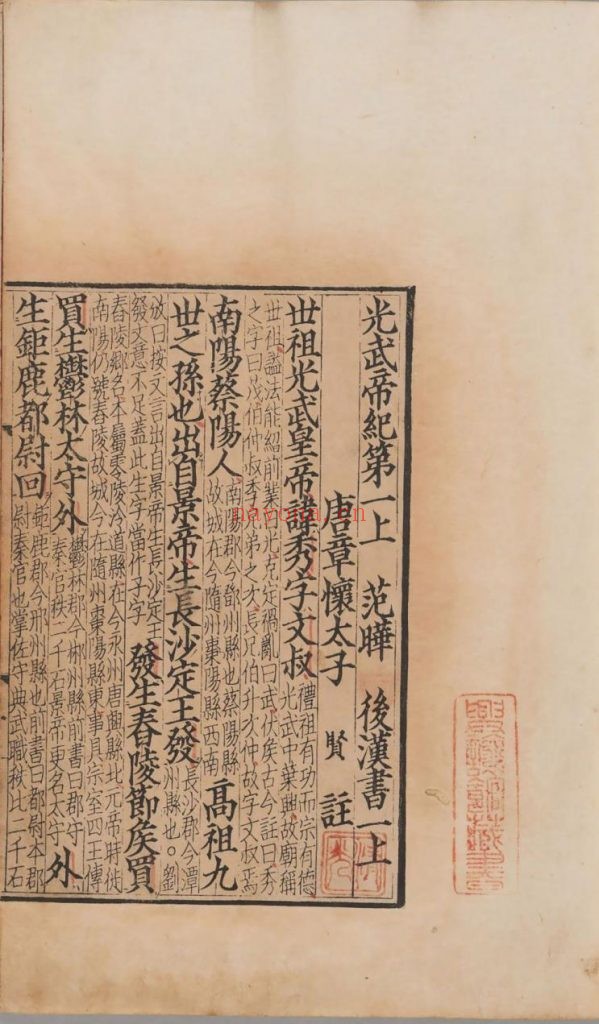
Original Course Images

Who This Resource Is For
This resource is for readers or learners who can use Chinese-language materials and want a named resource on Chinese History. Compare the stated scope and previews before ordering; a fixed level of prior experience is not assumed unless the source directory says so.
Learning Format and Digital Delivery
Chinese-language PDF book; 697 pages; Guangxi Normal University Press, 2018. Virtual and downloadable; there is no physical shipment. Price: USD 9.00. A file link is not yet attached to this product. Please contact Karma Kismet before ordering to confirm delivery arrangements; immediate automated access is not promised.
Frequently Asked Questions
Is the full material in English?
No English edition, recording or subtitle track is confirmed. The source material is Chinese-language.
Is a personal consultation included?
No individual consultation is listed with this resource.
Does this resource guarantee an outcome?
No. It is for educational and cultural study, not a guaranteed result or substitute for professional advice.
Editorial Note
Karma Kismet translated and organized the course facts and original previews for English readers. Lesson counts and formats follow the available source listing; unspecified contents, certificates and instructor credentials are not asserted.
Related Courses
Browse Chinese History and read digital delivery information.
Shi Zhan’s Pivot as a historical interpretation
The exact source is Pivot, a 697-page Chinese PDF book by Shi Zhan, published by Guangxi Normal University Press on January 1, 2018, with ISBN 9787549586080. The product’s fifty-lecture wording should not be taken as evidence that the source supplies fifty video recordings or verbatim transcripts. The book’s visible structure moves through philosophical and sociological introductions, geographical zones, historical cycles, the transition from empire to modernity, economic relations and world-historical reflection. It offers a large explanatory model. Reading it well therefore involves two related tasks: understanding the author’s proposed connections and examining the evidence by which those connections are made plausible.
Geographical zones as analytical categories
The directory names the central plains, the steppe, transitional zones, western regions, Tibet, the southwest and the ocean. Begin by putting these categories on a rough orientation map. The map is an aid to following the author’s argument, not a claim that each zone is homogeneous or has a permanently fixed boundary. Ask what role a zone plays in the selected chapter. Is the discussion about movement, exchange, political organization, relations between populations or an explanatory contrast? A geographical label can support several different kinds of claim. Identifying the specific claim prevents the reader from treating geography as an automatic cause of every historical event.
The transitional category deserves special attention because it may complicate a simple contrast between a central area and an outside. A reader-created comparison can examine how the author describes contact across a boundary: who moves, what circulates and which institutions mediate the interaction? Use details actually found in the book. If a chapter associates a region with a long-term pattern, identify the period and the cases used to support it. A modern map alone cannot supply that evidence. Historical routes, administrative relationships and political situations must be understood within the time frame of the argument being studied.
Testing a geographical explanation
Choose one sentence that connects a geographical condition with a historical outcome. Rewrite the proposed connection in the form of a question: how might this condition have shaped this outcome? Then list the intervening steps the book supplies. Distance might affect communication, but a particular communication system may alter the effect of distance. A physical setting may offer possibilities, while institutions and choices determine which possibility develops. These examples illustrate how to analyze a causal argument; they are not a substitute for Shi Zhan’s actual cases. The aim is to understand the mechanism rather than simply remember a striking regional contrast.
The historical-cycle framework
The source directory organizes earlier history through three cycles under the author’s framing and presents modernity as a further cycle. Treat cycle as an analytical proposal. Ask what begins a cycle, what distinguishes its phases and what allows the author to compare one with another. A repeating label does not demonstrate a repeating mechanism. Make a separate outline for each cycle from the book’s own chapter structure, then identify the feature the author considers comparable. If the cases differ, record the difference before trying to explain it away. A model is most useful when its limits can be stated as clearly as its organizing insight.
A reader can test the framework by selecting one transition described in detail. Identify the starting conditions, the change being explained and the evidence for the proposed turning point. Does the argument rely on political events, institutional change, geographical relations or economic development? More than one may be involved, but the relationships should be explicit. Then ask whether another transition could be described with the same mechanism. This does not require accepting or dismissing the entire book. It provides a way to examine a major thesis through a limited case, which is more manageable and more informative than a general reaction to its scale.
From empire to modernity
The visible structure gives particular importance to the transition from empire to a modern setting. Read that movement through the definitions the author uses. Empire, state, society and modernity can carry different meanings in different historical accounts. When the book introduces a new institutional or social relation, ask what has changed in the unit of analysis: a ruling structure, a territory, a population, an economic network or a conception of political belonging. The transition becomes clearer when these possibilities are separated. It is less useful to treat modernity as a single date after which all earlier forms vanish at once.
For an independent study exercise, take a passage that contrasts an earlier arrangement with a later one. Describe each arrangement before evaluating it. Then identify what the author regards as the crucial difference and what the comparison leaves outside its frame. A large historical narrative cannot give equal attention to every locality or social group. Recognizing that selection is part of reading its argument fairly. A gap in the account may suggest a question for further study without invalidating every connection in the model; equally, a compelling comparison does not establish that the same transition occurred everywhere in the same way.
Economy and world order
The directory includes economy and world-order discussion, extending the argument beyond a purely domestic political sequence. Ask how these sections change the geographical picture introduced earlier. Does the scale of explanation move from regional interaction to a wider network? Which relationships are treated as central, and what evidence makes them historically consequential? Keep an economic claim distinct from an ethical judgment or a prediction. Each requires a different kind of support. When the author connects China’s position with a global process, state both the proposed connection and the period to which it refers instead of turning the passage into a timeless statement.
The 2018 publication date matters especially for forward-looking remarks. A prediction is evidence of what the author expected in that context, not confirmation of what later happened and not a guaranteed forecast for a reader today. Mark such statements as dated interpretations. The book can still be studied for how the prediction was constructed: which trend, model or historical analogy made the outcome appear plausible? That question examines intellectual reasoning without silently updating the text. A present-day assessment would require separate contemporary evidence, which should remain distinct from the source book rather than being attributed to it.
Reading the conclusion at the right scale
World-historical reflection can be stimulating because it connects many cases within one perspective. Its scale also creates a responsibility for the reader to distinguish a broad thesis from the particular examples supporting it. After a major section, write a concise account of the thesis, one case that supports it and one question about its reach. At the end, return to the opening philosophical and sociological discussions and ask how they shaped the historical narrative. The goal is to understand Pivot as a reasoned historical interpretation, including its explanatory ambition, its dated setting and the boundaries of what its evidence can establish.