Study Qi Men Nine Palaces course through an English digital resource organized from the original curriculum, course record and reference images.
Course Overview
This English resource organizes the original Chinese curriculum for structured study of Qi Men Dun Jia divination and strategic timing traditions. It presents the source material as a cultural and educational system rather than a scientific prediction or guaranteed outcome.
What You Will Learn
- Core Qi Men terminology and chart-reading approaches used in the source material
- How the course connects palaces, doors, stars, spirits and stems with chart interpretation
- The lesson sequence, examples and study exercises supplied in the original record
- How to distinguish symbolic interpretation from factual or scientific claims
Course Contents
Vertical professional tutorial
Catalog screenshot
Video screenshot
Original Course Material Images
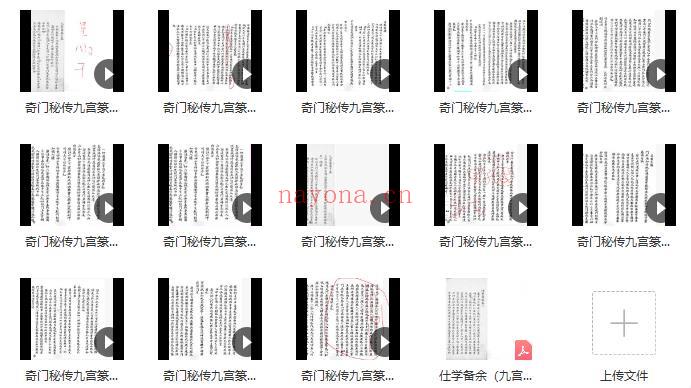
The following images are retained from the original nayona.cn course record for material identification and reference.


Who This Resource Is For
This material is suitable for adult learners exploring Qi Men Dun Jia, Chinese divination, chart reading or traditional timing and strategy methods. Beginners should start with definitions and calculation rules before attempting interpretive exercises.
Learning Format and Digital Delivery
- Virtual digital resource; no physical shipment
- Course files and access instructions are supplied after purchase
- Lesson counts and file types follow the available source record
- Use the materials for personal study and reference
Source and Editorial Method
The curriculum facts and original material images are adapted from the source record at nayona.cn. Karma Kismet translated and reorganized the available information without inventing credentials, lesson counts or promised outcomes.
Frequently Asked Questions
Is this a physical product?
No. It is a virtual, downloadable educational resource.
Is Qi Men Dun Jia scientifically validated?
No. Qi Men Dun Jia is presented here as a symbolic and cultural interpretive tradition, not as scientific diagnosis or prediction.
Does this product include a personal consultation?
No, unless the product description explicitly states that a consultation is included.
Related Qi Men Dun Jia Courses and Guides
- Yi Zheng Qi Men Dun Jia 108-Lesson Complete Course
- Qian Xiaodao Qi Men Pattern Reading Course
- Chen Youming Qi Men Date Selection and Timing Course
- Taigong Qi Men 100 Divination Case Studies
- Shuimu Qinglong Professional Qi Men Training: 200 Lessons
A commentary-oriented Nine Palaces resource
The original source identifies Zhu Yuanxi, also named Tianyi Daoren in the listing, with a course commenting on a work whose title includes Qi Men Nine Palaces Essentials. It mentions contents and video screenshots but does not reproduce a readable lesson inventory, count, or duration. The source therefore supports a commentary-oriented resource rather than a fully specified introductory syllabus. The English guide's Nine Palaces category is a useful subject anchor, while the actual material must establish which passages, examples, and explanatory steps are included.
A commentary differs from an independent list of chart rules. It may quote a passage, paraphrase it, discuss its assumptions, or compare an interpretation. Those stages should remain visible in your notebook whenever they actually occur. Do not merge the underlying work and the commentator's explanation into one unattributed statement. A careful reader can ask what the source text says, what Zhu Yuanxi adds, and what remains the learner's own reflection. This approach makes a commentary easier to study even when the brief listing does not supply an exact chapter map.
Start with the spatial vocabulary
Nine Palaces language provides a traditional arrangement for organizing a Qi Men chart. Before giving a position interpretive significance, identify the layout and labels used in the material. Copy a visible diagram accurately and record the source reference. Do not assume that a familiar diagram from another course matches every convention here. If the material's orientation or notation is unclear, mark the question. A chart map can be a useful learning artifact, but only when it preserves the specific arrangement being discussed rather than a reconstruction based on memory.
Keep spatial position separate from symbolic meaning. On one line, describe where a component appears. On another, summarize what the commentary associates with it. This distinguishes observation from inference. It also reduces the tendency to treat a palace number as a complete answer to a life question. The Nine Palaces category identifies a subject of study; it does not establish that a position proves a person's circumstances or that every chart using the arrangement follows the same interpretive rules across different traditions.
Read the text and explanation side by side
For one passage in the material, make a short record of the wording quoted or discussed, the commentator's explanation, and any conditions named. If you cannot distinguish quotation from paraphrase, leave that uncertainty visible rather than putting quotation marks around a summary. A commentary can be studied accurately through indirect language: the teacher reads the passage as a particular idea under specified assumptions. This avoids presenting a modern explanation as an exact historical statement when the available evidence does not support that precision.
When an English term has several possible translations, retain the Chinese expression beside it. A concise classical phrase may carry technical assumptions that disappear in smooth English prose. Your paraphrase should preserve those assumptions where they are explained. If they are not explained, record a question instead of filling the gap with a rule from another book. This habit is especially useful in a commentary resource because the teacher may be unpacking an inherited expression rather than introducing a term from the beginning for complete beginners.
Give component relationships their own entries
If the course discusses doors, stars, spirits, or stems within the palace arrangement, define each term from the actual material before linking them. These labels serve different functions in the symbolic chart. A learner who treats them as interchangeable auspicious or inauspicious words can miss the structure of the explanation. Your notebook should show which component is being considered and how it is compared with another. The brief source text does not verify a complete component-by-component curriculum, so these notes should grow from the actual passages you encounter.
For a relationship passage, record the visible arrangement, the conditions, and the interpretation separately. Then ask whether the commentary explains why one relationship receives attention. If the reason is unclear, note it. A detailed method can include priorities, qualifications, and alternative readings that a short summary would lose. Keeping the steps visible helps you understand the particular resource without turning it into a universal Qi Men procedure or attributing outside rules to Zhu Yuanxi because they happen to use familiar vocabulary.
Build a passage index from the actual resource
Because the supplied text lacks a readable directory, begin your own index with the headings and references you can verify. Preserve the original order and note actual file names or timestamps. Do not invent a sequence of beginner, intermediate, and advanced modules. A commentary may develop according to its underlying text rather than a standard course template. An index based on actual content gives you a reliable path back to an explanation and makes the resource usable without suggesting that its organization has been independently confirmed from the sparse listing.
The screenshots can help identify the presentation, but they should not carry more evidence than they contain. A preview may show a diagram or a contents heading while omitting the explanation that qualifies it. Describe visible details neutrally and avoid inferring missing chapters, case counts, or delivery features. If a preview is difficult to read, treat it as an identification clue. The course's detailed scope is best established from the full material, where a statement can be checked in its surrounding context rather than extracted from an image fragment.
Keep examples tied to their questions
When the commentary discusses a case, record the question or subject actually supplied. Then identify the chart features selected and the interpretation attributed to the teacher. If the case concerns a known event, note that the event was already available in the presentation. Do not invent a forecast date or additional details. This keeps the example's role clear. It can demonstrate how an interpretive framework is applied without automatically establishing accuracy in predicting unknown outcomes or supplying practical advice for a reader's current concern.
If you use the example for personal reflection, put that reflection in a separate entry. A cultural interpretation might prompt a question about your assumptions or choices, but it does not establish the facts of your situation. Keep practical decisions about health, money, disputes, or relationships grounded in direct information. This boundary allows you to engage thoughtfully with the commentary while avoiding the impression that a symbolic palace relationship has replaced ordinary evidence or given certainty about another person's behavior.
A useful commentary-study milestone
Choose one short passage and explain it in three stages: the underlying statement, the commentator's reasoning, and the conditions or questions that remain. Include a reference another reader could locate. This is a manageable personal project for a resource whose detailed directory is not reproduced in the listing. It tests understanding rather than memory of a striking phrase. It also helps you recognize where your English paraphrase simplifies something the actual material treats more carefully or conditionally.
Zhu Yuanxi's identified commentary can be approached as a source for cultural study of Nine Palaces Qi Men language and interpretation. The named focus and screenshot references provide identification, while the full material must support more detailed claims. Read with a clear distinction among source text, commentary, and your own reflection. That approach preserves the resource's particular character without inventing a syllabus, promising a qualification, or presenting symbolic associations as verified forecasts about a person's life.