An advanced classical astrology course listed as 19 videos. The instructor uses the name Mango Sister in the source title; no professional credential is independently verified.
Resource Overview
Classical Astrology Advanced Professional Course: 19 Videos is a digital learning resource about Traditional & Classical Astrology. The English description summarizes the available source listing; the underlying recordings or books are in Chinese. An English translation of the full material is not confirmed.
What You Will Learn
Use the sequence and preview material below to identify the course’s scope, terminology and teaching approach. Check each topic against the original lesson rather than treating a short listing as a complete transcript.
Course Contents
- Classical astrology
- Advanced course format
- Professional-study context
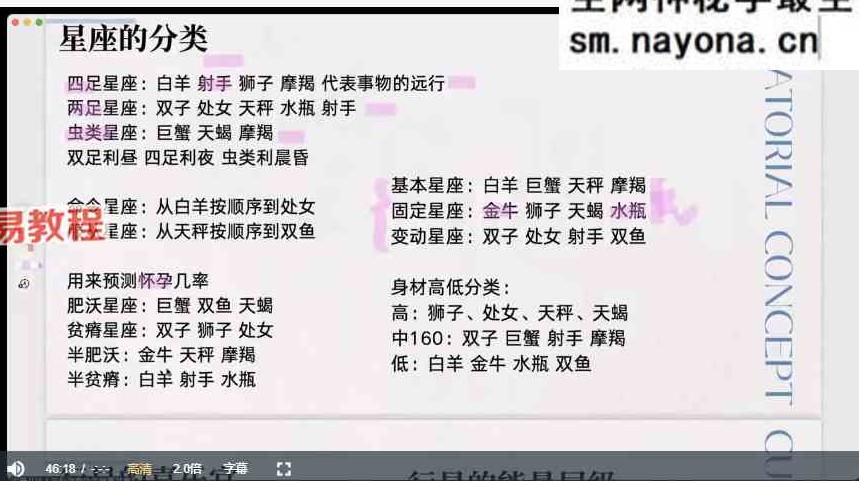
Original Course Images
Who This Resource Is For
This resource is for readers or learners who can use Chinese-language materials and want a named resource on Traditional & Classical Astrology. Compare the stated scope and previews before ordering; a fixed level of prior experience is not assumed unless the source directory says so.
Learning Format and Digital Delivery
19 Chinese-language videos Virtual and downloadable; there is no physical shipment. Price: USD 9.00. A file link is not yet attached to this product. Please contact Karma Kismet before ordering to confirm delivery arrangements; immediate automated access is not promised.
Frequently Asked Questions
Is the full material in English?
No English edition, recording or subtitle track is confirmed. The source material is Chinese-language.
Is a personal consultation included?
No individual consultation is listed with this resource.
Does this resource guarantee an outcome?
No. It is for educational and cultural study, not a guaranteed result or substitute for professional advice.
Editorial Note
Karma Kismet translated and organized the course facts and original previews for English readers. Lesson counts and formats follow the available source listing; unspecified contents, certificates and instructor credentials are not asserted.
Related Courses
Browse Traditional & Classical Astrology and read digital delivery information.
Nineteen Recorded Sessions With Date Labels
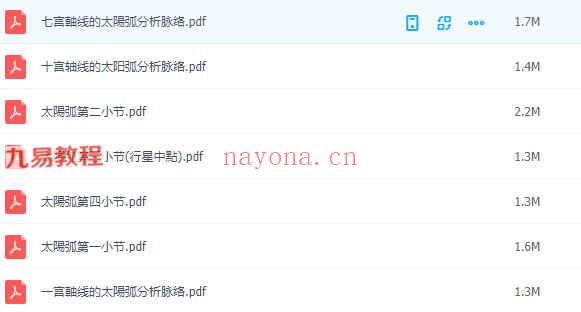
The Mango Sister listing identifies an advanced classical astrology collection of nineteen videos and says prior astrology knowledge makes it easier to study. Its directory is concrete about format: the files are numbered recordings of Live sessions, with dates running from July twenty four through September seventeen. The filenames do not establish the year of those sessions. They also do not provide detailed subject headings. An English description should therefore preserve the advanced label and recorded session format without inventing nineteen topic specific lesson titles.
The displayed file order puts session ten before session two because the names are sorted as text. A personal index can follow the numeric session sequence instead. Keep each original filename alongside the number so that a reference remains easy to locate. The repeated recording labels describe stored video files, not a current Live program. They do not promise enrollment, interaction with the instructor, a learning group, or a professional qualification. The word professional is part of the source’s framing and should not be read as a credential issued through this listing.
Checking Readiness Through Actual Vocabulary
The source’s explicit prior knowledge note is useful when evaluating suitability. Rather than infer a formal prerequisite list, sample the material and identify the terms you can follow. If several terms are unfamiliar, make a review list and return to reliable foundational explanations before proceeding. This is an independent study approach, not an entry assessment supplied by Mango Sister. A learner may have watched another course and still need to compare conventions, because similar classical vocabulary can be used with different emphasis.
A transition notebook can separate terms you recognize, terms whose usage differs, and terms you do not yet understand. Keep the original Chinese expressions and the session reference. This prevents a familiar English translation from giving a false sense of clarity. When the same term appears again, add the new example and compare contexts. Advanced study often depends on relationships among ideas, so a glossary should explain usage rather than merely list definitions detached from the examples in which they matter.
Making a Topic Index From Unspecific Titles
Because the filenames mostly contain session numbers and dates, add a brief subject summary only after viewing. Do not take the generic source commentary as a verified allocation of subjects to the nineteen sessions. A personal index can include the main question discussed, the concepts used, and the point you want to revisit. It can also mark a session that revisits earlier material. This makes review more efficient without changing the identity of the original files or implying that a detailed public syllabus exists.
Keep session summaries concise enough to scan later. A useful entry might identify a definition, a worked explanation, and an unresolved question. Those categories are your own learning aid, not promised course components. If a session includes a digression that clarifies an earlier term, link it in the glossary. Do not silently merge explanations from several sessions into a single rule unless the material actually supports the connection. Preserving context is especially important in recorded discussions that may develop an idea over time.
Follow Reasoning Rather Than Only Conclusions
When an explanation becomes complex, record the chart observations selected, the rule or convention applied, and the conclusion offered. Leave an uncertain step marked for review. A confident final statement can conceal a link you have not understood. The purpose of an advanced notebook is to make those links visible. It should not become a collection of dramatic claims detached from their reasoning. If you paraphrase into English, preserve any words that indicate possibility, attribution, or a limitation.
An independent exercise is to rewrite one explanation in plain language using only the steps you can trace. Then compare it with the recording. If you supplied an assumption that the teacher did not state, remove it or label it as yours. This can reveal a translation gap as well as a conceptual one. It also helps keep evaluative chart language from becoming an ordinary judgment about a person’s worth, motives, or future. A technical label should remain tied to its role within the method.
Studying Recorded Examples Carefully
If a session includes a chart example, document the question and the contextual information provided before the interpretation. Put later outcomes or comments in a separate section. This avoids hindsight when reviewing the account. If input details are not supplied, record that you are studying the chart shown rather than reconstructing it as though every setting were known. A case can demonstrate an interpretive approach without proving that the same approach answers every similar question reliably.
Compare examples only after comparing their questions. A difference in outcome may reflect a different context or a different convention. Preserve mismatches and unresolved points alongside the parts that appear coherent. Symbolic interpretations cannot verify another person’s intentions or substitute for real information about health, work, money, or relationships. The resource can be studied for the way it develops an explanation while those practical boundaries remain clear.
Professional Framing and Communication
The source title uses a professional course frame, but the directory does not establish a separate consultation skills syllabus or a qualification process. If communication topics appear in the recordings, index them after confirming their contents. For independent discussion, present an interpretation as an optional account that the person can question or reject. A reader’s confidence does not give the account factual authority over the person’s own experience. This is a careful application principle, not a claimed additional lesson in the collection.
A Review Rhythm for the Nineteen Sessions
Work in manageable groups of numbered sessions, then review the glossary and the questions those sessions raised. This is a suggested study rhythm rather than an official schedule. At the end of each group, identify what you can explain and which connection still needs attention. Nineteen recordings describe the collection’s format, but finishing them does not guarantee mastery. A traceable index and honest questions make the material easier to revisit and help you decide whether further foundational review is needed before continuing.
The strongest supported description is an advanced Chinese language classical astrology resource with nineteen dated session recordings and an explicit note that prior knowledge helps. Detailed techniques, credentials, supplied handouts, and ongoing instructor access are not established by the filenames. Let the actual material determine your topic map. That approach preserves the resource’s identity while giving an English learner a practical way to study its vocabulary, reasoning, and interpretive limits without repeating unverified promotional promises.