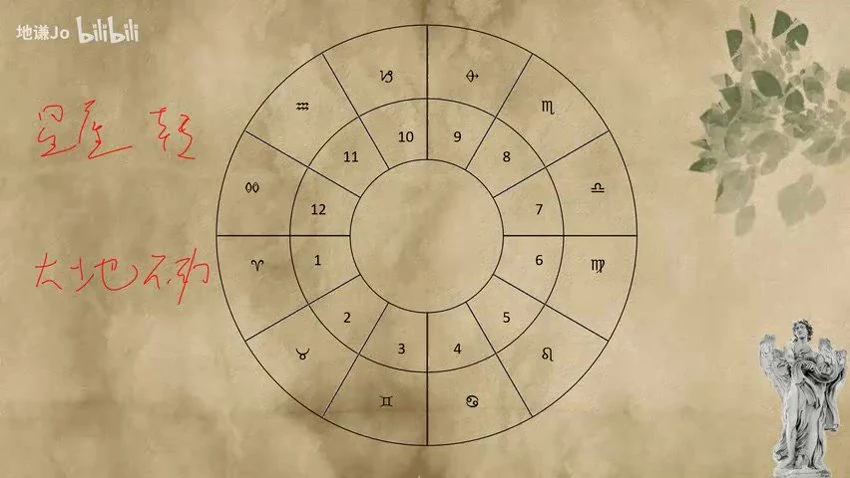
An applied classical astrology training course attributed to Guo Xiaoxian and listed as 62 videos.
Resource Overview
Guo Xiaoxian Classical Astrology Training 2.0: 62 Videos is a digital learning resource about Traditional & Classical Astrology. The English description summarizes the available source listing; the underlying recordings or books are in Chinese. An English translation of the full material is not confirmed.
What You Will Learn
Use the sequence and preview material below to identify the course’s scope, terminology and teaching approach. Check each topic against the original lesson rather than treating a short listing as a complete transcript.
Course Contents
- Classical astrology applications
- 62-video sequence
- Historical method context
Original Course Images

Who This Resource Is For
This resource is for readers or learners who can use Chinese-language materials and want a named resource on Traditional & Classical Astrology. Compare the stated scope and previews before ordering; a fixed level of prior experience is not assumed unless the source directory says so.
Learning Format and Digital Delivery
62 Chinese-language videos Virtual and downloadable; there is no physical shipment. Price: USD 9.00. A file link is not yet attached to this product. Please contact Karma Kismet before ordering to confirm delivery arrangements; immediate automated access is not promised.
Frequently Asked Questions
Is the full material in English?
No English edition, recording or subtitle track is confirmed. The source material is Chinese-language.
Is a personal consultation included?
No individual consultation is listed with this resource.
Does this resource guarantee an outcome?
No. It is for educational and cultural study, not a guaranteed result or substitute for professional advice.
Editorial Note
Karma Kismet translated and organized the course facts and original previews for English readers. Lesson counts and formats follow the available source listing; unspecified contents, certificates and instructor credentials are not asserted.
Related Courses
Browse Traditional & Classical Astrology and read digital delivery information.
A Detailed Directory for Applied Classical Study
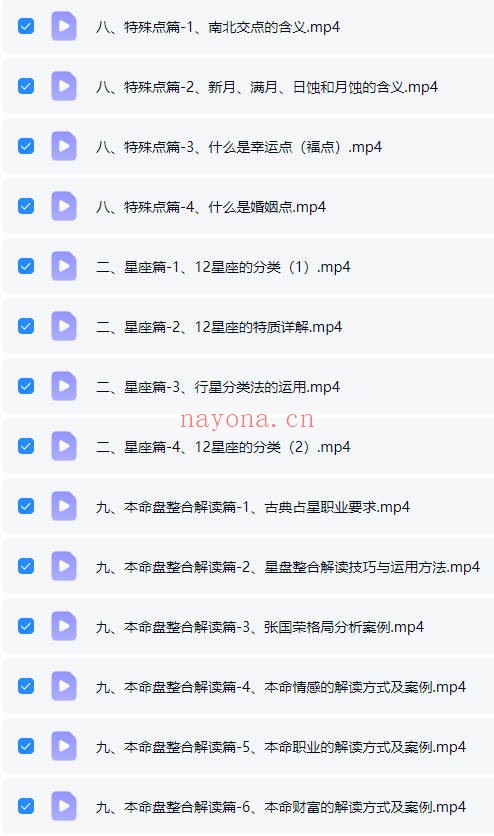
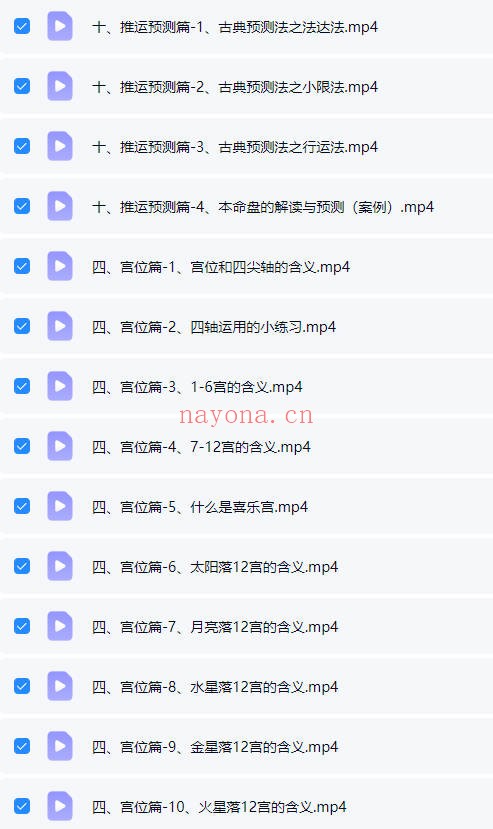
Guo Xiaoxian’s 2.0 training is listed as sixty two videos and provides a substantial topic directory. It moves through basic concepts and software, zodiac signs, planets, houses, aspects, planetary relationships, day and night charts, special points, integrated natal reading, and timing methods. This outline comes from actual section and file labels rather than a generic claim of completeness. The collection is described as applied training, but that description does not guarantee predictive accuracy, professional competence, or a fixed time in which every learner will master the material.
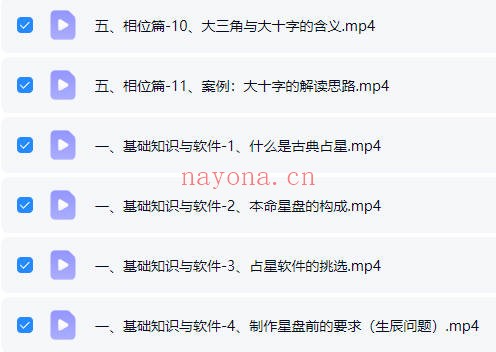
The foundation section names classical astrology, natal chart structure, software selection, and requirements concerning birth information. The sign section includes two classification files, sign characteristics, and the use of planetary classifications. These early topics provide reference points for the later sections. The directory does not identify a supplied software license or personal verification of birth details. A learner should record the setup actually demonstrated and leave missing inputs unresolved rather than assuming that the resource provides a separate technical service.
Planetary States and Practice
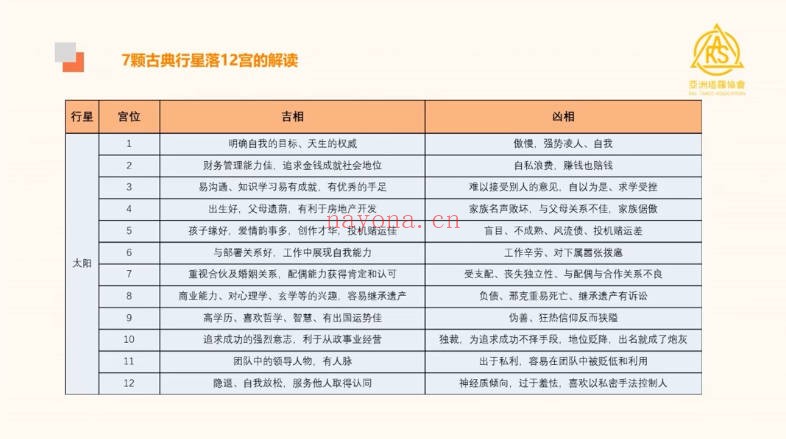
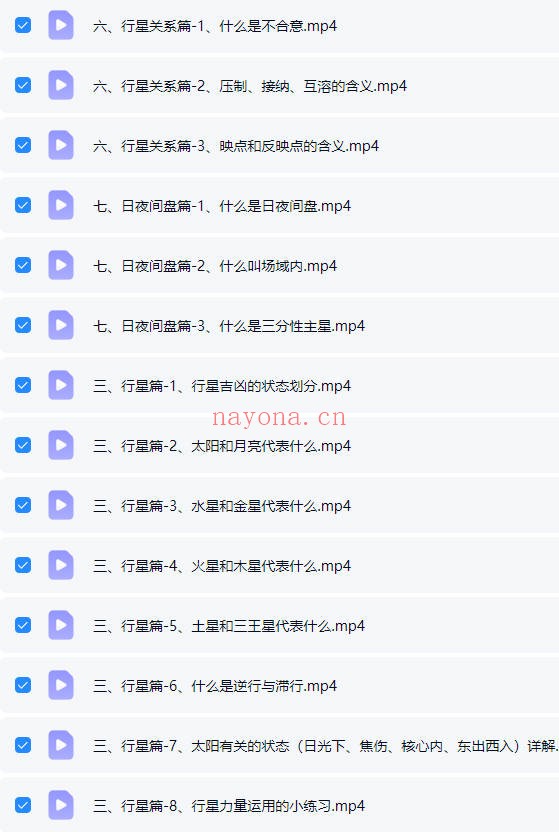
The planet section names assessments of planetary condition, paired explanations of the Sun and Moon, Mercury and Venus, and Mars and Jupiter, followed by Saturn and the outer planets. Additional files concern retrograde and stationary motion, solar related conditions, and a small planetary strength exercise. These labels support a focus on both meanings and states. They do not establish that a favorable condition guarantees success or that a difficult one determines a person’s character. Evaluative language belongs to the course’s interpretive conventions.
For English notes, keep the technical term, the criterion used, and the proposed significance separate. A word translated as strong can sound like an ordinary personal quality unless its chart specific role is explained. When working with the named exercise, preserve the instructions actually supplied. If you develop an additional exercise independently, label it as your own. This allows active study without attributing invented assignments or a particular assessment process to the course.
The House Section’s Specific Scope
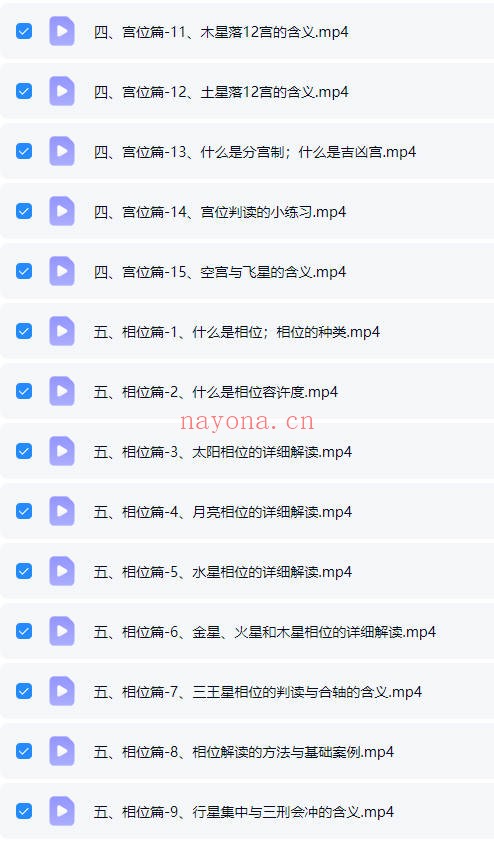
The house section names houses and four angles, an angle exercise, houses one through six and seven through twelve, planetary joys, and separate files for seven planets through the twelve houses. It also names house division systems, evaluative house terminology, a house interpretation exercise, and empty houses with flying star style relationships. This is a detailed directory supported scope. The phrase empty house should be studied through the actual explanation, not turned into a claim that a life area is absent or unimportant.
A personal index can link each house topic to the planet section where related vocabulary was introduced. Record the framework used before writing a whole chart interpretation. If another course uses a different convention, keep the comparison separate. The same English label may conceal a difference in usage. A traceable note with the original Chinese wording and an example is more useful than a compressed keyword list, particularly where a technical term could be mistaken for a statement about real life certainty.
Aspects and Named Patterns
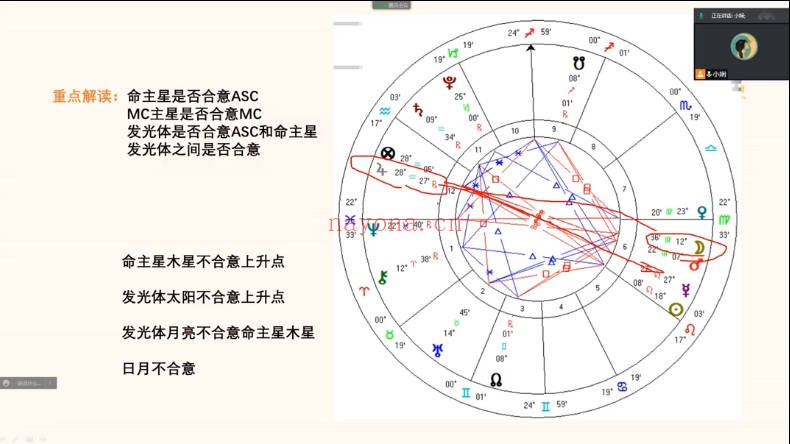
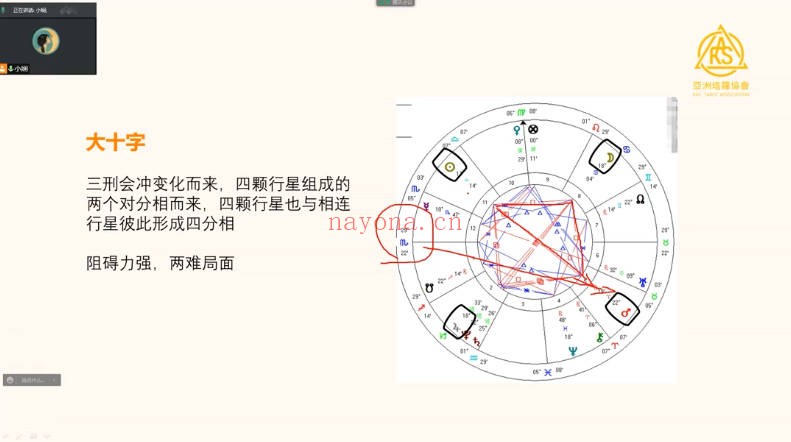
The aspects section includes types of aspects, allowable distance or orb, detailed readings of several planets’ aspects, outer planet aspects and angle conjunctions, interpretation methods with basic cases, concentrated planets, a T square related label, grand trines, grand crosses, and a grand cross case. These actual entries establish that both individual relationships and larger patterns are discussed. They do not justify inventing a particular meaning for every pattern from the directory alone. The definitions and their applications should be recorded from the lessons.
When studying a pattern case, describe the configuration first, then record the meaning proposed in its context. Note any conditions or exceptions supplied. A visually striking pattern does not automatically explain every feature of a person’s life. If the lesson addresses a specific subject, preserve that subject rather than expanding the conclusion into a universal personality account. This approach keeps the directory’s detailed pattern focus useful while avoiding the source commentary’s stronger promises of precise life outcomes.
Planetary Relationships and Sect
The planetary relationship files name aversion, suppression or overcoming related language, reception, mutual reception, and antiscia with counter antiscia. Some translations should remain provisional until the recording clarifies its terminology. The day and night chart section names that distinction, an in field concept, and triplicity rulers. Preserve the original expressions when a direct English equivalent is uncertain. A familiar classical term can be a helpful starting translation, but its exact role in this course should be established through usage.
Build a comparison page showing how these concepts modify an earlier interpretation, if the lessons provide such an example. This helps reveal whether the new idea changes the selection of a factor, the weighting of a relationship, or the final wording. Do not add a connection solely because it would make the summary more elegant. An honest gap is a useful review target. The aim is to understand the method presented, not to create an apparently seamless doctrine from several brief filenames.
Special Points and Integrated Natal Examples
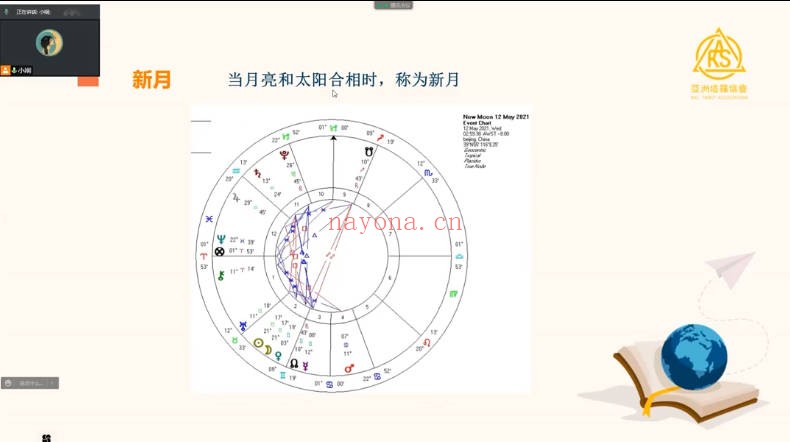
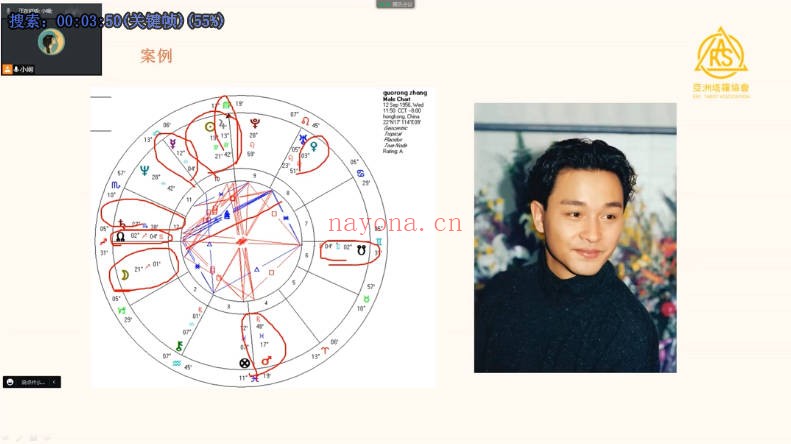
The special point section names lunar nodes, new and full moons with eclipses, the Part of Fortune, and a marriage related point. The integrated reading section then names professional requirements, interpretation techniques, a named public figure case, and examples concerning relationships, occupation, and wealth. These labels show the collection’s broad applications. They do not establish a professional credential or a guarantee that a symbolic point identifies a marriage, an income, or another event.
Study an integrated example by separating known biographical information from chart interpretation. If an outcome is already known, preserve that fact in the notes so that the explanation is not mistaken for a prediction made beforehand. A case about a public figure can illustrate a method without proving a general claim about everyone with a similar configuration. Your own summary should retain qualifications and identify where the explanation relies on context supplied outside the chart.
The Three Named Timing Approaches
The final section names firdaria, annual profections, transits, and a combined natal and forecasting case. These are the concrete timing subjects in the visible directory. The broader source claims about precise event prediction are not treated as verified results. Record the setup, the interpretive reasoning, and any proposed period separately. A timing technique can be studied as part of a traditional framework while practical decisions remain connected to information that can be checked outside astrology.
A final study map can follow the ten named sections and link definitions to later applications. This organization uses the supplied directory without inventing a workbook, a certificate, or individual feedback. Sixty two listed videos describe the scale of the resource. A learner’s understanding depends on language, careful review, and the ability to trace the steps of an explanation. The most useful notes preserve both the method and its uncertainties, making the collection easier to revisit without turning interpretive conventions into guaranteed facts.