Explore the Life Palace, Body Palace and Twelve Palaces in a 56-lesson course that connects major stars, supporting stars and palace interpretation.
Course Overview
This English study page organizes a substantial Chinese-language Zi Wei Dou Shu curriculum for international learners. It preserves the supplied course scope while adding clear learning context, terminology and navigation. Zi Wei Dou Shu is presented as a traditional Chinese metaphysical system for cultural and educational study, not as a guaranteed prediction of events.
What You Will Learn
- Life Palace and Body Palace foundations
- Fourteen major stars in the Life Palace
- Migration, Fortune, Wealth and Career Palaces
- Three Directions and Four Alignments, empty palaces and transformations
Curriculum Structure
The material progresses from definitions and chart structure to applied interpretation. Use the modules in sequence, keep a glossary of Chinese terms, and test each principle against the worked examples supplied in the course.
- Module 1: Life Palace and Body Palace foundations. Review the relevant chart components, record the interpretive rules and compare their application across examples.
- Module 2: Fourteen major stars in the Life Palace. Review the relevant chart components, record the interpretive rules and compare their application across examples.
- Module 3: Migration, Fortune, Wealth and Career Palaces. Review the relevant chart components, record the interpretive rules and compare their application across examples.
- Module 4: Three Directions and Four Alignments, empty palaces and transformations. Review the relevant chart components, record the interpretive rules and compare their application across examples.
Original Course Preview Images
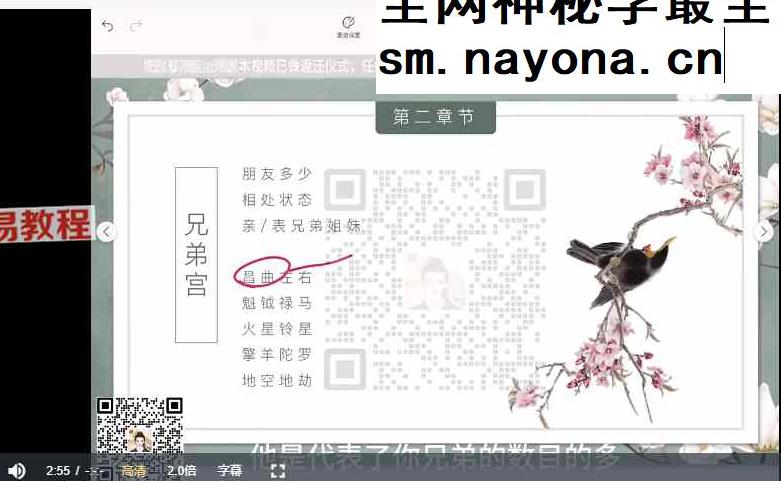
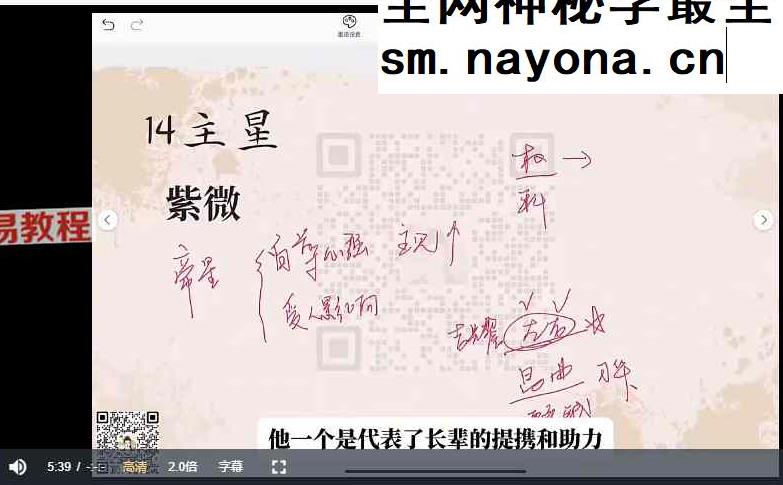
These supplied previews show the organization and visual materials included with the course listing.
Who This Course Is For
- Adult learners building a structured foundation in Zi Wei Dou Shu
- Students comparing traditional Chinese chart-reading methods
- Practitioners who want an organized reference for revision and case study
- Researchers studying Chinese metaphysics, terminology and teaching systems
Language, Format and Digital Delivery
This product page and study guide are written in English. The underlying lessons or documents may be in Chinese, so learners should review the curriculum before purchase. This is a virtual, downloadable educational product; no physical item is shipped. Access details are handled through the product delivery area.
How to Study the Material
Begin by learning the palace and star vocabulary, then map each rule to a sample chart. Separate natal structure from decade and annual timing, and document the evidence for every interpretation. Advanced students should compare multiple schools rather than treating one formula as universal.
Frequently Asked Questions
Is this a physical product?
No. It is a virtual and downloadable study product.
Is the underlying course in English?
The sales guide is in English; source lessons and files may use Chinese-language instruction.
Does the course guarantee future outcomes?
No. Zi Wei Dou Shu is presented for traditional, cultural and educational study. Interpretations are not guarantees and should not replace medical, legal, financial or psychological advice.
Can beginners use it?
Refer to the course title and curriculum level. Beginners should start with foundations and chart setup before advanced transformations, timing or professional case work.
Related Zi Wei Dou Shu Courses
- Zi Wei Dou Shu Beginner Practical Course: 30 Video Lessons
- Zi Wei Dou Shu Chart Calculation and Setup Course
- Zi Wei Dou Shu Practical Chart Reading Masterclass
- Zi Wei Dou Shu Twelve Palaces Study Course
- Northern School Flying Palace and Four Transformations Course
Browse the complete Life Palace & Twelve Palaces Courses collection or contact Karma Kismet with a course question.
Editorial Note
Karma Kismet translated, organized and expanded the supplied curriculum information for English-speaking learners. Traditional terms are retained where a single standardized translation would lose meaning. The page describes the educational package without promising a particular personal result.
Reading context and study practice
The fifty-six-recording directory includes Life and Body Palaces, major stars, supporting categories, Four Transformations, individual palace topics, and lessons linking palaces together. This structure supports a study path that moves from components to relationships. Avoid treating an isolated Life Palace statement as the whole meaning of a chart.
Major stars in the Life Palace
Three named recordings address fourteen major stars in the Life Palace. Keep the star description and the palace context together in your notes. A statement made specifically about placement in the Life Palace should not automatically be transferred elsewhere. The task is to understand contextual interpretation, not to fix a person’s identity according to a star label.
Life and Body distinctions
The directory separately identifies a Life Palace and Body Palace lesson. Use it to clarify their roles before combining them. If the terminology resembles personality or behavior language, retain the traditional framing. Neither label is a psychological assessment, and the distinction should not be used to claim access to someone’s private motives or bodily condition.
Three Directions and Four Alignments
The file list explicitly names this relational topic together with empty palaces. Draw the positions used in a demonstrated example. An empty palace remains part of the chart structure; it should not be interpreted literally as an absence of a life area. Follow the taught relational procedure rather than inventing a substitute star or filling the diagram by intuition.
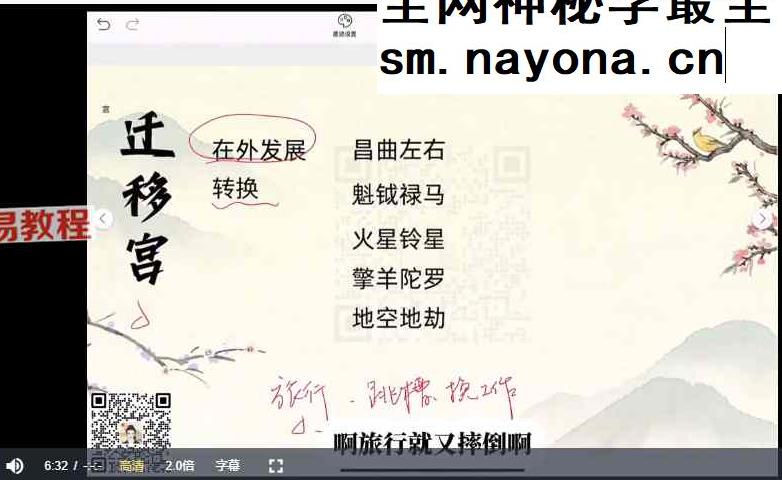
Migration and Fortune topics
The source includes Migration and Fortune Palace lessons before Wealth and Career. Preserve the differences among those topics. An interpretation about surroundings or a subjective theme is not automatically an instruction to relocate or make a financial change. When reviewing a case, specify which topic is being discussed instead of merging several palace labels into a broad promise.
Wealth and Career comparisons
Wealth and Career receive distinct named lessons. Compare what information the course uses for each topic and whether a later example links them. A symbolic statement about resources differs from verified income, debt, work qualifications, or job opportunities. Real decisions require those ordinary facts regardless of how the chart themes are described.
Linked palaces
The directory includes two lessons on connecting palaces. For an exercise, preserve the order in which the material moves from one topic to another. Write the reason for each connection. If the link is unclear, leave a question in the notes rather than borrowing a rule from another course. Structural clarity is more useful than a dramatic but untraceable conclusion.
A pathway through the named palace lessons
The directory moves from Life and Body Palaces to Migration, Fortune, Wealth, Career, Spouse, Property, Children, Parents, Health, Siblings, and a social-relationship palace topic. Use that order to build a subject map. An English palace label may have several translations, so keep the Chinese term beside it when available. The map should identify the lesson where a topic is introduced and the rule used to connect it with other topics. This avoids treating a chart as twelve unrelated predictions. It also prevents the learner from importing an everyday meaning that the course does not actually assign to a technical palace name.
Empty palaces as a structural question
The named empty-palace topic invites a specific procedural question: how does this course interpret a position without a major star of the type being considered? Look for the answer in the recording rather than supplying a general rule from memory. Supporting symbols, relational positions, or another stated convention may be discussed, but their use must be verified in the actual example. An empty position does not mean an empty life. The useful study outcome is being able to describe the method’s response to that chart condition while recognizing that it remains a symbolic interpretive procedure.
Auxiliary categories in context
The source groups several supporting categories in the early lessons and separately names miscellaneous stars. Record the categories as the course presents them, including qualifications. Avoid assuming that a symbol with a challenging label has the same meaning in every palace. The context of an example may change what the author emphasizes. A clear note can identify the category, the placement, and the associated theme without declaring that the person is unlucky or dangerous. This also helps keep technical vocabulary from acquiring an unintended moral meaning when translated into English.
Palace links and one question
For a linked-palace example, state the question before following the connections. If the example examines work, show how the course relates the career topic to other positions and why. Do not use the same chain to answer a relationship question unless the material demonstrates that use. A link is part of a reasoning process, not a license to make claims about every life area. You can compare two linking examples by tracing their routes and noting their different questions. This produces an educational comparison that is specific enough to review and modest enough to avoid invented applications.
Sensitive palace names
Some palace titles refer to family, partnership, health, and resources. Their symbolic discussions can be emotionally powerful even when presented for cultural study. Keep language neutral and avoid telling a chart subject that a relationship is doomed, a family member has a hidden motive, or an illness is indicated. Those are factual or clinical claims that a symbolic diagram cannot establish. When summarizing a lesson, describe what the tradition associates with a configuration and distinguish that association from the person’s actual experience. The fifty-six-recording listing supports study of the named system; it does not replace professional advice or direct personal knowledge.