Develop a practical chart-reading workflow through 25 recorded lessons combining San He, Four Transformations and Flying Star methods with applied examples.
Course Overview
This English study page organizes a substantial Chinese-language Zi Wei Dou Shu curriculum for international learners. It preserves the supplied course scope while adding clear learning context, terminology and navigation. Zi Wei Dou Shu is presented as a traditional Chinese metaphysical system for cultural and educational study, not as a guaranteed prediction of events.
What You Will Learn
- A repeatable sequence for reading a complete natal chart
- San He, Four Transformations and Flying Star perspectives
- Interpreting stars, palaces and dynamic relationships together
- Worked chart examples and integrated judgment
Curriculum Structure
The material progresses from definitions and chart structure to applied interpretation. Use the modules in sequence, keep a glossary of Chinese terms, and test each principle against the worked examples supplied in the course.
- Module 1: A repeatable sequence for reading a complete natal chart. Review the relevant chart components, record the interpretive rules and compare their application across examples.
- Module 2: San He, Four Transformations and Flying Star perspectives. Review the relevant chart components, record the interpretive rules and compare their application across examples.
- Module 3: Interpreting stars, palaces and dynamic relationships together. Review the relevant chart components, record the interpretive rules and compare their application across examples.
- Module 4: Worked chart examples and integrated judgment. Review the relevant chart components, record the interpretive rules and compare their application across examples.
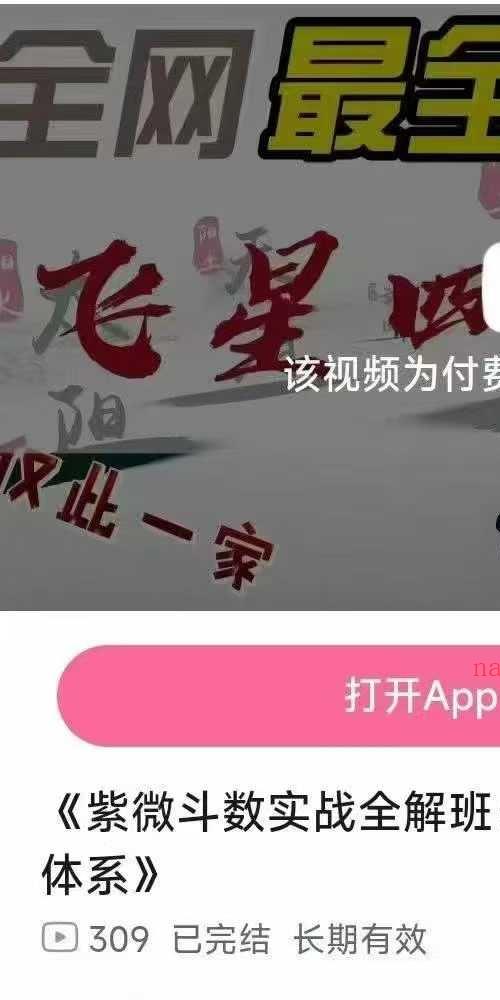
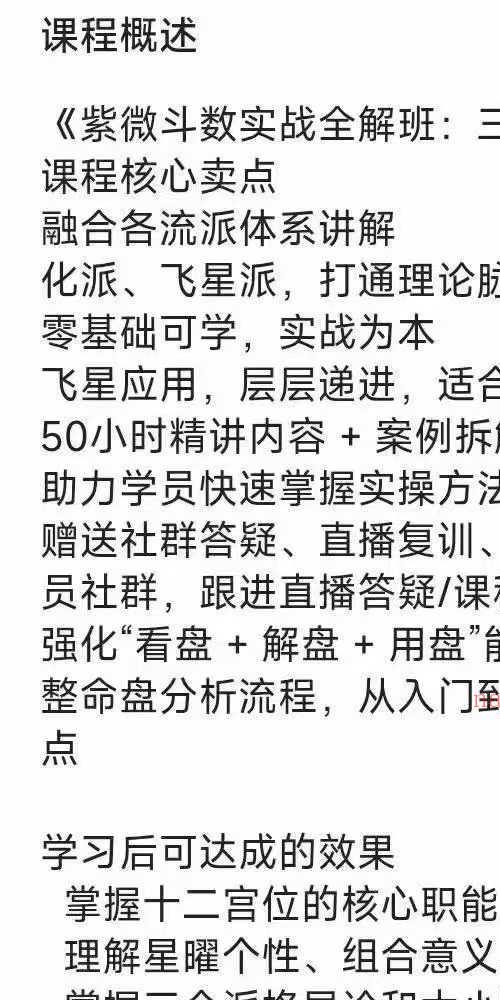
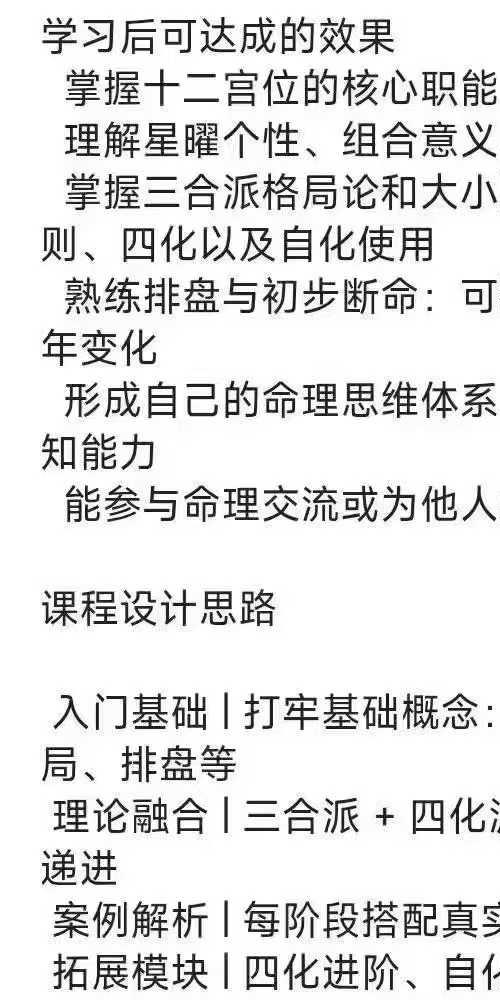
Original Course Preview Images
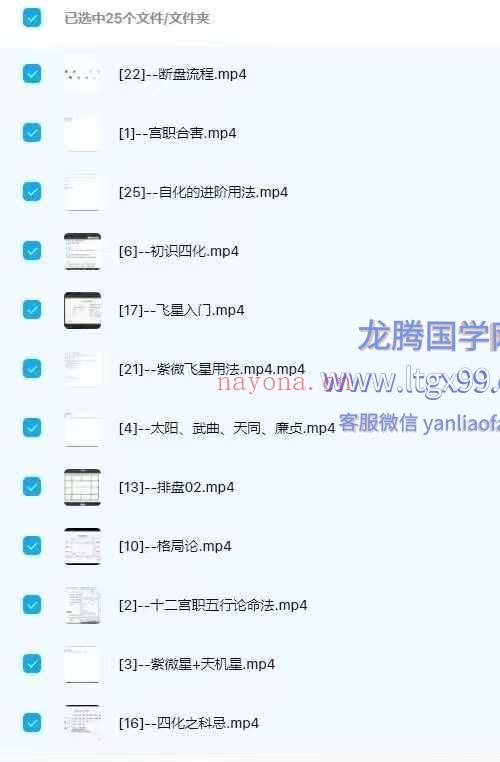
These supplied previews show the organization and visual materials included with the course listing.
Who This Course Is For
- Adult learners building a structured foundation in Zi Wei Dou Shu
- Students comparing traditional Chinese chart-reading methods
- Practitioners who want an organized reference for revision and case study
- Researchers studying Chinese metaphysics, terminology and teaching systems
Language, Format and Digital Delivery
This product page and study guide are written in English. The underlying lessons or documents may be in Chinese, so learners should review the curriculum before purchase. This is a virtual, downloadable educational product; no physical item is shipped. Access details are handled through the product delivery area.
How to Study the Material
Begin by learning the palace and star vocabulary, then map each rule to a sample chart. Separate natal structure from decade and annual timing, and document the evidence for every interpretation. Advanced students should compare multiple schools rather than treating one formula as universal.
Frequently Asked Questions
Is this a physical product?
No. It is a virtual and downloadable study product.
Is the underlying course in English?
The sales guide is in English; source lessons and files may use Chinese-language instruction.
Does the course guarantee future outcomes?
No. Zi Wei Dou Shu is presented for traditional, cultural and educational study. Interpretations are not guarantees and should not replace medical, legal, financial or psychological advice.
Can beginners use it?
Refer to the course title and curriculum level. Beginners should start with foundations and chart setup before advanced transformations, timing or professional case work.
Related Zi Wei Dou Shu Courses
- Zi Wei Dou Shu Beginner Practical Course: 30 Video Lessons
- Zi Wei Dou Shu Chart Calculation and Setup Course
- Zi Wei Dou Shu Twelve Palaces Study Course
- Life Palace, Body Palace and Twelve Palaces Course
- Northern School Flying Palace and Four Transformations Course
Browse the complete Zi Wei Chart Reading Courses collection or contact Karma Kismet with a course question.
Editorial Note
Karma Kismet translated, organized and expanded the supplied curriculum information for English-speaking learners. Traditional terms are retained where a single standardized translation would lose meaning. The page describes the educational package without promising a particular personal result.
Reading context and study practice
This twenty-five-recording listing presents an integrated approach involving San He, Four Transformations, and Flying Star perspectives. Integration requires knowing which rule contributes to a particular sentence. A clear chart-reading workflow can preserve these distinctions even when the material brings them together in a single example.
Separate method notes
Create one working page for each named perspective before combining interpretations. Record its input, its characteristic relationships, and the way the lesson uses them. This makes it possible to recognize a method switch. Similar terminology across schools is not proof that the procedures are identical or that every interpretation can be merged without qualification.
Palace roles first
The supplied description starts with palace roles before discussing advanced transformation work. Establish the topic being examined and the diagram positions involved. An interpretation that changes from a personal theme to a relationship theme should explain that change. The palace label provides a frame for the example, not independently verified information about the person’s actual circumstances.
San He relationships
Study the San He relationships as drawn in the course, keeping the linked positions visible. Do not reconstruct them from a vague notion of nearby palaces. A useful exercise is to trace the relationship in the example and explain why those positions are grouped. That demonstrates structural understanding without asserting that the grouping determines an outcome.
Four Transformations
When a transformation is introduced, note its trigger and the star or palace relation being discussed. Keep the four categories distinct. A transformation term may acquire a particular emphasis in this integrated presentation; retain that explanation with its context rather than replacing it with a simplified keyword borrowed from another author.
Flying Star sequence
For a Flying Star example, follow the sequence step by step and retain the origin and destination stated in the lesson. A finished summary can hide which link was considered first. Your reconstruction should show the route used by the author and identify where interpretation begins, allowing a later reviewer to distinguish tracing errors from interpretive differences.
Integrated conclusions
Write a combined conclusion only after the contributing perspectives have been explained. If they suggest different symbolic themes, report the difference. Avoid resolving it by choosing whichever sentence best matches a known biography. A measured synthesis acknowledges its assumptions and remains an educational interpretation rather than a forecast about career, marriage, or a particular year.
An integration table
For a single worked example, make three columns headed San He, Four Transformations, and Flying Star. Enter only the observations the material actually makes under each perspective. Leave a cell blank if that perspective is not used. Below the table, write the integrated explanation and identify which observations support each sentence. This exposes the structure of the synthesis. It also prevents a learner from manufacturing agreement among methods by repeatedly restating one idea under different headings. Integration can be intellectually useful when the steps remain distinct, but agreement of symbolic descriptions is not independent evidence of a real-world outcome.
What to do when perspectives differ
If one perspective emphasizes stability while another emphasizes change, first ask whether they address the same topic and time layer. They may be describing different parts of the example. If the difference remains, preserve it in your notes. Do not resolve it merely by selecting the statement that sounds closest to a known biography. That would obscure the actual reasoning. A measured synthesis can say that the method offers several symbolic emphases and explain their contexts. It need not produce a single dramatic prediction. Learning to handle unresolved differences is part of understanding a combined interpretive framework.
Keeping a route visible
A flying relation is easier to follow when its route is drawn rather than compressed into a final phrase. Label the starting position, the rule used to initiate the relation, the destination, and the life topic discussed. If the lesson introduces another step, add it separately. Do not draw an extra arrow because it would make the narrative more satisfying. A route diagram helps a reader distinguish what the method actually instructs from what the learner has inferred. When a conclusion is uncertain, the diagram can still be a useful record of the procedure shown in the recording.
One example, more than one question
The same chart example can be discussed under several questions, but the course’s answer to one question should not automatically become its answer to another. A structural observation about palace relationships may be used differently in a career discussion and a relationship discussion. Write the actual question at the top of your case page. If the integrated explanation changes topic, show where and why. This makes it easier to assess whether the source’s reasoning is being represented accurately. It also discourages the tendency to make every symbolic feature account for every part of a person’s life.
Evaluating a synthesis as writing
Review an integrated summary for clear references, consistent terms, and realistic scope. A sentence should identify its subject rather than relying on unexplained expressions such as this energy or that pattern. Remove factual assertions that the chart cannot establish, including statements about another person’s motives, guaranteed events, or professional outcomes. What remains can still be a thoughtful explanation of traditional interpretation. The twenty-five-recording format and the source’s description of combined methods provide a study context; they do not confer a credential or establish predictive reliability. A clear synthesis is one that another learner can question constructively.