Learn BaZi Ten Gods with this 70-lesson Blind School foundations course. Covers Yin-Yang, Five Elements, stems, branches, and symbolic analysis. Digital study.
Course Overview
This 70-lesson digital course offers a structured introduction to the Blind School (Mang Pai) BaZi system, designed for complete beginners. It builds a step-by-step knowledge ladder from foundational concepts of Yin-Yang and the Five Elements through to the Ten Gods system and symbolic analysis. The course dedicates nearly 20 lessons to Heavenly Stems and Earthly Branches, covering their relationships, hidden stems, and states. It then explains the Four Pillars palaces and the Ten Gods, with dedicated lessons on each god's meaning, configuration, and combinations. Later lessons introduce Blind School-specific symbols such as Lu, Yang Ren, Tomb Storehouses, and Kui Gang, and explore core judgment logic including body strength, true/false Ten Gods, and wealth-officer configurations. The course concludes with thematic topics like marriage timing, divorce indications, and opening the wealth storehouse, ending with a comprehensive overview of BaZi reading steps. This is a patient, detailed foundation course for cultural and educational study.
What You Will Learn
- Understand Yin-Yang and the Five Elements, including their generating, overcoming, multiplying, and insulting relationships.
- Identify the Heavenly Stems and Earthly Branches, their attributes, combinations, clashes, punishments, and hidden stems.
- Explain the Four Pillars palaces and their connections to family relations and life areas.
- Describe the Ten Gods system, including each god's meaning, imagery, and interactions.
- Analyze Ten Gods configurations for wealth, officer, seal, output, and peer stars.
- Recognize Blind School symbols such as Lu, Yang Ren, Tomb Storehouses, and Kui Gang.
- Apply symbolic judgment logic for body strength, Ten Gods truth/falsity, and wealth-officer relationships.
Course Contents
- Lesson 01: Yin and Yang
- Lesson 02: Five Elements Generating and Overcoming
- Lesson 03: Characteristics of the Five Elements
- Lesson 04: Five Elements Overacting
- Lesson 05: Five Elements Insulting and Yin-Yang of the Ten Heavenly Stems
- Lesson 06: Imagery of the Ten Heavenly Stems
- Lesson 07: Colors, Directions, Five Constants, and Five Flavors of the Ten Heavenly Stems
- Lesson 08: Void and Solid of the Ten Heavenly Stems and Five Combinations
- Lesson 09: Phenomena Produced by the Ten Heavenly Stems
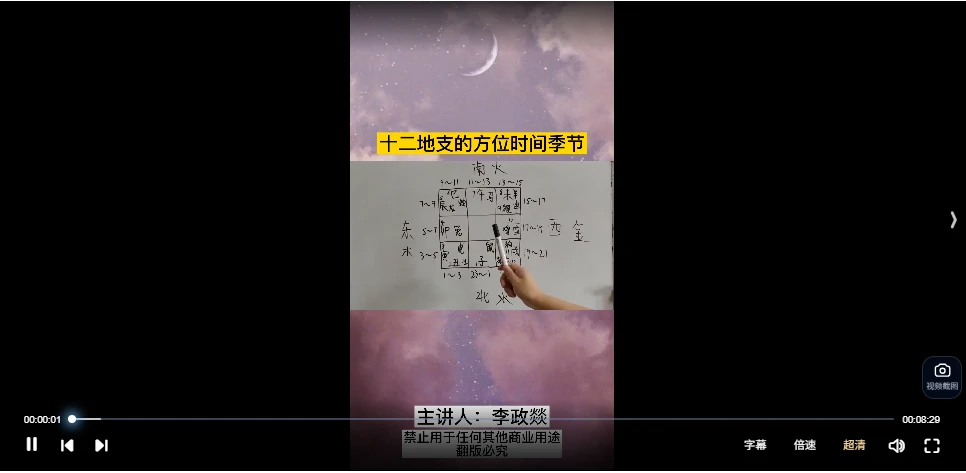
- Lesson 10: Directions, Time, and Seasons of the Twelve Earthly Branches
- Lesson 11: Analysis of Three Meeting Combinations
- Lesson 12: Twelve States of the Heavenly Stems
- Lesson 13: Detailed Explanation of the Twelve States
- Lesson 14: Three Harmony and Three Meeting Combinations
- Lesson 15: Half Combinations of Birth and Tomb
- Lesson 16: Six Combinations of Earthly Branches
- Lesson 17: Six Clashes of Earthly Branches
- Lesson 18: Six Penetrations of Earthly Branches
- Lesson 19: Mutual Destruction of Earthly Branches
- Lesson 20: Hidden Stems of Earthly Branches (Part 1)
- Lesson 21: Hidden Stems of Earthly Branches (Part 2)
- Lesson 22: Hidden Combinations of Earthly Branches
- Lesson 23: Nine Self-Combinations of Stems and Branches
- Lesson 24: How to Quickly Find Personal Birth Year
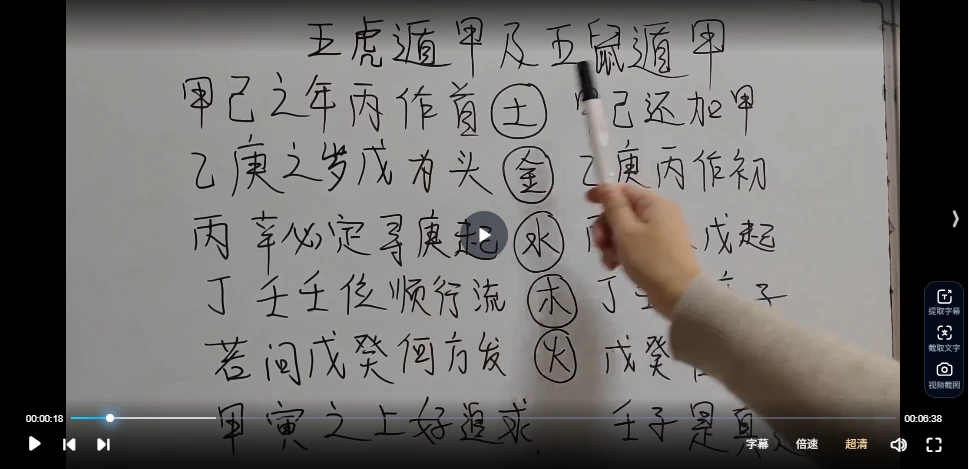
- Lesson 25: Five Tiger Escape and Five Rat Escape Methods
- Lesson 26: Four Pillars Palaces and Distance
- Lesson 27: Four Pillars Palaces and Six Relations
- Lesson 28: Meaning of the Ten Gods
- Lesson 29: Generating Relationships Among the Ten Gods
- Lesson 30: Overcoming Relationships Among the Ten Gods
- Lesson 31: Imagery of Direct and Indirect Wealth
- Lesson 32: Concept of Eating God
- Lesson 33: Characteristics of Hurting Officer
- Lesson 34: Concept of Direct Officer
- Lesson 35: Concept of Seven Killings
- Lesson 36: Concept of Direct Seal
- Lesson 37: Characteristics of Owl God
- Lesson 38: Concept of Parallel
- Lesson 39: Concept of Rob Wealth
- Lesson 40: Configuration of Direct Officer
- Lesson 41: Configuration of Seven Killings
- Lesson 42: Configuration of Wealth
- Lesson 43: Configuration of Eating God
- Lesson 44: Configuration of Hurting Officer
- Lesson 45: Configuration of Direct Seal
- Lesson 46: Configuration of Owl God
- Lesson 47: Configuration of Parallel and Rob Wealth
- Lesson 48: Concept of Lu
- Lesson 49: Concept of Yang Ren
- Lesson 50: Meaning of the Four Tomb Storehouses
- Lesson 51: Three Treasures of Life
- Lesson 52: Four Central Gods and Four Corner Gods
- Lesson 53: Balance Between Body and Function
- Lesson 54: Heaven and Earth Unified Qi, Body Strength and Weakness
- Lesson 55: Meaning of the Four Kui Gang
- Lesson 56: Truth, Falsity, Void, and Solid of the Ten Gods
- Lesson 57: Wealth Controlling Officer, Officer Controlling Wealth
- Lesson 58: Conditions for Opening the Wealth Storehouse
- Lesson 59: Viewing Eating and Hurting as Wealth
- Lesson 60: Viewing Parallel and Rob Wealth Controlling Wealth
- Lesson 61: Viewing Marriage Timing
- Lesson 62: Viewing Divorce
- Lesson 63: Mixed Direct and Indirect Seal
- Lesson 64: Detailed Explanation of Owl God Snatching Food
- Lesson 65: Wealth Damaging Seal
- Lesson 66: Stem-Branch Interaction Relationships in Reading BaZi
- Lesson 67: Hidden Attraction of the Ten Gods
- Lesson 68: Hidden Overcoming of the Ten Gods
- Lesson 69: Detailed Explanation of Eating and Hurting Generating Wealth
- Lesson 70: Steps for Reading BaZi
Who This Resource Is For
This course is ideal for complete beginners with a strong interest in BaZi astrology, especially the Blind School system, who feel overwhelmed by scattered information. It suits learners who prefer a patient, step-by-step approach and want to build a solid, systematic foundation from zero. It is also suitable for those who wish to study BaZi as a cultural, historical, and symbolic discipline rather than for predictive purposes. No prior knowledge of Yin-Yang, Five Elements, Heavenly Stems, Earthly Branches, or the Ten Gods is required. The course is designed for dedicated self-study, with 70 lessons that reward consistent effort and a willingness to engage deeply with foundational theory before moving to analysis.
Learning Format and Digital Delivery
- 70 video lessons in MP4 format
- Digital download or streaming access
- Structured curriculum from beginner to intermediate foundation
- Self-paced learning with clear lesson progression
- Includes practical thematic lessons on symbolic analysis
- Concludes with a comprehensive overview of BaZi reading steps
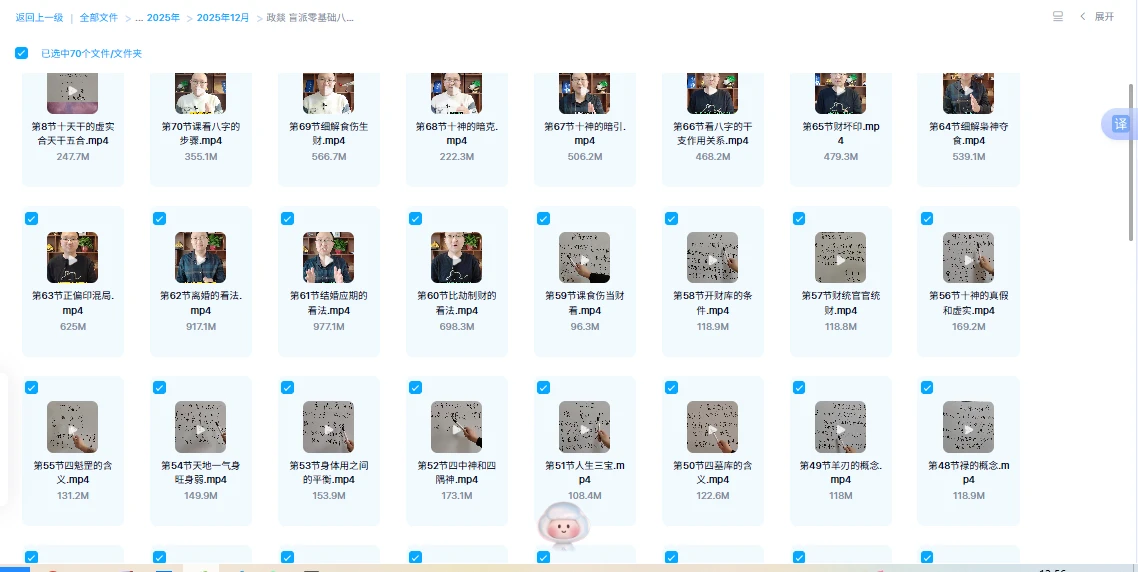
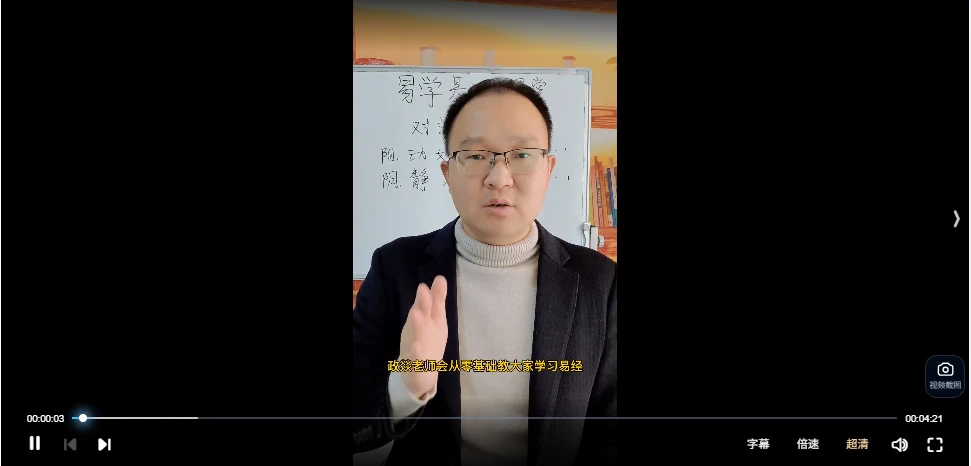
Original Course Material Images
The original course images are preserved below so learners can identify the course package and supporting materials.
Editorial Note
This English page is an educational adaptation of verified Chinese course material. Karma Kismet reorganizes the curriculum for English-language discovery while keeping BaZi within a cultural, historical and symbolic study context.
Frequently Asked Questions
Is this course suitable for complete beginners?
Yes. The course is specifically designed for zero-foundation learners. It starts with Yin-Yang and the Five Elements and builds up gradually, dedicating nearly 20 lessons to basic Heavenly Stems and Earthly Branches before moving to the Ten Gods system.
What is the Blind School (Mang Pai) approach in this course?
The Blind School is a distinct BaZi system known for its structured judgment methods. This course introduces Blind School-specific symbols such as Lu, Yang Ren, Tomb Storehouses, and Kui Gang, and explores core logic like body strength, Ten Gods truth/falsity, and wealth-officer configurations.
Does this course guarantee accurate predictions?
No. This course presents BaZi as a cultural, historical, educational, and symbolic study. It does not guarantee prediction results or life outcomes. It focuses on understanding the traditional framework and analytical methods.
How many lessons are included and what topics are covered?
The course includes 70 video lessons. Topics range from Yin-Yang and Five Elements to Heavenly Stems and Earthly Branches, Four Pillars palaces, the Ten Gods system, Blind School symbols, and thematic analysis such as marriage timing, divorce indications, and opening the wealth storehouse.
Related BaZi Courses
- BaZi From Zero Course Collection: 11 Beginner Modules
- Zhang Weiguang Daoist BaZi Practical Chart Reading Course: 320 Lessons
- Ten Heavenly Stems and Day Master Study Course
- Hu Yiming Feng Shui and BaZi Five Elements Course Collection
- Mu Yi Four Pillars BaZi Luck Pillars and Annual Flow Course
- Zheng Minsheng BaZi Marriage Compatibility Course: 20 Lessons
- Advanced BaZi Pattern, Career and Wealth Case Training Course
- Li De Advanced BaZi Practitioner Training Collection: 162 Lessons
- Zhu Yu Yi Jing, Qi Men and BaZi Course Bundle: 11 Collections
Follow the course's shift from definitions to configurations
The source inventory of this 70-lesson Blind School foundation course provides a clear distinction worth preserving in your study notes. Lessons 28 through 39 name Ten Gods meanings, generating and controlling relationships, and individual concepts. Lessons 40 through 47 then move to configurations of officer, seven killings, wealth, output, resource, and peer-related labels. This shift gives you a source-based review question: can you distinguish what a label means from how the course discusses that label in a larger arrangement?
A helpful personal exercise is to keep definition notes and configuration notes on facing pages. The first page records the relationship and terminology used by the material. The second records the conditions introduced in the configuration discussion. Do not move an interpretation from the second page into the basic definition merely because it is memorable. The course's separate topic titles suggest that vocabulary and arrangement deserve separate attention. This exercise follows that distinction without claiming an additional workbook or assessment is included with the videos.
Use palace lessons as a bridge
The inventory places Four Pillars palaces, distance, and six relations in lessons 26 and 27 before the Ten Gods sequence. When you reach the later material, return to those explanations if a reference position is unclear. A relationship label and a palace position are different kinds of information. Your notebook should show which one the teacher is discussing at each step. Keeping both visible makes it easier to reconstruct an explanation and prevents a broad family association from being treated as identical to a calculated Ten Gods relationship.
The listed course also distinguishes visible concepts from hidden relationships. Hidden stems are named in lessons 20 and 21, hidden combinations in lesson 22, and hidden attraction and controlling relationships of the Ten Gods near the end. Treat each topic according to its explanation in the videos. The occurrence of the word hidden does not license guessing information absent from an example. Copy the notation actually supplied and record the symbolic relationship as the teacher describes it, with its conditions intact.
Approach late thematic lessons with the foundation intact
Marriage timing and divorce are named topics in lessons 61 and 62. Their position late in the inventory gives you a practical reason to understand the earlier vocabulary before reading them personally. The topic titles describe traditional analytical subjects; they do not establish that the material can determine a real couple's future. Record the reasoning with attribution and avoid turning a symbolic indicator into blame. The same care applies to the lesson about opening a wealth storehouse: its terminology belongs to a traditional framework, not a guarantee of financial gain.
The final listed lesson concerns the steps for reading BaZi. After studying it, compare your own notes with that overview and mark where an earlier definition or configuration needs review. This creates a concrete use for the course's closing topic. Useful progress means being able to explain the source's sequence and reconstruct its reasoning while distinguishing notation from symbolic inference. It does not require accepting every thematic conclusion or claiming that the seventy-lesson count proves accuracy, professional recognition, or guaranteed life outcomes.