Study BaZi Ten Gods course through an English digital resource organized from the original curriculum, course record and reference images.
Course Overview
This English resource organizes the original Chinese curriculum for structured study of BaZi and Four Pillars of Destiny traditions. It presents the source material as a cultural and educational system rather than a scientific prediction or guaranteed outcome.
What You Will Learn
- Core BaZi terminology and chart-reading approaches used in the source material
- How the course connects stems, branches and Five Elements with chart interpretation
- The lesson sequence, examples and study exercises supplied in the original record
- How to distinguish symbolic interpretation from factual or scientific claims
Course Contents
Vertical Professional Course
Resource Information
Original Course Material Images
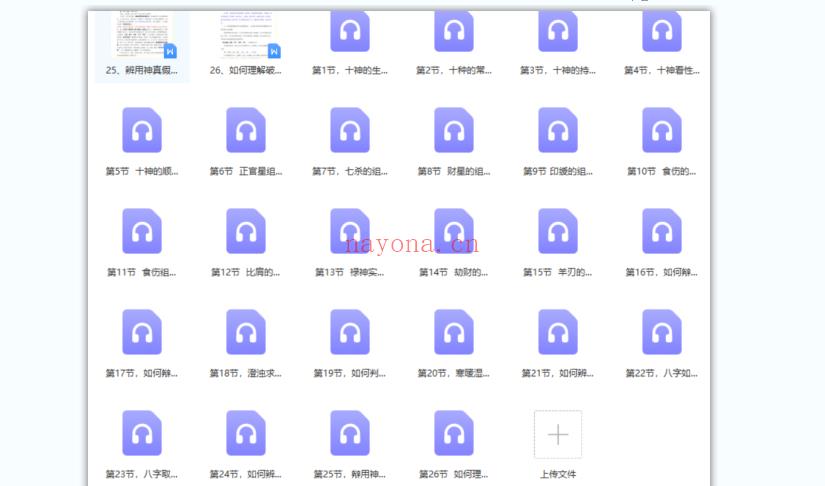
The following images are retained from the original nayona.cn course record for material identification and reference.

Who This Resource Is For
This material is suitable for adult learners exploring BaZi, Four Pillars chart reading, Chinese astrology or traditional destiny-analysis methods. Beginners should start with definitions and calculation rules before attempting interpretive exercises.
Learning Format and Digital Delivery
- Virtual digital resource; no physical shipment
- Course files and access instructions are supplied after purchase
- Lesson counts and file types follow the available source record
- Use the materials for personal study and reference
Source and Editorial Method
The curriculum facts and original material images are adapted from the source record at nayona.cn. Karma Kismet translated and reorganized the available information without inventing credentials, lesson counts or promised outcomes.
Frequently Asked Questions
Is this a physical product?
No. It is a virtual, downloadable educational resource.
Is BaZi scientifically validated?
No. BaZi is presented here as a symbolic and cultural interpretive tradition, not as scientific diagnosis or prediction.
Does this product include a personal consultation?
No, unless the product description explicitly states that a consultation is included.
Related BaZi Courses and Guides
- Xia Guangming Four Pillars BaZi Fast-Track Course
- Song Guoyuan Gan-Zhi Logic BaZi Chart Reading Course
- Wei Qianli BaZi Essentials and Day Master Study Guide
- Zhuo Hong Five Elements BaZi Study Guide
- Pan Dongguang Annual Luck BaZi Practice Guide
- Blind School BaZi Marriage Compatibility Guide
- Jiulong Career and Wealth BaZi Training Course
- Wenzeng Advanced BaZi Practitioner Training
- Fangzhou 105-Lesson Complete BaZi Course Bundle
Studying Ten Gods as relationships
Gao Dechen Ten Gods Intensive BaZi Course is categorized around the Ten Gods, a central vocabulary in traditional Four Pillars interpretation. The supplied source text contains a general resource heading but no readable lesson inventory, duration, or file specification for this particular product. Consequently, the study companion here explains how to organize Ten Gods learning without presenting an invented syllabus. It also keeps the resource distinct from unrelated courses mentioned in the source page's recommendation lists. Those recommendations do not establish the contents of Gao Dechen's course.
The expression Ten Gods can be misleading in English. In BaZi usage, it names symbolic relationships calculated relative to the Day Master, rather than ten supernatural beings a student is expected to worship. Understanding that relational function is a useful starting point. A label depends on how one stem is compared with another and on the interpretive conventions being applied. The same stem can therefore receive a different relational label when the reference Day Master changes. This dependence is essential to learning the system coherently.
Make the reference point visible
For every practice example, write the Day Master at the top of your page before identifying any Ten Gods labels. Then list the other visible stems and explain the relationship you are assigning to each. Keep the calculation separate from the symbolic meaning. A student who remembers a meaning but loses the reference point can produce a confident interpretation attached to the wrong relationship. By showing the steps, you can locate a mistake in classification without treating the entire symbolic discussion as a single indivisible statement.
Use one consistent set of English terms while retaining the Chinese terminology from the material in your glossary. Common translations of the Ten Gods vary considerably, particularly for labels that sound judgmental when translated literally. Record alternate names as alternate names. Do not assume that a different English wording necessarily describes a different relationship. Conversely, do not assume two teachers mean precisely the same thing merely because their translations match. The surrounding explanation should guide your understanding of how a label is being used.
Avoid moral meanings hidden in translations
Words such as wealth, officer, resource, and output may sound like everyday descriptions of money, employment, learning, and productivity. In a BaZi passage they first belong to a symbolic classification. A wealth label does not establish someone's bank balance. An officer label does not prove that someone holds public office. Before connecting such language to an ordinary life topic, examine the author's reasoning and qualifications. This simple distinction prevents the classification stage from being mistaken for evidence about a person's actual circumstances.
The same care applies to labels translated as robbing or hurting. Their English tone can encourage a student to judge a person before understanding the tradition's terminology. In your notes, replace moral shorthand with a neutral description of the relationship being discussed. If the material later makes a thematic interpretation, record it separately and identify it as the author's symbolic claim. Learning to explain an uncomfortable traditional term without endorsing a judgment is a valuable skill for discussing historical systems responsibly with contemporary readers.
Learn pairs without flattening their differences
A useful personal exercise is to study related labels together and ask what distinguishes them within the terminology you are reading. Write a short comparison in which the shared relationship appears first and the differentiating condition appears second. This can be more memorable than memorizing ten isolated definitions. However, the exercise should follow the definitions actually supplied by the course. If a distinction is absent or unclear, mark it as a question rather than importing a rule from another source and attributing it to this one.
Keep your comparison table small enough to review. A page crowded with personality adjectives often hides the calculation that produced them. Instead, prioritize the reference stem, the relationship, the relevant polarity convention, and the symbolic explanation given in the passage. Add an example only when you can show why it belongs there. This method makes your notebook useful for checking reasoning. It also allows you to revise a definition later without losing track of which examples were based on the earlier understanding.
Reading a Ten Gods passage in context
When you encounter an interpretation, ask which part of the chart it refers to. Is the relationship attached to a visible stem, discussed through a branch, or used as a general thematic expression? Does the passage include seasonal or positional qualifications? These questions are reading prompts, not claims about a confirmed lesson sequence. They help you avoid treating the occurrence of a label anywhere in a chart as sufficient evidence for the same conclusion. Context matters within the traditional method even when the vocabulary looks familiar.
Create a short evidence record for one passage: the exact term, the chart detail cited, the conditions named, and the author's conclusion. Then write an alternative plain English paraphrase that keeps every condition. If you cannot explain the connection without adding information, identify the missing step. It may be an assumed convention, an earlier explanation, or a genuine ambiguity. Resolving that gap is a better use of study time than collecting more interpretive phrases whose logic you cannot yet reconstruct.
Review with controlled examples
For personal practice, hold the reference Day Master constant while changing one comparison stem on paper. Identify what changes in the relational classification and what remains the same. Then reverse the exercise by holding the comparison stem constant and changing the Day Master. These are constructed learning exercises, not examples claimed to appear in Gao Dechen's material. They can help demonstrate why a Ten Gods label is relational. Keep them free of invented biographical stories so that the classification remains the thing being tested.
Once you can explain a label consistently, review how the course uses it in longer interpretations. Avoid skipping from vocabulary recall directly to reading a stranger's life. You can gain substantial familiarity through transcription, translation, and comparison alone. If examples in the supplied material include personal details, study only the information relevant to the argument and avoid circulating identifying information. A careful notebook should preserve the reasoning that interests you while respecting the difference between educational material and another person's private experience.
Choosing a realistic learning goal
The word intensive in the English product title identifies the subject emphasis; it does not, by itself, establish contact hours, an examination, or a professional qualification. Your own learning goal can be more concrete: accurately identify relationships in the examples you study, explain the terms without moral labeling, and summarize how context affects an author's interpretation. These goals can be reviewed against your notes. They do not depend on promised predictive accuracy, income, or a claim that a course title guarantees mastery.
Ten Gods study becomes more useful when vocabulary, calculation, and interpretation remain connected but distinguishable. Return to the original explanation whenever a label starts functioning as a catchall personality category in your notes. A person cannot be reduced to one symbolic relationship, and a chart label is not a substitute for direct knowledge of their circumstances. Approach the resource as an opportunity to understand a traditional analytical language, with its internal distinctions and translation challenges, while keeping practical judgments grounded in real information.