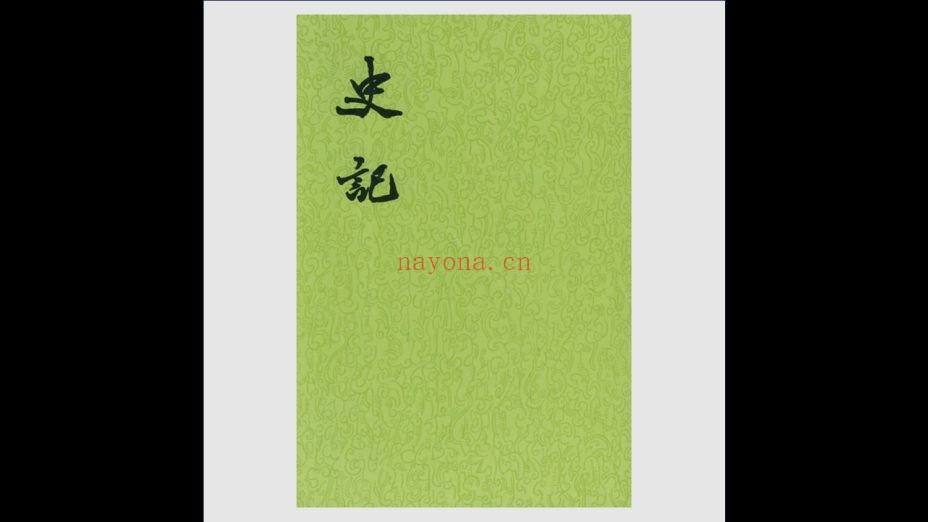
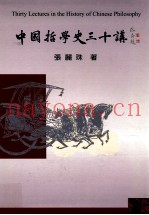
A 594-page Chinese PDF book by Zhang Lizhu, published by Liren in 2008. The thirty lectures are the written organization of the book, not a video course.
Resource Overview
History of Chinese Philosophy: Thirty Lectures (Zhang Lizhu PDF Book) is a digital learning resource about Chinese Philosophy. The English description summarizes the available source listing; the underlying recordings or books are in Chinese. An English translation of the full material is not confirmed.
What You Will Learn
Use the sequence and preview material below to identify the course’s scope, terminology and teaching approach. Check each topic against the original lesson rather than treating a short listing as a complete transcript.
Course Contents
- Chinese philosophy
- Historical organization of philosophical debates
- Thirty written lectures in one PDF book
Original Course Images
Who This Resource Is For
This resource is for readers or learners who can use Chinese-language materials and want a named resource on Chinese Philosophy. Compare the stated scope and previews before ordering; a fixed level of prior experience is not assumed unless the source directory says so.
Learning Format and Digital Delivery
Chinese-language PDF book; 594 pages; Liren, 2008. Virtual and downloadable; there is no physical shipment. Price: USD 9.00. A file link is not yet attached to this product. Please contact Karma Kismet before ordering to confirm delivery arrangements; immediate automated access is not promised.
Frequently Asked Questions
Is the full material in English?
No English edition, recording or subtitle track is confirmed. The source material is Chinese-language.
Is a personal consultation included?
No individual consultation is listed with this resource.
Does this resource guarantee an outcome?
No. It is for educational and cultural study, not a guaranteed result or substitute for professional advice.
Editorial Note
Karma Kismet translated and organized the course facts and original previews for English readers. Lesson counts and formats follow the available source listing; unspecified contents, certificates and instructor credentials are not asserted.
Related Courses
Browse Chinese Philosophy and read digital delivery information.
Thirty lectures as a written history of philosophy
The source identifies Zhang Lizhu’s History of Chinese Philosophy: Thirty Lectures (Zhang Lizhu PDF Book) as a Chinese PDF book published by Liren in 2008, with 594 pages and ISBN 9789866923197. Here lecture describes the book’s organization; it does not establish a collection of thirty videos. The visible contents offer a route through early Chinese thinkers, Han discussions, Wei-Jin interpretation, Buddhist philosophy and later debates concerning principle, mind and qi. The excerpt stops at the opening of Qing material in lecture twenty-six, so the remaining lecture topics should not be reconstructed from a presumed standard curriculum. The book itself is the authority for its complete structure.
Questions that connect early thinkers
The directory places Confucius, early theories of human nature, Mencius and Xunzi within its opening movement. This suggests a useful reader-created thread: how does an account of people affect an account of education or conduct? Do not answer by repeating a familiar contrast between Mencius and Xunzi without examining the selected passages. Find the precise terms used to describe human tendencies, the role assigned to learning and the argument connecting those points. A philosophical account of human nature may concern potential, spontaneous response, acquired disposition or a normative ideal. Distinguishing those possibilities keeps the discussion more precise than a simple positive-or-negative label.
Make two columns for a comparison, but give them the names of the thinkers rather than the conclusions you expect to find. Under each, record a claim, an example or reason supporting it and an implication the book draws. Then ask whether the claims genuinely contradict each other or address different parts of the problem. A contrast can be real even when the English summaries are too crude to explain it. Return to the Chinese terms when the disagreement becomes difficult to state. The value of the exercise lies in articulating the disagreement accurately, not in declaring a winner from a modern personal preference.
Several traditions and several kinds of argument
The visible contents include Laozi, Zhuangzi, Huang-Lao, Mohists, discussions of names and Legalists. These entries should not be flattened into a list of interchangeable schools offering advice. Ask what kind of problem each selected passage constructs. An argument about language may test distinctions; an argument about government may ask how order is maintained; a reflection on perspective may challenge the assumptions through which a reader judges a situation. These are independent reading possibilities to investigate in the actual book. They help the learner approach a tradition through its questions and reasoning rather than through a single remembered slogan.
When comparing two traditions, use an example that both discuss or a question that can be stated without favoring one in advance. Describe the proposed problem in ordinary English before introducing technical vocabulary. Then add the technical terms and explain what they make possible. If the comparison becomes too broad, reduce it to one claim about knowledge, action or social order. A bounded comparison may show that two arguments use different standards of success. That finding is often more interesting than an assertion that one tradition is practical and another mystical, categories that may conceal rather than clarify the reasoning.
Han and Wei-Jin intellectual settings
The source directory names Dong Zhongshu and Wang Chong in the Han discussion, followed by a Wei-Jin methodological treatment and three phases of that later intellectual movement. These headings give the reader an opportunity to examine how the book links an intellectual question with a changing setting. Keep the historical background beside the argument, but do not let background replace an explanation of the argument’s logic. A statement about what a thinker sought to address should be connected with the wording the book presents. If the book describes a sequence of phases, identify the feature used to distinguish them rather than assuming that the labels merely indicate dates.
A useful exercise is to choose one passage in which the book explains a change in interpretation. Ask what is being reinterpreted, what difficulty motivates the new reading and what the later account retains from the earlier one. This approach can reveal continuity and disagreement at the same time. It also avoids treating intellectual change as a succession of completely sealed schools. Preserve any uncertainty about the dating or attribution of a passage. The purpose is to understand the historical account the author builds, including the choices that make a complex development legible in a book organized as lectures.
Buddhist philosophy within the wider narrative
The Sui-Tang Buddhist philosophy section changes the conceptual setting of the survey. A reader approaching it from earlier Chinese vocabulary should expect some terms to require a new explanation. Do not assume that a familiar English word such as mind, emptiness or nature has the same function everywhere it appears. Establish the question a term addresses in the chosen section and note the relationship between an argument and its terminology. The directory confirms the broad presence of Buddhist philosophy, but it does not justify assigning an unlisted school, text or detailed lesson to the book. Those particulars must be checked in the pages themselves.
Principle, mind and qi
The later contents explicitly identify Song-Ming principle-and-mind discussions, early thinkers, the Cheng brothers, Zhu Xi and Wang, followed by Ming-Qing qi. These entries can be read through a vocabulary map. Put principle, mind and qi in separate spaces, then add only the relationships the book actually explains. Does a passage use a term to describe the world, moral understanding, cultivation or the relation between experience and order? The same term may take on more than one role. A map grounded in selected paragraphs is more reliable than a diagram assembled from broad labels alone.
For a comparison of later arguments, first state the question in a form both passages can recognize. Then show how each answer changes the route from understanding to conduct. Avoid using modern psychological language to settle an older philosophical disagreement unless you explain the limits of that analogy. An account of mind in this historical setting is not automatically a theory of mental health or a contemporary self-improvement technique. The book is useful for conceptual and historical study. Its arguments can inspire present reflection, but that reflection should remain distinguishable from an assertion about what a particular historical thinker meant.
Building a coherent reading route
Rather than rushing through the thirty-lecture title as a checklist, choose a thread such as human nature, standards of knowledge or the relation between cultivation and social life. After each relevant section, write what changed in the question as well as what changed in the answer. Include one Chinese expression whose meaning needs further work. The resulting record will reveal where the book’s chronology supports comparison and where a new context requires a different starting point. Finish by locating the full contents in the PDF; the partial source excerpt should guide orientation, not substitute for the book’s own complete sequence.