A 1983 Qionglai County cultural-relics gazetteer. Its local documentation makes it a distinct artifact reference rather than a general archaeology course.
Resource Overview
Qionglai County Cultural Relics Gazetteer: 1983 Edition is a digital learning resource about Archaeology & Artifacts. The English description summarizes the available source listing; the underlying recordings or books are in Chinese. An English translation of the full material is not confirmed.
What You Will Learn
Use the sequence and preview material below to identify the course’s scope, terminology and teaching approach. Check each topic against the original lesson rather than treating a short listing as a complete transcript.
Course Contents
- Qionglai cultural relics
- Local gazetteer context
- 1983 edition
Original Course Images
Who This Resource Is For
This resource is for readers or learners who can use Chinese-language materials and want a named resource on Archaeology & Artifacts. Compare the stated scope and previews before ordering; a fixed level of prior experience is not assumed unless the source directory says so.
Learning Format and Digital Delivery
Chinese-language digital gazetteer; file type not confirmed Virtual and downloadable; there is no physical shipment. Price: USD 9.00. A file link is not yet attached to this product. Please contact Karma Kismet before ordering to confirm delivery arrangements; immediate automated access is not promised.
Frequently Asked Questions
Is the full material in English?
No English edition, recording or subtitle track is confirmed. The source material is Chinese-language.
Is a personal consultation included?
No individual consultation is listed with this resource.
Does this resource guarantee an outcome?
No. It is for educational and cultural study, not a guaranteed result or substitute for professional advice.
Editorial Note
Karma Kismet translated and organized the course facts and original previews for English readers. Lesson counts and formats follow the available source listing; unspecified contents, certificates and instructor credentials are not asserted.
Related Courses
Browse Archaeology & Artifacts and read digital delivery information.
A dated local record of Qionglai cultural relics
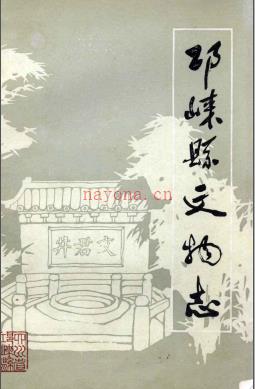
The source identifies the first volume of the Qionglai County Cultural Relics Gazetteer as a 94-page PDF compiled and published by the local cultural-relics office in 1983. It names ancient sites, murals, cliff carvings, tomb inscriptions and stone works among the recorded material. The visible directory includes Wenjun Well, Longxing Temple objects, inscriptions and rubbings, towers and Qiong kiln objects. This is a local documentary resource with a specific date and jurisdiction. Its entries can support historical investigation, but they do not establish the current condition, accessibility or preservation status of every place or object named.
Read an entry as an item record
Choose one item from the directory and find its entry. Record the name used in the book, the location described, the type of evidence and the page reference. If the text provides a date or attribution, preserve the wording and identify whether it is presented as certain or proposed. A local gazetteer may combine a physical description with a historical association. Those components should remain distinguishable. The reader can then say what the entry documents without making every associated tradition an independently confirmed fact.
Wenjun Well offers a named starting point in the source directory. Begin with what the entry actually says about the place and any accompanying image. Do not supply a familiar literary story as if it were the entry’s complete evidence. If the book connects the place with a person or tradition, identify the basis it gives. A cultural association can itself be historically important, even when the relationship to an earlier event requires separate investigation. Keeping that distinction visible allows the local record to be used respectfully and precisely.
Buildings, objects and sites require different descriptions
The listed material includes temples, towers, sculptures, inscriptions and kiln-related objects. A building record may concern layout, location and changes over time; an object record may concern material, form and provenance; a site record may involve visible remains and historical identification. Do not force all of them into one identical description. Choose fields that fit the item. The purpose is to preserve the evidence relevant to that item, not to produce a uniform catalogue whose neatness conceals differences in the kinds of information available.
For a comparison, select two items of a similar kind. Two towers or two inscriptions may permit a clearer first exercise than a tower and a ceramic vessel. List the descriptive categories the entries share and the information supplied by only one. Absence of a detail in an entry is not automatically evidence that the feature was absent in the object. It may reflect the book’s documentation choices or the available evidence in 1983. A careful comparison reports the difference in documentation before proposing a difference in the objects themselves.
Photographs and captions
The source directory lists images and particular photographed details, including tower parts and sculptural objects. Read the caption with the image and locate the related text. A photograph can show a visible feature while leaving scale, orientation or chronology unclear. If a detail is important to an interpretation, ask whether the caption establishes it. Do not infer the present appearance from a dated image. A photograph in the volume is evidence of the object as represented in that documentary context, not a live view of a monument four decades later.
A useful study exercise pairs a verbal description with an image. Identify one feature both make clear and one feature only the text supplies. Then note an uncertainty that neither resolves. This can reveal how local documentation combines visual and written evidence. It also prevents a caption from becoming an invisible authority: the reader must understand what the image itself shows and what the caption adds. Where the scan is too unclear to assess a feature, mark that limit instead of sharpening the claim through an imagined detail.
Inscriptions and rubbings
The listed rubbings and inscription entries offer a different kind of evidence. An inscription is both a material object and a text. Before using its words, establish which reading the book supplies and whether damage or uncertainty is indicated. A rubbing may preserve surface details that a paraphrase omits, but it still needs careful interpretation. Keep the physical description, the transcription and the historical conclusion in separate notes. This allows a future reader to see whether a claim rests on visible characters, the compiler’s reading or a broader association explained elsewhere.
If an inscription names a person, place or date, trace exactly how the entry uses it. A date on an object may concern construction, commemoration, repair or another action specified by the text. It should not automatically become the date of every feature now associated with the site. Likewise, a named person may be the subject, donor, writer or another participant. The role matters. A precise summary preserves the verb or relationship that connects the name with the object, rather than simply collecting names as evidence of antiquity.
Qiong kiln material and classification
The directory includes Qiong kiln references and objects such as a duck cup, colored jar and lotus-leaf bowl. These names can orient a study of how the gazetteer presents local material culture. Begin with the description and image supplied for one object. Ask whether the name is a functional label, a shape description or an attribution. Do not infer exact production date or use from the name alone. A local inventory can preserve valuable object information, but the argument for a technical attribution must come from the entry or another identified source.
The 1983 boundary of the record
A dated gazetteer can be compared with later documentation, but the comparison must preserve both dates. If an entry describes a place as standing, damaged or newly identified, that statement belongs to the record’s context. It should not be silently updated to present tense. A modern investigation might ask what changed afterward, but it requires separate evidence. The 1983 edition remains useful precisely because it preserves an earlier documentary view. Treating it as current would erase the historical value of that view as well as risk an inaccurate claim about the site today.
A compact final project can describe one item through its name, physical evidence, textual association and dated documentation. Include an unresolved question about attribution or later history. Such a project uses the gazetteer’s locality and specificity as strengths. It does not turn the 94-page volume into a comprehensive archaeology course or a current travel guide. The learner gains experience in reading a local cultural-relics record, comparing images with text and distinguishing a preserved historical description from a claim that would require present-day verification.