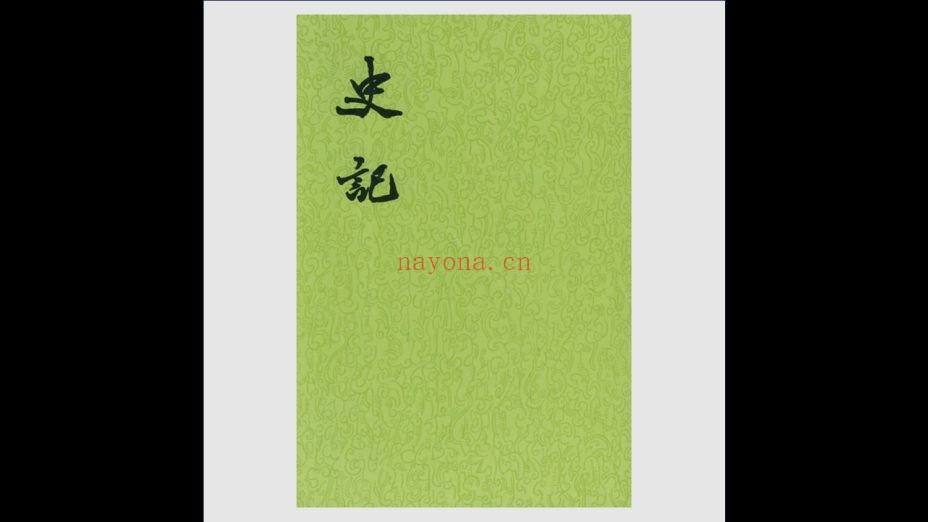
A 20-volume Chinese classics series published by Shanghai Ancient Books Publishing House in 2012. The source list includes annotated editions of the Analects, Mencius, Zhuangzi, Laozi and other named texts.
Resource Overview
Chinese Classics: 20-Volume Annotated Chinese Series is a digital learning resource about Chinese Classics. The English description summarizes the available source listing; the underlying recordings or books are in Chinese. An English translation of the full material is not confirmed.
What You Will Learn
Use the sequence and preview material below to identify the course’s scope, terminology and teaching approach. Compare each card interpretation with the original lesson rather than treating a short listing as a complete transcript.
Course Contents
- Annotated classical Chinese texts
- Confucian works including the Analects and Mencius
- Daoist and historical works named in the source inventory
- 20-volume series and edition context
Original Course Images


Who This Resource Is For
This resource is for readers or learners who can use Chinese-language materials and want a named resource on Chinese Classics. Compare the stated scope and previews before ordering; a fixed level of prior experience is not assumed unless the source directory says so.
Learning Format and Digital Delivery
20-volume Chinese-language digital book series; the source describes electronic editions Virtual and downloadable; there is no physical shipment. Price: USD 9.00. A file link is not yet attached to this product. Please contact Karma Kismet before ordering to confirm delivery arrangements; immediate automated access is not promised.
Frequently Asked Questions
Is the full material in English?
No English edition, recording or subtitle track is confirmed. The source material is Chinese-language.
Is a personal consultation included?
No individual consultation is listed with this resource.
Does this resource guarantee an outcome?
No. It is for educational and cultural study, not a guaranteed result or substitute for professional advice.
Editorial Note
Karma Kismet translated and organized the course facts and original previews for English readers. Lesson counts and formats follow the available source listing; unspecified contents, certificates and instructor credentials are not asserted.
Related Courses
Browse Chinese Classics and read digital delivery information.
The twenty volume edition
The source identifies a twenty volume annotated Chinese classics series published by Shanghai Ancient Books Publishing House in 2012. It explicitly describes electronic editions rather than shipped paper books and says the series adds translations and notes to classical works. Translation here should not be assumed to mean English: the resource is Chinese language, and an English version is not confirmed. The source page’s automatic delivery claims belong to that original seller and do not establish current delivery arrangements for this Karma Kismet product. Confirm the actual files and access arrangements before ordering.
The inventory is concrete enough to distinguish this collection from a generic classics bundle. It includes philosophical, historical, literary, military, family instruction, and reference works. The twenty volume count does not mean twenty single titles, because some listed volumes combine works. It also does not establish that every text is complete in a particular scholarly sense or that the editions reproduce every traditional commentary. The actual title pages and contents remain necessary for evaluating scope. The series label provides an organizing context, while each volume retains its own textual identity.
Philosophical and ethical works
The source inventory names the Analects, Mencius, Xunzi, Laozi, Zhuangzi, Liezi, and Han Feizi. It also names a combined volume for the Classic of Filial Piety, Great Learning, and Doctrine of the Mean. These are verified titles in the list, not an assertion that the collection presents their arguments as one unified worldview. When comparing them, first identify the question a passage addresses and the terms it uses. A similarity in vocabulary can conceal a difference in purpose, and a different phrase can sometimes address a related problem.
An optional starting path is to choose one short passage from a work that interests you, read the classical text, then examine the modern Chinese translation and notes. Keep these layers separate. A translation can clarify syntax, while a note may explain an allusion, a term, or an interpretive choice. Do not treat the note as the only possible reading unless the edition provides a reason for that conclusion. No comparative workbook or guided instruction is confirmed. The reader creates the comparison from the actual volumes and preserves references to the passages used.
Literature, history, and cultural forms
The list includes the Book of Songs, Songs of Chu, Documents, Yanzi Chunqiu, A New Account of Tales of the World, Family Instructions of the Yan Clan, and The Literary Mind and the Carving of Dragons. These titles give the collection a broader scope than philosophical sayings alone. A poem, historical account, anecdote, family instruction, and literary argument should be read with attention to their form. The fact that all are called classics does not make them interchangeable sources of advice or identical kinds of historical evidence.
For a literary passage, note voice, imagery, and the context explained by the annotation. For a historical or anecdotal passage, ask how the edition identifies the setting and source tradition. For family instruction, distinguish the historical social setting from a modern personal application. These are proposed reading questions, not verified chapter summaries. Avoid pulling a vivid sentence out of context and presenting it as a universal rule. The annotated format can help restore context, provided you attend to the notes rather than treating the translated sentence as a self contained maxim.
Military, reference, and unusual subjects
The source also lists the Art of War, a combined Six Secret Teachings and Three Strategies volume, the Changes, Classic of Mountains and Seas, and Erya. This range is a reason to inspect individual volumes before selecting a study path. A military text is not automatically a business manual, a symbolic or cosmological text is not a verified prediction system, and a reference work is not designed to be read like a narrative. Each title calls for its own question and context. The listing identifies their inclusion without establishing a single practical use for all of them.
If an annotation explains a symbolic association, record it as an interpretation within the edition or tradition. Do not convert it into a guarantee about events. If a strategy passage interests you, distinguish its original setting from an analogy you choose to make today. The analogy may help you think, but it remains your application. The collection’s breadth can be useful precisely because it exposes different forms of reasoning and expression. Preserving their differences is more informative than extracting all twenty volumes into one list of motivational statements.
A notebook for annotated reading
For each passage, record the volume, chapter or section, printed page, and file page if they differ. Then separate the classical wording, the modern Chinese rendering, and the annotation. Add your own question in a fourth space. This organization makes it easier to return to a difficult line and see where your interpretation came from. It is especially useful when several volumes use different editors or annotation styles, although the current source does not identify every editor. Check those details in the books rather than assuming uniform authorship or methodology across the series.
You could build a small vocabulary list of expressions that recur. Include the context of each occurrence instead of assigning one English meaning to every use. Classical Chinese syntax and modern explanatory Chinese are different reading tasks. If a passage remains uncertain, preserve the question and compare the annotation with the surrounding text. A familiar English title does not establish an English translation of the contents. Readers who need English editions should confirm that requirement independently rather than choosing this Chinese collection on the strength of its translated shop title.
Planning across twenty volumes
There is no need to begin with the first title in the source inventory or to finish every volume consecutively. Choose a defined interest, inspect the relevant volume, and assess whether the annotation level suits you. A reader interested in poetry may start differently from someone interested in ethics or textual reference. Keep a record of what you have actually read so a selective path remains visible. The twenty volume count establishes the set’s advertised scale, not a guarantee that completing it produces comprehensive mastery of Chinese culture.
The source says its electronic materials are mostly PDF with a small number of DJVU files generally, but it does not assign a verified format to every volume in this specific set. Confirm the delivered inventory and compatibility if that matters to you. No paper shipment, audio narration, certificate, or live course is implied. Select the collection for its named 2012 series and actual title list, then use the classical text, Chinese translation, and annotations together. The strongest reading outcome is a more precise understanding of particular passages, their contexts, and the questions they leave open.