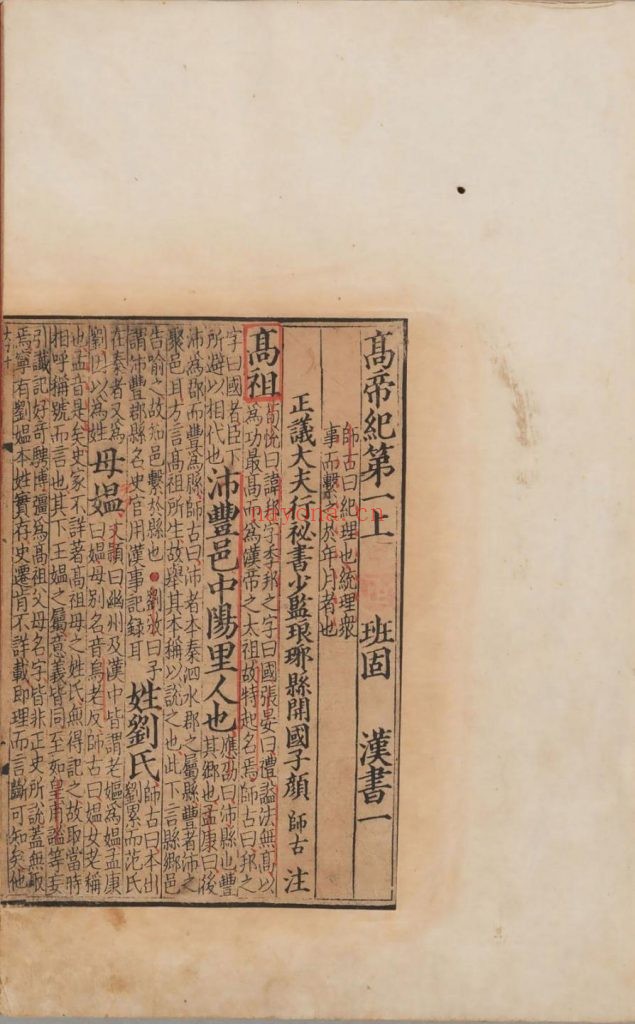
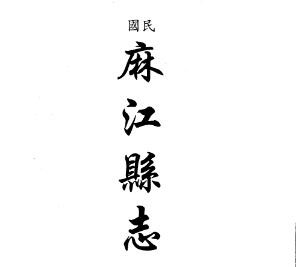
A combined local-history volume naming the Republican-era Majiang county gazetteer, a Guzhou miscellany and Rongjiang local-school material.
Resource Overview
Majiang and Rongjiang Local Gazetteer Compilation is a digital learning resource about Local Gazetteers. The English description summarizes the available source listing; the underlying recordings or books are in Chinese. An English translation of the full material is not confirmed.
What You Will Learn
Use the sequence and preview material below to identify the course’s scope, terminology and teaching approach. Check each topic against the original lesson rather than treating a short listing as a complete transcript.
Course Contents
- Majiang county history
- Guzhou miscellany
- Rongjiang local material
Original Course Images
Who This Resource Is For
This resource is for readers or learners who can use Chinese-language materials and want a named resource on Local Gazetteers. Compare the stated scope and previews before ordering; a fixed level of prior experience is not assumed unless the source directory says so.
Learning Format and Digital Delivery
Chinese-language digital compilation; file type not confirmed Virtual and downloadable; there is no physical shipment. Price: USD 9.00. A file link is not yet attached to this product. Please contact Karma Kismet before ordering to confirm delivery arrangements; immediate automated access is not promised.
Frequently Asked Questions
Is the full material in English?
No English edition, recording or subtitle track is confirmed. The source material is Chinese-language.
Is a personal consultation included?
No individual consultation is listed with this resource.
Does this resource guarantee an outcome?
No. It is for educational and cultural study, not a guaranteed result or substitute for professional advice.
Editorial Note
Karma Kismet translated and organized the course facts and original previews for English readers. Lesson counts and formats follow the available source listing; unspecified contents, certificates and instructor credentials are not asserted.
Related Courses
Browse Local Gazetteers and read digital delivery information.
Context for reading and study
The source names a bound compilation of a Republican-era Majiang county gazetteer, a Jiaqing-period Guzhou miscellany, and Republican-era Rongjiang local-school material. These are three distinct documentary identities, not one text from a single period. The source also identifies a PDF edition. A useful reading approach preserves the component boundaries before drawing comparisons among places and genres.
Three works inside one compilation
Begin by locating the title page or opening heading of each component. Record its title, stated period, compiler if given, and page range within the digital file. Do not treat the modern bound volume as evidence that the three works share an author or purpose. The Majiang gazetteer, Guzhou miscellany, and Rongjiang local material should remain separately identifiable in notes and citations. A compilation brings them together for access, but its binding does not remove their differences. If one component has missing or unclear pages, describe that limitation for the component rather than assuming that the whole volume is complete.
Mixed periods, not one Republican account
The Jiaqing label in the Guzhou title distinguishes it from the Republican-era works named alongside it. Preserve that distinction. The source’s broad explanatory prose sometimes treats the material together, but a researcher should not date all three components to one period. Before comparing passages, identify the period represented by each and whether the text discusses an earlier event. A title’s period reference is a starting point, not a full chronology of every entry. Keeping the layers visible helps prevent a statement from an earlier miscellany from being used as direct evidence of the same practice in a later local-school text.
Gazetteer and miscellany
A county gazetteer and a miscellany can organize information differently. Determine the actual headings and arrangement in each work before assuming that equivalent topics appear in equivalent sections. A miscellany may present observations or selected material without the same structure as a gazetteer. The source’s title establishes that distinction even though the short listing does not provide a complete contents table. A comparison should therefore begin with the document form. Ask what the author selected, how it was arranged, and what kind of statement is being made. This respects the text as evidence rather than flattening every component into a generic local history.
Local-school material and audience
The Rongjiang component is named as local-school material. That suggests a particular documentary purpose to investigate, but it does not confirm a full school curriculum in this English guide. Look for the intended audience and instructional framing in the actual text. A passage that introduces a locality to students may simplify or select information differently from a gazetteer entry. Record those choices rather than assuming that the text is an exhaustive description of local life. The educational interest can include how place was presented to readers, while claims about classroom practice or teaching outcomes require evidence beyond the title.
Place names and boundaries
Keep Majiang, Guzhou, and Rongjiang as separate place references until the documents explain their relationship. A historical place name may not correspond exactly to a modern administrative boundary. Do not assume that two similar names identify the same territory or that a present map can be applied without qualification. Record the spelling or characters used in the source and any geographic explanation it supplies. If you create a map for personal notes, distinguish confirmed locations from uncertain ones. The compilation can support local-history inquiry, but the guide should not invent a geographical equivalence that the available text has not established.
Customs and attributed descriptions
The source discusses customs and cultural material broadly. When reading such a passage, identify whether it records a named practice, repeats a story, or offers the compiler’s evaluation. These are different kinds of evidence. A description may concern one group, place, or occasion rather than everyone in the locality. Keep the attribution and context in the summary. Avoid treating historical evaluative language as an objective description of living communities. The text can reveal how an author represented local culture without becoming a complete or neutral account of all people who lived there.
People and local representation
If a component includes people or biographies, preserve the selection criteria where the text states them. A list of notable figures is not a complete population register. Ask what kinds of activity or status are recognized and which voices may be absent. Do not infer that an omitted person was unimportant or did not exist. A useful reading note can summarize a biography and also explain how the compiler frames it. This makes the material valuable both for particular details and for the history of local representation, while keeping the limits of a selected record clear.
Products, geography, and comparison
The source’s broad description names geography, local products, and education among the subjects. Verify the actual sections before extracting data. A product list can identify what an author thought worth recording, but it does not automatically quantify production or establish trade volume. A geographic description may use terms that need historical context. Compare only like material, preserving the date and unit where available. If two components organize the same subject differently, describe that difference rather than forcing them into a single table. A careful comparison is specific enough that another reader can return to the passages.
Digital and printed identity
The source explicitly describes a PDF, while other descriptive prose mentions traditional book form. Keep the digital delivery identity separate from the historical or reproduced book’s appearance. A scan of a traditionally bound work is not a physical copy supplied to the reader. Check whether page numbers restart at component boundaries and whether the file adds modern front matter. Cite the individual work and its printed page where possible, then record the digital location for navigation. This makes the bound compilation usable without confusing the modern access format with the original documentary form.
A component-by-component reading project
Choose one narrow subject and examine it separately in each component where it actually appears. Your notes can record title, period, genre, passage, and conclusion. If a subject is absent or cannot be located, preserve that gap. Do not claim that the compilation provides a continuous history from one period to another merely because its works span different periods. Its value lies in offering distinct local documents that can be compared carefully. The page does not confirm English translation, a complete modern gazetteer database, or additional local-history volumes beyond the named compilation.
Compare genres before conclusions
When two components appear to disagree, begin by checking whether they address the same question. A local teaching text may simplify information that a gazetteer organizes more formally, while a miscellany may preserve a selected observation. Explain the difference in form before calling the passages contradictory. The comparison should retain the separate titles and periods, giving each text the scope its own evidence supports.