
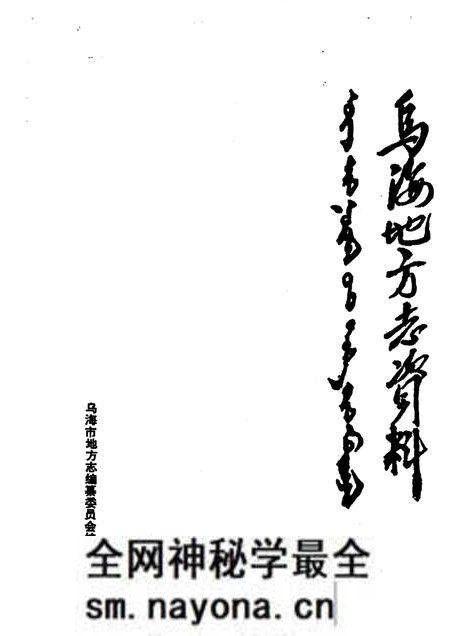
Volume one of a 1985 Wuhai local-gazetteer materials series. The edition and locality are part of its bibliographic identity.
Resource Overview
Wuhai Local Gazetteer Materials: 1985 Volume One is a digital learning resource about Local Gazetteers. The English description summarizes the available source listing; the underlying recordings or books are in Chinese. An English translation of the full material is not confirmed.
What You Will Learn
Use the sequence and preview material below to identify the course’s scope, terminology and teaching approach. Check each topic against the original lesson rather than treating a short listing as a complete transcript.
Course Contents
- Wuhai locality
- 1985 materials
- Volume-one context
Original Course Images


Who This Resource Is For
This resource is for readers or learners who can use Chinese-language materials and want a named resource on Local Gazetteers. Compare the stated scope and previews before ordering; a fixed level of prior experience is not assumed unless the source directory says so.
Learning Format and Digital Delivery
Chinese-language digital local-history volume Virtual and downloadable; there is no physical shipment. Price: USD 9.00. A file link is not yet attached to this product. Please contact Karma Kismet before ordering to confirm delivery arrangements; immediate automated access is not promised.
Frequently Asked Questions
Is the full material in English?
No English edition, recording or subtitle track is confirmed. The source material is Chinese-language.
Is a personal consultation included?
No individual consultation is listed with this resource.
Does this resource guarantee an outcome?
No. It is for educational and cultural study, not a guaranteed result or substitute for professional advice.
Editorial Note
Karma Kismet translated and organized the course facts and original previews for English readers. Lesson counts and formats follow the available source listing; unspecified contents, certificates and instructor credentials are not asserted.
Related Courses
Browse Local Gazetteers and read digital delivery information.
Context for reading and study
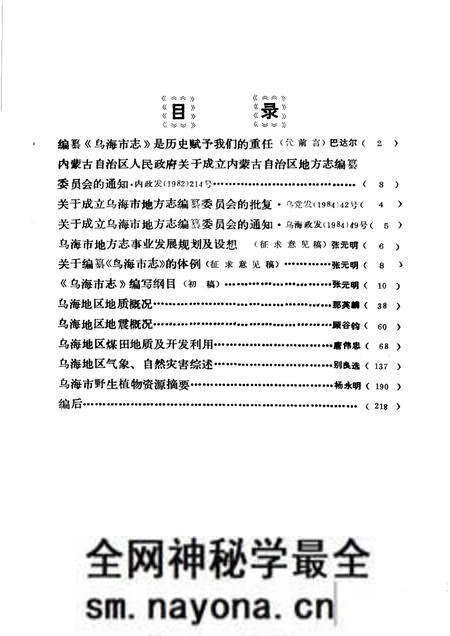
The bibliographic identity here is Wuhai local-gazetteer materials, first volume, dated 1985. The source article discusses regional formation, resources, industrial development, population movement, transport, and cultural life. It does not provide a verified page-by-page contents table. Those reported topics can guide inquiry, but precise findings should be checked in the volume itself.
Materials rather than an assumed final gazetteer
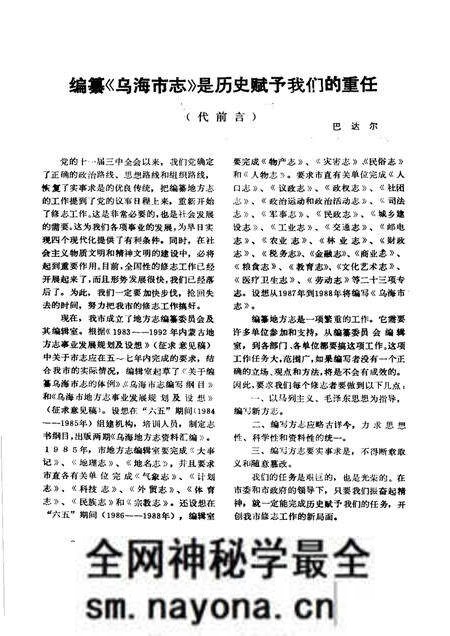
The title uses local-gazetteer materials and specifies a first volume. Do not silently relabel it as a complete final city gazetteer or assume that later volumes are included. Look for the volume’s own introduction to understand its compilation purpose. It may collect information useful for further local-history work, but the exact form must be verified from the text. A materials volume can still be valuable because it preserves selected records and narratives. Its scope is clearer when the reader identifies what was assembled rather than treating the title as a promise of exhaustive coverage of Wuhai’s history.
The 1985 reference
The date identifies the named volume, not necessarily every event, statistic, or observation within it. Separate publication or compilation date from the period covered by a particular passage. A retrospective account may discuss earlier developments, while a table may refer to one specific reporting year. Record those dates explicitly before comparing information. Do not use the volume as a source for current population, industry, or environmental conditions without a current source. Its educational value is historical: it can show what was recorded and how the locality was represented at the time of compilation.
Administrative names in context
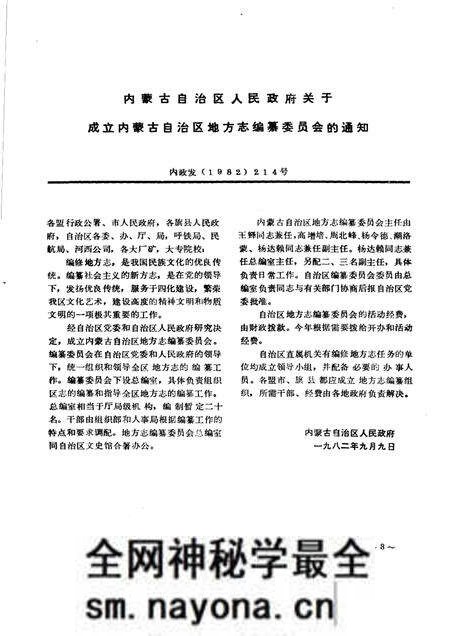
The source article mentions Wuda, Haibowan, and Hainan in its discussion of local formation. Treat these as historical administrative subjects to check in the volume. Preserve the characters and the context so that a familiar English spelling is not confused with an unrelated place. If the text describes a boundary or institutional change, record the date and documentary basis. Do not assume that present administrative arrangements explain every earlier record. A local-history timeline should distinguish confirmed changes from broad narrative summaries and should not add events simply to make the story appear continuous.
Resources and industrial language
Coal and other industrial themes are prominent in the source article. When reading the volume, distinguish a resource description from a production statistic and an evaluative statement about quality. Each answers a different question. A resource figure may use a territory, category, or reporting method that must be preserved. Do not treat a historical description as a current reserve estimate or a present investment opportunity. The material can support study of how resources were discussed in local development narratives. Its figures and claims should remain attached to the date and source that make them historically interpretable.
Transport and causal explanations
The article connects industrial development with rail, road, and river transport. Verify the actual passage before repeating a causal claim. A text may record a construction project, describe traffic, or argue that transport enabled growth. Those statements require different evidence. Keep the observed development separate from the author’s explanation of its effect. A comparison can ask how transport is represented alongside industry, but it should not invent a quantified economic impact. The local-history volume is most useful when the reader shows what the record establishes and where the narrative adds an interpretation.
Population movement and categories
The source describes population movement associated with development. A historical population entry should be read with its categories, date, and territorial coverage. Ask whether the figure concerns registered residents, workers, households, or another defined group. Do not compare unlike categories as if they measured the same thing. A narrative about migration may also highlight some groups and omit others. Preserve that selection. The material can prompt questions about local social change, but it should not be used to make sweeping claims about every resident’s origin, identity, or experience from one broad article summary.
Industrial life and individual experience
A development narrative may emphasize projects, enterprises, and achievement. Look for the distinction between that institutional story and evidence about individual lives. A description of a workplace or settlement does not necessarily show how all people experienced it. If the volume contains a personal account, identify it as such and preserve the speaker’s context. If it offers an editorial characterization of local spirit, attribute that characterization. A careful reading can appreciate the documentary narrative while recognizing that celebratory language is an interpretation, not a measurable trait shared by every person in the locality.
Education, health institutions, and culture
The article names schools, health institutions, and cultural activity among the subjects. These are historical institutional topics to verify in the text, not promises that the volume contains a complete register of every organization. A count should be kept with its date and definition. A narrative about improvement should be read alongside the evidence it uses. Do not convert historical institutional descriptions into current service information or medical guidance. Cultural activity can also be studied through the categories selected by the compiler, while recognizing that official or organized activity may not capture every form of local cultural life.
Environmental context without present-day conclusions
The source discusses the Yellow River, terrain, climate, and resources as part of the local setting. Use those passages to understand the historical narrative, but avoid extrapolating them into current environmental assessments. A historical source may have different categories or priorities from a contemporary study. Record what is described and what evidence supports the description. If a modern research question requires change over time, this volume may be one dated source among others. It cannot alone establish the current condition or the full trajectory of a resource-based city.
A Wuhai source notebook
For a focused reading project, select one topic actually found in the volume and record the heading, passage, date, unit, and authorial framing. Separate factual entries from narrative explanations. If the scan has unclear text, mark uncertainty rather than relying on a plausible OCR reading. The title’s first-volume identity should remain in every citation so that it is not confused with a complete series. The page identifies Chinese-language local-history material. It does not confirm an English translation, a corrected statistical dataset, later volumes, or a current guide to Wuhai’s institutions and economy.
One table, one careful extraction
If you extract a table from the Wuhai volume, copy its heading and notes along with the values. Keep the original category wording in a separate field from your English translation. If a value is unclear, mark it instead of silently normalizing it. This small extraction record makes the historical information easier to review and prevents an uncertain reading from becoming a confident claim in a later comparison.