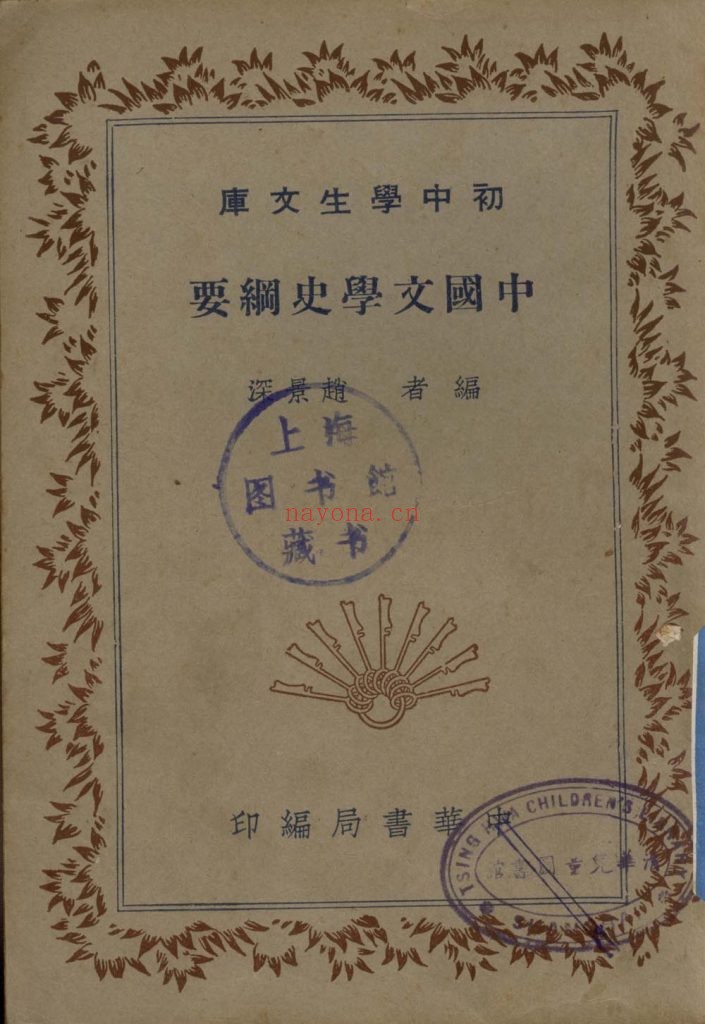
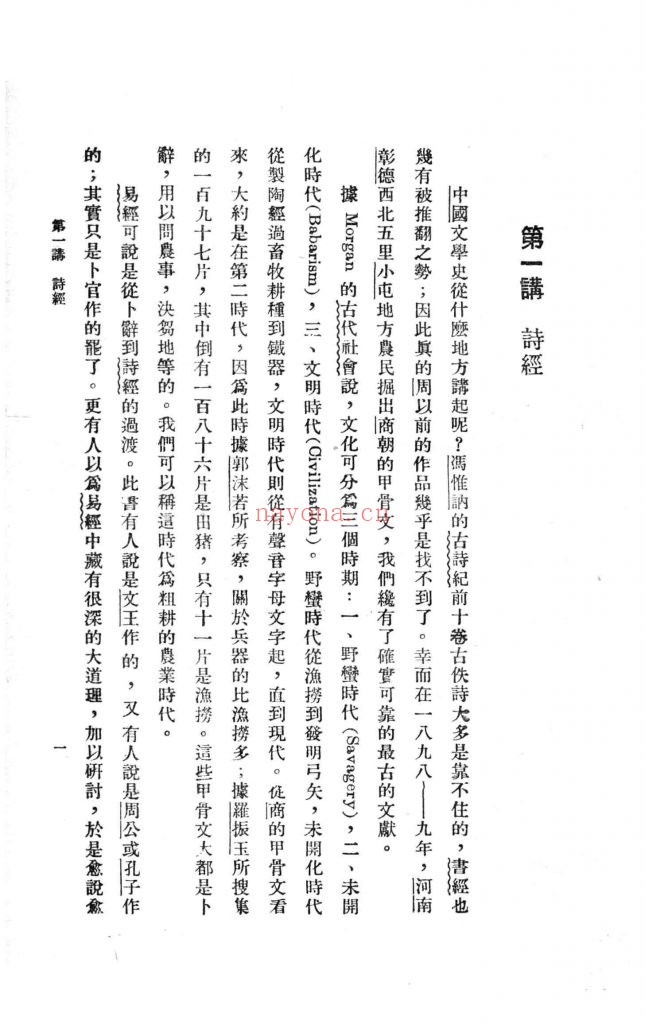
A 1947 edition of Zhao Jingshen's New History of Chinese Literature, published by Beixin. This is a literary-history text.
Resource Overview
Zhao Jingshen New History of Chinese Literature: 1947 Edition is a digital learning resource about Chinese Literature. The English description summarizes the available source listing; the underlying recordings or books are in Chinese. An English translation of the full material is not confirmed.
What You Will Learn
Use the sequence and preview material below to identify the course’s scope, terminology and teaching approach. Check each topic against the original lesson rather than treating a short listing as a complete transcript.
Course Contents
- Chinese literary history
- Zhao Jingshen
- 1947 edition
Original Course Images
Who This Resource Is For
This resource is for readers or learners who can use Chinese-language materials and want a named resource on Chinese Literature. Compare the stated scope and previews before ordering; a fixed level of prior experience is not assumed unless the source directory says so.
Learning Format and Digital Delivery
Chinese-language digital book; file type not confirmed Virtual and downloadable; there is no physical shipment. Price: USD 9.00. A file link is not yet attached to this product. Please contact Karma Kismet before ordering to confirm delivery arrangements; immediate automated access is not promised.
Frequently Asked Questions
Is the full material in English?
No English edition, recording or subtitle track is confirmed. The source material is Chinese-language.
Is a personal consultation included?
No individual consultation is listed with this resource.
Does this resource guarantee an outcome?
No. It is for educational and cultural study, not a guaranteed result or substitute for professional advice.
Editorial Note
Karma Kismet translated and organized the course facts and original previews for English readers. Lesson counts and formats follow the available source listing; unspecified contents, certificates and instructor credentials are not asserted.
Related Courses
Browse Chinese Literature and read digital delivery information.
Reading Zhao Jingshen’s 1947 literary history
The source establishes a specific bibliographic identity: Zhao Jingshen’s New History of Chinese Literature, published by Beixin in 1947. It does not provide a verified detailed chapter list. The safest educational route is therefore to examine the book’s own contents and examples before assigning topics to it. Its date also creates a useful double perspective. A reader can learn from its account of earlier literature and investigate how a twentieth-century literary historian constructs that account. These purposes complement each other, but an assertion about the history of a poem is different from an observation about the historian’s selection or evaluative language.
What makes a history of literature an argument?
A literary history does more than arrange works by date. It chooses which works represent a period, decides what counts as an important change and explains relationships among texts, forms and audiences. Begin by reading a short section for those decisions. What kind of example does the author use? Does a quotation illustrate a style, a theme, a historical condition or a judgment of value? Record the purpose of the example as well as its wording. This allows the reader to understand why it appears in the account instead of assuming that a selected passage is simply the most famous or best work of its period.
The word new in the title is a bibliographic feature, not a guarantee that the book’s interpretation reflects current scholarship. Nor does it prove a precise relationship with another Zhao Jingshen title. Establish any such relationship from the books themselves. A useful first question is what the introduction says the author intends to explain or revise. If the introduction does not settle that question, leave it open. Reading the title as a claim to be investigated is more productive than allowing a familiar English adjective to supply an imagined scholarly program.
Period, genre and example
When the actual contents divide the subject into periods or genres, make a small outline from those divisions. Then inspect how one transition is described. A change in political chronology is not necessarily the same as a change in literary form, readership or language. If the historian places a boundary between sections, ask which kind of change makes that boundary useful. The question can be answered only from the explanation and examples in the book. It should not be resolved by adding a standard modern periodization that the author may not use.
Genre labels also require attention. A word rendered as poetry, prose, drama or fiction may encompass distinctions that matter to the selected passage. Retain the original label when available and explain its role in the author’s organization. Consider whether the label describes formal properties, circulation, performance or a later scholarly classification. This exercise can reveal why two texts that seem alike to a modern reader are discussed in different sections. It also helps prevent the reader from judging the book by an assumed genre system before discovering the categories through which it actually tells literary history.
The relationship between a quotation and a judgment
Choose one paragraph where a literary example is followed by an evaluation. Read the quoted words first, temporarily setting the evaluation aside. Describe an observable feature: repetition, a change of voice, an image, a contrast or a pattern in sentence length, depending on the passage. Then return to Zhao Jingshen’s judgment and ask how that feature supports it. A judgment may depend on several features or on historical knowledge supplied elsewhere. Reconstruct the connection as fairly as possible before agreeing or disagreeing. This is close reading of the historian’s reasoning as well as close reading of the literary work.
If an evaluation uses a broad adjective, ask what it means in the surrounding argument. A word such as plain, ornate, vigorous or restrained can refer to several different textual qualities. Translate the adjective into a specific claim about the example and test the claim against the words. If the evidence supports only part of the judgment, state that limitation. The exercise turns literary appreciation into an explanation another person can examine. It does not require removing personal response; it requires distinguishing the response from the historical or textual claim being offered.
Dates at different levels
A note from this resource can involve at least three dates: the period of the literary work discussed, the date of a textual witness used by the historian and the 1947 publication date of the history itself. Do not merge them. A late printed edition can preserve an earlier work, while a twentieth-century explanation interprets both through its own questions. When a claim about chronology is central, identify which date it concerns. If the author gives an attribution or a date without explaining the evidence, mark it as the book’s statement. Further verification can then proceed without presenting the claim as already independently established.
Comparing with another history
A comparison should begin with one shared object, such as the same work or a clearly equivalent literary question. Find how each history introduces it, which passages it selects and what conclusion it draws. Avoid comparing entire books through isolated adjectives. If one account gives more space to the work, investigate how that space is used. Additional length may provide more examples, a broader historical argument or a different kind of explanation. It does not automatically mean that the work was valued more highly. Preserve the comparison’s scope so that a finding about one section does not become a claim about each author’s whole career.
The separately listed 1941 Outline of Chinese Literary History is a possible bibliographic comparison, but its relationship to this 1947 New History must be checked rather than assumed. Different publishers and titles establish distinct editions, not a confirmed revision sequence. If both are available, compare their contents pages and one common discussion before describing continuity. This can become an informative study of how organization and emphasis differ. Where the evidence does not show a direct relationship, the comparison can still be useful without making a claim about one book replacing or expanding the other.
A reader’s small anthology
After studying several sections, assemble a personal selection of brief references to works actually discussed. For each, include the reason the historian uses it, one feature you observed and one question for further reading. This is a finding aid rather than a replacement for the literary texts. It should point outward to the works and back to the history’s argument. If the selection reproduces only the author’s conclusions, add an observation of your own grounded in the example. If it contains only personal favorites, add the historical question that made each passage relevant.
The 1947 edition can thus be approached as both a guide and a historical document. Its usefulness lies in the particular literary relationships it explains and the interpretive choices it makes visible. A careful final note should state what one section taught you about literature and what it taught you about writing literary history. Those are different results, and both can be valuable. Keeping them distinct protects the study from treating an older account as either timeless authority or an artifact with nothing left to teach. The book’s actual reasoning deserves examination on its own terms.