
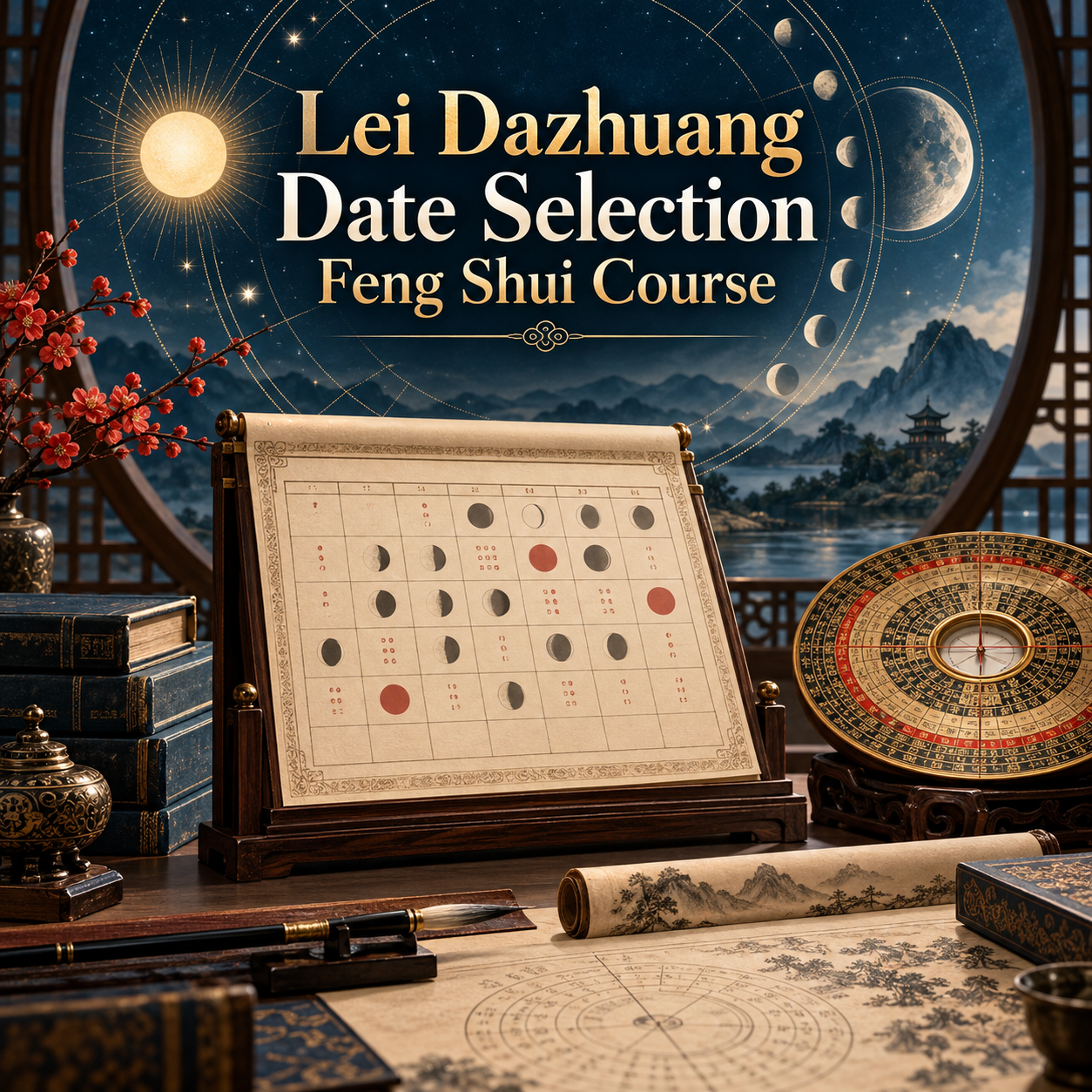
Course Overview
This course introduces traditional date selection as a study system used alongside Feng Shui and Chinese metaphysics. The source listing describes 14 teaching videos plus electronic documents. The English edition organizes the material for learners who need a clear explanation of what the course covers before purchase.
Source-Based Course Details
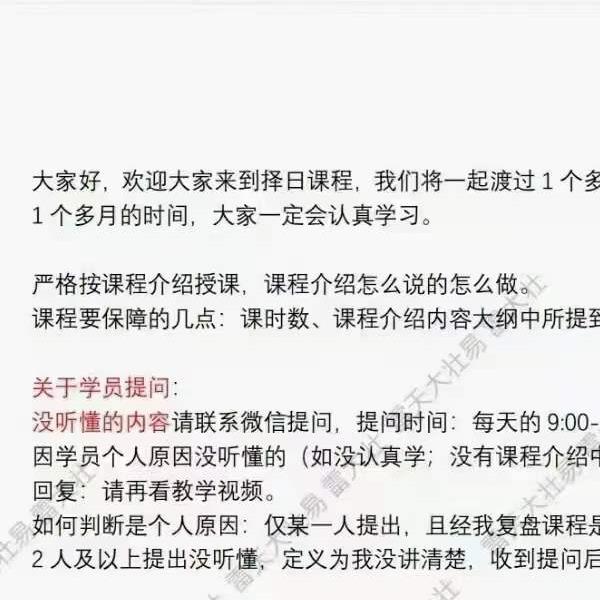
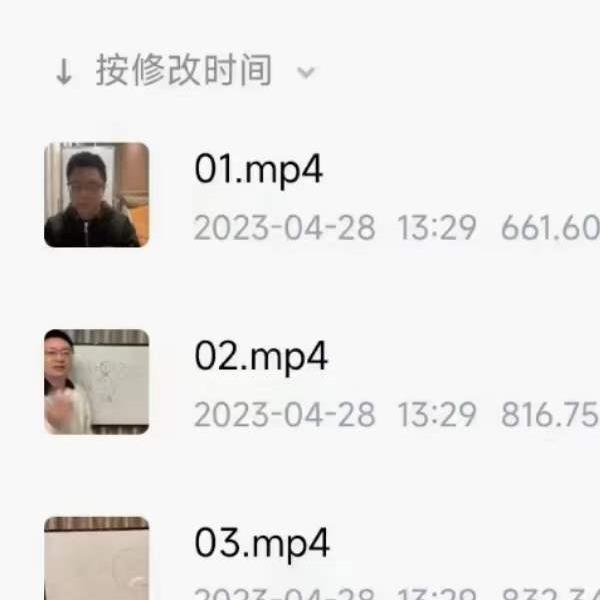
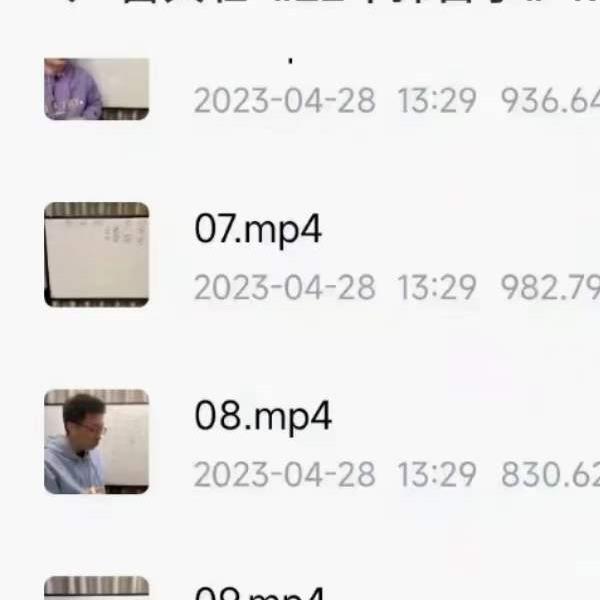
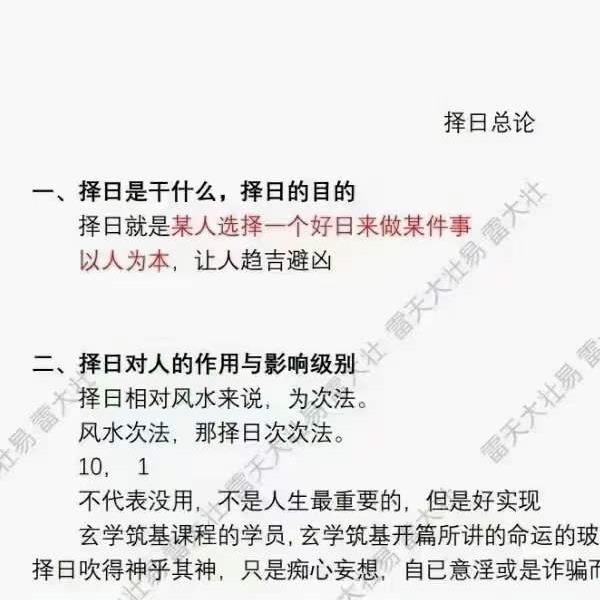
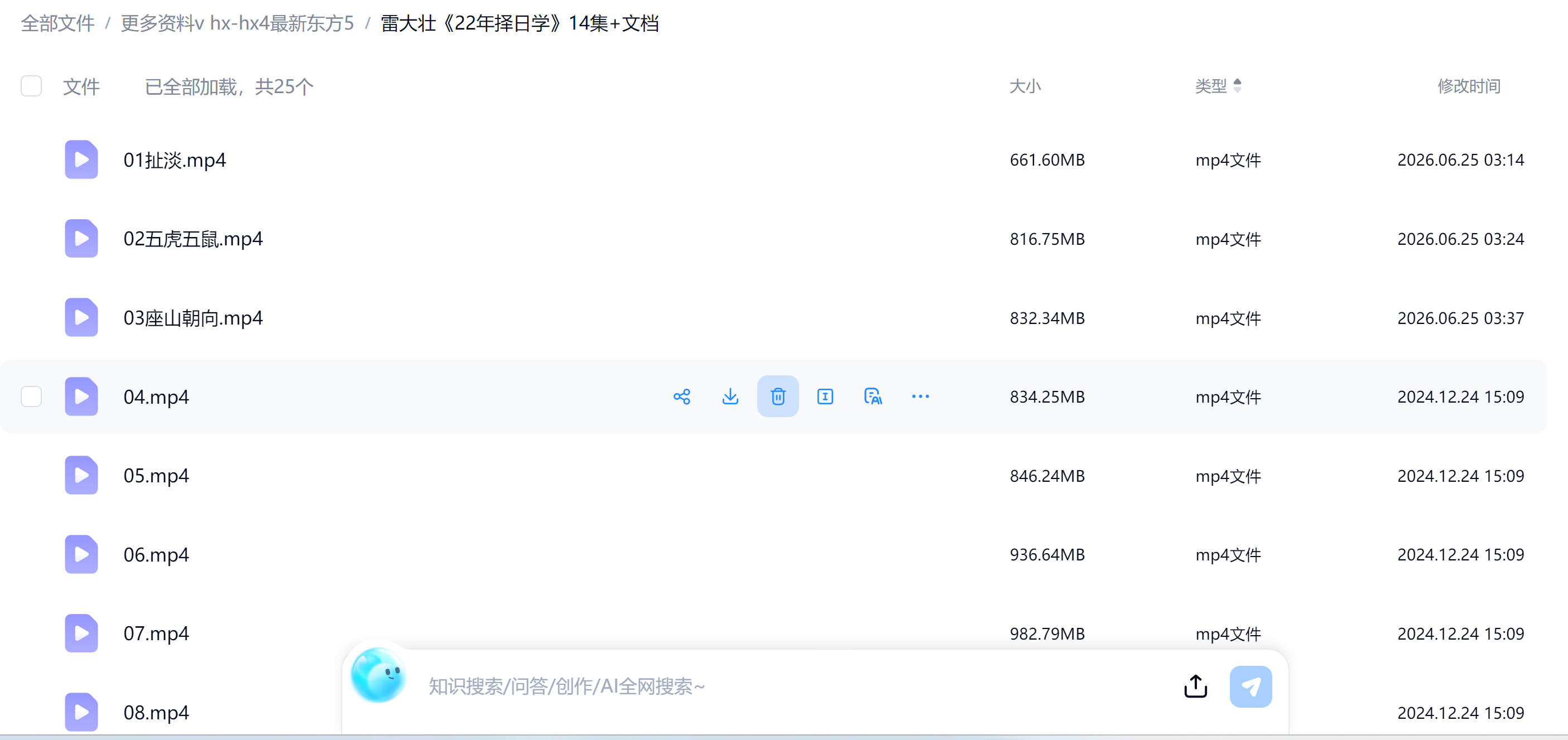
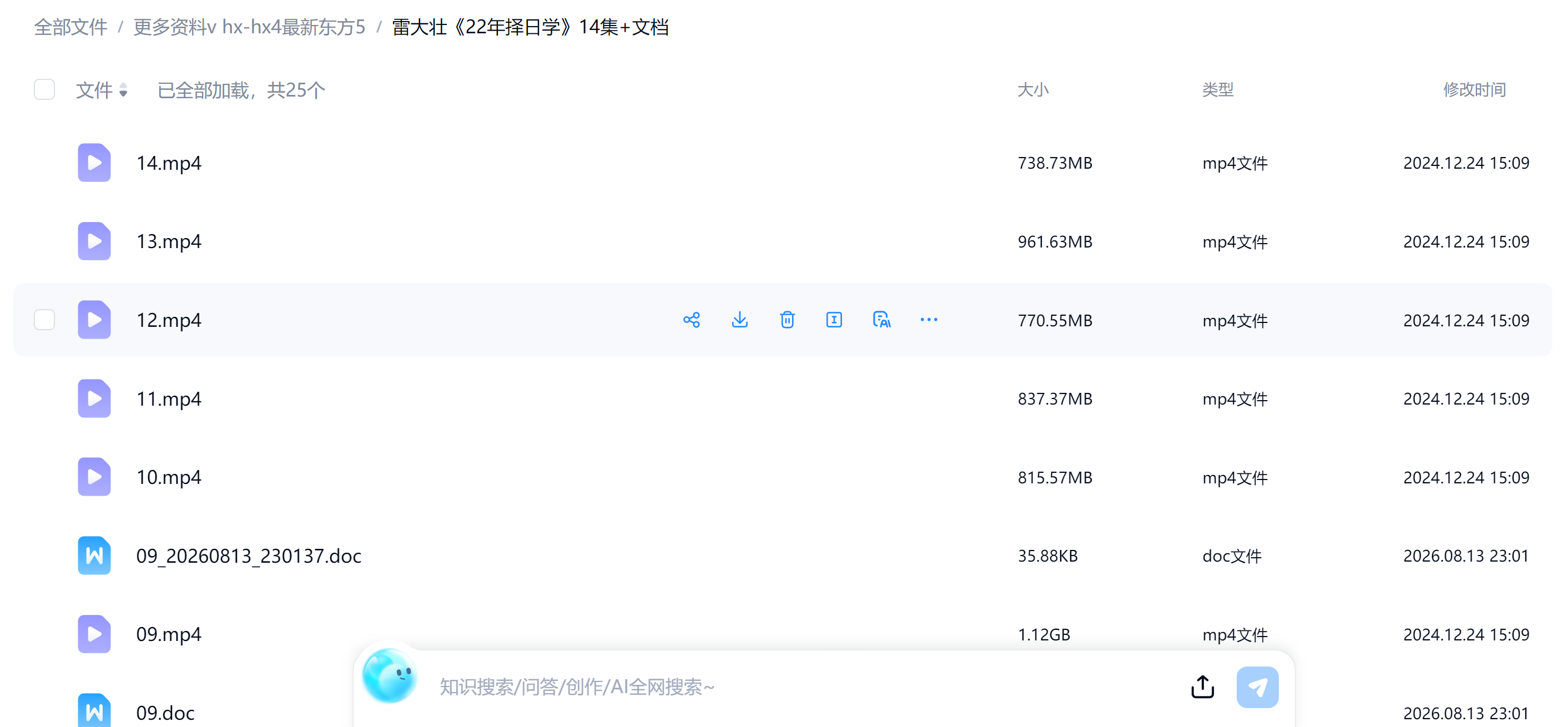
This page is an English educational adaptation based on the richer nayona.cn course record: 雷大壮《22年择日学》14集+文档. The original source images are preserved below, and the English structure adds search-friendly sections for course discovery, comparison, and digital delivery.
What You Will Learn
- The role of date selection in traditional Feng Shui and Chinese metaphysical practice.
- How calendar-based reasoning can be studied in an organized sequence.
- How to review the 14-lesson course alongside its supporting documents.
- How date selection relates to site work, timing decisions, and broader Feng Shui study.
Course Contents
- 14 video lessons from the 2022 date selection course listing.
- Electronic documents mentioned in the source material.
- Four original source images preserved in the product page.
Original Course Images
Who This Course Is For
This digital resource is suitable for Feng Shui learners, Chinese metaphysics students, course collectors, and practitioners who want a structured reference for independent study. Beginners should start with foundation and Form School material before moving into Xuan Kong, Li Qi, or date selection.
Learning Format and Digital Delivery
This is a virtual and downloadable course product. The product page summarizes the course scope, original course imagery, and learning structure. Access instructions are provided through the digital delivery process after purchase.
Detailed Date Selection Curriculum from the Original Workbook
The supplied 54-page workbook confirms that this course teaches a structured method of traditional Chinese date selection rather than a list of generic lucky dates. It begins with purpose and classification, develops the calendar and directional inputs, and then combines the selected date with the site and the people involved.
Purpose, Scope, and Types of Date Selection
- What date selection is intended to do and how its influence is evaluated within the traditional system.
- Why a date must be selected for a specific activity, location, direction, and person rather than labeled universally auspicious.
- Classification by input parameters and by method, helping learners understand why different schools can produce different recommendations.
Calendar and Directional Foundations
- The stem-branch calendar, Six Jia void branches, true solar time, the Twenty-Four Mountains, sitting direction, and facing direction.
- Three reference subjects used in the method: the person, the physical site, and the selected date chart.
- How annual, monthly, daily, and directional information is organized before judging a date.
Useful Factors and Traditional Constraints
The workbook covers traditional supportive factors such as Three Virtues and Six Elegances, growth stages, Lu position, Horse position, Heavenly Nobleman, solar and lunar factors, as well as commonly checked constraints including Three Sha, Tai Sui conflict, Ke Shan Yun, Yin Fu, Twenty-Four Mountain prohibitions, month-building factors, and other named calendar rules. The course also discusses the principle of controlling or resolving a constraint instead of treating every named factor as an automatic rejection.
Twelve Day Officers and Twenty-Eight Lunar Mansions
Learners examine the twelve day officers – Establish, Remove, Full, Balance, Stable, Initiate, Destruction, Danger, Success, Receive, Open, and Close – together with the Twenty-Eight Lunar Mansions. The courseware presents these as parts of a larger decision process, not as stand-alone labels.
Supporting the Site and the People
- Methods described as supplementing the dragon, supporting the mountain, and harmonizing the principal person.
- Relevant Four Pillars foundations, including luck cycles, Day Master, month command, Ten Gods, hidden stems, roots, combinations, and strength assessment.
- Useful and unfavorable influences and how the person, landform, direction, and date chart are considered together.
- Advanced discussion of Three Sha, chart patterns, precision limits, and responsible evaluation of a date chart.
Learning Method Evident in the Courseware
The instructor uses a whole-to-parts-to-whole approach: establish the overall model, learn the individual rules, and then recombine them in practical analysis. The workbook is calculation-heavy and is intended to accompany repeated viewing of the recorded lessons. It does not present date selection as a guarantee of an outcome.
Related Lei Dazhuang Courses
- Lei Dazhuang Urban Housing Feng Shui Course
- Lei Dazhuang Xuan Kong Nine Stars Feng Shui Course
- Lei Dazhuang Yi Xue Foundation Course
- Lei Dazhuang Form School Feng Shui Course
- Lei Dazhuang Feng Shui Qi and Xuan Kong Course Collection
Frequently Asked Questions
Is this a physical product?
No. This is a digital learning resource.
Are the original course images changed?
No. The body images are preserved from the nayona.cn source material so learners can recognize the original course package.
Does this guarantee a Feng Shui result?
No. Karma Kismet presents this material for cultural, educational, and research purposes. It should not replace professional architectural, legal, financial, health, or safety advice.
Editorial Note
Karma Kismet rewrites course introductions in English for search clarity, topic organization, and user understanding while keeping source course images and factual course details intact.

Reviews
There are no reviews yet.