
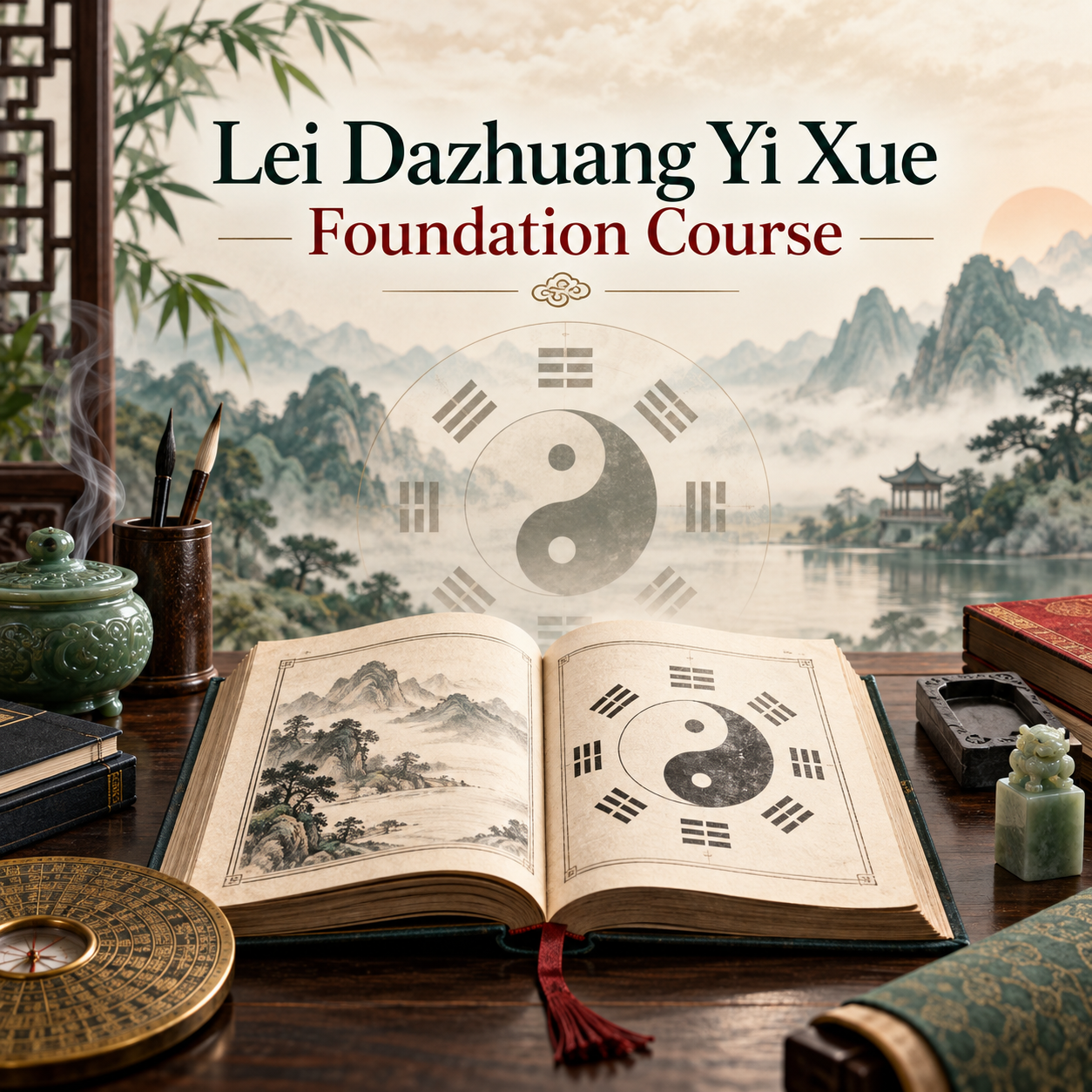
Course Overview
This Yi Xue foundation course is positioned as the starting layer for learners who want to understand the vocabulary and study logic behind traditional Chinese metaphysics. The source listing describes 51 video lessons with supporting documents, making it a broad foundation before moving into Feng Shui form, Li Qi, date selection, or Xuan Kong methods.
Source-Based Course Details
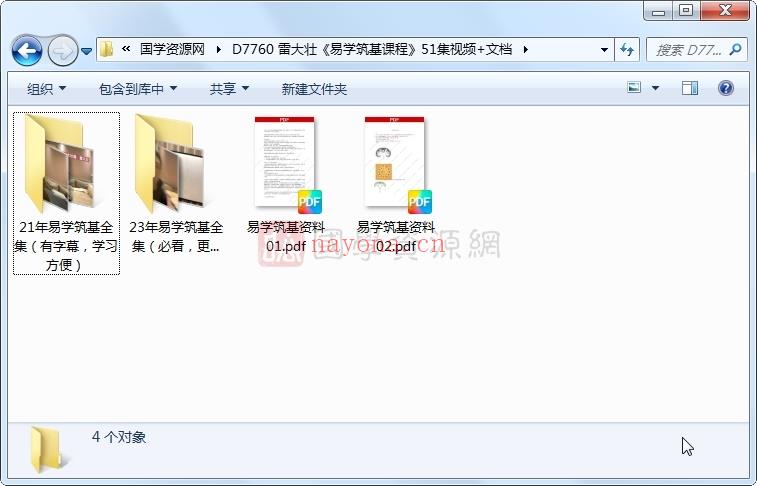
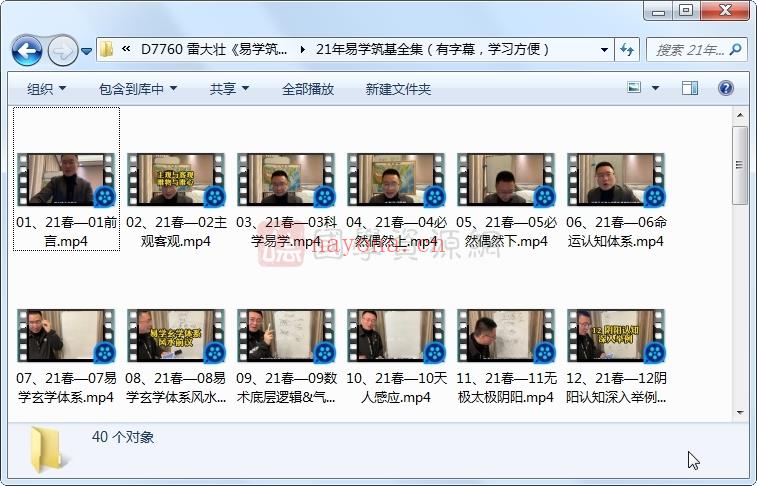
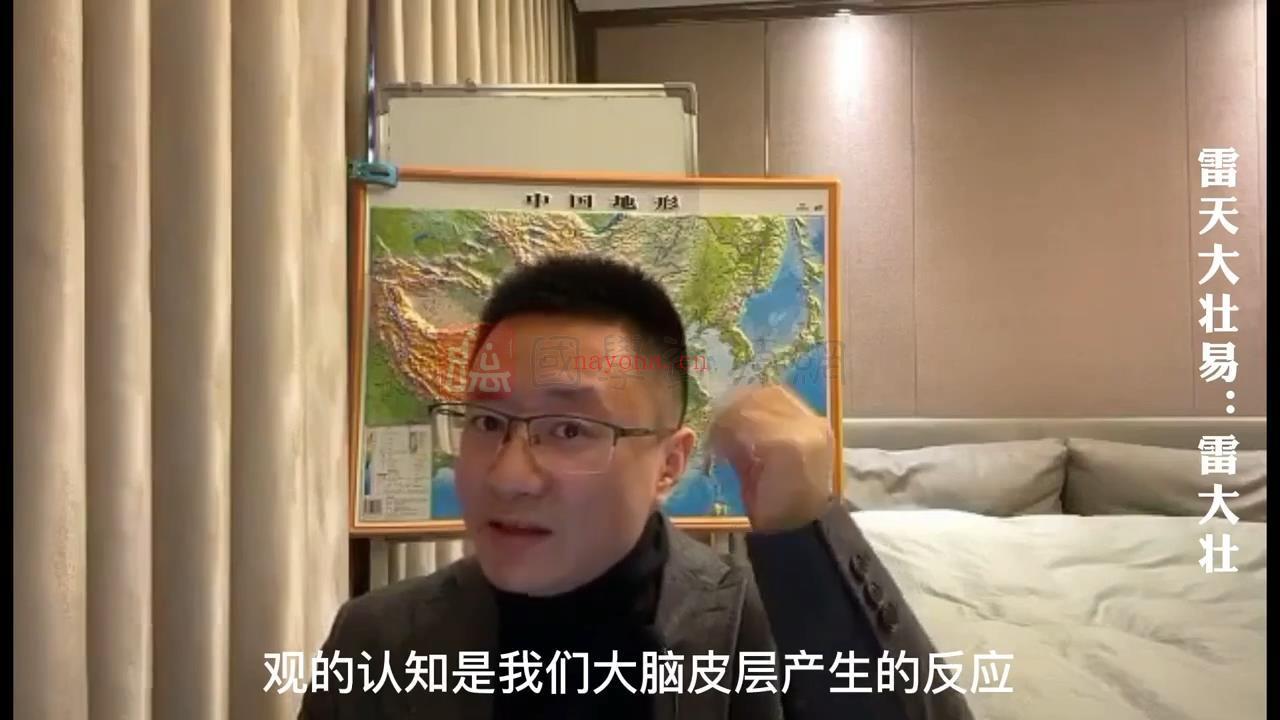
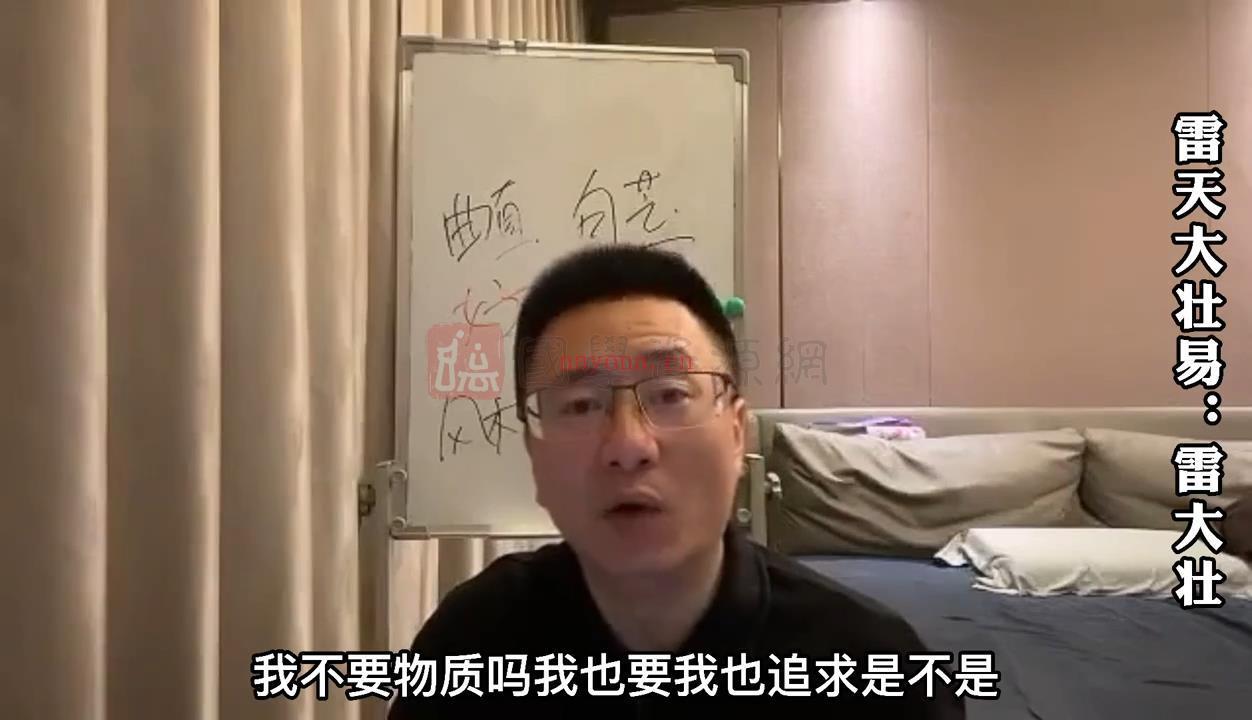
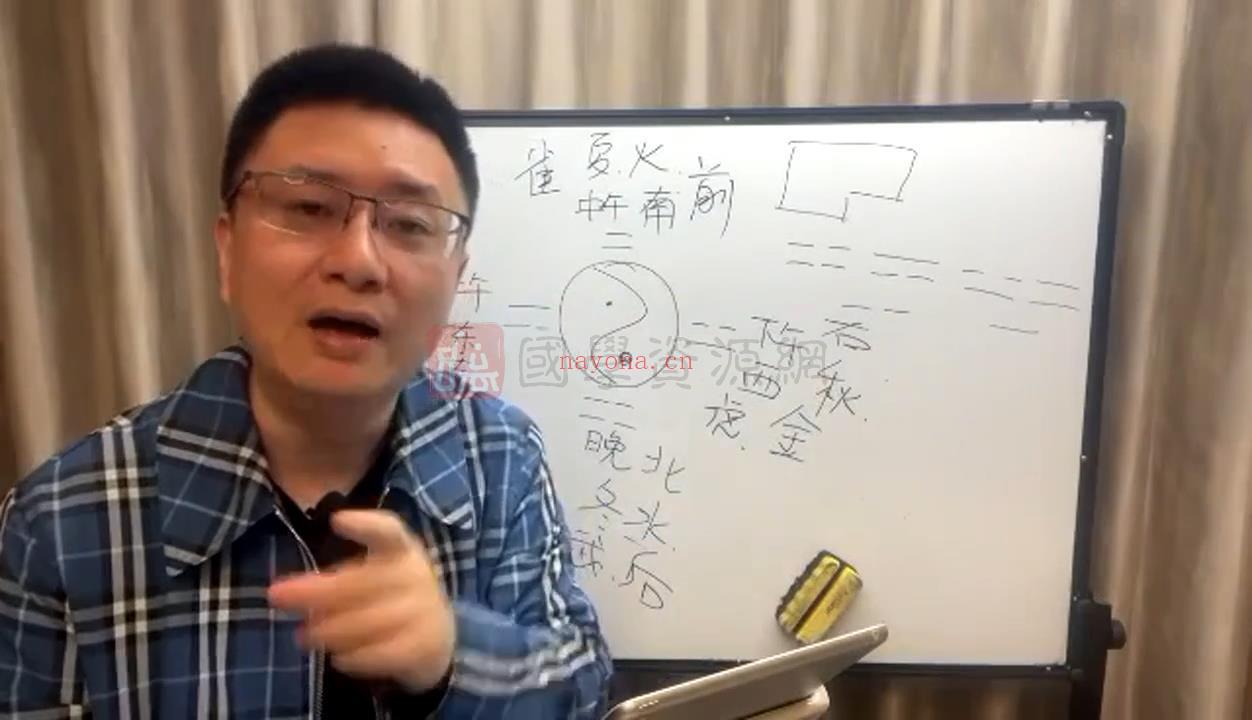
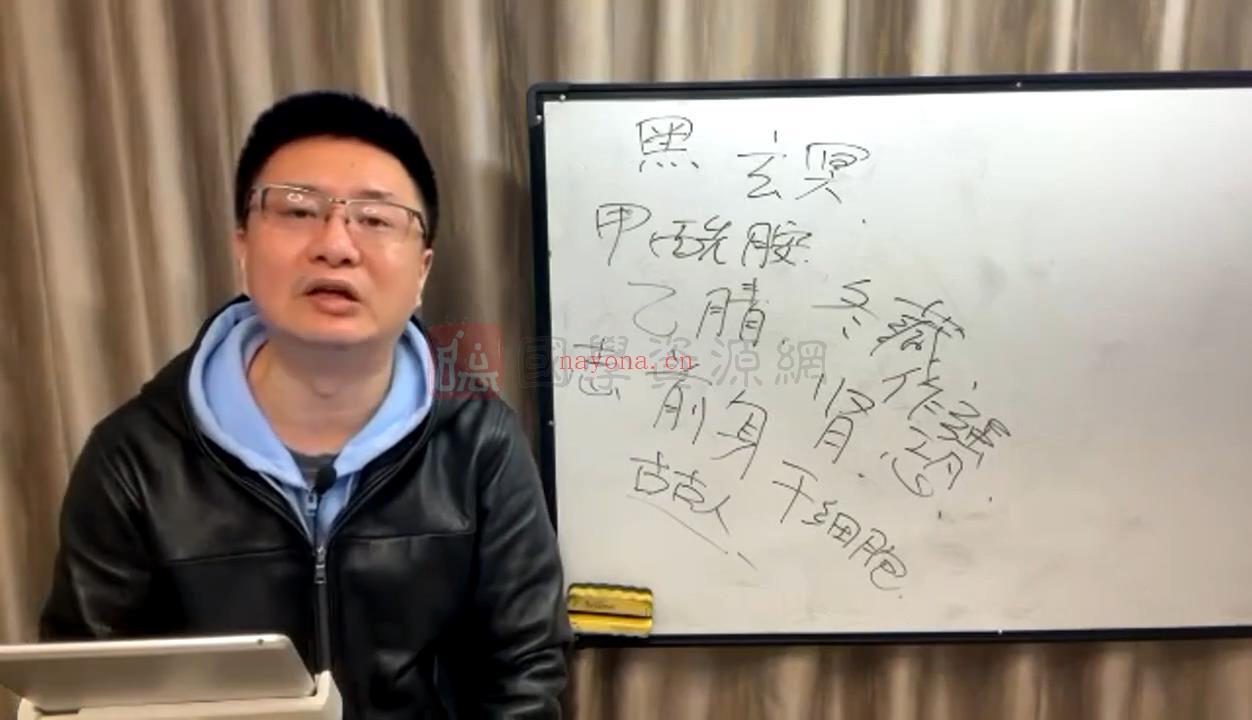
This page is an English educational adaptation based on the richer nayona.cn course record: 雷大壮《易学筑基课程》51集视频+文档百度网盘分享. The original source images are preserved below, and the English structure adds search-friendly sections for course discovery, comparison, and digital delivery.
What You Will Learn
- Core Yi Xue vocabulary used across Feng Shui and Chinese metaphysics.
- How foundational ideas connect to later Feng Shui, Bagua, Five Elements, and practical reading systems.
- How to organize a large 51-lesson course into repeatable study blocks.
- How to use source images and documents as a reference while reviewing lessons.
Course Contents
- 51 video lessons listed in the original course record.
- Supporting documents included in the source listing.
- Foundation-level study path for learners preparing for more specialized Feng Shui courses.
Original Course Images
Who This Course Is For
This digital resource is suitable for Feng Shui learners, Chinese metaphysics students, course collectors, and practitioners who want a structured reference for independent study. Beginners should start with foundation and Form School material before moving into Xuan Kong, Li Qi, or date selection.
Learning Format and Digital Delivery
This is a virtual and downloadable course product. The product page summarizes the course scope, original course imagery, and learning structure. Access instructions are provided through the digital delivery process after purchase.
Curriculum Verified from the Original Courseware
This expanded curriculum summary is based on two supplied Yi Xue foundation workbooks totaling 63 pages. The materials show that this is not a short glossary course: it builds a conceptual framework first, then introduces the symbolic systems used across Feng Shui, BaZi, date selection, and other traditional Chinese metaphysical disciplines.
Part 1: How Yi Xue Builds a Model of the World
- Objective and subjective knowledge: how observation, interpretation, and personal assumptions affect metaphysical reasoning.
- Science, Yi Xue, necessity, and chance: a framework for distinguishing repeatable rules from coincidence and unsupported claims.
- Destiny and influence: an introduction to the factors traditionally considered when discussing fate, environment, timing, and human choice.
- Qi and Ti-Yong: the distinction between an underlying principle or body (ti) and its practical expression or function (yong).
- Underlying models of Chinese metaphysical arts: how a limited set of symbols can be used to organize time, space, change, and relationships.
Part 2: Core Symbols and Correspondences
- Wuji, Taiji, and the idea of selecting a reference point for analysis.
- Yin and Yang as relative, interdependent, and changing qualities rather than fixed labels.
- Four Images, analogy-based classification, the Eight Trigrams, and the Sixty-Four Hexagrams.
- The Five Elements as five modes of energy and transformation: Wood, Fire, Earth, Metal, and Water.
- Hetu and Luoshu numerical arrangements and their role in later spatial and timing systems.
- Heavenly Stems, Earthly Branches, the Twelve Growth Stages, and traditional calendar foundations.
Part 3: Detailed Five-Element Study
The second workbook moves beyond memorizing element keywords. It examines the individual qualities of Wood, Metal, Water, Fire, and Earth, including form, direction, season, movement, symbolic associations, and the way an element changes according to context. This foundation is useful before studying element balance in Feng Shui, BaZi, or date-selection charts.
Teaching Approach Evident in the Materials
The courseware repeatedly emphasizes understanding principles before memorizing techniques. Learners are encouraged to question assumptions, distinguish a model from literal reality, and apply Yin-Yang and Five-Element relationships consistently. The written materials support the lessons with diagrams and structured notes; they are designed as a companion to the recorded instruction rather than a stand-alone replacement for it.
Courseware Included in This Curriculum
The reviewed materials comprise a 44-page foundation workbook and a 19-page Five Elements workbook. Together they cover the conceptual and symbolic vocabulary needed for later study of Feng Shui, Four Pillars of Destiny, Xuan Kong, and Chinese date selection.
Related Lei Dazhuang Courses
- Lei Dazhuang Urban Housing Feng Shui Course
- Lei Dazhuang Xuan Kong Nine Stars Feng Shui Course
- Lei Dazhuang Form School Feng Shui Course
- Lei Dazhuang Date Selection Feng Shui Course
- Lei Dazhuang Feng Shui Qi and Xuan Kong Course Collection
Frequently Asked Questions
Is this a physical product?
No. This is a digital learning resource.
Are the original course images changed?
No. The body images are preserved from the nayona.cn source material so learners can recognize the original course package.
Does this guarantee a Feng Shui result?
No. Karma Kismet presents this material for cultural, educational, and research purposes. It should not replace professional architectural, legal, financial, health, or safety advice.
Editorial Note
Karma Kismet rewrites course introductions in English for search clarity, topic organization, and user understanding while keeping source course images and factual course details intact.

Reviews
There are no reviews yet.