A 385-page Tai Yi Divination study manual presented as a scanned digital reference for beginners through applied study.
Course Overview
This English guide organizes the supplied traditional Chinese learning material around a clear course sequence. The underlying recorded lessons or documents may be in Chinese; review the stated format and curriculum before purchase.
What You Will Study
- Tai Yi terminology and foundations
- Reading the supplied explanations in sequence
- Practice material and applied examples
Course Scope and Format
A 385-page Tai Yi Divination study manual presented as a scanned digital reference for beginners through applied study. The course title and description identify the lesson count or page length when stated in the supplied curriculum. This is a digital educational product; no physical item is shipped.
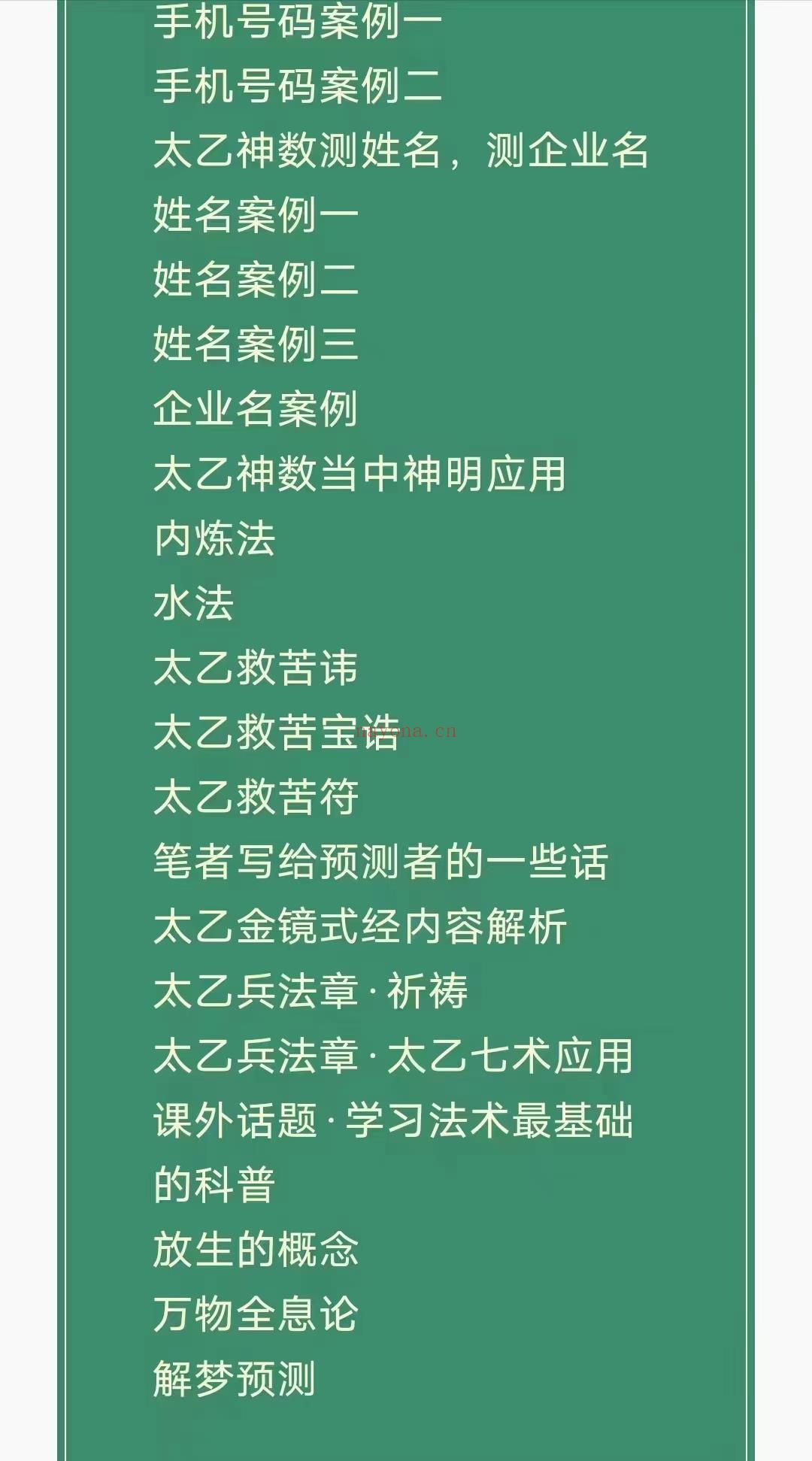
Original Course Preview Images
These images come from the original course listing and help show the supplied material.


Who This Resource Is For
This resource is for learners of traditional Chinese metaphysics who want to study the named method and compare the recorded examples with the stated rules. Beginners should start with terminology and basic procedures before moving to advanced cases.
Study Approach
Follow the lessons in order, keep a glossary of Chinese terms, and document the steps used in every example. Distinguish a traditional interpretation from an evidence-based claim or a guaranteed personal outcome.
Digital Delivery
This product is virtual and downloadable. No physical shipment is required. Check the product and order details for the available delivery format.
Frequently Asked Questions
Is the material in English?
The product guide is in English. Original lessons and documents may be in Chinese.
Is this a physical product?
No. It is a digital study resource.
Does the method guarantee a result?
No. Traditional interpretations are presented for cultural and educational study, not as guaranteed predictions or professional advice.
Related Learning
Browse the Tai Yi Divination collection and the full course library.
- I Ching Applied Practice: 80 Video Lessons
- Plum Blossom Numerology and Trigram Practice: 89 Lessons
- I Ching for Beginners: Casting and Reading Hexagrams
- The 64 Hexagrams Explained: Video and Study Guide
For course questions, contact Karma Kismet.
Reading a Tai Yi Manual as a Study Resource
This 385-page scanned reference offers a substantial amount of material for someone exploring Tai Yi Divination. The useful question is how to read it carefully. Tai Yi terminology, calculation procedures, and interpretive examples can be difficult to follow when encountered all at once. Treat the manual as a text to examine, annotate, and revisit. A patient reading practice will help you distinguish a stated rule from an example, and an example from a claim about what will happen in real life.
The source listing presents the book as an introduction that moves toward applied discussion. That description can guide your expectations, but it does not establish how clearly every page scans or how much prior knowledge each passage assumes. Before relying on a particular explanation, make sure you can read the relevant page and identify each step it actually states. When a passage appears incomplete or ambiguous, record the uncertainty instead of filling the gap with a guess.
Build a Working Vocabulary
Begin by collecting unfamiliar Chinese terms exactly as they appear. Give each term a page reference and a brief provisional definition. If two passages seem to use the same word differently, keep both contexts in your notes. Translating a technical term with one convenient English word can hide a distinction that matters later in the method. Your glossary should remain open to correction as you continue through the manual.
It also helps to separate three kinds of information: the symbols named by the text, the procedure for arranging or calculating them, and the interpretation attached to the completed arrangement. A learner may recognize individual terms yet still lose track of the order of operations. Keeping these layers apart makes it easier to find the precise point where your understanding becomes uncertain.
A Practical Reading Sequence
- Survey the pages and note where introductory explanations, procedures, and examples appear. This is a navigation exercise, not an assumption that every section follows a fixed curriculum.
- Read an introductory passage slowly and rewrite its main point in your own words without adding claims it does not make.
- For each procedure, create a numbered list of the steps stated on the page. Mark any step you cannot verify from the scan.
- Work through one example with your notes covered, then compare your reconstruction with the text.
- Return to earlier definitions after studying an example. Context may clarify a term that was initially obscure.
A long scanned manual is rarely best approached by reading many pages in one sitting. Short sessions leave room to test whether you can explain a concept without looking at the page. If you cannot, revisit the specific passage rather than pushing ahead. Record page numbers for open questions so that later material can be compared with the original wording.
Keep Rules and Examples Distinct
The source description refers to calculations, practical techniques, and situations used for illustration. An example can show how an author applied a method in one case, but it does not necessarily define a universal rule. Note what information the example begins with, which operations the text shows, and which interpretive choices are made afterward. If a conclusion appears without an explained step, label it as the author’s conclusion rather than presenting it as a calculation you have independently reproduced.
You can make a simple practice sheet with spaces for the starting information, terms used, procedural steps, textual evidence, and remaining questions. Complete the sheet using only a passage you can actually read. This creates a record of your reasoning and helps you spot recurring difficulties. If several examples use a similar step, compare their wording before deciding that the step has the same role in each context.
Who May Find This Manual Useful
A beginner interested in traditional Chinese divination may value the opportunity to examine terminology and worked material at length. A reader with prior experience may use the manual to compare its presentation with another text. Someone primarily seeking a short overview, a fully edited modern textbook, or immediate answers to personal questions may find a lengthy scan less convenient. The number of pages describes the scale of the reference; it does not measure clarity, completeness, or suitability for every reader.
Because the underlying material is Chinese, language ability affects the study experience. An English description of the product cannot replace the wording on the scanned pages. If you use translation tools, check technical terms against the surrounding passage and keep the original characters in your notes. A literal translation can be helpful for orientation while still missing the meaning intended within a specific traditional framework.
Interpretation and Responsible Use
Tai Yi Divination belongs here as a subject of cultural and textual study. Its interpretive practices should not be treated as evidence that a future event is certain. Be especially careful when an example discusses health, relationships, work, or other consequential matters. Study what the text says and how its reasoning is organized, while making important real-world decisions through appropriate evidence and qualified help. It is reasonable to leave a passage unresolved when the scan or your current knowledge does not support a confident reading.
Some promotional language in a source listing may describe material as uniquely valuable or promise easy mastery. Such language is not a useful substitute for inspecting the text itself. Evaluate the manual by whether its pages are legible to you, whether the explanations support your study goals, and whether you can trace an example back to the stated procedure. Progress means understanding the material more accurately, not producing an impressive-sounding interpretation.
Questions About the 385-Page Manual
Does the page count mean every page is a lesson?
No. A page count indicates the size of the scanned reference. Pages may contain explanations, examples, notes, or other material. Follow the organization visible in the manual rather than assuming one page equals one lesson.
Can someone new to Tai Yi start here?
The source description presents the book as beginning with foundations. A newcomer can start by building a glossary and tracing introductory procedures, but should expect to pause when terminology or calculations need further clarification.
How should I handle a step I cannot read in the scan?
Mark the page and the uncertain characters. Compare nearby passages if they address the same step. Do not silently invent missing text or treat a guessed calculation as something the manual explicitly teaches.
Will studying examples make my interpretations certain?
No. Examples can help you understand the author’s method and practice following its internal logic. They do not establish reliable predictions or remove uncertainty from personal decisions.
What is a useful goal for a first pass?
A modest first goal is to identify the main terms, locate the procedural explanations, and reconstruct one readable example. That gives you a firmer basis for deciding which chapters deserve deeper study.