An advanced 336-video course on number combinations and the Triangle Law tradition within Chinese image-number study.
Course Overview
This English guide organizes the supplied traditional Chinese learning material around a clear course sequence. The underlying recorded lessons or documents may be in Chinese; review the stated format and curriculum before purchase.
What You Will Study
- Number combination patterns
- Triangle Law terminology
- Applied examples organized by life topic
Course Scope and Format
An advanced 336-video course on number combinations and the Triangle Law tradition within Chinese image-number study. The course title and description identify the lesson count or page length when stated in the supplied curriculum. This is a digital educational product; no physical item is shipped.
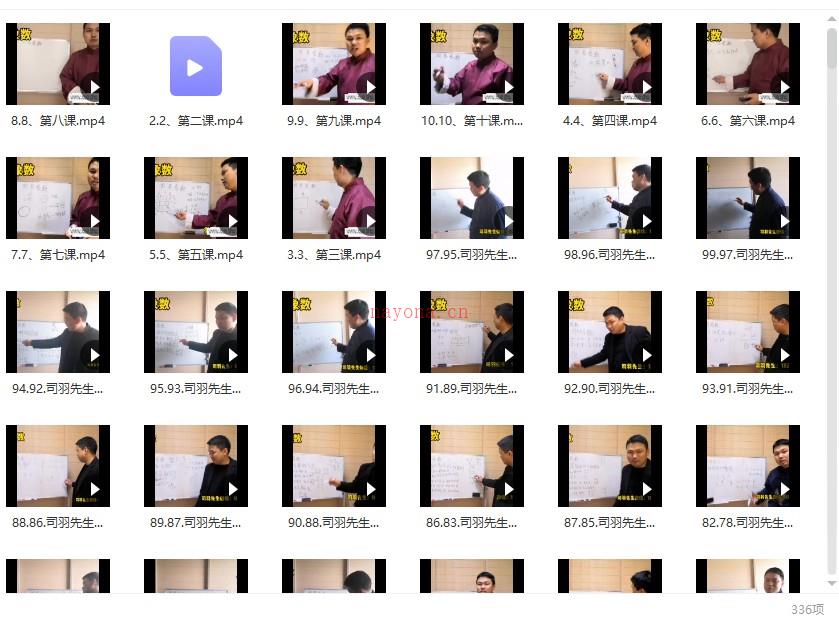
Original Course Preview Images
These images come from the original course listing and help show the supplied material.

Who This Resource Is For
This resource is for learners of traditional Chinese metaphysics who want to study the named method and compare the recorded examples with the stated rules. Beginners should start with terminology and basic procedures before moving to advanced cases.
Study Approach
Follow the lessons in order, keep a glossary of Chinese terms, and document the steps used in every example. Distinguish a traditional interpretation from an evidence-based claim or a guaranteed personal outcome.
Digital Delivery
This product is virtual and downloadable. No physical shipment is required. Check the product and order details for the available delivery format.
Frequently Asked Questions
Is the material in English?
The product guide is in English. Original lessons and documents may be in Chinese.
Is this a physical product?
No. It is a digital study resource.
Does the method guarantee a result?
No. Traditional interpretations are presented for cultural and educational study, not as guaranteed predictions or professional advice.
Related Learning
Browse the Life Numbers & Triangle Law collection and the full course library.
- I Ching Applied Practice: 80 Video Lessons
- Plum Blossom Numerology and Trigram Practice: 89 Lessons
- I Ching for Beginners: Casting and Reading Hexagrams
- The 64 Hexagrams Explained: Video and Study Guide
For course questions, contact Karma Kismet.
Studying patterns in an advanced number course
This advanced video course is presented as a study of number combinations within a Chinese image number tradition, including a framework called Triangle Law. The listing identifies 336 videos and mentions examples organized by life topic. Those facts suggest a large body of recorded material, but they do not provide a complete topic map for every recording. The most useful starting question is therefore methodological: how does the presenter move from a group of numbers to a named pattern, and from that pattern to a proposed interpretation?
Numbers can be combined in many ways. A rule needs to state which numbers are selected, how their positions matter, and what changes when their order changes. Without that information, a memorable example is hard to reproduce. Treat the course as an opportunity to document a particular traditional vocabulary and its application. Avoid assuming that the phrase Triangle Law denotes a mathematical theorem or a universally shared rule across other number systems.
What to clarify before interpreting a combination
For each example, identify the inputs first. Are the numbers supplied by a person, a date, a text, or another source? The available summary does not answer that for the entire course, so the recordings must be checked case by case. Next, record any grouping or transformation exactly as shown. Finally, note the labels the presenter applies and the life topic being discussed. A clear transcript of these steps lets you distinguish a formal procedure from a verbal association added afterward.
When a course covers many examples, repetition can be valuable. A term that seems vague in one recording may be applied more precisely in another. At the same time, a long sequence can make inconsistent uses harder to spot. Maintain an index of number patterns and definitions, linking each to the lesson where it appears. If a later lesson modifies an earlier explanation, preserve both versions and note the difference instead of quietly replacing the first.
A workable path through a large collection
- Sample the opening recordings to identify assumed vocabulary and the basic form of an example.
- Create a glossary for recurring terms, keeping an uncertain translation marked as uncertain.
- Reproduce a small number of worked combinations step by step.
- Group your notes by the rule used, then by the life topic discussed.
- Review examples that appear to share a pattern and compare their interpretations.
- Record exceptions, skipped steps, and claims that are not supported by the demonstrated procedure.
- Periodically summarize the method in your own words and test that summary against a fresh example.
This plan helps prevent the sheer number of videos from becoming the measure of progress. Understanding ten examples with their rules and limits can be more useful than watching many recordings without a traceable record. The listed file sequence includes numerous numbered items, but the listing alone does not guarantee a simple progression from introductory to advanced topics. Use the actual lesson content to determine when a prerequisite needs revisiting.
How to handle life topic examples
The source mentions examples concerning areas such as accidents and marriage. These are sensitive subjects. In notes, identify what the presenter claims the number pattern signifies, then ask what information was already known about the case. A symbolic label should not be turned into a prediction about a real person’s safety or relationship. The source’s description uses emphatic claims about accuracy and innovation; those are part of its promotional account, not independent evidence.
Life topics also invite broad language. A phrase such as change, conflict, or opportunity can fit many circumstances. When evaluating an example, ask how specific the interpretation was before any outcome was supplied. Does the course define a condition under which the pattern would mean something else? Is there a way to distinguish the cited interpretation from several plausible alternatives? These questions help you study the framework fairly without accepting more than the example demonstrates.
Triangle Law as a study term
The title and source description use Triangle Law in connection with number combinations. Until a recording defines the term, treat it as the name of this tradition’s organizing idea. Draw the arrangement used in a lesson exactly as shown in your private notes, and label the numbers according to the presenter’s language. Then write a separate explanation of what the arrangement is said to mean. If a later example uses a different arrangement, compare the two before concluding that they follow the same rule.
A useful self check is to take an example whose interpretation you have not yet watched and attempt only the mechanical part. Can you identify the same combination or position as the presenter? If not, the missing issue is procedural. If you can reproduce the pattern but not the interpretation, the missing issue is semantic. These are different study problems and may require different kinds of review.
Appropriate audience and preparation
The advanced label suggests that viewers may encounter specialized terms early. Someone familiar with Chinese image number study may be ready to compare this approach with previously learned systems. A newcomer can still inspect the material, but may need to pause often and build a foundation in the relevant terminology. The English guide describes the subject; the underlying videos may be in Chinese. Preview material can help judge whether language and pace are manageable.
The number of recordings does not by itself show how many distinct rules are taught, how much repetition occurs, or whether any particular question receives a complete treatment. Let the examples and explanations, rather than the size of the collection, determine its value for your purpose. If your aim is historical or comparative study, note where the presenter attributes a rule to a tradition and where they present it as their own explanation. Do not infer an origin or lineage beyond what can be verified from the material.
Responsible use and realistic expectations
Number patterns can be studied as part of a cultural interpretive practice. They do not establish facts about a person’s life or future. In particular, do not use a pattern to assess medical risk, predict an accident, judge a relationship, or direct a consequential financial or legal choice. For those situations, rely on relevant evidence and qualified people.
If practicing with examples from your own life, use low stakes material and write down both the rule and your interpretation before learning an outcome. Keep track of readings that fail to fit as well as those that seem striking. This will make your study more honest and reduce the temptation to adjust a meaning after the fact. Respect other people’s privacy and avoid applying sensitive labels to them without consent.
Questions about Triangle Law and life number patterns
Is Triangle Law a standard mathematical law?
In this listing it is the name of a traditional interpretive framework. Its procedures should be learned from the lessons, not assumed from the mathematical meaning of a triangle.
Are the 336 videos all different topics?
The listing states the video count but does not provide a complete topic by topic outline. Some recordings may develop or revisit earlier ideas; inspect the material to understand its organization.
Can I use an example to assess someone’s future?
No reliable future judgment follows from a demonstrated symbolic pattern. Treat case interpretations as examples of the tradition and leave major decisions to appropriate evidence.
What should I do when the numbers match but my reading differs?
Separate the reproduced calculation from the interpretive step. Compare the presenter’s stated conditions and vocabulary with your notes, and mark any unresolved choice.
Would prior number study help?
Familiarity with basic image number vocabulary may help with an advanced presentation, but prior systems should be kept separate until the recordings show a direct connection.