This detailed Taiji collection begins with standing practices and silk-reeling exercises, develops stepping and hand methods, and then breaks down Chen-style form sequences. The indexed files allow learners to compare individual movements with whole-form demonstrations.
Course Overview
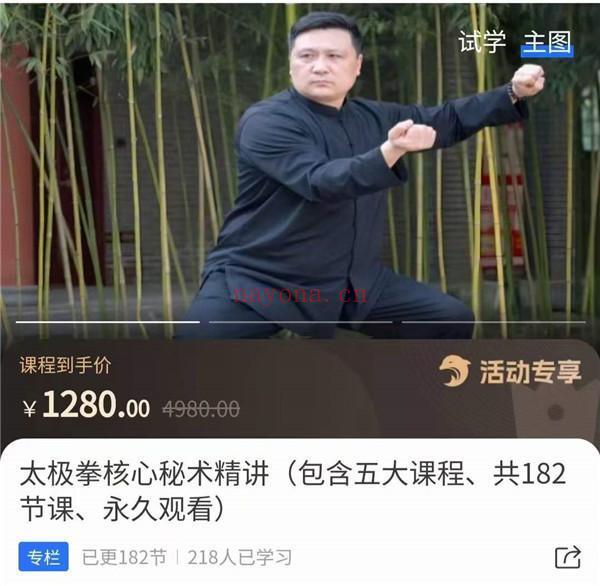
Chen Erhu Tai Chi Core Principles: 182 Lessons is a digital study resource in the Tai Chi collection. This English product guide explains the listed material; the original recordings and documents are in Chinese. English subtitles or translated full lessons are not included unless separately stated.
Course Contents and Learning Focus
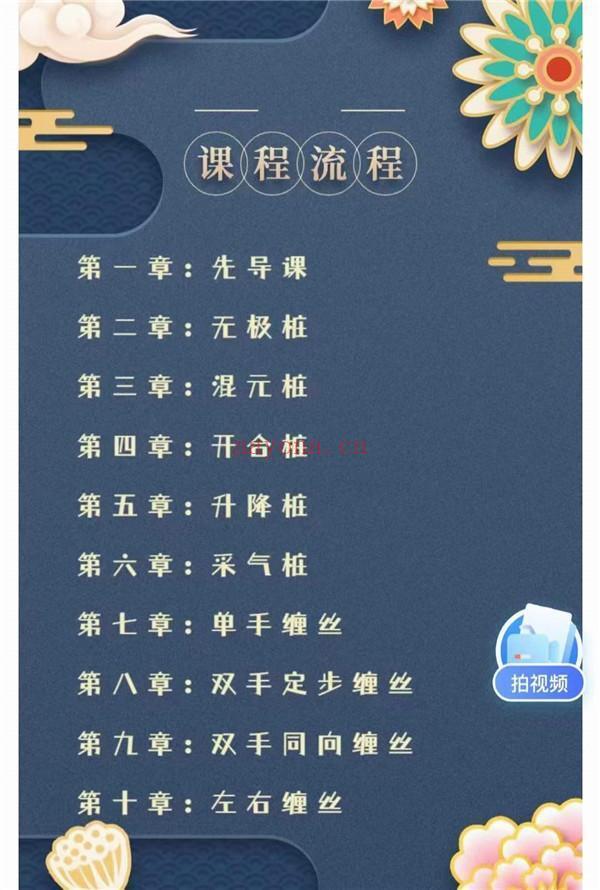
- Lessons 1-6: introduction and standing exercises
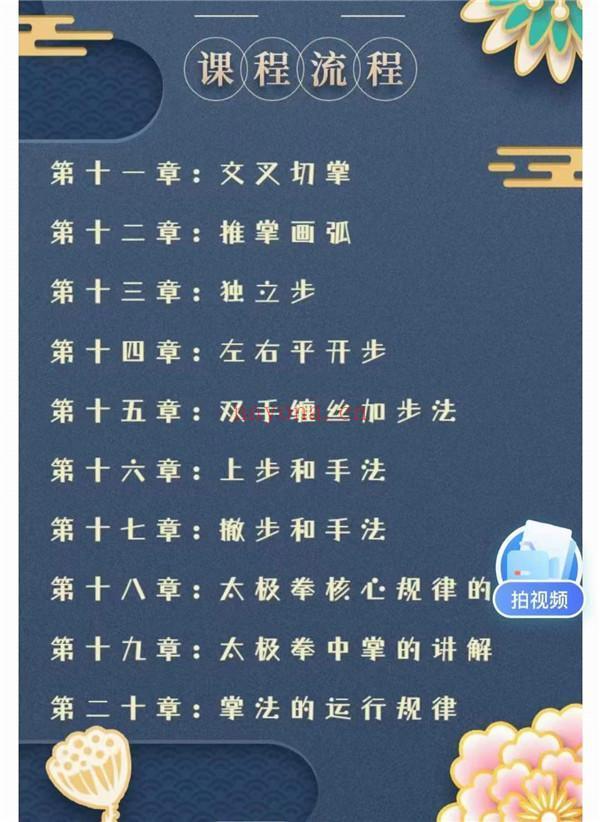
- Lessons 7-17: silk-reeling, stepping and coordinated hand work
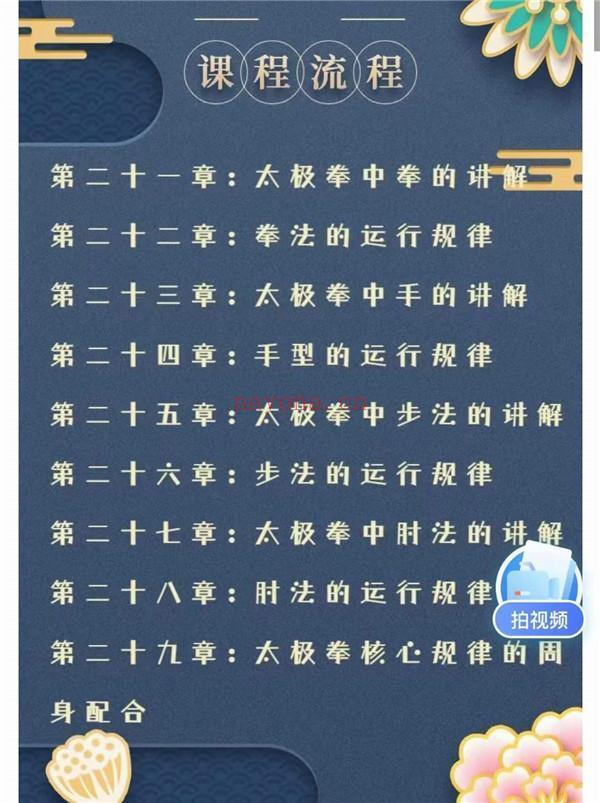
- Lessons 18-29: palm, fist, hand, elbow and footwork principles
- Lessons 30-100: individual movements of the first form sequence
- Lessons 101-102: front and rear whole-form demonstrations
- Lessons 103-182: the second indexed movement sequence
What You Will Learn
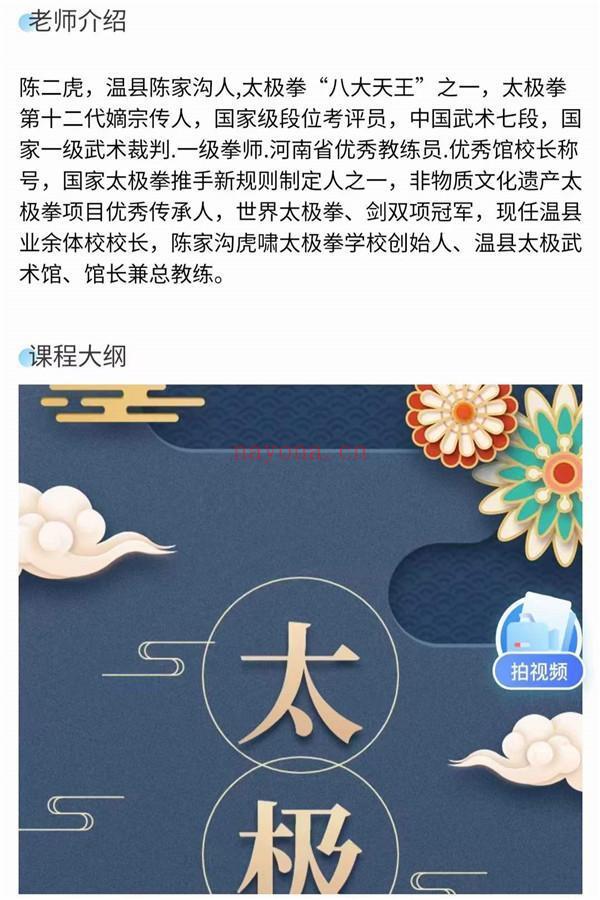
Use the listed topics to identify the scope of this resource, follow its recorded sequence and compare the original diagrams with your study notes. Where individual lesson names are not supplied, the preview images are provided instead of an invented syllabus.
Original Course Previews



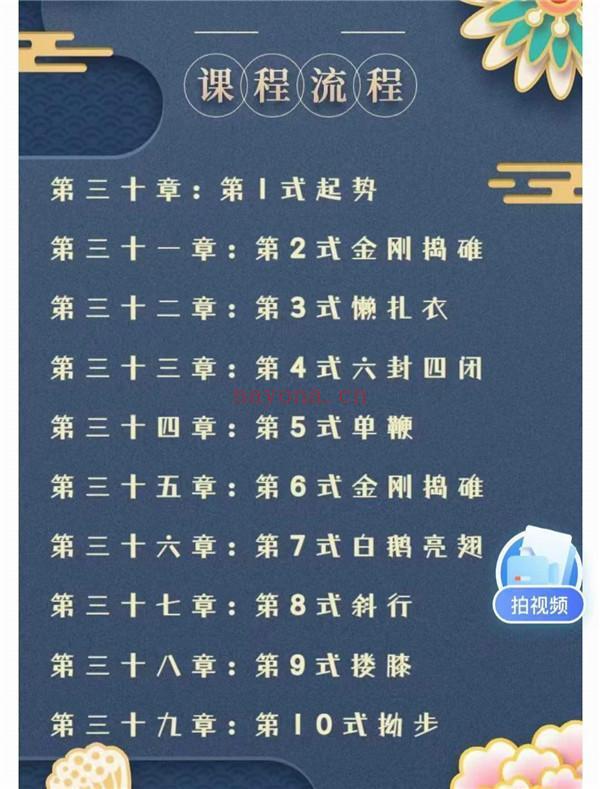
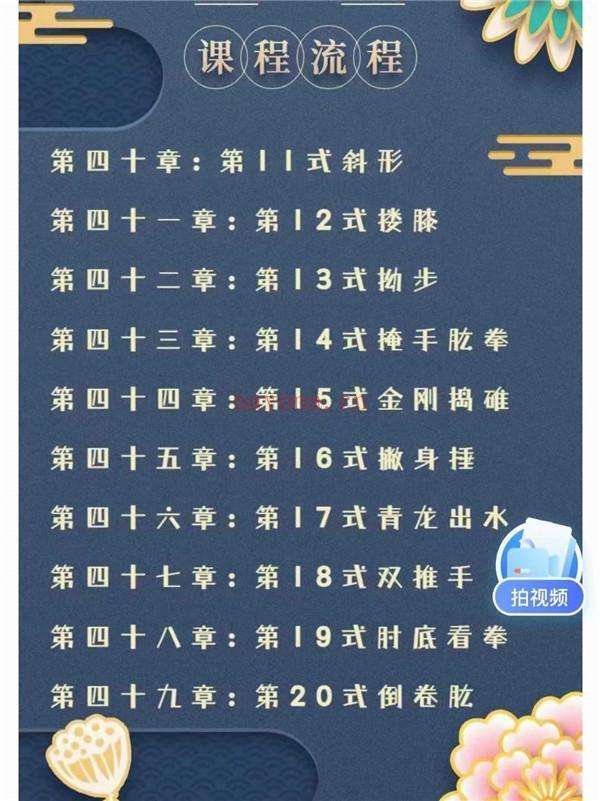
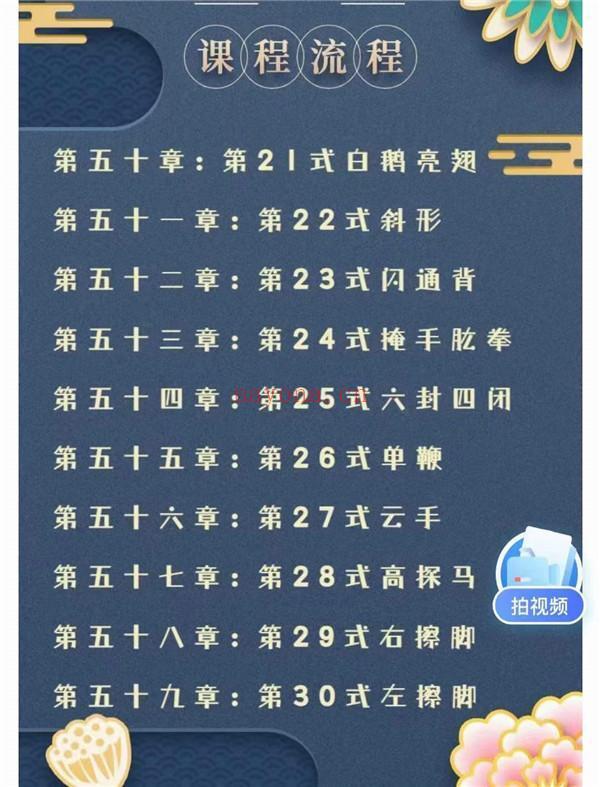
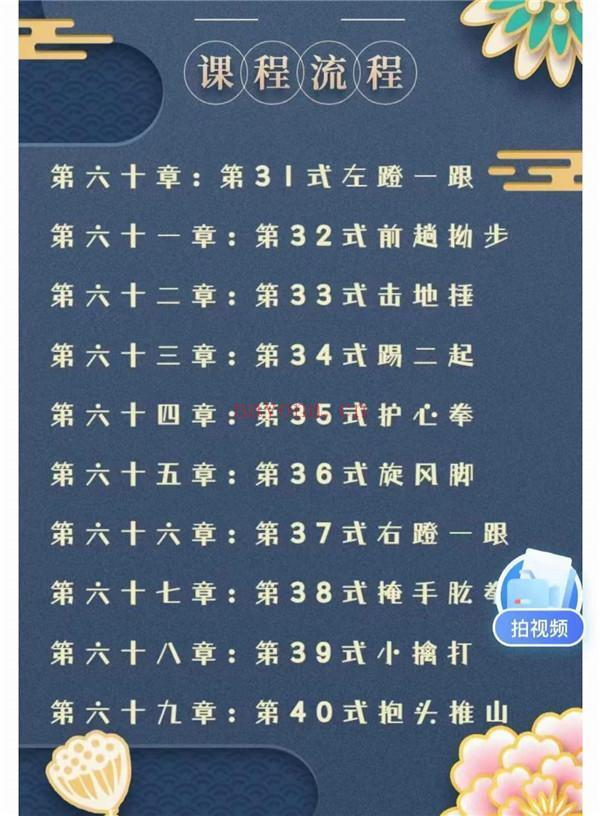
Who This Course Is For
For learners who can follow Chinese-language material and want to study Tai Chi. Check the format and previews before buying. Intermediate or continuation courses assume familiarity with the relevant foundations and do not imply that prerequisite courses are included.
Learning Format and Digital Delivery
Format: 182 recorded lessons across five advertised course series. Price: USD 9.00. This is a virtual, downloadable product; no physical shipment is required. The download link has not yet been attached to this listing and will be added by the store. Contact us before ordering if you need to confirm delivery timing; immediate automatic file access is not promised.
Frequently Asked Questions
Is the course taught in English?
No English-language recording or subtitle track is confirmed. This description is in English; the underlying course material is Chinese.
What is included?
182 recorded lessons across five advertised course series. Review the course contents and original previews for the stated scope.
Will a physical item be shipped?
No. This is a digital learning resource.
Is a certificate or personal consultation included?
No certificate, accreditation or individual consultation is promised by this listing.
Editorial Note and Disclaimer
Karma Kismet has organized the course listing and available directory into this English guide. Lesson counts refer to the supplied listing, not an independent review of every recording. Traditional and cultural study only. Ritual or internal-alchemy claims are not guaranteed or verified outcomes. Physical demonstrations do not replace qualified supervision; avoid painful movements, forced breathing or breath retention.
Related Courses
- Liu Ying Xing Yi Quan Five Qi Course: 45 Videos
- Fa Yuan Bagua Zhang Foundations: 21 Lessons
- Ma Hong Tai Chi Course: 38 Videos
- Yi Xiang Daoist Internal Alchemy: 45 Lessons
Browse Tai Chi, review course and delivery questions, or learn about Karma Kismet.
Using a Detailed Tai Chi Index
The unusual strength of this 182-lesson listing is its granularity. Early recordings identify standing exercises, silk-reeling, stepping and hand methods. A long middle section names individual movements in a first form sequence, followed by front and rear demonstrations of the whole form. The remaining indexed lessons take up another movement sequence. This gives a learner several ways to locate a particular topic, but a long index is not the same as a personalized training plan. Its best use is as a map for careful viewing and review.
Chen-style Tai Chi movements may appear slow when viewed as a whole. The lesson titles show how many separate questions can sit inside that appearance: What do the feet do? When does a hand change shape? How is a turn coordinated with the rest of the body? The first part of the collection names such questions directly through lessons on palms, fists, hands, elbows, footwork and overall coordination. A viewer can use these entries to develop a more precise language for observing a demonstration without assuming that recognizing a movement makes it safe or accurate to perform.
Foundations before the form
The first six listed lessons include an introduction and several named standing exercises. The next group covers one-handed and two-handed silk-reeling, crossing or arcing hand movements, and stepping variations. These entries can help a student notice recurring patterns when later form lessons move more quickly through a sequence. If a term such as silk-reeling is unfamiliar, begin by watching what the recording actually demonstrates. Treat traditional imagery as a teaching vocabulary, not as a literal statement about the body’s internal structure.
Lessons 18 through 29 then name core rules and particular methods. Their position in the index suggests that they offer a bridge between simpler exercises and the many individually named form movements that follow. That is a useful organizational inference, not a claim that each principle is fully mastered before lesson 30. In movement study, a principle often becomes clearer after returning to an earlier lesson with a specific later example in mind.
Working Between Parts and Whole
- Choose one named movement from the first indexed sequence and note its lesson number.
- Watch its individual lesson, recording only the visible order of major actions and any spoken point you understand clearly.
- Find the same movement in a whole-form demonstration. Compare its entry and exit with the isolated lesson.
- Use the front and rear views to check direction and placement, while remembering that neither view reveals every detail.
- Return to the early stepping or hand-method lesson that seems relevant. Revise your notes if the whole-form context changes your interpretation.
The repeated movement names in the index are useful rather than redundant. A named posture can recur at different points in a form, where the preceding and following actions differ. It is worth recording the lesson number as well as the movement name. Otherwise, a note about a later Single Whip or Cloud Hands entry may be mistaken for a note about its earlier occurrence.
The second indexed movement sequence also allows comparison with the first. Similar names appear in both portions, yet similar names need not imply identical transitions or presentation. Describe what you can actually see in each recording. If the course’s five advertised series are not clearly marked in the file names available to you, avoid imposing your own series boundaries on the index.
For learners at different stages
A beginner may use the early lessons to become familiar with posture names and watch the form demonstrations for orientation. Someone who already studies Chen-style Tai Chi may prefer to use the individual movement clips as references for a question raised during supervised practice. A researcher can examine how the course orders foundational methods and form material. In every case, the recordings are a study aid rather than a source of live correction.
Some movements listed later involve turning, low positions, kicks or changes of balance. A viewer should not copy the deepest or fastest visible version simply because it appears in a video. Work within a comfortable range, leave space around you and stop if a movement causes pain or instability. Qualified in-person instruction is particularly useful for movements where the camera cannot show how weight is distributed or how a transition is controlled.
Meaning and Limits of Core Principles
The phrase core principles describes the course’s teaching focus. It does not mean that a fixed number of videos can settle every question about Tai Chi or deliver a guaranteed level of proficiency. Traditional movement names and explanations are part of an art’s language. They may serve as memorable cues, but they should not be converted into medical claims. Likewise, an assertion in surrounding source commentary about rapid improvement or lasting access should not replace checking what is actually listed and available.
A useful personal outcome from study is a better question: Which part of the step is unclear? At what point does the hand turn? How does this repeated posture differ in its new location? Those questions can guide discussion with an instructor and make review more focused. They are more realistic than expecting a large lesson count alone to determine progress.
Questions About the 182-Lesson Collection
Why are there both individual lessons and whole-form demonstrations?
Individual entries help isolate a named movement. Whole-form views show that movement among its neighbors. Comparing both can clarify order and transitions that an isolated clip cannot show.
Are the front and rear views interchangeable?
They present different visual information. One may make a direction or arm position easier to see, while the other clarifies how the sequence travels. Neither provides a complete view of your own execution.
Should I study all 182 lessons in one pass?
The index supports selective review. It is reasonable to begin with a small group of foundational lessons, then return to relevant entries as questions arise in the form material.
Do repeated posture names mean duplicate lessons?
No. A posture name can appear at more than one point in a sequence. Its transitions and surrounding movements may change, so record the lesson number when taking notes.
Can this collection assess my Tai Chi form?
No. The recordings show material for observation and study. They cannot evaluate your balance, comfort or interpretation in real time. Use direct, qualified feedback for physical corrections.
Treat the extensive index as a navigation tool. It lets you move deliberately among standing work, principles, individual movements and complete demonstrations while keeping clear boundaries between studying a recorded presentation and receiving supervised movement instruction.