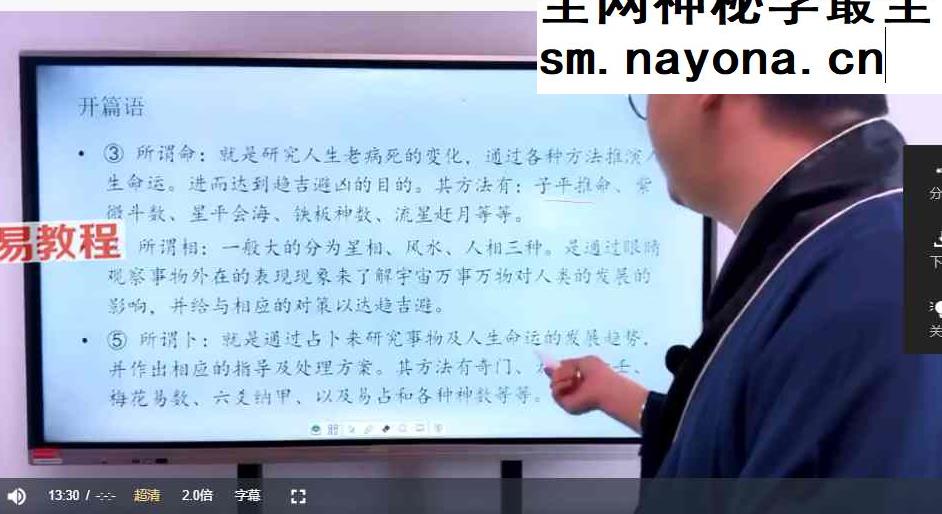
Explore Yi Xiang's Xing Ming dual-cultivation syllabus as a traditional Daoist study collection. The directory includes literary commentary, sitting practice, breath-related teachings and internal-alchemy imagery; extraordinary claims in the historical terminology are not presented as verified effects.
Course Overview
Yi Xiang Daoist Internal Alchemy: 45 Lessons is a digital study resource in the Daoist Meditation & Internal Alchemy collection. This English product guide explains the listed material; the original recordings and documents are in Chinese. English subtitles or translated full lessons are not included unless separately stated.
Course Contents and Learning Focus
- Xing Ming dual cultivation and Daoist terminology
- Commentary on Su Dongpo, Bai Juyi and Lu Zu texts
- Traditional sitting and stillness teachings
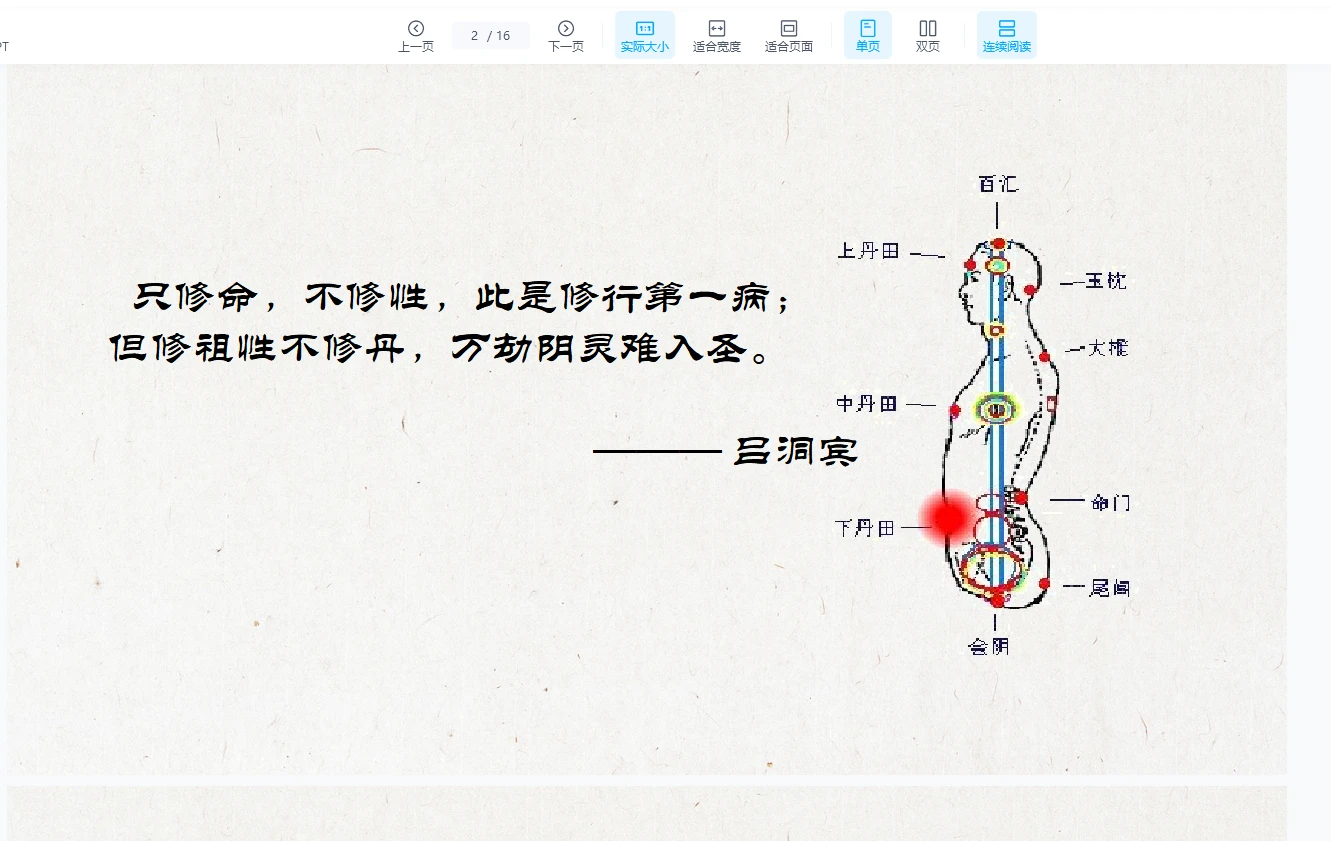
- Neijing Tu and internal-alchemy imagery
- Standing exercises, Six Healing Sounds and daily-life themes
- PowerPoint files and supplementary autobiographical recordings
What You Will Learn
Use the listed topics to identify the scope of this resource, follow its recorded sequence and compare the original diagrams with your study notes. Where individual lesson names are not supplied, the preview images are provided instead of an invented syllabus.
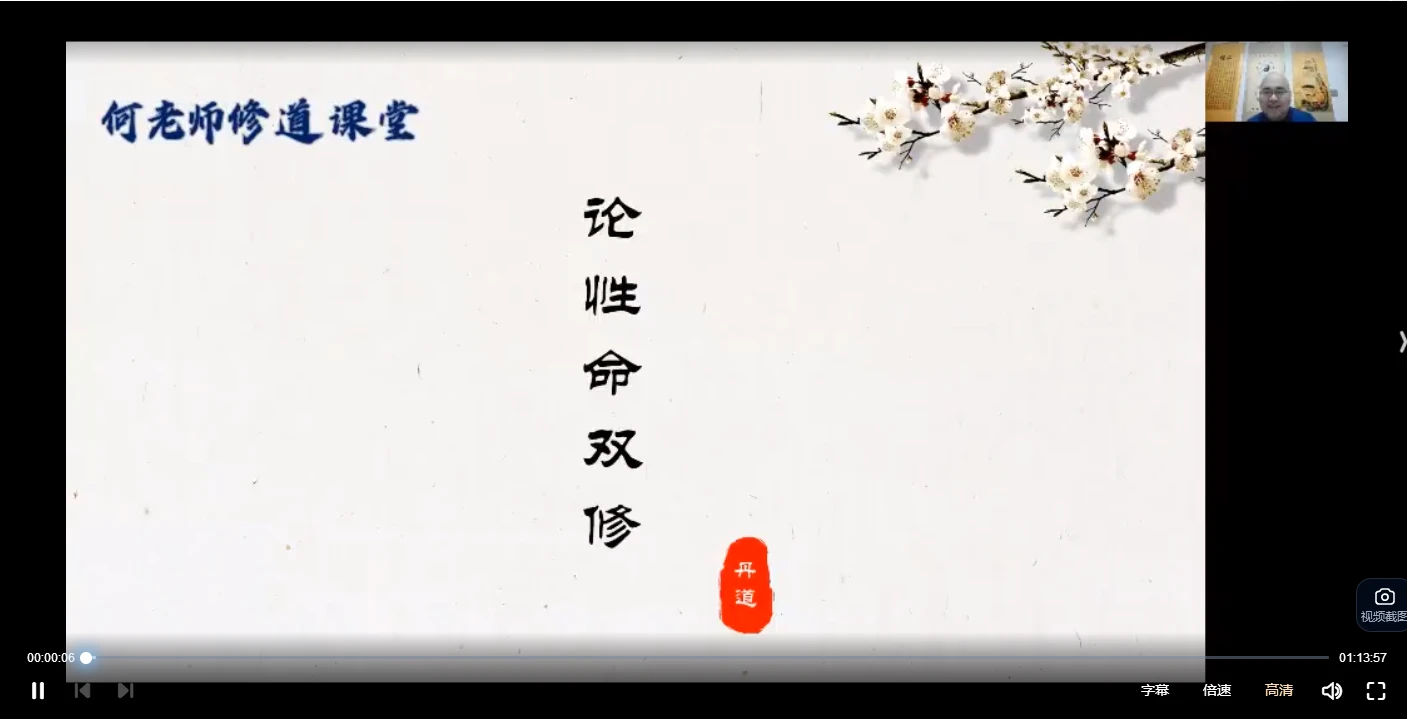
Original Course Previews



Who This Course Is For
For learners who can follow Chinese-language material and want to study Daoist Meditation & Internal Alchemy. Check the format and previews before buying. Intermediate or continuation courses assume familiarity with the relevant foundations and do not imply that prerequisite courses are included.
Learning Format and Digital Delivery
Format: 45 principal video lessons with PPTX and supplementary materials. Price: USD 9.00. This is a virtual, downloadable product; no physical shipment is required. The download link has not yet been attached to this listing and will be added by the store. Contact us before ordering if you need to confirm delivery timing; immediate automatic file access is not promised.
Frequently Asked Questions
Is the course taught in English?
No English-language recording or subtitle track is confirmed. This description is in English; the underlying course material is Chinese.
What is included?
45 principal video lessons with PPTX and supplementary materials. Review the course contents and original previews for the stated scope.
Will a physical item be shipped?
No. This is a digital learning resource.
Is a certificate or personal consultation included?
No certificate, accreditation or individual consultation is promised by this listing.
Editorial Note and Disclaimer
Karma Kismet has organized the course listing and available directory into this English guide. Lesson counts refer to the supplied listing, not an independent review of every recording. Traditional and cultural study only. Ritual or internal-alchemy claims are not guaranteed or verified outcomes. Physical demonstrations do not replace qualified supervision; avoid painful movements, forced breathing or breath retention.
Related Courses
- Liu Ying Xing Yi Quan Five Qi Course: 45 Videos
- Fa Yuan Bagua Zhang Foundations: 21 Lessons
- Chen Erhu Tai Chi Core Principles: 182 Lessons
- Ma Hong Tai Chi Course: 38 Videos
- Liu Zhe Quanzhen Internal Alchemy: Eight Day Course
Browse Daoist Meditation & Internal Alchemy, review course and delivery questions, or learn about Karma Kismet.
Approaching Xing Ming as a Historical Study Vocabulary
Yi Xiang’s 45-lesson collection uses the Daoist expression Xing Ming, often discussed as paired aspects of cultivation. English translations of these terms vary, and a short phrase cannot capture every interpretation found in traditional texts. A useful first step is therefore to learn how the course uses its own vocabulary before assigning a single modern meaning to it. The directory brings together conceptual talks, literary commentary, sitting-related material, breath-related topics and diagrams. These different forms of material invite reading, listening and careful comparison rather than a search for one simple technique.
Historical internal-alchemy language often uses images of processes, places and substances to describe a tradition’s view of practice. An image may function as a teaching aid, a symbolic map or an instruction within a particular setting. It should not automatically be read as a literal anatomical diagram or as evidence that an extraordinary effect occurs. Keeping those possibilities separate is especially helpful when studying a course through recordings and presentation files without a live teacher available to clarify terms.
Texts and Literary References
The listed topics include commentary connected with Su Dongpo, Bai Juyi and the text associated with Lu Zu. These references offer a way to examine how literary writing, religious language and later interpretation meet. When a lesson cites a poem or a short traditional passage, identify what is being quoted and what is the presenter’s explanation. The two are related, but they are not the same source. A brief note about the speaker’s interpretation can prevent it from being mistaken for the only possible reading of the older text.
For readers new to this field, unfamiliar names and metaphors can make a lesson sound more definite than it is. Build a small glossary as you proceed. Write the Chinese term where possible, add a tentative English rendering and record the context in which it appears. If a later lesson uses the same word differently, update the note instead of forcing both uses into one definition. That process turns the course into a structured reading project rather than a collection of isolated claims.
Working With Diagrams and Presentation Files
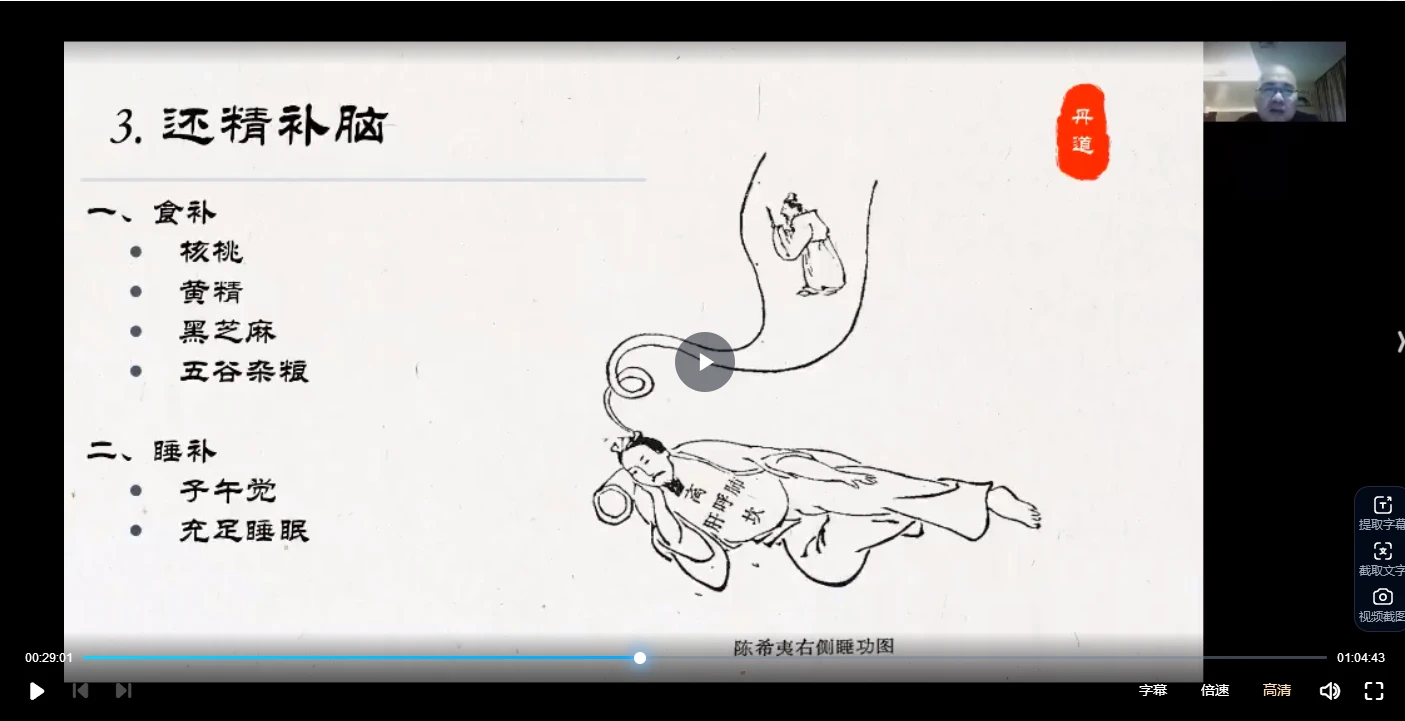
The Neijing Tu is among the imagery named in the directory. A diagram can be studied for its labels, visual relationships and symbolic language even when a learner does not adopt a literal interpretation. Start by describing what is actually depicted, then compare the accompanying explanation with that description. Ask which details come from the image, which come from a cited text and which are the instructor’s commentary. This is a productive method for other presentation slides as well.
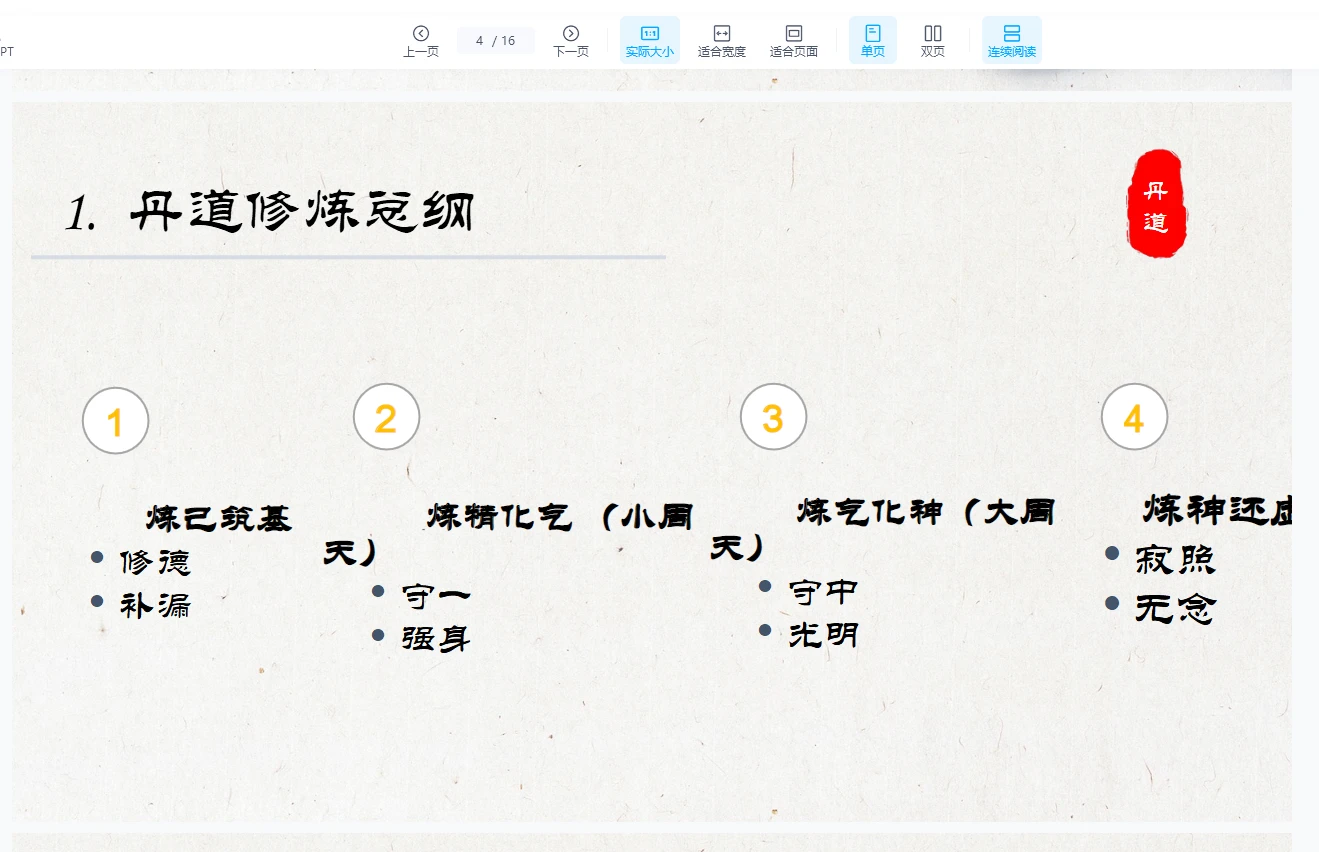
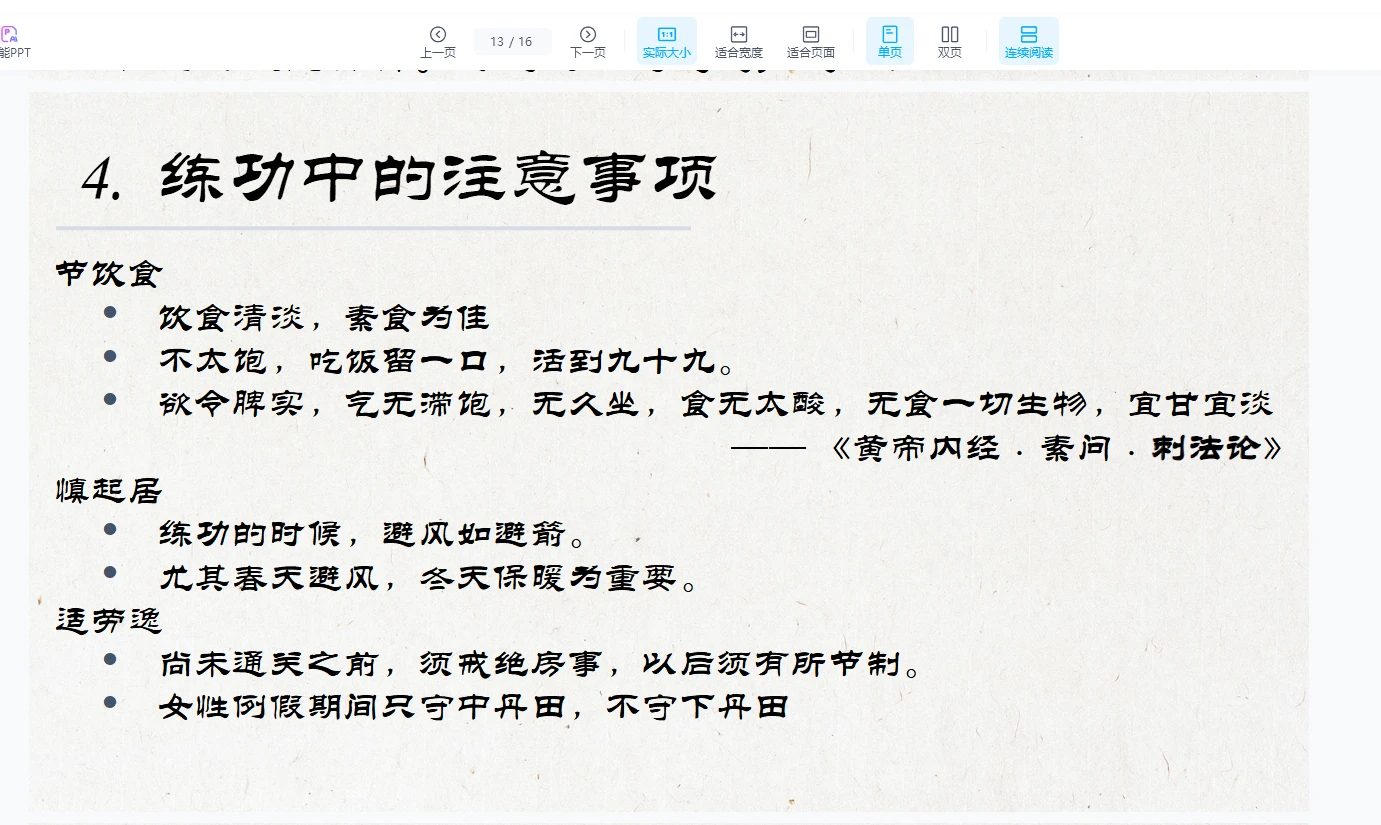
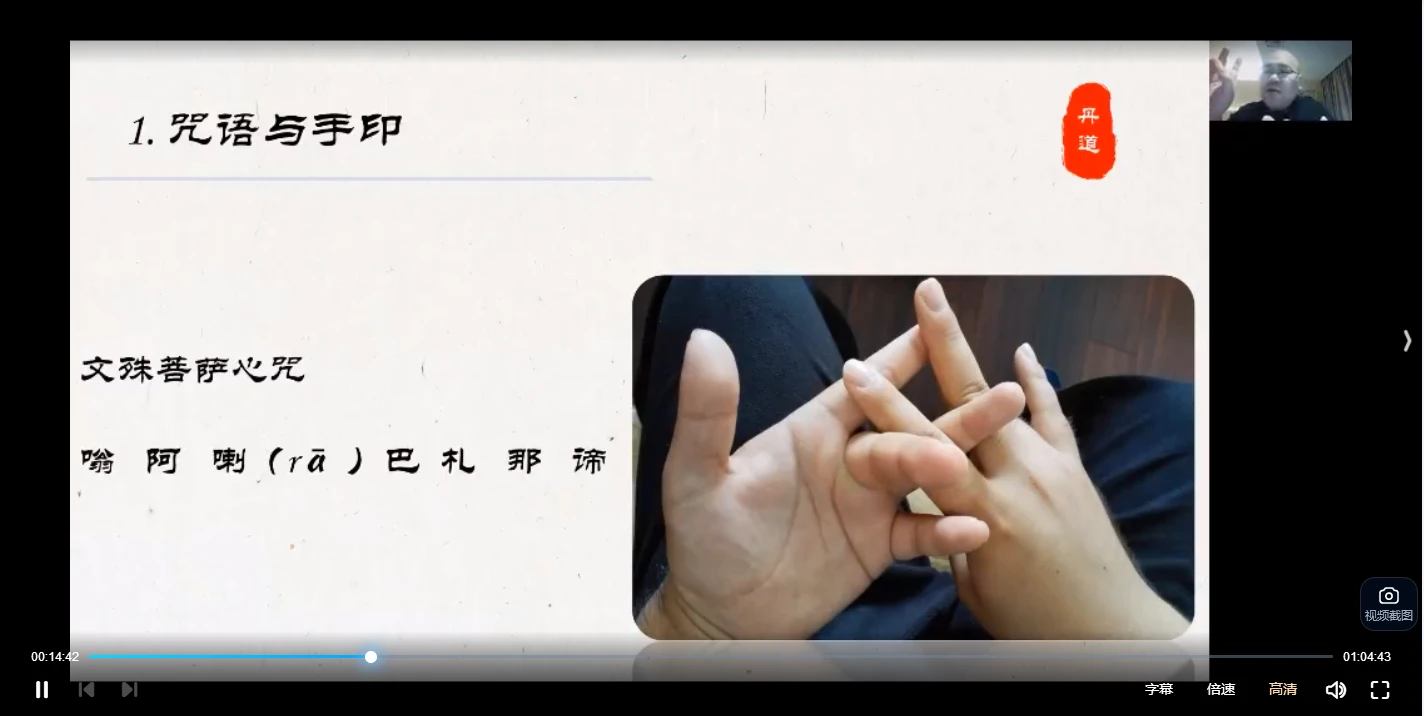
Presentation files may help locate terms used in a recording, but a slide is seldom a complete argument. Read it alongside the relevant spoken segment where possible. Conversely, a recording may use an image too briefly for detailed inspection; pausing at the corresponding slide can help. The listing also mentions supplementary written and audio material, so the principal lessons should not be confused with every additional item in the directory. Check the available previews to understand the visible scope.
Sitting, Breathing and Claims of Attainment
Some lesson titles refer to sitting, stillness, visualization and breathing. Those topics deserve particular care because a historical description can sound like a direct instruction to produce an effect. Read claims about unusual powers or bodily processes as claims made within the source tradition, not as established outcomes. There is no reason to test a dramatic assertion in order to understand its cultural role in a lesson.
For any practice that concerns breathing or prolonged posture, avoid forcing the breath, holding it to reach a target, or remaining in a painful position. A recording cannot see dizziness, strain or discomfort. If a segment’s directions are unclear, it is reasonable to stop at conceptual study and seek suitable in-person guidance before trying anything physical. Curiosity about a tradition does not require performing every technique it describes.
A Study Sequence for a Large Collection
- Read the available directory once to identify conceptual, textual, image-based and physical-practice topics.
- Choose a single lesson and write down its central terms before attempting to summarize the whole series.
- Match a presentation file to its recording when the names clearly correspond, and note any mismatch rather than inventing a connection.
- Separate statements about tradition from observations that can be checked in the visible materials.
- Return to earlier notes after later lessons introduce additional uses of a term or image.
Studying in this way gives the 45 lessons room to develop. It also makes it easier to recognize when a topic is only introduced rather than fully explained. A title mentioning standing exercises or Six Healing Sounds identifies a subject area; it does not, by itself, establish a complete supervised training progression.
Suitable Readers and Clear Limits
This collection may suit readers interested in Daoist texts, internal-alchemy imagery and the language of traditional cultivation who can work with Chinese-language recordings and documents. It may also be useful to someone comparing how a contemporary presenter connects literary sources with practice vocabulary. A learner seeking fully translated lessons should first check the available language information and previews. A learner seeking personal assessment, treatment or proof of unusual abilities should not assume those are provided by a recorded course.
Respectful study can include disagreement. You can recognize that a diagram or ritual expression matters within a tradition while remaining undecided about its literal interpretation. Keeping that distinction in your notes makes discussion clearer and avoids turning a cultural source into a claim about medical or supernatural effects.
Questions About Yi Xiang’s 45 Lessons
Does Xing Ming have one fixed English definition? No single short rendering covers every use. Track how the expression is explained in the relevant lesson and compare it with the surrounding text.
Should the Neijing Tu be treated as an anatomical chart? Study it first as a traditional image with its own symbolic vocabulary. Do not infer a medical description from its visual form.
Are unusual claims in a lesson verified by their inclusion? No. A course can document or discuss a claim without demonstrating that the claimed effect occurs.
Can the breath-related material be practiced independently? A recording may be useful for understanding terminology, but it cannot provide personal feedback. Avoid strain or forced breathing, and obtain appropriate guidance for physical practice.
How do the supplementary files relate to the 45 lessons? They provide additional forms of material mentioned in the directory. Their exact relationship to an individual lesson should be established from matching titles or previews, not assumed from the file type alone.