

Learn foundational health qigong through 41 listed videos covering Baduanjin, Wuqinxi, Liuzijue, Yijin Jing, standing practices and gentle movement forms.
Course Overview
This broad introductory collection groups 41 recorded files across several well-known health-qigong forms. It gives new learners a way to compare standing, moving, breathing and coordinated routines without presenting one lineage as the only method.
What You Will Learn
- Recognize the structure of several major health-qigong forms
- Compare front-view, rear-view and guided-practice recordings
- Study gentle movement, posture and natural breathing at an introductory level
- Build a gradual practice sequence instead of rushing through every form
Course Contents
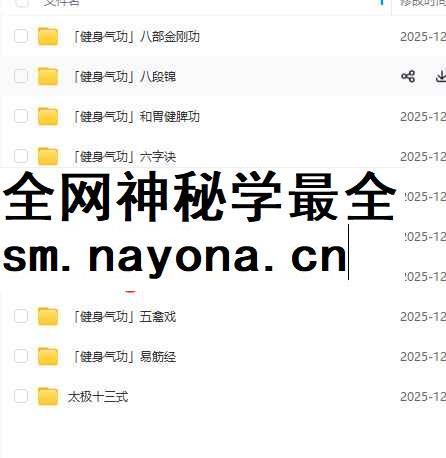
- Wuqinxi (Five-Animal Qigong): 1 recording
- Baduanjin (Eight Brocades): multiple adult, children, front-view and rear-view recordings
- Eight-Section Vajra Exercise: 2 recordings
- Liuzijue (Six Healing Sounds): 1 recording
- Gentle stomach-and-spleen exercise: 1 recording
- Eye-movement exercise: 1 recording
- Yijin Jing: 2 recordings
- Eighteen gentle flexibility movements: 1 recording
- Standing qigong practice: 1 recording
- Tai Chi Thirteen Forms: 3 recordings
Original Course Images
The original course images are retained in their recorded order for visual reference.

Who This Course Is For
Adult learners interested in Chinese movement, breathing and contemplative traditions. Begin gently and adapt the practice to your own mobility and experience.
Learning Format and Digital Delivery
Virtual, downloadable video course with no physical shipping. The store administrator will add or confirm the digital delivery link separately.
Practice Safety
Qigong is generally considered a low-risk activity when practiced appropriately, but movement and breathing exercises are not risk-free for everyone. Use a comfortable range, do not force the breath, and stop if you feel dizzy, faint, short of breath, have chest pain or feel unwell. People who are pregnant or have health or mobility concerns should ask a qualified healthcare professional about suitable modifications. See the NCCIH qigong overview.
Frequently Asked Questions
How many files are listed?
The verified directory contains 41 MP4 files, including several alternative Baduanjin demonstrations.
Is this suitable for a complete beginner?
It is organized as an introductory collection, but learners should start slowly and choose movements appropriate to their mobility.
Related Qigong Courses and Guides
Editorial Note
Karma Kismet translated and organized the verified course directory for English-speaking learners. Traditional health language has been edited so that it is not presented as a diagnosis, cure or guaranteed outcome.
Disclaimer
For cultural, historical and educational study only. This course does not diagnose, treat or prevent disease and does not replace medical care.
More Qigong Courses
- Traditional Qigong Breathing Training: 23 Video Lessons
- Wudang Baduanjin Qigong Course: 10 Video Lessons
Exploring a Collection of Qigong Forms
This beginner collection brings together 41 listed video files rather than presenting a single routine as the whole of qigong. The subjects named in the listing include Wuqinxi, Baduanjin, Liuzijue, Yijin Jing, standing practice, gentle flexibility work, and Tai Chi Thirteen Forms. That range makes the collection useful for observing differences in movement, pacing, posture, and the way an instructor guides attention. The word “health” in the title identifies a traditional practice category; it should not be read as a promise of a particular result.
A new viewer does not need to complete all 41 recordings in order to understand the collection. It can be studied as a set of examples. Some entries show the same broad form from different viewpoints or for different audiences. Others introduce a separate practice with its own movement vocabulary. Keeping those differences in mind can prevent the collection from feeling like one long sequence that must be mastered in order.
Choosing a First Viewing Path
Start by deciding what you want to observe. If your aim is to understand how a form is structured, watch one recording without moving along, then make notes about the order of its sections. If you are comparing demonstrations, choose two recordings of the same named form and look for changes in camera angle, tempo, or teaching cues. If your interest is in vocabulary, write down the names of the forms and avoid assuming that similarly named exercises are identical.
- Preview the named forms in the file list and select one that seems appropriate for close study.
- Watch a short portion to identify the starting posture, overall pace, and amount of space the demonstration uses.
- Notice whether a video is a teaching explanation, a front or rear view, or a follow-along performance.
- Write down one or two observations before trying to imitate the movement.
- Return to the same recording later rather than switching forms whenever a sequence becomes unfamiliar.
This path keeps the number of files manageable. It also makes it easier to notice what a particular recording actually teaches. A video may show a graceful complete routine without explaining every transition. Another may provide close instruction but less sense of how the whole form flows. Both can be useful if their roles are understood.
Understanding the Named Practices
Baduanjin and Alternative Views
Baduanjin, often rendered in English as Eight Brocades, is represented by multiple recordings in this collection, including front-view and rear-view demonstrations and versions described for adults or children. Those labels matter when choosing what to watch. A rear view may help a learner compare direction and arm placement, while a front view may make facial orientation or symmetry clearer. A recording aimed at children should not automatically be treated as a shortened adult lesson; inspect the actual content before drawing that conclusion.
Wuqinxi, Liuzijue, and Yijin Jing
Wuqinxi is commonly identified by its Five-Animal name, while Liuzijue is associated with a set of sounds. Yijin Jing is another named practice in the directory. Each title points toward a distinct traditional framework. The directory alone does not establish a single interpretation, lineage, or historical account for any of them. As you watch, observe how the recording presents posture, rhythm, and instruction. Keep the traditional names as labels for study rather than translating them into medical predictions.
Standing and Gentle Movement Entries
The listing also includes standing practice, eye movement, gentle flexibility movements, and a stomach-and-spleen exercise. These labels suggest variety in scale and focus, but they do not tell you exactly how demanding each recording is. A small-looking movement may still be uncomfortable for someone with a particular limitation, and a standing sequence may require balance or endurance. Preview the movement and select a comfortable level of participation.
Comparing Without Rushing
One advantage of a broad collection is the chance to compare how different practices organize attention. Some recordings may emphasize repeated movements; others may use sound, stillness, or a longer coordinated sequence. Make a simple viewing journal with the video title, the type of demonstration, and questions you want to revisit. Avoid ranking one form as universally better on the basis of its name or a brief preview. The relevant question for a beginner is often whether the instructions are clear and whether the movement can be followed comfortably.
A slow study plan might focus on one named routine for several viewing sessions, then compare it with a different form. You can also watch a complete routine once as an overview and later return to individual parts. The collection’s file count represents breadth, not a requirement to perform every routine. Rest and repetition can be more informative than moving through the list as quickly as possible.
Movement and Breathing Boundaries
Practice within a range that feels steady. Do not force a stretch, lock a joint, hold your breath to match a video, or continue through dizziness or pain. If a movement cannot be followed safely while standing, watching and taking notes is still a valid way to learn about the form. People with health or mobility concerns can ask a qualified healthcare professional about suitable activity and modifications. A video cannot assess an individual viewer.
Traditional descriptions sometimes connect a practice name with an organ or an intended effect. Such language can be studied as part of the tradition without assuming that the effect has been established for a particular person. Treat the recordings as educational demonstrations of movement and related cultural ideas. They do not replace diagnosis, treatment, or individualized instruction.
Who This Collection May Suit
The set may suit an adult beginner who wants to see several recognized qigong forms before choosing one for closer study. It may also help a reader comparing camera viewpoints, guided practice, and complete performances. Someone who wants only one tightly sequenced course may need to create a personal viewing order from the listed files. Someone seeking clinical exercise advice needs individual guidance beyond what a video directory can provide.
Questions About the 41-Video Collection
Do the 41 files represent 41 separate forms?
No. The list includes multiple recordings related to Baduanjin and other named practices. Count the files separately from the number of distinct forms.
Should a beginner start with every Baduanjin version?
There is no need to watch all versions at once. Choose one clear recording, learn its structure, and then use another viewpoint to resolve specific questions.
Are the traditional health names medical instructions?
No. Names and historical explanations identify a practice context. They do not establish that a movement will prevent or treat a condition.
What if a recording feels too fast?
Pause, observe without moving, or select another recording. A beginner can study the sequence visually before attempting to follow it.
Can I combine several forms in one session?
The collection contains varied practices, but the listing does not prescribe a combined routine. Learn what each recording asks of you and choose an amount of activity appropriate to your experience and circumstances.


