
A 10-video intermediate collection on traditional Daoist and Liu Ren ritual studies, presented for cultural and historical learning.
Course Overview
This English guide organizes the supplied traditional Chinese learning material around a clear course sequence. The underlying recorded lessons or documents may be in Chinese; review the stated format and curriculum before purchase.
What You Will Study
- Terminology in traditional ritual texts
- The structure of the ten recorded lessons
- Historical context and responsible interpretation
Course Scope and Format
A 10-video intermediate collection on traditional Daoist and Liu Ren ritual studies, presented for cultural and historical learning. The course title and description identify the lesson count or page length when stated in the supplied curriculum. This is a digital educational product; no physical item is shipped.
Original Course Preview Images
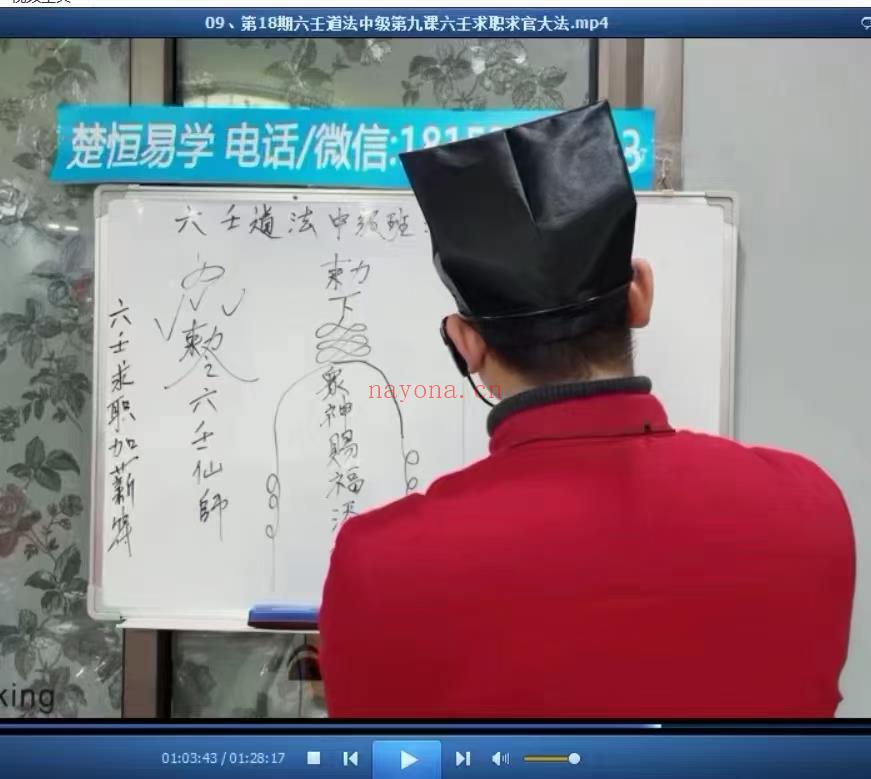
These images come from the original course listing and help show the supplied material.


Who This Resource Is For
This resource is for learners of traditional Chinese metaphysics who want to study the named method and compare the recorded examples with the stated rules. Beginners should start with terminology and basic procedures before moving to advanced cases.
Study Approach
Follow the lessons in order, keep a glossary of Chinese terms, and document the steps used in every example. Distinguish a traditional interpretation from an evidence-based claim or a guaranteed personal outcome.
Digital Delivery
This product is virtual and downloadable. No physical shipment is required. Check the product and order details for the available delivery format.
Frequently Asked Questions
Is the material in English?
The product guide is in English. Original lessons and documents may be in Chinese.
Is this a physical product?
No. It is a digital study resource.
Does the method guarantee a result?
No. Traditional interpretations are presented for cultural and educational study, not as guaranteed predictions or professional advice.
Related Learning
Browse the Daoist Studies Courses collection and the full course library.
For course questions, contact Karma Kismet.
Studying the Ten Lessons in Context
This collection concerns traditional Daoist and Liu Ren ritual language in ten recorded lessons. Its source listing names topics associated with blessings, a ritual altar, livestock, illness, disputes, relationships, hostile people and employment. Those labels show the kinds of concerns addressed by the recordings; they do not establish that a ritual changes any of those situations. The most useful starting point is to ask how each lesson frames a human problem, what symbols or terms it uses, and which claims belong to the tradition rather than to independently demonstrated results.
The subject sits at the intersection of religious practice, local custom, divinatory vocabulary and everyday hopes. A reader might encounter a lesson title referring to good fortune and assume it is a practical formula. A more careful reading asks what the title means within its cultural setting, which actions are described, who is expected to understand them, and whether an essential part of the context is missing from the recording. Intermediate material may refer to concepts that are not explained from first principles. The ten-lesson count tells you the size of the listed set, not how much prior study an individual learner will need.
What the named topics can teach a cultural reader
Ritual titles often reveal the concerns of the communities that preserve them. A lesson about livestock, for instance, can be read as evidence that household and agricultural matters had a place in the ritual vocabulary. A title about seeking work can prompt questions about status, livelihood and social expectation. A title that invokes illness reflects a historical way of naming distress, not a medical diagnosis. These are worthwhile questions even when a student has no intention of performing a ritual.
Similarly, a lesson about a court dispute is best understood as part of a traditional account of conflict. It cannot replace qualified legal advice or change a legal process. A lesson about reconciliation or harmony may express an ideal of improved relations, yet another person’s consent and autonomy remain essential. Any language about handling an adversary calls for particularly careful interpretation; a recorded title is no reason to threaten, harass or interfere with someone.
A Structured Way to Watch
- Before each recording, write down its listed title and identify words you can translate confidently. Leave uncertain words in Chinese until their context becomes clearer.
- During the first viewing, describe the sequence at a high level. Note when the speaker explains a concept, recounts a tradition, demonstrates an object or makes a claim about an effect.
- On a second viewing, distinguish instructions from explanations. Do not fill gaps in a procedure by guessing from another lesson.
- Afterward, summarize the lesson in neutral language. For example, write that a recording discusses a traditional approach to a concern, rather than saying that the approach resolves it.
- Compare recurring terms across the ten lessons. Note differences as well as similarities, especially where a phrase changes meaning with its setting.
A glossary can make the collection easier to navigate. Include the Chinese expression, a tentative English rendering, the lesson in which it appears and the reason for your interpretation. If a symbol, ritual role or sequence is unclear, mark it as unclear. Avoid treating a familiar English translation as proof that the underlying Chinese expression has only one meaning. This is particularly relevant when Daoist and Liu Ren terms appear near each other: proximity in a course title does not erase differences among traditions and methods.
Reading claims with care
The source description makes strong claims about practical effects. Those claims are part of the promotional description, not evidence that a promised outcome occurred. A responsible student can examine why a technique is said to matter within a traditional framework without adopting its asserted powers as fact. When a lesson refers to health, the relevant real-world decision belongs with qualified healthcare professionals. When it refers to employment or money, ordinary applications, planning and professional advice remain the appropriate basis for action. When it refers to legal conflict, seek reliable legal help rather than substituting a ritual narrative for a response to deadlines or obligations.
Study also requires attention to people outside the lesson. Some traditional titles suggest influencing another person’s feelings, reputation or circumstances. Historical interest does not grant permission to intrude on privacy, manipulate relationships or target someone. If a recording describes a practice whose ethical implications are uncertain, you can document and analyze it without acting on it. That distinction allows serious engagement with the material while respecting other people.
Who May Find This Collection Useful
Readers studying Chinese ritual traditions, Liu Ren terminology or the way recorded teaching presents inherited practices may find the lesson set useful. It may also serve a translator comparing literal lesson titles with the explanations given inside each recording. The material is less suited to someone seeking a verified remedy, a prediction, professional training or direct help with an urgent personal problem. The English guide supplies an orientation; comprehension of the recordings depends on the language and terminology used there.
There is no need to rush through ten recordings. A single lesson can generate several separate notes: its stated subject, its vocabulary, any cultural references, and questions that require further research. Revisiting those notes after another recording may clarify a term or reveal an inconsistency. Neither result is a failure. Traditional instructional material can preserve multiple voices and assumptions, and the task of study is to understand them accurately rather than force them into a seamless system.
Questions Specific to the Recorded Lessons
Do the ten titles provide a complete explanation of Liu Ren ritual practice?
No. They identify the topics of this listed intermediate set. A title does not establish the full scope of a tradition or supply all the context needed to understand a demonstration.
How should I interpret the lesson on illness?
Read it as a traditional account of illness-related ritual language. It is not a diagnostic or treatment resource. Seek qualified medical care for symptoms, and avoid delaying care because of a claim in a recording.
What about the lesson concerning court cases?
It can be examined for its historical vocabulary and ideas about conflict. It should not guide decisions about a legal matter; deadlines, rights and obligations require advice from an appropriate legal professional.
Can the lessons on relationships or adversaries be studied ethically?
Yes, as cultural material. Describe what the lessons claim and consider their assumptions about other people. Respect consent and privacy, and do not use a traditional claim as justification for coercion or harassment.
Does a ten-video collection guarantee that every term will be explained?
No. The intermediate description suggests that prior familiarity may help. Keep a record of undefined terms, verify translations carefully and treat unresolved points as open questions.
What is a useful result of studying this material?
A sound result is a clearer understanding of the named topics, the course’s vocabulary and the distinction between a tradition’s own claims and observable evidence. That understanding does not depend on producing a personal outcome through ritual practice.
Approached this way, the collection becomes an opportunity to study how recorded lessons transmit specialized language. Careful note-taking, cultural context and ethical restraint make that study more precise than accepting either a dramatic title or a promotional account at face value.


Reviews
There are no reviews yet.