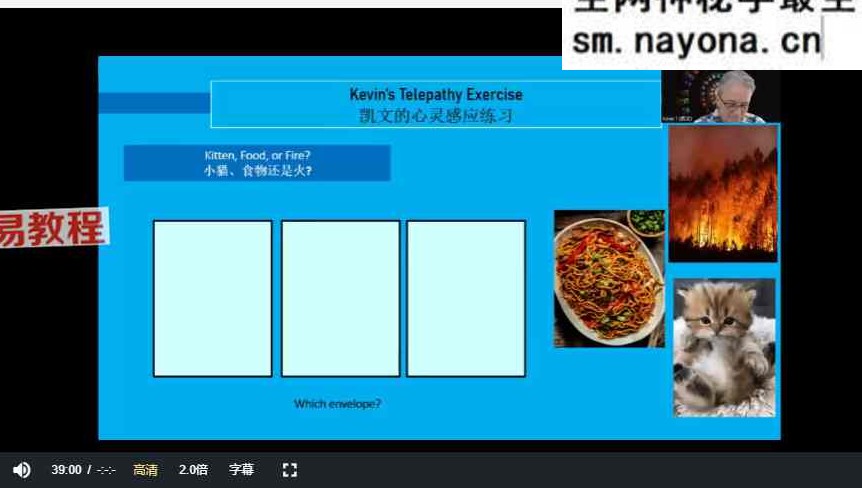
Zhan Tangning's beginner meditation series lists an introductory lesson, guided exercises and reflective themes. Its eight named recordings are presented as contemplative study, not a clinical program.
Resource Overview
Zhan Tangning Beginner Meditation Series: Eight Videos is a digital learning resource about Meditation Foundations. The English description summarizes the available source listing; the underlying recordings or books are in Chinese. An English translation of the full material is not confirmed.
What You Will Learn
Use the sequence and preview material below to identify the course’s scope, terminology and teaching approach. Compare each card interpretation with the original lesson rather than treating a short listing as a complete transcript.
Course Contents
- Introductory meditation orientation
- Attention and reflective exercises
- Self-reflection themes in the source directory
- Using the original lesson sequence for study
Original Course Images




Who This Resource Is For
This resource is for readers or learners who can use Chinese-language materials and want a named resource on Meditation Foundations. Compare the stated scope and previews before ordering; a fixed level of prior experience is not assumed unless the source directory says so.
Learning Format and Digital Delivery
Eight Chinese-language videos in the listed series Virtual and downloadable; there is no physical shipment. Price: USD 9.00. A file link is not yet attached to this product. Please contact Karma Kismet before ordering to confirm delivery arrangements; immediate automated access is not promised.
Frequently Asked Questions
Is the full material in English?
No English edition, recording or subtitle track is confirmed. The source material is Chinese-language.
Is a personal consultation included?
No individual consultation is listed with this resource.
Does this resource guarantee an outcome?
No. It is for educational and cultural study, not a guaranteed result or substitute for professional advice.
Editorial Note
Karma Kismet translated and organized the course facts and original previews for English readers. Lesson counts and formats follow the available source listing; unspecified contents, certificates and instructor credentials are not asserted.
Related Courses
Browse Meditation Foundations and read digital delivery information.
Approaching the eight named recordings
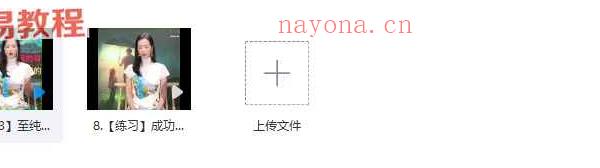
Zhan Tangning’s beginner series has a visible eight-item directory combining an introductory recording, course discussions and practice recordings. The named themes include free will, awareness, family order, inner-sun imagery and moving toward the father. These are contemplative and reflective themes, not an established clinical program. The following suggestions help a reader examine the themes while preserving personal choice. They are editorial learning guidance rather than additional exercises asserted to be included in the recordings.
Start with the introductory recording
The first filename explicitly identifies a beginner introduction. Use it to clarify the vocabulary and the way the presenter frames participation. Record what is explained about the practices actually shown. Do not assume that the series uses the same approach as another meditation course simply because both use the word meditation. A short glossary can preserve unfamiliar Chinese terms alongside provisional English explanations.
Before proceeding, write what you understand the practice to involve and what remains unclear. If a later instruction depends on a concept you cannot explain, return to the introductory passage rather than guessing. The introductory recording’s role is a concrete fact in the directory. Its presence does not establish that every reader will have the same experience or that the series provides individual guidance. Keep your study route proportionate to the material you can inspect.
Free will and choosing an experience
The directory names a free-will theme framed around what one wants to experience. A reflection can begin by distinguishing a wish from a choice. A wish may concern an outcome outside your control, while a choice concerns an action you can take. Write both separately. Then identify which part of the source’s explanation addresses each.
For an editorial exercise, choose a small ordinary situation, such as whether to make time for a creative project. Describe the experience you hope for and one action that could support it. Leave the outcome open. This keeps free-will language connected to responsibility without suggesting that intention determines every event. If the material speaks more broadly about creating experience, retain that as the teaching’s viewpoint rather than turning it into a guarantee. A reflective question can be useful even when its answer is provisional.
Labels and self-description
One practice filename mentions reviewing and removing labels, appreciation and free will. Treat these labels as thematic leads until you inspect the recording. In a personal reflection, a label such as always indecisive can be examined as a broad self-description rather than as a permanent fact. Ask what actual situations support it and which situations do not.
You do not need to replace a difficult label with an equally absolute positive one. A more precise sentence can describe a behavior in a particular context and leave room for change. If the exercise feels emotionally demanding, you can keep the reflection brief or work only with a neutral example. The directory does not establish that the recording resolves past experiences or removes distress. The educational task is to understand the language and notice how a description influences interpretation, without treating the practice as a guaranteed psychological intervention.
Family order as source terminology
The family-order theme should be read as terminology within this series. Identify the relationships and assumptions actually discussed. Do not infer that the teaching provides a universal rule for every family or that a person must accept a particular role to learn from the resource. Family histories and present circumstances differ, and the listing does not settle those differences.
A study note can distinguish a descriptive statement about a relationship from a normative statement about what someone ought to do. If the presenter moves between the two, record the transition. This makes the account easier to evaluate. A personal reflection can focus on what you choose to acknowledge or what boundary you need now. It should preserve your autonomy and avoid turning a symbolic family image into pressure to reconnect, forgive or disclose information before you wish to do so.
Inner-sun and polarity imagery
The practice directory includes imagery of a complete self, an inner sun, masculine force, softness and firmness, and feminine themes. Study these as metaphors in the source rather than as biological definitions or fixed rules about gender. Ask what quality each image is intended to represent and whether the explanation gives room for several readings.
For a diagram exercise, place the named image beside its stated quality and the passage that explains it. Keep your personal association in another field. An inner-sun image might resonate with a reader without demonstrating a literal internal energy source. Likewise, firmness and softness can be discussed as ways of responding without being assigned rigidly to kinds of people. The useful result is a clearer account of the symbolic vocabulary, not a claim that the imagery reveals an essential truth about everyone.
The father theme and personal boundaries
The title and later recordings emphasize moving toward the father. That theme can be explored as a source topic without requiring physical contact, reconciliation or a particular emotional response. Identify whether the passage refers to a person, a memory, a symbolic role or an imagined scene. These are different forms of engagement and should not be merged.
When reflecting personally, choose the degree of participation that feels appropriate. A neutral textual analysis is a complete learning activity. You may also write what the theme brings to mind while leaving actions undecided. The source listing does not provide enough information to promise that the series repairs a relationship or resolves a difficult history. A thoughtful account should preserve consent and boundaries, especially where family imagery might otherwise be presented as an obligation. Understanding a theme does not require accepting every recommendation attached to it.
Practices and discussion recordings
The directory alternates discussion themes and practice labels rather than identifying eight identical lessons. Make an index that records the actual format and topic of each file. A practice recording may return to ideas introduced in a discussion, but the relationship should be checked through the contents. Do not invent a timetable or assume a fixed duration from file sizes.
After viewing a pair, write which idea the discussion introduced and how the practice uses it, if that connection is explicit. If the connection is unclear, note the question. This makes the series easier to navigate while preserving its real structure. A personal practice log should remain separate from the course inventory. Your observations are valuable records, but they are not additional curriculum or evidence that every learner will experience the same result.
A useful final reflection
Choose one theme you can explain with a source location. Describe the language used, your interpretation and one limit. You might understand a metaphor more clearly, notice a self-description that needs qualification or decide that a family theme requires further thought. These are specific outcomes that do not depend on a dramatic transformation claim.
Return to the original passage when your summary becomes broader than the recording supports. Keep the series as contemplative study, with the learner free to inspect, pause and interpret. The strongest reflection should remain readable to someone who does not share the presenter’s worldview. It should show what the named recordings contribute and what they do not establish, while keeping your choices and other people’s autonomy intact.