The published four-lesson outline names an introduction, an opening practice and two later practice sessions. Its traditional energy language is described as part of the teaching, not a verified medical effect.
Resource Overview
Guo Heren Taishang Kunlun Contemplation: Four Videos is a digital learning resource about Mindfulness & Contemplation. The English description summarizes the available source listing; the underlying recordings or books are in Chinese. An English translation of the full material is not confirmed.
What You Will Learn
Use the sequence and preview material below to identify the course’s scope, terminology and teaching approach. Check each topic against the original lesson rather than treating a short listing as a complete transcript.
Course Contents
- Introduction and initial practice
- Opening practice described in the source
- Two later sessions in the four-part sequence
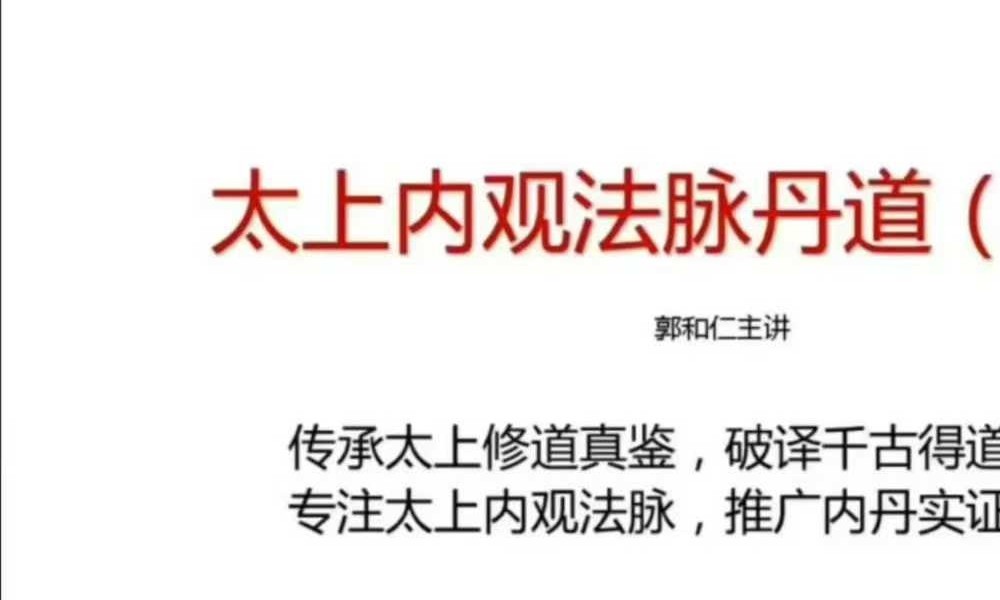
Original Course Images
Who This Resource Is For
This resource is for readers or learners who can use Chinese-language materials and want a named resource on Mindfulness & Contemplation. Compare the stated scope and previews before ordering; a fixed level of prior experience is not assumed unless the source directory says so.
Learning Format and Digital Delivery
Four Chinese-language recorded lessons Virtual and downloadable; there is no physical shipment. Price: USD 9.00. A file link is not yet attached to this product. Please contact Karma Kismet before ordering to confirm delivery arrangements; immediate automated access is not promised.
Frequently Asked Questions
Is the full material in English?
No English edition, recording or subtitle track is confirmed. The source material is Chinese-language.
Is a personal consultation included?
No individual consultation is listed with this resource.
Does this resource guarantee an outcome?
No. It is for educational and cultural study, not a guaranteed result or substitute for professional advice.
Editorial Note
Karma Kismet translated and organized the course facts and original previews for English readers. Lesson counts and formats follow the available source listing; unspecified contents, certificates and instructor credentials are not asserted.
Related Courses
- Awakening Through Contemplation: 305 Video Collection
- Yingxin Seven Chakras: 22 Lessons and Audio Practices
- Seven Chakras in Depth: Ten Video Lessons
- Violet Flame Reiki: Six-Part Video Course
- Wuzi Studio Western Reiki: 15 Videos
- Energy Reflection Cards: 23 Video Lessons
- Li Yan Inner-Energy Reflection: Five Videos
- Casey Akashic Reading Course 2025: 45 Videos
- Guo Xuhui Akashic Records Reading: 22 Lessons
- Li Linhao Breathing and Relaxation Practice: Nine Videos
- Zhan Tangning 21-Day Breathing Meditation: 30 Videos
Browse Mindfulness & Contemplation and read digital delivery information.
Reading the four-lesson traditional outline
Guo Heren’s Taishang Kunlun listing supplies a four-lesson outline, with an explicit warning that the delivered contents may change. It names an introduction, an opening practice and later sessions using inner-alchemy and traditional energy vocabulary. This is enough to identify the resource’s themes, but not enough to verify every claim about bodily channels, organs or energetic effects. The following reading approach treats that language as part of a cultural and contemplative framework. It does not translate it into established anatomy or a medical procedure.
Preserve the outline’s status
Record the published outline separately from any contents you verify in the recordings. The first is a description of intended topics; the second is evidence about the actual material. If they differ, note the difference without silently rewriting one to match the other. The source itself allows for changes, so a careful English explanation should retain that qualification.
The third and fourth lessons are described together in the listing. Do not split their joint description into two invented lesson titles or assign specific techniques to one session without checking. A course index can preserve the combined outline and add actual recording locations when available. This keeps the four-session structure understandable while avoiding unsupported claims about exact sequence, duration or complete coverage. The same discipline applies to any named formula: a label identifies a theme, not every instruction it contains.
Traditional terms and translation
The outline uses words that may be rendered as light, channels, elixir, openings or energy. Keep the original Chinese terminology beside a provisional English gloss where possible. A familiar English word can make a symbolic idea sound like a literal physical structure, so inspect the passage before choosing the gloss.
Create a contextual glossary rather than a universal definition list. For each term, identify the surrounding image or action and whether the source explains the term directly. If it uses a metaphor, retain that character. If the explanation claims a physical effect, attribute the claim and leave it unverified. This approach communicates the teaching without implying that a named channel has been demonstrated anatomically or that a symbolic elixir is a measurable substance. Translation should clarify the worldview, not grant its claims a scientific status they have not established.
Introduction and beginning practice
The first lesson combines an overview with starting work. Read it for the concepts it expects the learner to recognize before later sessions. A useful note can identify a term, its explanation and an example in the same passage. If the introduction relies on an unexplained formula, keep a question rather than completing it from another tradition.
You can study a beginning practice through its wording and sequence without physically reproducing every instruction. Identify what the source asks the participant to notice and what it says that noticing means. These are separate levels. A subjective sensation is a report of experience, while a claim about an internal transformation adds an interpretation. Keeping the levels separate lets you understand the contemplative language even if you do not share all of its assumptions or do not wish to engage in the practice.
Light imagery in the first session
The first-session outline includes several images involving lighting and brightness. Treat them as named images in the teaching before assuming a literal process. Ask whether the recording presents them as visualization, metaphor, an attributed traditional account or a claimed bodily event. The listing alone cannot settle that distinction.
For a textual exercise, map the image to the term it explains and the passage where the explanation occurs. If several images are linked, record the relationship supplied by the source. Do not merge them merely because they all involve light. A paper map can show the sequence while preserving questions about interpretation. It also avoids implying that a learner must report a particular sensation to have understood the lesson. A contemplative image can be discussed for its structure and meaning without requiring a claim that it has illuminated a physical organ or channel.
Opening language in the second session
The second-session description uses opening-related vocabulary. Such language can organize a traditional account, but should not be treated as evidence that a physical obstruction has been removed. Preserve the exact term and the explanation given. A reader should be able to tell when a sentence reports the source’s worldview and when it describes an observation.
If an exercise is demonstrated, record only the steps actually shown and any explicit qualifications. Do not infer a hidden technique from the title. Nor should a recording’s confident language override ordinary comfort or the learner’s choice to stop. An educational note can focus on how the opening metaphor relates to the rest of the outline. This provides a concrete interpretive question while keeping claims about brain, bodily pathways or universal effects separate from what the material can establish.
Later inner-alchemy themes
The joint description of lessons three and four uses rotating-elixir and channel imagery alongside a five-element theme. Start by identifying how those images are related in the actual passage. A sequence diagram can preserve the order of ideas, but its arrows should be labeled with the relationship the source explains rather than an assumed physical mechanism.
Compare the terminology with the introduction to see whether an earlier definition is being applied or modified. If the later passage changes the sense of a word, note the change. A traditional vocabulary may be internally coherent while remaining metaphorical or metaphysical in its claims. Your summary can explain that coherence without presenting imagined channels, elixirs or connections as verified bodily processes. The resource’s cultural interest lies partly in its way of organizing experience and meaning; that interest does not depend on overstating what the outline proves.
Observation without diagnosis
If you keep a personal reflection log, describe experiences in ordinary terms such as warmth, distraction or comfort rather than immediately assigning a traditional cause. Place the source’s interpretation in a separate field. This prevents a vocabulary learned from the recording from becoming a diagnosis of your body.
The absence of a named sensation should not be framed as failure, and an intense sensation should not automatically be framed as progress. The listing does not establish a standard response for every learner. Keep participation optional and do not force an instruction that produces discomfort. A textual analysis remains a valid way to study the resource. The log can be useful as a record of your experience, but it does not verify a mechanism, a medical effect or the claimed activation of a structure described in the traditional outline.
An attributed cultural summary
Finish with a summary that names the four-session outline, explains one traditional term in context and identifies one limit. Use wording such as the source describes when reporting a belief or claimed process. This keeps the distinction visible without making the prose dismissive or vague.
A good summary can acknowledge that the resource offers a particular contemplative vocabulary and sequence while leaving effects and historical claims unresolved. It should also preserve the outline’s possible-change qualification. The result is a clearer account for a reader who wants to know what the published description actually supports. It does not invent a credential, a fixed syllabus beyond the outline or a promise that watching four recordings will produce the bodily outcomes asserted in the surrounding source text.