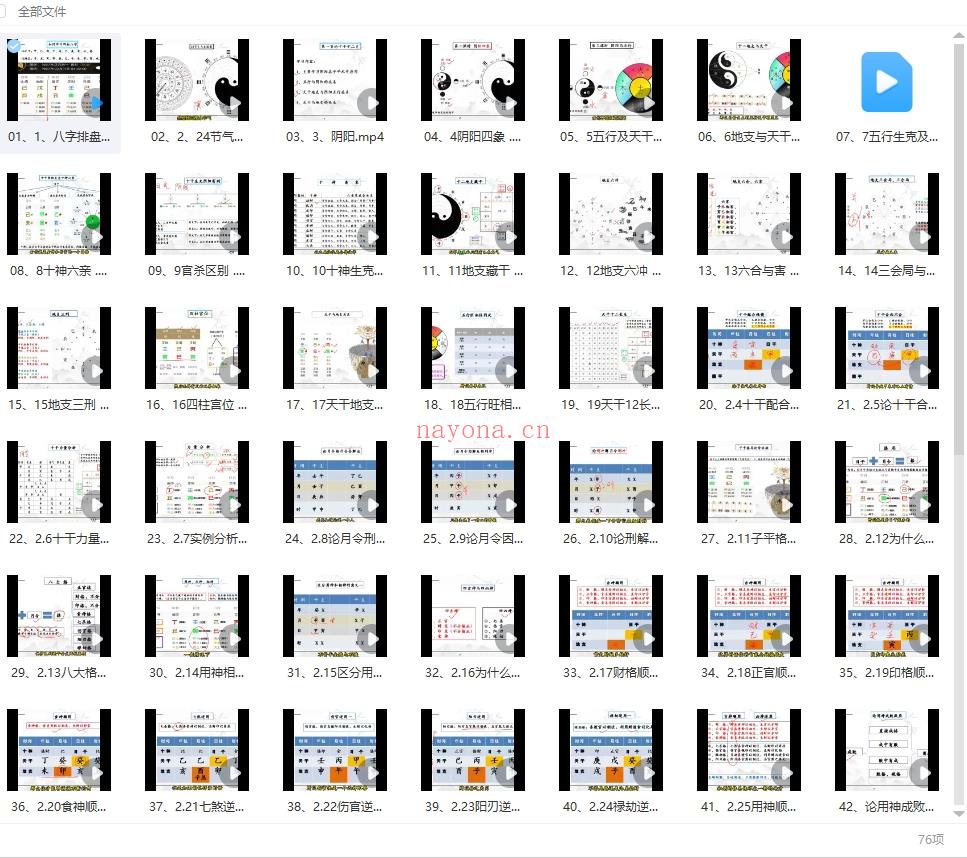
Sanfeng Xuanzi's intermediate course focuses on traditional Zi Ping pattern methods. Its scope is pattern-oriented BaZi interpretation, not a general zodiac forecast; the listing identifies a 76-video series.
Course Overview
Sanfeng Xuanzi Zi Ping Patterns: Intermediate Course is a digital study resource in the BaZi Structures & Patterns collection. This English product guide explains the listed material; the original recordings and documents are in Chinese. English subtitles or translated full lessons are not included unless separately stated.
Course Contents and Learning Focus
- Traditional Zi Ping pattern methods
- Intermediate-level course scope
- The 76-video recorded sequence
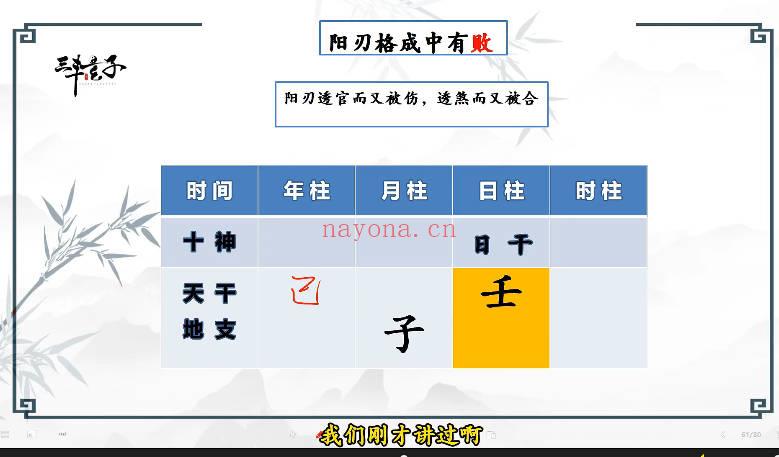
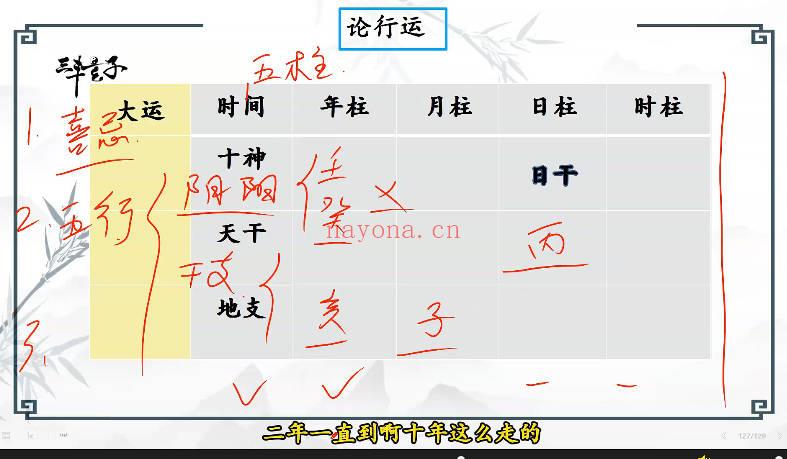
- Original chart and course-document previews
What You Will Learn
Use the listed topics to identify the scope of this resource, follow its recorded sequence and compare the original diagrams with your study notes. Where individual lesson names are not supplied, the preview images are provided instead of an invented syllabus.
Original Course Previews


Who This Course Is For
For learners who can follow Chinese-language material and want to study BaZi Structures & Patterns. Check the format and previews before buying. Intermediate or continuation courses assume familiarity with the relevant foundations and do not imply that prerequisite courses are included.
Learning Format and Digital Delivery
Format: 76 recorded video lessons. Price: USD 9.00. This is a virtual, downloadable product; no physical shipment is required. The download link has not yet been attached to this listing and will be added by the store. Contact us before ordering if you need to confirm delivery timing; immediate automatic file access is not promised.
Frequently Asked Questions
Is the course taught in English?
No English-language recording or subtitle track is confirmed. This description is in English; the underlying course material is Chinese.
What is included?
76 recorded video lessons. Review the course contents and original previews for the stated scope.
Will a physical item be shipped?
No. This is a digital learning resource.
Is a certificate or personal consultation included?
No certificate, accreditation or individual consultation is promised by this listing.
Editorial Note and Disclaimer
Karma Kismet has organized the course listing and available directory into this English guide. Lesson counts refer to the supplied listing, not an independent review of every recording. For traditional and cultural study, not guaranteed predictions, financial advice or assured personal outcomes.
Related Courses
- Shanyang Blind School BaZi: 20 Lessons
- Cangran Dongze Blind School BaZi: 2024 Disciple Course
- Zeng Yong BaZi Pattern Method: Volume Two
- BaZi Stem and Branch Information: 33 Videos
Browse BaZi Structures & Patterns, review course and delivery questions, or learn about Karma Kismet.
Sanfeng Xuanzi's pattern-oriented sequence
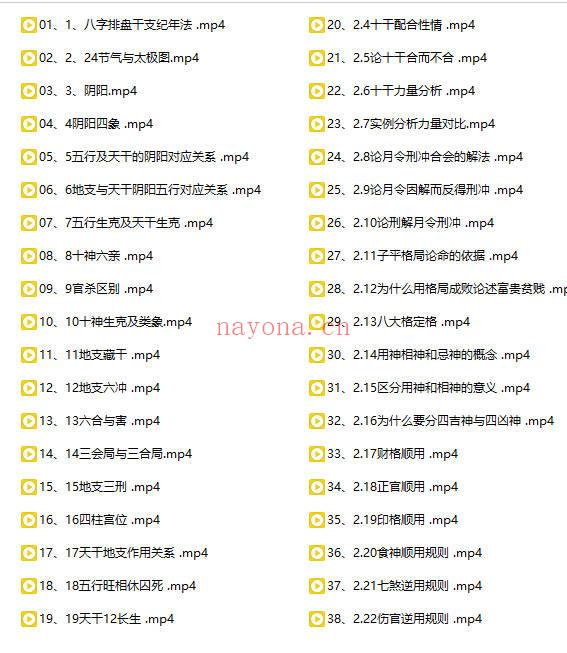
The source explicitly identifies a seventy-six-video intermediate course on traditional Zi Ping pattern methods. Its inventory begins with calendrical notation, the twenty-four solar terms, Yin-Yang, Five Elements, Ten Gods, hidden stems, branch relationships, palaces, and the twelve stages. It then develops pattern reasoning in a more detailed sequence. This structure gives an intermediate learner a concrete reason to revisit foundations before concentrating on classification. The course's intermediate label does not mean every foundational term can be skipped or that prerequisite resources are automatically included.
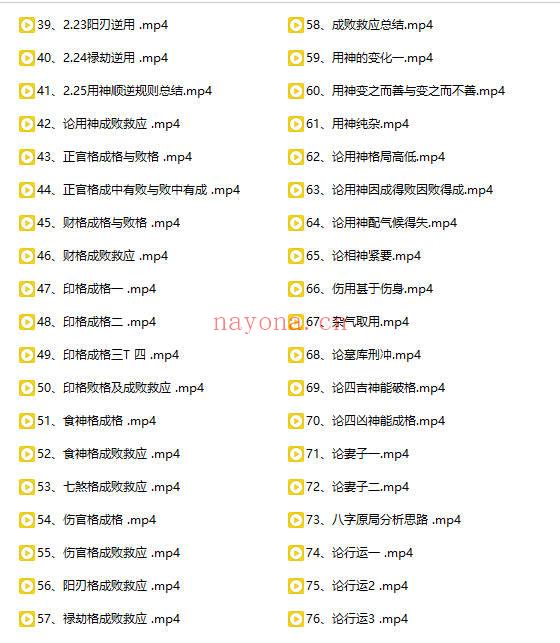
One distinctive feature is the inventory's attention to conditions, failure, rescue, and change. Several pattern topics appear more than once with different qualifications. A useful personal plan is to follow one pattern across those entries instead of memorizing a list of pattern names in isolation. The source supports that route through its actual topic titles. It does not guarantee that pattern analysis determines wealth, status, or life outcomes. Read those traditional thematic claims with attribution while focusing on how the method constructs its arguments.
Calendar and relationship groundwork
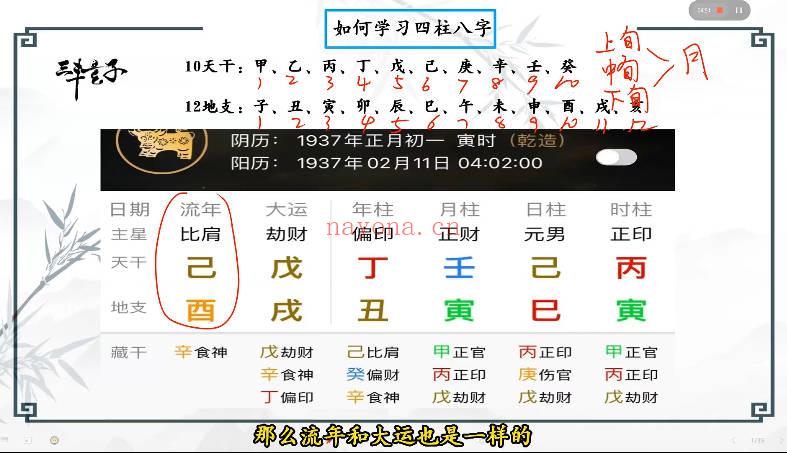
The opening topics include stem-branch year notation and solar terms. Record the calendar conventions explained in the material before transcribing examples. A chart-based argument can become confusing if a date is interpreted under one convention while the notation was constructed under another. If an example leaves the convention unclear, mark that uncertainty. Do not silently change the date or invent a missing hour. A precise study record should show the inputs and assumptions that make the later pattern discussion intelligible.
The foundation sequence also distinguishes officer and seven-killings, Ten Gods imagery, and several kinds of branch relationship. Keep these distinctions in the course's own terminology. A familiar English translation is not enough to guarantee that a concept is used the same way in another Zi Ping or Blind School resource. When comparing sources, give each definition a separate label. This helps you understand Sanfeng Xuanzi's explanation on its own terms and reduces the risk of constructing a hybrid method that no source actually teaches.
Monthly context leads into pattern reasoning
Before the inventory's explicit pattern sections, it names discussions of monthly conditions affected by punishment, clash, combination, and meeting. These topics provide a bridge between individual relationships and the larger chart structure. When studying them, write down the original monthly condition and the change the teacher discusses. Then identify what the change means for the argument. The titles tell you where the subject appears; the actual video must establish the rules and exceptions. Avoid treating one dramatic relationship as sufficient to classify every chart.
This bridge can be studied through a short comparison. Choose two supplied examples and ask which monthly assumptions they share and which conditions differ. Keep the examples' actual information intact. If you cannot explain why the teacher prioritizes one relationship, note the missing step rather than supplying it from another book. Such questions make intermediate study more rigorous. They also prevent a student from treating a pattern name as a self-evident conclusion when the course may be using a specific chain of reasoning to arrive at it.
Useful god and assisting god are separate topics
The inventory explicitly names the concepts of useful god, assisting god, and unfavorable god, followed by the significance of distinguishing useful and assisting gods. Preserve that distinction in your English notes. The term useful god is not a universal promise that something is beneficial in ordinary life; it has a technical role in the traditional framework. Record how this course defines the role and what information it uses to identify it. A concise glossary should retain the Chinese terminology when an English phrase risks obscuring the difference.
Later topics return to the importance of the assisting god and the relationship between harming the useful factor and harming the self reference. These titles suggest that the role distinction matters throughout the sequence. Link those entries in your index rather than replacing them with one broad definition. The point is to understand how the course develops its explanation. If your earlier summary needs revision, keep a note explaining why. This makes learning visible and prevents a first-pass paraphrase from becoming an unquestioned rule.
Follow formation, failure, and rescue separately
The inventory includes officer, wealth, resource, eating-god, seven-killings, hurting-officer, Yang Blade, and Lu or peer-related patterns. Several sections distinguish formation from failure, and some specifically discuss rescue or success within failure. Use separate notebook headings for those conditions. A pattern classification and a claim about its condition are related but not identical. Keeping them separate helps you avoid labeling a chart simply fortunate or unfortunate. It also retains the source's conditional structure, which is more informative than a memorized hierarchy of names.
For one pattern, collect only the passages you can locate and write a short map: identification, stated conditions, possible failure, and any rescue described. Include references to the actual file numbers. Do not infer a rescue rule merely because another pattern has one or because a different teacher offers a familiar remedy. In this context, rescue is a technical interpretive idea, not a physical intervention or a promise to improve a person's life. The map should explain the source's argument rather than create practical instructions from an abstract label.
Change and mixed conditions deserve a second pass
The later inventory names changes of useful gods, favorable and unfavorable change, purity and mixture, level distinctions, climate context, and storehouse clashes. These topics can qualify earlier definitions. A second pass through your notes can ask which early summaries were too broad. Add the new conditions and the references that support them. Do not erase the earlier note without marking the change; understanding why your explanation needed refinement is a useful part of intermediate study and can reveal where a translation initially hid an important distinction.
The source also names topics in which traditionally auspicious labels may disrupt a pattern and traditionally inauspicious labels may help form one. That contrast is a strong reason to avoid reading label names as moral judgments. Record the conditions in the actual explanation. A label's ordinary English tone does not settle its role in an argument. Learning this distinction can make discussions clearer and more respectful, especially when translated terms might otherwise sound like judgments about a person's character, social value, or inevitable circumstances.
End with the original chart and period sequence
The closing inventory includes family-related topics, an original-chart analysis approach, and three discussions of luck periods. After studying them, compare the stated order of reasoning with your pattern map. Which conclusions concern the original chart, and which depend on a period comparison? Keep those layers separate. A chart classification should not become a permanent statement about someone's entire life simply because the same word appears in a timing discussion. Preserve the conditions and interval attached to each interpretation.
An appropriate learning outcome is the ability to explain how this source distinguishes pattern identification, formation, failure, rescue, and later change. The seventy-six-video inventory supports a detailed navigation route, while the recordings establish the method itself. Use it for traditional and cultural study with accurate terms and references. Claims about wealth, rank, relationships, or future events remain symbolic interpretations in that framework, and they should not replace practical information or define a person's worth through a pattern category.