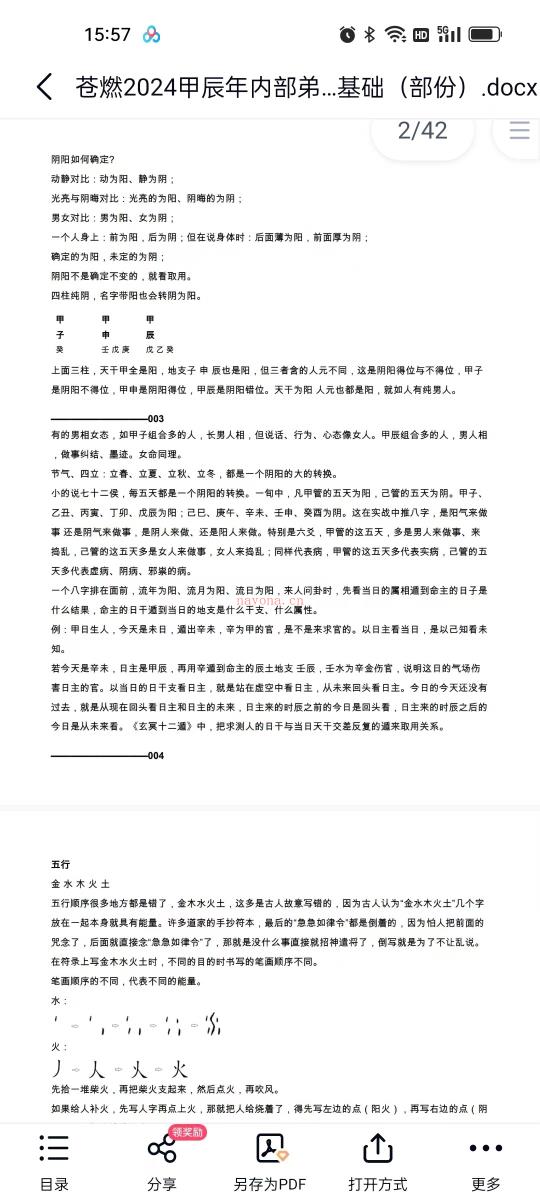
This Ji Shang Guo Xue collection by Shanyang is identified as Blind School BaZi. It combines twenty recorded lessons with supporting course materials; the original previews allow learners to inspect its terminology and chart presentation.
Course Overview
Shanyang Blind School BaZi: 20 Lessons is a digital study resource in the Blind School BaZi collection. This English product guide explains the listed material; the original recordings and documents are in Chinese. English subtitles or translated full lessons are not included unless separately stated.
Course Contents and Learning Focus
- Blind School BaZi as the named interpretive tradition
- The twenty-video teaching sequence
- Supporting course documents
- Original chart and curriculum previews
What You Will Learn
Use the listed topics to identify the scope of this resource, follow its recorded sequence and compare the original diagrams with your study notes. Where individual lesson names are not supplied, the preview images are provided instead of an invented syllabus.
Original Course Previews


Who This Course Is For
For learners who can follow Chinese-language material and want to study Blind School BaZi. Check the format and previews before buying. Intermediate or continuation courses assume familiarity with the relevant foundations and do not imply that prerequisite courses are included.
Learning Format and Digital Delivery
Format: 20 recorded video lessons with course materials. Price: USD 9.00. This is a virtual, downloadable product; no physical shipment is required. The download link has not yet been attached to this listing and will be added by the store. Contact us before ordering if you need to confirm delivery timing; immediate automatic file access is not promised.
Frequently Asked Questions
Is the course taught in English?
No English-language recording or subtitle track is confirmed. This description is in English; the underlying course material is Chinese.
What is included?
20 recorded video lessons with course materials. Review the course contents and original previews for the stated scope.
Will a physical item be shipped?
No. This is a digital learning resource.
Is a certificate or personal consultation included?
No certificate, accreditation or individual consultation is promised by this listing.
Editorial Note and Disclaimer
Karma Kismet has organized the course listing and available directory into this English guide. Lesson counts refer to the supplied listing, not an independent review of every recording. For traditional and cultural study, not guaranteed predictions, financial advice or assured personal outcomes.
Related Courses
- Cangran Dongze Blind School BaZi: 2024 Disciple Course
- Sanfeng Xuanzi Zi Ping Patterns: Intermediate Course
- Zeng Yong BaZi Pattern Method: Volume Two
- BaZi Stem and Branch Information: 33 Videos
Browse Blind School BaZi, review course and delivery questions, or learn about Karma Kismet.
Shanyang's source-supported teaching route
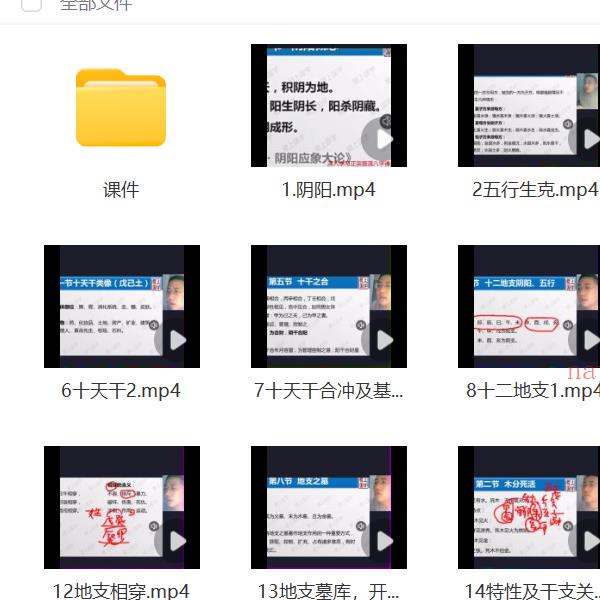
The original inventory identifies a twenty-video Shanyang Blind School collection with PDF course materials. Unlike a listing that only names a tradition, it gives readable video topics. The sequence begins with Yin-Yang, Five Elements generation and control, exceptional situations in those relationships, and elemental imagery. It then develops the stems and branches before moving to Ten Gods relationships, symbolic stars, and a closing Blind School reading topic. This provides a concrete route for organizing personal study without guessing what each numbered file contains.
The source also includes biographical and promotional statements about the teacher. These are not needed to understand the documented sequence, and the listing alone does not independently verify a lineage or claims of unusually high accuracy. The English companion focuses on the filenames, formats, and identified subjects. A tradition can be studied through its vocabulary and explanations without using an appealing biography as proof of its interpretive conclusions. The twenty-video count describes the source inventory rather than a guarantee of skill or a professional credential.
Begin with the exception lesson as well as the general rule
The third listed video concerns exceptional situations in Five Elements generation and control. That topic is worth keeping beside the second video's general relationship discussion. A learner who remembers only a diagram of generating and controlling cycles may overlook conditions the course later treats as important. Create two short notes: the relationship as introduced and the qualifications supplied in the exception discussion. Use the video's actual explanation to fill them. The title tells you where to look, but it does not establish the complete rule on its own.
The fourth video names elemental imagery. Keep imagery separate from the relational notes while recording how the teacher connects them. An image may help explain a traditional idea without being a calculation procedure or a factual description of a person. For example, a natural association should remain an association unless the source explicitly explains its technical use. This distinction gives you room to appreciate the cultural language without turning every memorable phrase into an unrestricted chart-reading rule. It also makes English paraphrases more faithful to the discussion.
Keep the repeated stem topics connected
The inventory introduces stems in videos five and six, discusses stem combinations, clashes, and basic imagery in seven, and returns to stems alongside branch combinations in ten. This repeated placement suggests a useful indexing habit: record the concept and its file reference wherever it appears. Do not assume that a later appearance simply repeats the earlier definition. It may add a relationship, qualification, or comparison. Your notes can show that development while preserving the original file numbers so that you can revisit the actual explanation.
For a stem example, write the Chinese name, a consistent English transliteration, and the context in which it is used. If the material assigns an image or a relationship, record that separately. A stem's conventional elemental pair is background knowledge; the course's interpretation must still be understood from the surrounding explanation. Avoid defining someone solely by a stem label. The purpose of these notes is to reconstruct a traditional vocabulary and its use, not to infer a person's character or prospects from an isolated symbol.
Branch topics deserve distinct entries
The branch portion includes introductory videos, three combinations, penetration, storehouses and opening them, and characteristics of stem-branch relationships. These are separate named topics in the inventory. Keep each entry distinct rather than collecting them under the single label interaction. A glossary that uses one English word for several different relationships can hide important distinctions. If translations vary, retain the Chinese term beside the English explanation. This allows you to review the teacher's meaning without assuming every familiar relationship name functions identically across different BaZi traditions.
Storehouse language can sound like a promise about money when detached from its technical context. In this collection it is a named traditional chart topic. Record the conditions the teacher gives for the discussion and the symbolic interpretation attached to them. Do not translate opening a storehouse into an assurance of income or a practical instruction to purchase an object. The inventory confirms that the topic is present, while the video must establish what the method actually says. Your personal notebook should keep those two levels of evidence separate.
Use the virtual and solid topic to check assumptions
Video fifteen is named around stem-branch communication and virtual or solid conditions. When you reach it, ask which earlier terms now require qualification. Record the definitions actually supplied and any examples used to distinguish them. These expressions may be translated in several ways, so a neat English label is not enough. A careful note should explain how the course uses the distinction. If the explanation remains unclear, mark the question rather than filling it with a definition remembered from another Blind School resource.
The subsequent three videos concern Ten Gods relationships. A practical review is to keep the Day Master reference visible when recording those labels, then distinguish the classification from the interpretation. Terms translated as wealth, officer, output, or resource are symbolic relationships before they become thematic language. They are not direct measurements of someone's circumstances. Connecting this stage with your earlier stem and branch notes can show how the course develops its argument, while still leaving a clear boundary between copied notation and an author's inference.
Pair the PDFs cautiously
The source lists PDF names covering pairs of lessons, including entries for the later fifteen-through-twenty range. It also contains naming variations and repeated-looking early references. Preserve those filenames in your inventory rather than assuming every document maps cleanly to one unique video pair. Open the actual PDF and identify the relevant topic before linking it in your notebook. A file's name is a useful clue, but it is not a substitute for checking its contents. Careful pairing prevents you from citing the wrong handout during later review.
For one topic, compare the video explanation with its associated document where the relationship can be established. Note what the document makes visible, such as notation or a diagram, and what the recording adds verbally. Do not claim that the PDF supplies translated notes or subtitles unless the actual file demonstrates that. The English page is a guide to Chinese material. A learner who can follow that material can use the formats together, but the listing does not turn the underlying lessons into an English-language course.
Consolidate before the closing topic
The nineteenth video names symbolic stars and the twentieth names Blind School reading. Before moving to the closing item, review which concepts you can explain with references and which remain only familiar phrases. Then compare your notebook with the final discussion. What order does the teacher use? Which conditions receive priority? These questions provide a specific use for the documented sequence. They are personal review prompts, not a claim that the course includes a formal assessment, teacher feedback, or a certificate of completion.
The resource can support cultural study of a particular Blind School teaching sequence, from basic relationships to interpretive synthesis. Useful progress is visible in accurate terminology, checked PDF references, and explanations that preserve conditions. The material's traditional claims should remain attributed, especially where they touch private life, money, or future events. A twenty-part course can offer an organized learning route, while responsible understanding still depends on careful reading and a clear distinction between a symbolic argument and independent facts about a person's life.