A 2024 in-person disciple-course recording attributed to Cangran Dongze. The package is listed as 33 videos with handouts, distinguishing it from introductory Blind School collections by other teachers.
Course Overview
Cangran Dongze Blind School BaZi: 2024 Disciple Course is a digital study resource in the Blind School BaZi collection. This English product guide explains the listed material; the original recordings and documents are in Chinese. English subtitles or translated full lessons are not included unless separately stated.
Course Contents and Learning Focus
- The 2024 disciple-course recording
- Thirty-three video lessons
- Accompanying BaZi handouts
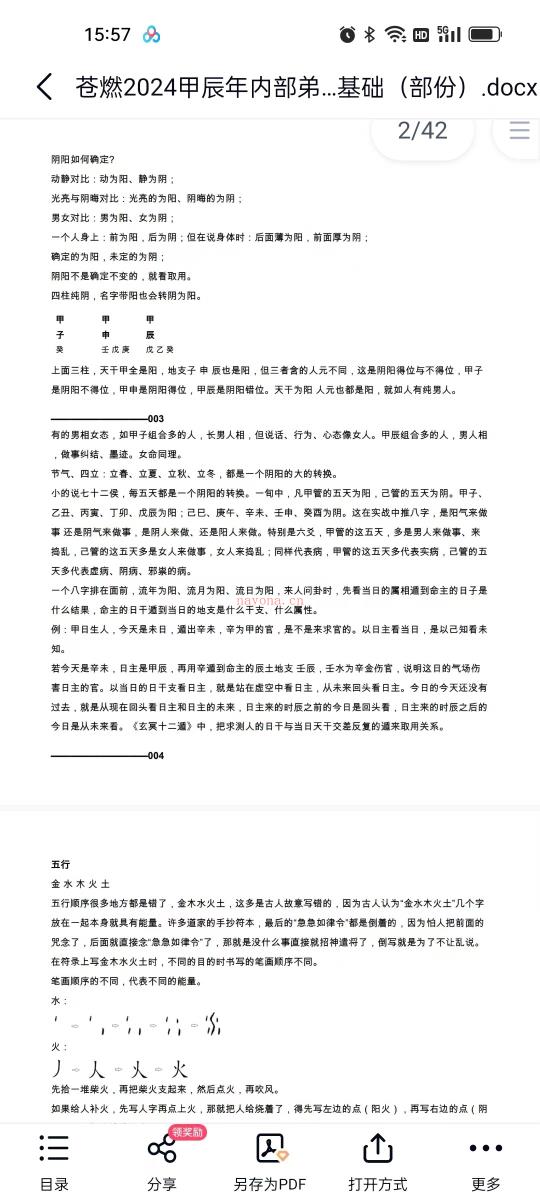
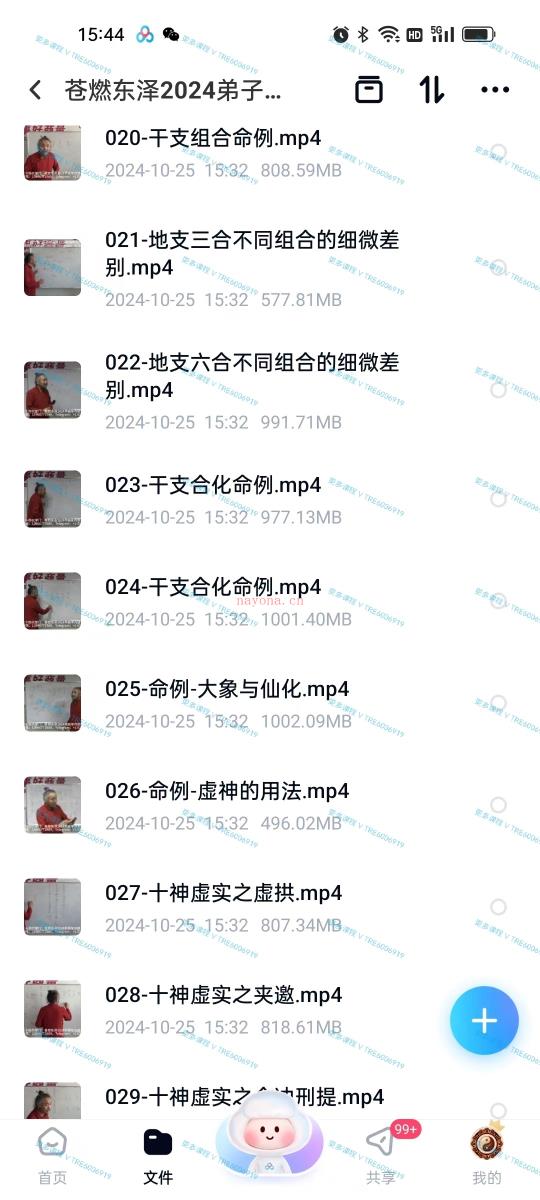
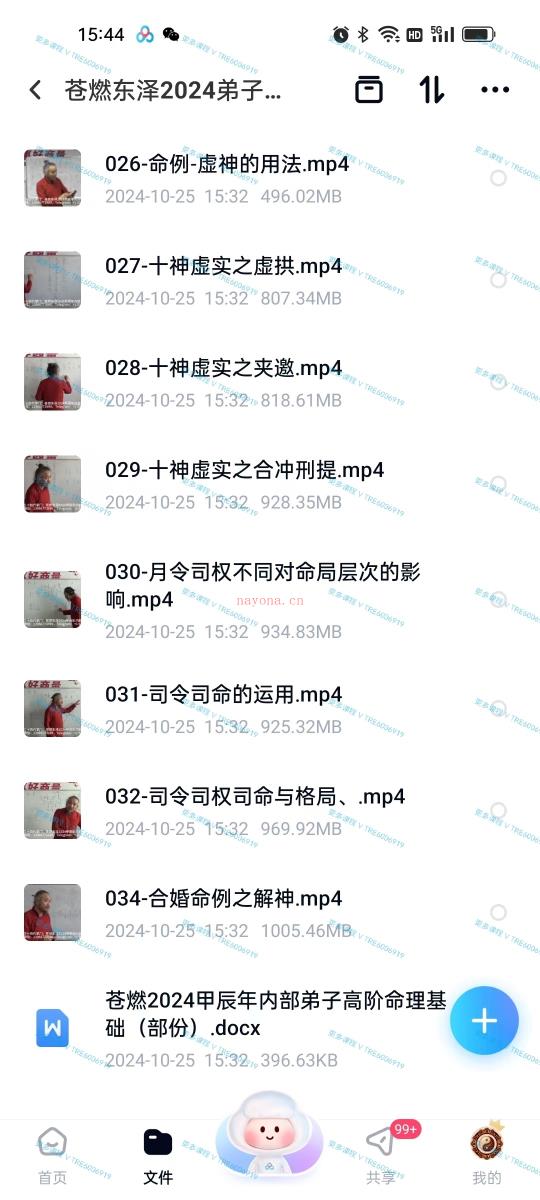
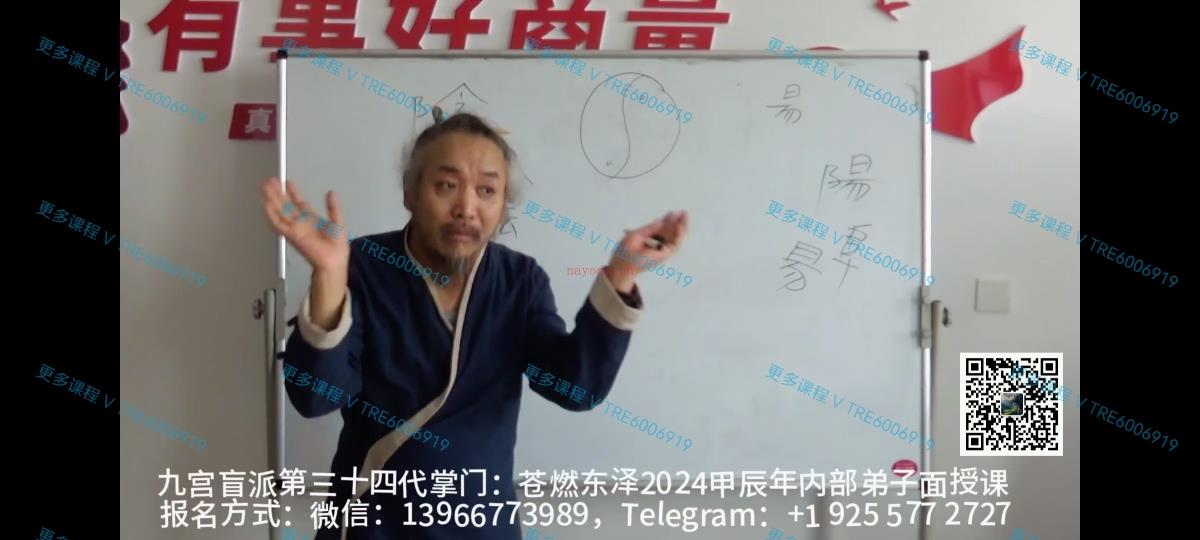
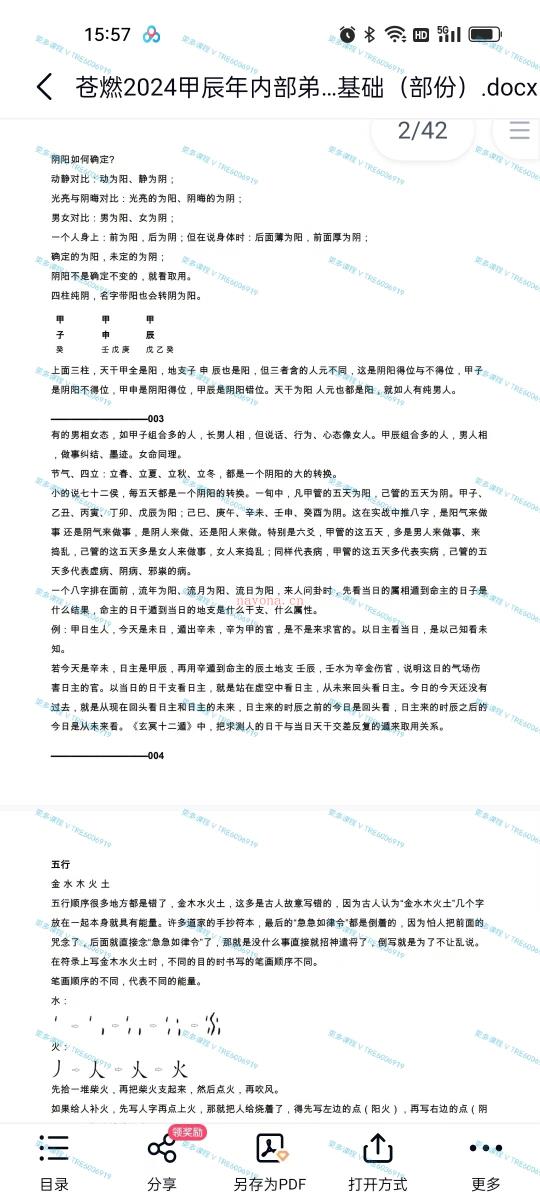
- Original instructional and chart previews
What You Will Learn
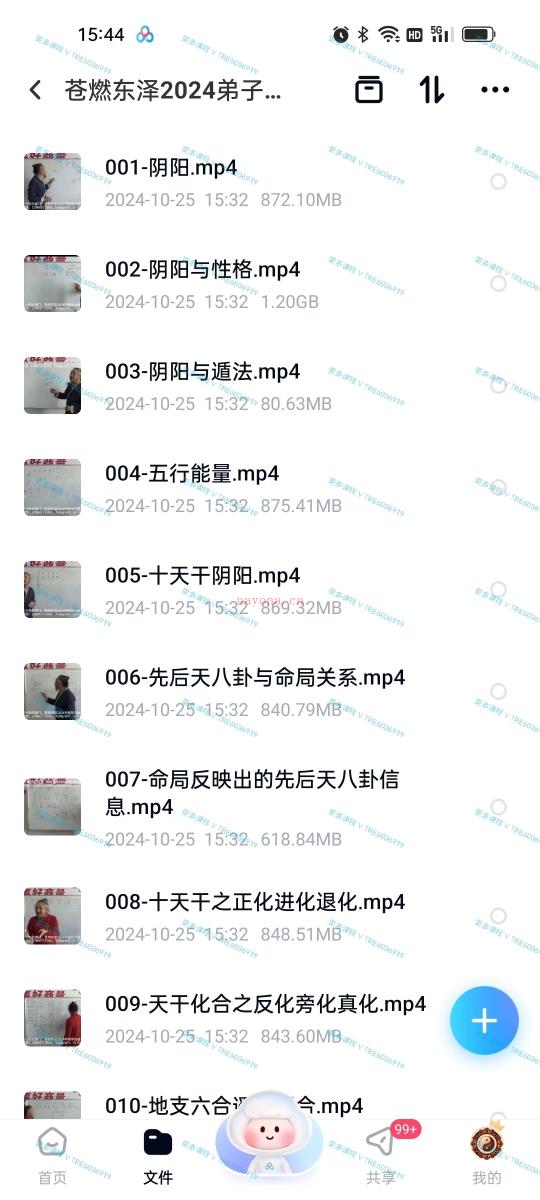
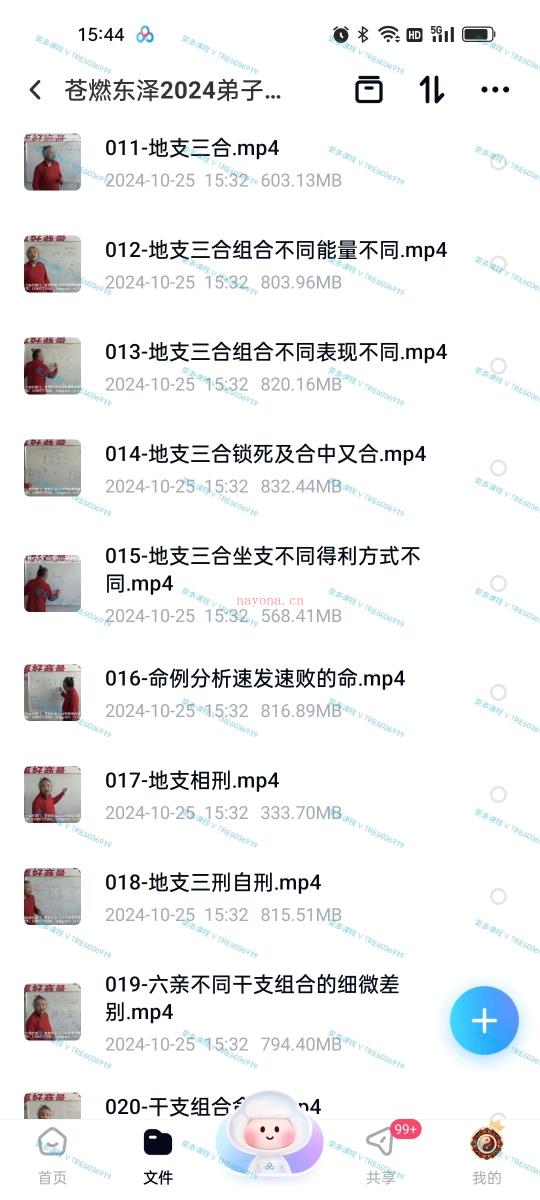
Use the listed topics to identify the scope of this resource, follow its recorded sequence and compare the original diagrams with your study notes. Where individual lesson names are not supplied, the preview images are provided instead of an invented syllabus.
Original Course Previews

Who This Course Is For
For learners who can follow Chinese-language material and want to study Blind School BaZi. Check the format and previews before buying. Intermediate or continuation courses assume familiarity with the relevant foundations and do not imply that prerequisite courses are included.
Learning Format and Digital Delivery
Format: 33 recorded lessons with handouts. Price: USD 9.00. This is a virtual, downloadable product; no physical shipment is required. The download link has not yet been attached to this listing and will be added by the store. Contact us before ordering if you need to confirm delivery timing; immediate automatic file access is not promised.
Frequently Asked Questions
Is the course taught in English?
No English-language recording or subtitle track is confirmed. This description is in English; the underlying course material is Chinese.
What is included?
33 recorded lessons with handouts. Review the course contents and original previews for the stated scope.
Will a physical item be shipped?
No. This is a digital learning resource.
Is a certificate or personal consultation included?
No certificate, accreditation or individual consultation is promised by this listing.
Editorial Note and Disclaimer
Karma Kismet has organized the course listing and available directory into this English guide. Lesson counts refer to the supplied listing, not an independent review of every recording. For traditional and cultural study, not guaranteed predictions, financial advice or assured personal outcomes.
Related Courses
- Shanyang Blind School BaZi: 20 Lessons
- Sanfeng Xuanzi Zi Ping Patterns: Intermediate Course
- Zeng Yong BaZi Pattern Method: Volume Two
- BaZi Stem and Branch Information: 33 Videos
Browse Blind School BaZi, review course and delivery questions, or learn about Karma Kismet.
Reading the Cangran Dongze inventory with care
The supplied course context identifies this as a 2024 Cangran Dongze disciple-course recording with thirty-three videos and handouts. Its source text supplies thirty-three topic entries, although several titles contain transposed or irregular characters. That combination gives a useful but imperfect index. Preserve the original numbering and verify unclear wording against the actual recording or handout. Do not turn a garbled title into a detailed rule simply because you recognize some of its words. The English companion should reflect what the evidence supports without pretending the transcription is cleaner than it is.
The word disciple describes the source's course label. It does not establish that a purchaser becomes a disciple, gains a lineage status, or receives formal recognition. Similarly, the 2024 date identifies this collection; it is not a claim that every underlying idea was first developed that year. The material can be approached as a recorded teaching source within Blind School BaZi. Its value for study lies in following the explanations and cases, rather than deriving credentials or predictive assurance from the circumstances suggested by its title.
Early topics connect several symbolic vocabularies
The first readable entries name Yin-Yang, Yin-Yang and character, and the polarity of the Ten Heavenly Stems. Other early titles mention early and later heaven trigrams in relation to a chart. Keep these topic families in separate glossary entries. A course may connect them, but a shared symbolic vocabulary does not make their roles identical. Your notebook should show how the teacher moves between the terms. If a title is unclear, use it as a location reference and wait for the actual explanation before paraphrasing its intended meaning.
When a passage links a symbolic category with character, record the association as part of the teaching framework. Do not treat it as an independently verified description of a living person. A useful review question is which chart detail the teacher cites and what conditions accompany the interpretation. That keeps the explanation connected to its context. It also prevents a short polarity label from becoming a catchall personality judgment. Cultural study can examine such associations carefully without using them to define a person's abilities, conduct, or worth.
Give combination topics enough space
A substantial part of the inventory concerns stem and branch combinations, including six combinations and several entries involving three combinations. Some titles explicitly suggest that different combinations have different energy or expression, although their transcription needs checking. This is a reason to avoid compressing all combination topics into one rule. Make one entry for each explanation you actually study and record the conditions it supplies. The source's repeated topics offer a path for comparison, but their complete distinctions must come from the material rather than from the titles alone.
For a comparison, hold the terminology consistent while noting what changes between two examples. Does the teacher emphasize a different branch, position, or surrounding relationship? Does the explanation distinguish formation from thematic interpretation? Write down the evidence you can locate. If the distinction is not clear, mark it as a question. This approach is more useful than deciding that every occurrence of a named combination must carry the same meaning. It helps you reconstruct this course's reasoning without imposing a simplified method learned elsewhere.
Study cases without completing missing information
The inventory includes case entries around combinations and transformations, and a title that refers to rapid rise and decline. When a case appears, copy the supplied chart notation and background information before summarizing the interpretation. If an hour, date, or event detail is absent, leave it absent. An invented detail can make an explanation seem coherent while disconnecting it from the original material. Your study record should help you see exactly what was available to the author and which parts of the discussion remain dependent on unclear or incomplete information.
Also note whether the outcome is presented before the reasoning. A case explaining an already known event provides a different kind of evidence from a dated forecast recorded in advance. You can study the internal symbolic argument in either situation, but your notes should not merge them. If a dramatic case attracts your attention, slow down and identify the intermediate steps. A memorable outcome is not a substitute for a method you can explain, and a traditional interpretation should not be reported as independent confirmation that the symbols caused the event.
Virtual relationships need source-specific definitions
The later inventory names virtual gods, virtual arching, and related hidden or invited relationships of the Ten Gods. English translations for these ideas vary, and some source titles are difficult to parse. Keep the Chinese wording and the actual file reference in your glossary. Then write a plain description based on the explanation you hear or read. Do not assume that an unfamiliar term means precisely what a similarly translated term meant in another teacher's course. Source-specific definitions are particularly valuable when studying a continuation or disciple-oriented collection.
Separate visible notation from the additional relationship the method interprets. On one line, record what is actually printed in the example. On another, describe the virtual or inferred relationship attributed to the teacher. This makes the step from observation to symbolic inference visible. It is not a judgment about whether the whole tradition should be accepted; it is a way to understand what kind of statement is being made. It also prevents you from accidentally presenting an inferred symbol as a literal part of the original chart transcription.
Monthly authority and the closing theme
The final portion includes titles about monthly authority and related governing concepts, followed by a marriage-comparison case. These entries suggest another useful review question: how does the teacher use monthly context when assessing a chart, and how is that context retained in a thematic example? The titles do not establish all the rules. Read the actual explanations and keep their conditions attached. If a technical term sounds like ordinary authority or status in English, make sure your paraphrase reflects its chart role rather than implying a person's social position.
For the marriage case, identify whether two charts are actually supplied and what comparison is made. Do not add a partner chart or infer private relationship details to make the example fit the product's general topic. Record conclusions in attributed language and avoid turning symbolic labels into blame. A traditional comparison can be examined as a cultural argument without determining a real couple's compatibility, intentions, or future. This is especially important when a closing case appears to synthesize several earlier concepts and might otherwise feel more conclusive than the evidence warrants.
Build a reliable personal index
Your first durable output from the collection can be an index with original numbers, verified topic paraphrases, actual timestamps or page references, and unresolved transcription questions. This gives the thirty-three-part structure a practical purpose without inventing a polished curriculum. It also makes the handouts easier to use when their relationship to a recording can be established. The index should preserve uncertainty rather than erase it. A clear note about an unclear title is better than a confident English heading based on a guess.
Useful progress means recognizing the course's recurring combination themes, explaining its source-specific virtual relationships, and documenting how conditions appear in cases. Those are study skills that can be reviewed against the material. They do not establish certification, predictive accuracy, or personal outcomes. Approach the Cangran Dongze recording as a particular traditional teaching source, with both readable topics and imperfect text clues, and let careful verification of the actual explanation guide any detailed claims you make about its method.