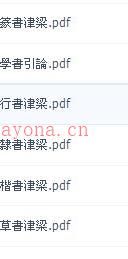
A six-volume calligraphy study set covering regular, cursive, clerical, running and seal scripts, with an introduction to learning calligraphy.
Resource Overview
Guide to Calligraphy: Six-Volume Script Collection is a digital learning resource about Calligraphy. The English description summarizes the available source listing; the underlying recordings or books are in Chinese. An English translation of the full material is not confirmed.
What You Will Learn
Use the sequence and preview material below to identify the course’s scope, terminology and teaching approach. Check each topic against the original lesson rather than treating a short listing as a complete transcript.
Course Contents
- Five named script styles
- Calligraphy study introduction
- Six-volume collection
Original Course Images
Who This Resource Is For
This resource is for readers or learners who can use Chinese-language materials and want a named resource on Calligraphy. Compare the stated scope and previews before ordering; a fixed level of prior experience is not assumed unless the source directory says so.
Learning Format and Digital Delivery
Six Chinese-language digital volumes Virtual and downloadable; there is no physical shipment. Price: USD 9.00. A file link is not yet attached to this product. Please contact Karma Kismet before ordering to confirm delivery arrangements; immediate automated access is not promised.
Frequently Asked Questions
Is the full material in English?
No English edition, recording or subtitle track is confirmed. The source material is Chinese-language.
Is a personal consultation included?
No individual consultation is listed with this resource.
Does this resource guarantee an outcome?
No. It is for educational and cultural study, not a guaranteed result or substitute for professional advice.
Editorial Note
Karma Kismet translated and organized the course facts and original previews for English readers. Lesson counts and formats follow the available source listing; unspecified contents, certificates and instructor credentials are not asserted.
Related Courses
Browse Calligraphy and read digital delivery information.
Six volumes, five scripts and a foundation for calligraphy study
Start slowly, and allow careful reading to guide every copying decision.
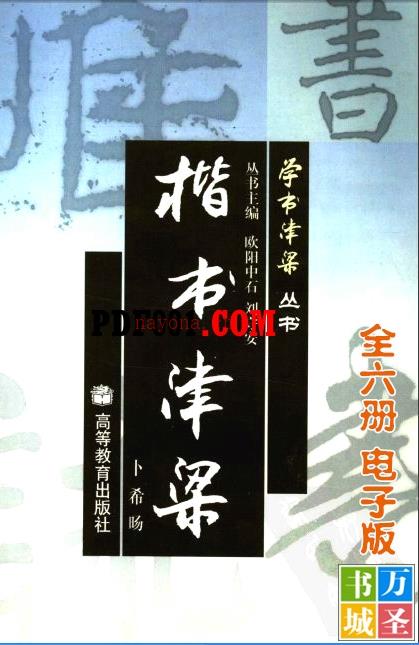
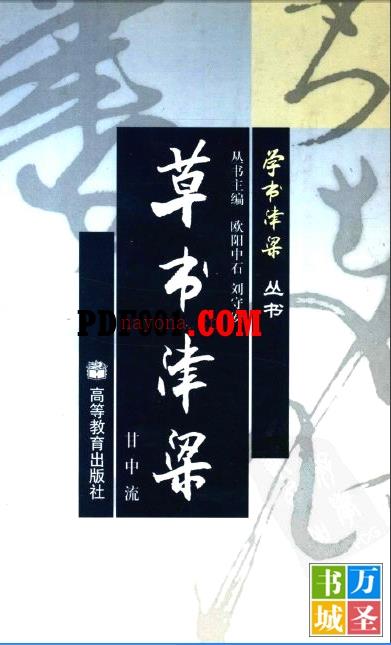
The Guide to Calligraphy set is listed as six electronic volumes covering regular, cursive, clerical, running and seal scripts together with an introduction to learning. The source names Ouyang Zhongshi and Liu Shou’an as series editors and describes the regular-script volume through overview, development, theory, writers, works and learning guidance. These facts support a broad study orientation, not a promise of a particular exercise sequence in every volume. A learner can use the set to connect visual observation with historical vocabulary. The first task is to distinguish what belongs to a script category from what belongs to an individual example.
Choosing a visual starting point
Select one clearly reproduced character in one volume. Before trying to copy it, describe its arrangement: where the dense areas lie, how the components balance and how the empty spaces contribute to the whole. These observations are available from the image. Claims about speed, pressure or the exact order of movement may require additional explanation or demonstration. Do not treat the visible result as a complete record of the hand’s action. A book can teach the reader to notice a finished form, while practice asks a different question about how that form is produced.
A useful first exercise is to draw a light boundary around the character’s overall shape on a separate study sheet. Compare that outline with the locations of its principal components. Then note one feature that gives the form stability and one that gives it movement. The terms are descriptive aids rather than fixed judgments about every example. Return to the book’s explanation and see whether it identifies similar features. This creates a bridge between your own observation and the volume’s terminology before a copying exercise begins.
Regular script and structural attention
The source gives the regular-script volume a particularly detailed introduction. A reader can approach it through proportion and the relationship of strokes within a character. Choose a small set of examples with a shared component and examine how its placement changes. The component may not occupy exactly the same space in every character. Copying it as an isolated fixed shape can therefore miss the adjustment required by the whole. The exercise encourages attention to composition rather than a mechanical assumption that a learned stroke or component can be inserted unchanged wherever it appears.
When practicing, keep the model and your attempt side by side. Compare one feature at a time: spacing, direction, length or the relationship between two components. A page filled with repetitions is less informative if the learner cannot explain what changed between attempts. Mark a specific intention before the next copy and assess whether the result reflects it. This is a reader-created method of practice, not an asserted assignment from the collection. It makes use of the book’s examples while acknowledging that the learner’s movement and materials introduce variables a static reproduction cannot fully control.
Running and cursive scripts
Running and cursive scripts raise questions about connection, abbreviation and legibility. Begin with an example whose characters are identified by the volume. Study how the visible forms relate to the underlying characters before attempting to imitate a connected passage. A continuous mark can look expressive while being textually misunderstood. Calligraphy study includes reading, so preserve the written content alongside visual analysis. Ask which forms are connected, which are shortened and which retain a recognizable structural feature. The answers should come from the selected example and the accompanying explanation, not from an assumption that freer appearance means fewer conventions.
A comparison with a regular-script form can be useful when the same character is available in both. Identify what remains and what changes. The goal is not to judge the running or cursive form by its closeness to regular script. It is to understand how a reader recognizes a character under a different organization of movement and shape. Avoid drawing a general conclusion from one pair. A small set may reveal several different ways in which relationships are transformed, and the variety is part of what makes script study interesting.
Clerical and seal scripts
Clerical and seal-script volumes invite attention to distinctive structures and historical forms. Retain the character identification provided by the book, especially where an older form differs from a familiar modern shape. A visual resemblance is not enough to establish identity. Observe the width, balance and arrangement of a selected example, then connect those observations with the volume’s discussion of the script. This protects the learner from treating an unfamiliar form as mere decoration. Its visual qualities and its role as writing should be studied together.
For a cross-script exercise, select one identified character represented in more than one volume. Prepare a comparison that names the script, describes a structural difference and explains how the character remains readable within the example’s conventions. Keep the exercise small enough to check against the text. The six-volume set can support such comparison because its stated scope includes several scripts, but the availability of a particular matched character must be verified in the pages. Do not invent a comparative plate or assume that every volume supplies the same set of models.
Theory, history and visual evidence
The source describes calligraphic theory and historical development as parts of the regular-script volume. When reading a theoretical statement, find an example that helps clarify its meaning. A metaphor about balance or movement can be evocative, but its educational value increases when the reader can show how it relates to a visible form. Conversely, an example should not be forced to illustrate a principle merely because the principle is memorable. Ask whether the book makes the connection and whether the reproduced detail is clear enough to assess it.
A sustainable practice record
Keep a small dated record of selected models and attempts. State the purpose of each session and the specific difference you observed afterward. Include a note about the script and the source reference, so that similar-looking models are not confused. Periodically return to an earlier model with the vocabulary gained from another volume. Progress may mean noticing a relationship that was invisible before, not simply producing a more polished copy. The collection can support cultural and artistic study without promising a fixed level of skill, and careful observation makes its broad script coverage usable at a manageable pace.