A thirteen-video introduction to traditional incense blending attributed to Li Xiang. It is a craft and cultural-study course, not a medical treatment.
Resource Overview
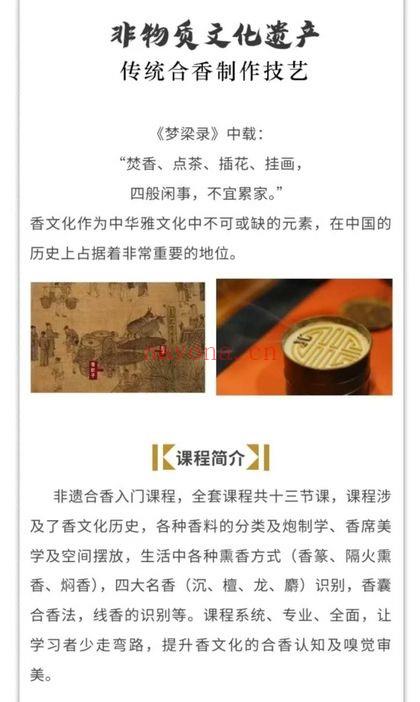
Li Xiang Incense-Making Heritage: Thirteen Videos is a digital learning resource about Chinese Arts & Lifestyle. The English description summarizes the available source listing; the underlying recordings or books are in Chinese. An English translation of the full material is not confirmed.
What You Will Learn
Use the sequence and preview material below to identify the course’s scope, terminology and teaching approach. Check each topic against the original lesson rather than treating a short listing as a complete transcript.
Course Contents
- Incense-blending craft
- Heritage practice
- Thirteen-video format
Original Course Images

Who This Resource Is For
This resource is for readers or learners who can use Chinese-language materials and want a named resource on Chinese Arts & Lifestyle. Compare the stated scope and previews before ordering; a fixed level of prior experience is not assumed unless the source directory says so.
Learning Format and Digital Delivery
Thirteen Chinese-language videos Virtual and downloadable; there is no physical shipment. Price: USD 9.00. A file link is not yet attached to this product. Please contact Karma Kismet before ordering to confirm delivery arrangements; immediate automated access is not promised.
Frequently Asked Questions
Is the full material in English?
No English edition, recording or subtitle track is confirmed. The source material is Chinese-language.
Is a personal consultation included?
No individual consultation is listed with this resource.
Does this resource guarantee an outcome?
No. It is for educational and cultural study, not a guaranteed result or substitute for professional advice.
Editorial Note
Karma Kismet translated and organized the course facts and original previews for English readers. Lesson counts and formats follow the available source listing; unspecified contents, certificates and instructor credentials are not asserted.
Related Courses
Browse Chinese Arts & Lifestyle and read digital delivery information.
Context for reading and study
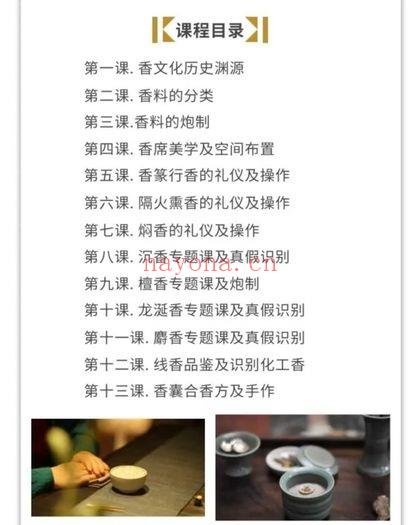
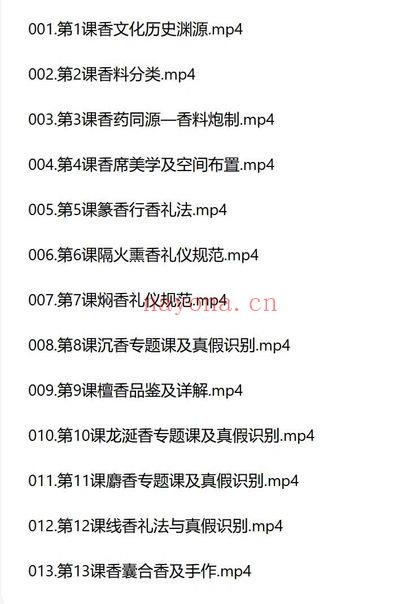
Li Xiang’s thirteen-video introductory listing provides a specific directory: history, material classification, processing, incense-setting aesthetics, three named use methods, four named aromatic-material subjects, stick-incense appraisal, and sachet blending. These details support a craft and cultural reading path. They do not establish medical benefits, a supplied materials kit, or permission to infer undocumented formulas.
History before a universal tradition
The first directory entry concerns incense-culture origins. Read it for the periods, sources, and practices the presenter actually names. A historical story may describe one tradition rather than every use of incense across China. Keep an attributed account separate from a documented object or text. If the lecture gives a date or a lineage claim, preserve its reference instead of enlarging it into a universal history. The source’s heritage language establishes the course’s cultural framing, but it does not independently verify every biographical or historical assertion in the listing. A careful summary can remain interested while avoiding unsupported certainty.
Classifying aromatic materials
The second recording concerns classification. Make a glossary of the categories and the examples used in the lesson, retaining the Chinese names. A common name may refer to a material category rather than a single verified specimen. Do not infer purity, origin, or quality from the label alone. Separate the classification from later claims about scent or traditional use. This gives the reader a clearer foundation for the named material lessons. The course can teach a vocabulary for discussion without guaranteeing that the learner can authenticate a purchased material from a photograph, a name, or a seller’s description.
Processing as a craft procedure
The third entry names material processing. Record the operations demonstrated, the stated purpose, and the sequence only where the recording supplies them. Do not invent temperatures, times, proportions, or substitutions to complete an unclear step. A traditional processing term may carry historical meaning as well as practical meaning, so preserve its explanation. A viewing note can distinguish what the presenter does from what the learner has inferred. The listing identifies a processing subject but does not provide a complete formula in this English guide. Cultural study does not require turning every demonstration into a home instruction.
Incense settings and spatial arrangement
The fourth recording concerns aesthetics and spatial placement. Study the arrangement as a documented example: objects, spacing, order, and the explanation given for those choices. An attractive setting may express ritual or visual priorities rather than a universally correct room design. Keep that distinction visible. If the lecture associates an arrangement with a historical practice, retain the reference and context. Do not infer that the product includes a room plan, tools, or physical equipment. The named subject is an educational discussion of setting and aesthetics, and its details should be verified in the actual recording.
Three named use methods
The directory separately identifies incense-seal practice, indirect-heating practice, and menxiang practice. Preserve the original terms because a short English rendering may not capture every procedural distinction. Compare the apparatus and sequence shown in each recording instead of assuming they are interchangeable. A title alone does not provide enough information to reproduce a heat-related demonstration. Note the handling and conditions actually described. This comparison can clarify how the course organizes incense practice while keeping practical operations tied to the source rather than supplying an improvised method or an unsupported claim that one approach is always superior.
The four aromatic subjects
The listed material lessons concern agarwood, sandalwood, ambergris, and musk. They are named study subjects, not a promise that specimens of these materials are included. Record how the presenter distinguishes identity, preparation, and appraisal. A scent description is not the same as verified provenance or authenticity. If the source discusses genuine and imitation materials, note the basis used in the demonstration and the limits of that example. Avoid assuring a reader that the course will make them an expert authenticator. These subjects can be studied for terminology and cultural context without inventing material specifications or guarantees.
Stick-incense appraisal
The twelfth lesson names stick-incense appreciation and discussion of synthetic incense. Read the recording carefully before equating a scent impression with a compositional finding. A product’s ingredients and manufacturing history cannot be established solely by an attractive or unpleasant smell. Distinguish the presenter’s appraisal vocabulary from a verified laboratory result or a documented ingredient list. For notes, identify the sample, the observation, and the conclusion separately. This makes the demonstration easier to understand and keeps the scope honest. The English page does not promise that the recordings establish a universal test for every incense product.
Sachet blending and formulas
The final directory entry concerns sachet blending and handcraft. A sachet is a named project subject, but the listing does not give a verified formula in this guide. Do not invent a blend, ratio, ingredient list, or storage period. If you study a formula in the recording, copy its stated terms exactly and preserve any qualification or processing requirement. Mark unclear quantities rather than guessing. A craft example can be appreciated for its sequence and cultural role without claiming therapeutic effects. The course is an introduction to incense practice, not a treatment program or a guarantee of a particular bodily response.
Attribution without credential inflation
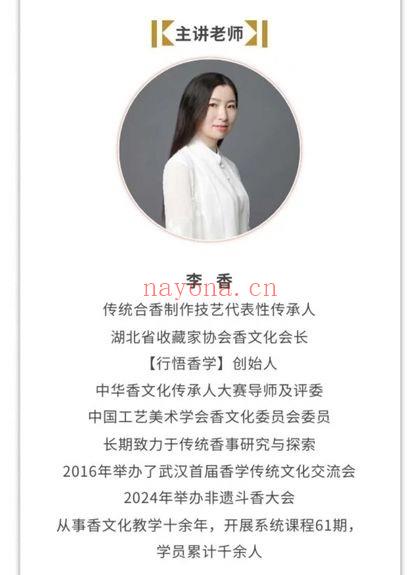
The source attributes the course to Li Xiang and supplies biographical statements. This guide preserves the named attribution without converting those statements into independently verified credentials or promising recognized certification for learners. A title such as heritage introduction describes the cultural subject; it does not by itself grant a qualification. Similarly, recorded teaching does not imply current live access, personal correction, or an ongoing consultation service. Keep the thirteen-video format and the verified directory distinct from promotional assertions. This helps a reader evaluate the actual resource rather than an expanded image of the instructor or the product.
A craft-focused review
A final review can compare terminology, material categories, processing descriptions, setting examples, the three named methods, appraisal language, and the sachet topic. Attach a recording reference to each note and identify where you are describing rather than interpreting. If a step or claim is unclear, leave it open. The source’s wider prose includes broad statements about wellbeing and learning outcomes; these should not be repeated as guarantees. The attainable educational purpose is a clearer understanding of incense craft vocabulary and its cultural framing. English translation, equipment, supplies, professional competence, and health benefits are not established by the listing.