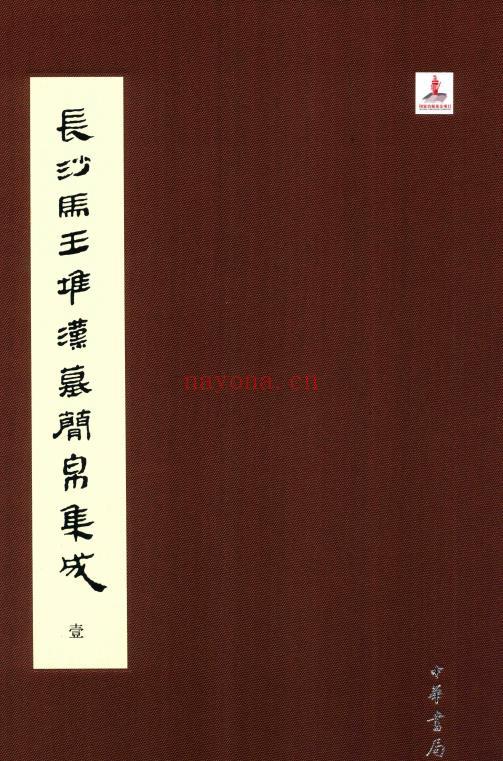
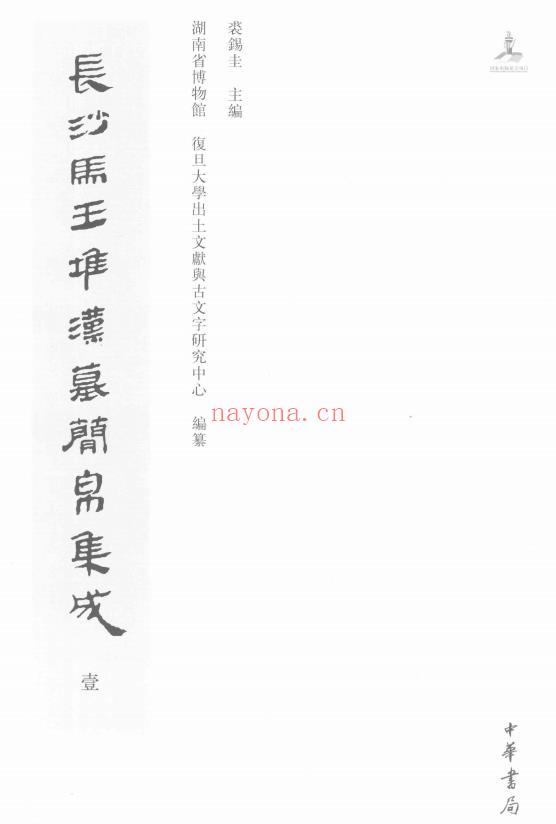
A seven-volume 2014 collection of bamboo and silk manuscripts from the Mawangdui Han tombs, edited by Qiu Xigui.
Resource Overview
Mawangdui Han Tomb Manuscripts: Seven-Volume Collection is a digital learning resource about Paleography & Dunhuang Studies. The English description summarizes the available source listing; the underlying recordings or books are in Chinese. An English translation of the full material is not confirmed.
What You Will Learn
Use the sequence and preview material below to identify the course’s scope, terminology and teaching approach. Check each topic against the original lesson rather than treating a short listing as a complete transcript.
Course Contents
- Mawangdui manuscripts
- Bamboo and silk texts
- Seven-volume edited collection
Original Course Images
Who This Resource Is For
This resource is for readers or learners who can use Chinese-language materials and want a named resource on Paleography & Dunhuang Studies. Compare the stated scope and previews before ordering; a fixed level of prior experience is not assumed unless the source directory says so.
Learning Format and Digital Delivery
Seven Chinese-language volumes Virtual and downloadable; there is no physical shipment. Price: USD 9.00. A file link is not yet attached to this product. Please contact Karma Kismet before ordering to confirm delivery arrangements; immediate automated access is not promised.
Frequently Asked Questions
Is the full material in English?
No English edition, recording or subtitle track is confirmed. The source material is Chinese-language.
Is a personal consultation included?
No individual consultation is listed with this resource.
Does this resource guarantee an outcome?
No. It is for educational and cultural study, not a guaranteed result or substitute for professional advice.
Editorial Note
Karma Kismet translated and organized the course facts and original previews for English readers. Lesson counts and formats follow the available source listing; unspecified contents, certificates and instructor credentials are not asserted.
Related Courses
Browse Paleography & Dunhuang Studies and read digital delivery information.
Reading Mawangdui manuscripts across seven coordinated volumes
The source identifies the Mawangdui Han Tomb bamboo-and-silk manuscript collection as a seven-volume work edited by Qiu Xigui and published by Zhonghua Book Company in 2014. It describes a collaboration involving the Hunan Provincial Museum and Fudan University’s center for excavated texts and ancient writing. The stated architecture is especially useful for study: two volumes of edited images, four volumes of transcription and commentary, and one volume of original images. These are related views of the manuscript evidence. A reader can learn how the work moves from surviving material to an organized image and then to a reasoned textual interpretation.
Start by matching the witnesses
Select a passage that can be located across the image and commentary components. Preserve the collection’s reference system before comparing the pages. A similar-looking fragment is not enough to establish a match. Confirm that the identifiers or commentary links refer to the same material. Once the match is clear, place the edited image, transcription and original-image reference together in the notes. This makes it possible to see what each component contributes. The edited image may make relationships easier to follow, while the original image can reveal the surviving material conditions that the reading must address.
A first study should remain short. Choose several legible characters or one small textual unit instead of an entire manuscript. Ask what the image shows, what the transcription supplies and what the commentary explains. If all three seem identical at first, inspect the notation and the treatment of damaged areas. The differences may be subtle but consequential. A learner who can describe one editorial decision clearly has gained a more useful understanding than one who has read a long paraphrase without noticing how it was established.
From mark to written form
Transcription requires identifying a historical written form, not simply replacing a picture with the nearest familiar modern character. Compare the supplied reading with the visible marks and note which features support it. Some forms may be unfamiliar even when the corresponding word is well known. Keep the distinction between a graph’s appearance and its linguistic function. The collection’s commentary can help explain that relation, but the learner should not erase its reasoning by copying only the final modernized form. The point is to understand how the text becomes readable.
Make a small glossary for forms encountered in the chosen passage. Include the collection’s transcription, a reference to the image and an explanation of the uncertainty if the commentary indicates one. Avoid extending the entry into a universal statement about every occurrence of the form. Another context may require a different analysis. This focused glossary is a record of learning from particular evidence. It also gives the reader a way to revisit an earlier passage when a later discussion clarifies a form that initially seemed obscure.
Material interruption and textual sequence
Bamboo and silk survive as material witnesses, and their physical condition can interrupt a text. Distinguish a missing portion from an unclear surviving portion and from an editor’s proposed completion. Those cases should not be paraphrased as if they carry the same level of certainty. When a sequence is reconstructed, ask how the collection establishes its order. The answer must come from the work’s explanation, not a presumption that a fluent modern sentence proves the arrangement. A plausible reading can guide inquiry while remaining a reconstruction whose grounds need to be understood.
A reader-created sequence chart can show the surviving units, the supplied connections and the passage’s interpreted sense. Use different visual marks for what is present and what is inferred. The chart is useful even if it simply confirms the editor’s arrangement, because it makes the dependence of the interpretation visible. If a connection remains uncertain, keep the alternatives instead of choosing the smoothest one without evidence. The collection offers the components needed for careful comparison; its usefulness does not require every difficulty to disappear.
Commentary as an argument
Read a commentary note for its reasoning rather than only its conclusion. Identify the problem it addresses, the evidence it uses and the alternative it accepts or rejects. A note may concern a graph, a word, a phrase or the arrangement of material. Those scales should not be confused. If a lexical explanation depends on another passage, locate the cited comparison when possible. A brief note can condense substantial scholarship, so the learner may need to unpack its steps before the conclusion becomes intelligible.
For one note, write an expanded explanation in plain English. State why the reading is difficult and how the editor proposes to solve it. Do not add a stronger certainty than the note expresses. If the reasoning remains unclear, formulate a question about the missing step. This exercise helps an English-speaking learner use Chinese scholarly commentary without pretending that recognition of a final translation is equivalent to understanding the textual argument. It also distinguishes the collection’s analysis from a modern personal interpretation added afterward.
Comparisons with transmitted texts
If the selected manuscript passage is compared with a transmitted text in the commentary, preserve the identity of both witnesses. Agreement may clarify wording; difference may raise a question about textual history or interpretation. Do not assume that the manuscript is automatically the original version or that a later printed text must be wrong. The relation requires evidence. Describe the exact difference before explaining its possible significance. A single changed form may alter an argument, or it may reflect a distinction that a broad English paraphrase would conceal.
Historical use of manuscript evidence
A manuscript can contribute to cultural and intellectual history, but its presence in a tomb does not automatically tell the reader how every person of the period thought or acted. Distinguish the surviving document, its interpreted contents and a wider historical claim. Ask what additional evidence would be necessary for the wider claim. The collection supplies a substantial textual foundation, yet the scope of any conclusion should match the evidence actually examined. A narrow statement about a passage is often more defensible than a sweeping account of Han society based on one striking sentence.
A useful final project follows one passage through all three components: edited image, transcription-and-commentary and original image. Explain one decision that made the passage readable and one uncertainty that remains. Include enough reference detail for another reader to repeat the comparison. This project takes advantage of the seven-volume design rather than using only the verbal interpretation. It develops attention to the relation between material survival and scholarly reading, which is the distinctive educational opportunity offered by this manuscript collection.