A seven-volume 1999 supplement to an oracle-bone inscription collection. It is a reference set for script study rather than a filmed class.
Resource Overview
Supplement to the Oracle Bone Script Collection: Seven Volumes is a digital learning resource about Paleography & Dunhuang Studies. The English description summarizes the available source listing; the underlying recordings or books are in Chinese. An English translation of the full material is not confirmed.
What You Will Learn
Use the sequence and preview material below to identify the course’s scope, terminology and teaching approach. Check each topic against the original lesson rather than treating a short listing as a complete transcript.
Course Contents
- Oracle-bone inscriptions
- Supplementary corpus
- Seven-volume edition
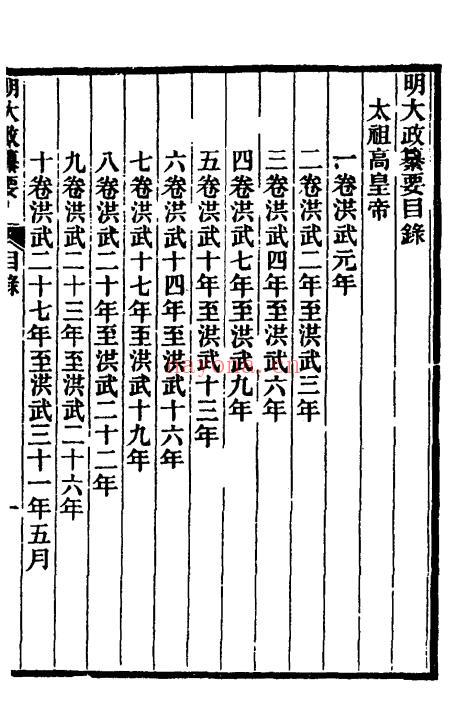
Original Course Images
Who This Resource Is For
This resource is for readers or learners who can use Chinese-language materials and want a named resource on Paleography & Dunhuang Studies. Compare the stated scope and previews before ordering; a fixed level of prior experience is not assumed unless the source directory says so.
Learning Format and Digital Delivery
Seven Chinese-language volumes Virtual and downloadable; there is no physical shipment. Price: USD 9.00. A file link is not yet attached to this product. Please contact Karma Kismet before ordering to confirm delivery arrangements; immediate automated access is not promised.
Frequently Asked Questions
Is the full material in English?
No English edition, recording or subtitle track is confirmed. The source material is Chinese-language.
Is a personal consultation included?
No individual consultation is listed with this resource.
Does this resource guarantee an outcome?
No. It is for educational and cultural study, not a guaranteed result or substitute for professional advice.
Editorial Note
Karma Kismet translated and organized the course facts and original previews for English readers. Lesson counts and formats follow the available source listing; unspecified contents, certificates and instructor credentials are not asserted.
Related Courses
Browse Paleography & Dunhuang Studies and read digital delivery information.
A supplement to an oracle-bone inscription corpus
The source identifies Tan Xisi’s Supplement to the Oracle Bone Script Collection as a seven-volume PDF edition published by Yuwen Press in 1999. It describes the supplement as collecting material omitted or not previously included in the earlier collection, including newly published inscriptions and results of joining and organizing fragments. The source gives 13,450 pieces for the supplement, while its discussion of 41,956 pieces concerns the earlier collection. These numbers should remain attached to their respective works. A supplement is related to an existing corpus, but it is not interchangeable with it and should be cited under its own title.
Keep item identity before interpretation
Begin with one numbered item that can be located clearly in the volume. Record its identifier, image reference and any accompanying reading. If the entry refers to another collection, retain that reference separately. Do not silently replace a supplement number with a base-collection number. Stable item identity is essential because a later discussion may propose a different reading while still referring to the same piece. Without the identifier, a learner can accidentally compare unrelated images that happen to contain a similar mark. The bibliography and numbering are therefore part of the study, not merely administrative details added afterward.
Image, transcription and interpretation
An inscription study involves several stages that should not be collapsed. The image presents marks on a material surface. A transcription identifies those marks as characters or character forms. An interpretation explains how the resulting words function in a passage. A readable interpretation may depend on a difficult transcription, and the transcription may depend on a damaged mark. Trace those dependencies in one selected item. The aim is not to become certain about every character immediately, but to know which parts of a proposed reading are directly visible and which require scholarly judgment.
A practical exercise is to select a small area of the image and compare it with the supplied reading. Describe the visible lines before naming the character. Then identify what evidence permits the identification. If part of the form is missing, note that limit explicitly. A familiar modern character can create a strong expectation that encourages the eye to supply absent strokes. Returning to the image interrupts that expectation. Preserve the distinction between recognizing a complete form and accepting an editor’s reasoned identification of a partial one.
Damage and absence
A broken surface does not preserve every part of the original text. The absence of a character in a fragment may therefore have a material explanation rather than a linguistic one. When reading a proposed sentence, ask which parts survive and which parts are supplied or inferred. The source’s emphasis on fragment organization makes this a relevant reading concern. Do not extend a restored phrase into a historical conclusion without understanding the restoration. A short uncertain passage can still be useful evidence, provided the uncertainty is carried into the claim made from it.
Keep a notation for unreadable and missing portions that follows the volume’s explanation when available. Different symbols can distinguish different editorial judgments, so do not normalize them into one vague question mark before understanding their function. If the notation is unexplained in the selected page, consult the introductory material. A plain English paraphrase should state when its meaning depends on supplied wording. This protects the reader from a common problem: the paraphrase becomes more definite than the transcription, even though no additional evidence has appeared.
Joining fragments as a reasoned proposal
The source mentions research on joining fragments. A proposed join can change how a text is read by placing previously separate portions in relation. To understand one, ask what supports the connection: a material edge, continuity of marks, a textual relationship or another criterion the volume explains. Do not assume all joins use the same evidence. Separate the reason for associating the pieces from the interpretation made possible by the association. The second can be persuasive only to the extent that the first is understood.
An independent diagram can show the pieces as presented and the order proposed for reading. Label which connections the edition treats as secure and which remain tentative, if that distinction is supplied. Then summarize the effect of the join in one sentence. Perhaps it clarifies a word or completes a relationship; the precise effect must come from the item. This bounded exercise is more instructive than treating a joined text as if it had always survived intact. It makes visible the scholarly work through which fragmentary evidence becomes usable.
Chronology and the earlier collection
The source discusses five chronological groups and content categories while describing the earlier Oracle Bone Script Collection. That discussion is background to the related corpus, not automatic proof of the supplement’s exact arrangement. Verify the supplement’s own introduction and index before applying those categories to it. If an item is assigned to a period, investigate the grounds stated for the assignment. A corpus classification can assist retrieval, but it should not be treated as a self-evident date that needs no explanation. The distinction matters when the date becomes part of a historical argument.
Using a corpus for a historical question
Choose a narrow question that the selected inscriptions can address. Begin with the wording and the item’s context rather than a broad claim about ancient society. A set of inscriptions may preserve a particular kind of activity more readily than others. The survival of a record is not proof that it represents all ordinary experience. State what the evidence shows and what lies beyond its scope. If the interpretation depends on several items, preserve each reference so that the comparison can be checked independently.
A useful comparison selects two items that share an identified expression or formal feature. Examine their differences in surviving context before concluding that the expression has the same function. Similar marks can support a question without settling it. Keep the image evidence beside the verbal account, especially where readings differ. The supplement’s educational value lies partly in showing how scholarship reasons from difficult material. It is not a simple glossary that guarantees one-to-one equivalence between every ancient mark and a modern word.
A small and transparent study result
End with a record of one item: its corpus identity, an observed feature, the proposed transcription, the interpretation and a remaining uncertainty. Explain any dependence on a join or a restored character. This gives a clear result without overstating expertise. The seven-volume 1999 resource supports reference study and comparison with the earlier collection. A learner benefits most by preserving the boundaries between material evidence and scholarly reconstruction, and by making every historical claim proportionate to the inscription that supports it.