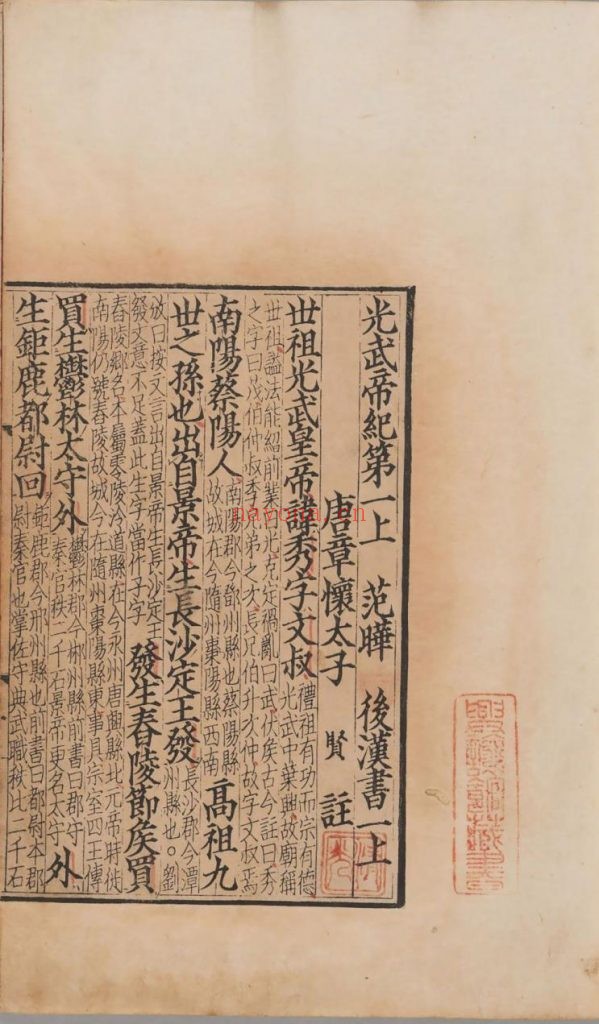
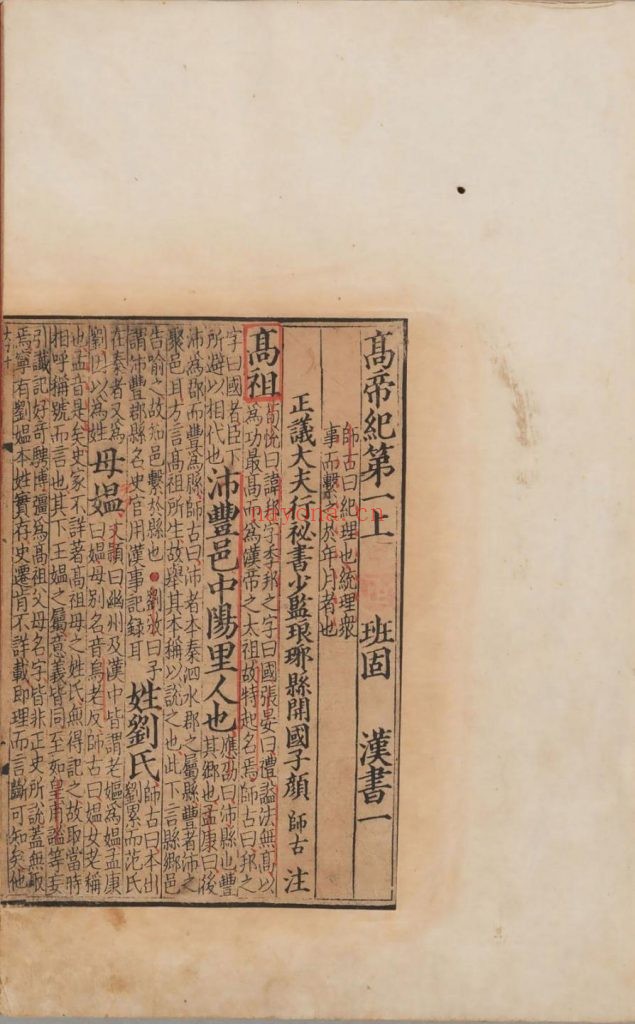
A four-volume historical edition of the Book of Han attributed to Ban Gu. It is a separate dynastic history from the Book of Later Han.
Resource Overview
Book of Han: Four-Volume Historical Edition is a digital learning resource about Historical Records. The English description summarizes the available source listing; the underlying recordings or books are in Chinese. An English translation of the full material is not confirmed.
What You Will Learn
Use the sequence and preview material below to identify the course’s scope, terminology and teaching approach. Check each topic against the original lesson rather than treating a short listing as a complete transcript.
Course Contents
- Book of Han
- Ban Gu attribution
- Edition and volume context
Original Course Images
Who This Resource Is For
This resource is for readers or learners who can use Chinese-language materials and want a named resource on Historical Records. Compare the stated scope and previews before ordering; a fixed level of prior experience is not assumed unless the source directory says so.
Learning Format and Digital Delivery
Four Chinese-language volumes according to the source title Virtual and downloadable; there is no physical shipment. Price: USD 9.00. A file link is not yet attached to this product. Please contact Karma Kismet before ordering to confirm delivery arrangements; immediate automated access is not promised.
Frequently Asked Questions
Is the full material in English?
No English edition, recording or subtitle track is confirmed. The source material is Chinese-language.
Is a personal consultation included?
No individual consultation is listed with this resource.
Does this resource guarantee an outcome?
No. It is for educational and cultural study, not a guaranteed result or substitute for professional advice.
Editorial Note
Karma Kismet translated and organized the course facts and original previews for English readers. Lesson counts and formats follow the available source listing; unspecified contents, certificates and instructor credentials are not asserted.
Related Courses
Browse Historical Records and read digital delivery information.
Understanding the architecture of the Book of Han
The source identifies a four-volume Book of Han edition attributed to Ban Gu, with a Southern Song Qingyuan-period Huang Shanfu printing subsequently associated with Liu Yuanqi. It describes a hundred internal divisions: twelve chronicles, eight tables, ten treatises and seventy biographies. Those figures explain why the four digital books should be approached through their internal organization. The work presents a dynastic history, while the printing is a later witness to its text. A reading project can therefore investigate both the Western Han and Xin-period narrative described in the source and the editorial features preserved by this particular copy.
Choosing a section by the question
Ask a concrete question before opening a long sequence of pages. A question about when a ruler acted may lead first to a chronicle. A question about a person’s career may require a biography. A question involving several simultaneous positions may be easier to investigate through a table, while an institutional topic may be addressed in a treatise. These are routes for exploration, not guarantees that every desired fact appears in the expected place. After locating a passage, check its relation to other sections. The Book of Han’s arrangement gives multiple ways of framing an event, and a single route may reveal only one part of it.
The source gives the historical span from the first year of Emperor Gaozu through Wang Mang’s fourth Dihuang year. Use those boundaries to orient a timeline, but keep the original reign-period wording in detailed references. A biography may include earlier background to explain an individual’s position, and a treatise may organize a subject without following the same narrative sequence as the chronicles. A reader who assumes every page moves forward at the same rate will quickly become confused. Distinguishing event chronology from the order in which an account introduces information is one of the most useful habits for this resource.
Following an individual through more than one account
Select a person who appears in a passage you can read and list the actions explicitly associated with that person. Separate appointment, proposal, participation and later evaluation. Then look for one of those actions in a chronicle or another relevant section. A second account may confirm the date while providing a different amount of explanation. If the accounts differ, record the exact point of difference instead of merging them into a smoother story. A discrepancy may concern chronology, emphasis or characterization, and those possibilities require different responses. The comparison is valuable even if it ends with a question rather than a resolved narrative.
Build a relationship chart only from the evidence supplied in the selected pages. Distinguish family connection, official relationship and participation in the same event. These lines should not all be drawn as if they mean the same thing. A person may cooperate in one episode and oppose another action later; a fixed label can conceal that change. The chart is a temporary reading aid, so revise it as new evidence appears. This method encourages close attention to the historical narrative’s sequence and prevents a memorable characterization from becoming an explanation for everything a person does.
How tables organize complexity
The eight table divisions in the source-described structure provide a reason to learn how to read tabular historical evidence. Begin with the column and row headings, then identify the unit represented by each entry. Is the alignment chronological, familial, administrative or another kind established by the actual table? Read abbreviations and notes before drawing a conclusion. A table is compact because it assumes the reader understands its categories. Copying isolated entries into a modern spreadsheet without those categories can make the data look more certain and more comparable than the original arrangement permits.
A small exercise is to select several adjoining entries and explain what their placement shows. Write the explanation as a relationship, not merely a list of names. Then ask what the table leaves out that a prose account might supply. If the table provides a sequence but no motive, do not invent a motive to make the sequence intelligible. If it groups entries under a shared heading, preserve the heading in the notes. The table’s structure is itself part of the evidence, and losing it may change the meaning of the entries even when every copied character is correct.
Institutional history in the treatises
A treatise can supply the language through which an institution is described across time. Read a selected discussion for categories, changes and stated purposes. Ask whether a passage describes an established rule, a proposed reform or a judgment about earlier practice. A sentence beginning with a general claim may be followed by examples that qualify it. Those qualifications should remain in the summary. The subject’s apparent continuity can otherwise become misleading: a familiar institutional name may remain while its operation changes. Use the treatise’s own distinctions before introducing a modern administrative analogy.
For an independent comparison, relate one institutional discussion to a person or event elsewhere in the work. Does the narrative show the rule being followed, challenged or interpreted? The two passages need not fit neatly. Their relationship may reveal the difference between an institutional account and an episode of political action. Describe that difference in a bounded way. The task is not to establish an entire social system from two passages, but to understand how the history distributes evidence and how one kind of account can clarify or complicate another.
The edition as an object of study
The named Song printing and later issuance are part of the source’s bibliographic description. When examining the scan, note how headings, main text and commentary are arranged. Before quoting, determine whether the words belong to the historical text or an annotation. A page image may retain distinctions that disappear in a plain transcription. If a character is unclear, record the uncertainty and consult another witness if available. A smooth modern paraphrase should never be used to hide a doubtful reading. The reproduction’s value lies partly in preserving evidence of the text’s presentation, not just in making its words accessible.
A distinct title with a distinct historical subject
The Book of Han should remain separate from the Book of Later Han even when the two copies are described as a paired printing. The title difference concerns the historical work, not merely which file follows another in a folder. A comparison can be useful, but only after each work’s internal sections and period have been identified. Similar-looking layouts do not establish identical textual content. Keep author attribution, title and juan references attached to every note so that a later discussion does not inadvertently transfer evidence from one history into the other.
A first project might end with a two-page dossier: the bibliographic identity, a dated event, a related person, a table or treatise connection and an unresolved point. Such a dossier is small enough to check thoroughly and broad enough to reveal the work’s multiple forms of historical writing. Explain where the conclusion rests on direct narration and where it rests on comparison. This produces a more dependable understanding than reading the four-volume designation as a measure of simplicity. The resource offers a substantial historical text whose organization rewards patient, question-led investigation.