Professional Feng Shui training with 90 videos: 59 Golden Lock Jade Pass lessons plus 31 practitioner lessons on luopan and landform study.
Course Overview
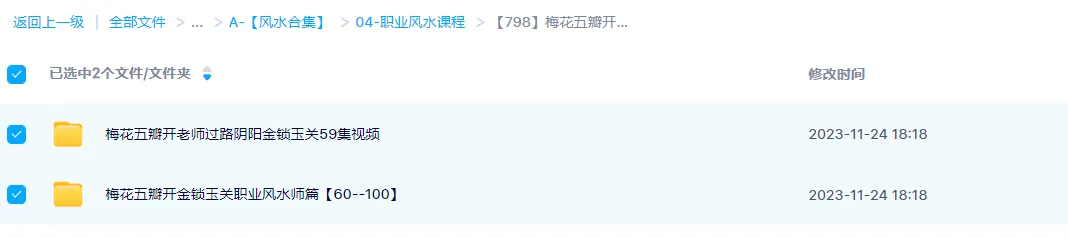
This professional Feng Shui training presents the complete video curriculum attributed to teacher Meihua Wuban Kai, combining two series: Passing Road Yin Yang Golden Lock Jade Pass (59 videos) and The Professional Feng Shui Practitioner (31 videos), for a total of 90 videos. The first series builds from foundational theory—Hetu, Luoshu, heavenly stems and earthly branches, five elements, nine stars, and eight trigrams—into practical compass use, the twenty-four mountains, establishing the pole, measuring object directions, sand-water configuration, and judging auspicious or inauspicious interiors. It also covers external form-sha identification and traditional responses, missing or multiple corners of houses, yin dwelling orientation, and the four symbols. The second series addresses timing rules, useful gods, disease analysis, career, health, marriage, and other eight-character prediction topics. This is cultural and educational study, not a promise of results.
What You Will Learn
- Understand foundational Feng Shui theory, including Hetu, Luoshu, heavenly stems and earthly branches, five elements, nine stars, and eight trigrams.
- Learn to use the luopan, recognize the twenty-four mountains, establish the pole, and measure object directions in a home.
- Study sand-water configuration methods to make preliminary judgments about auspicious and inauspicious interiors.
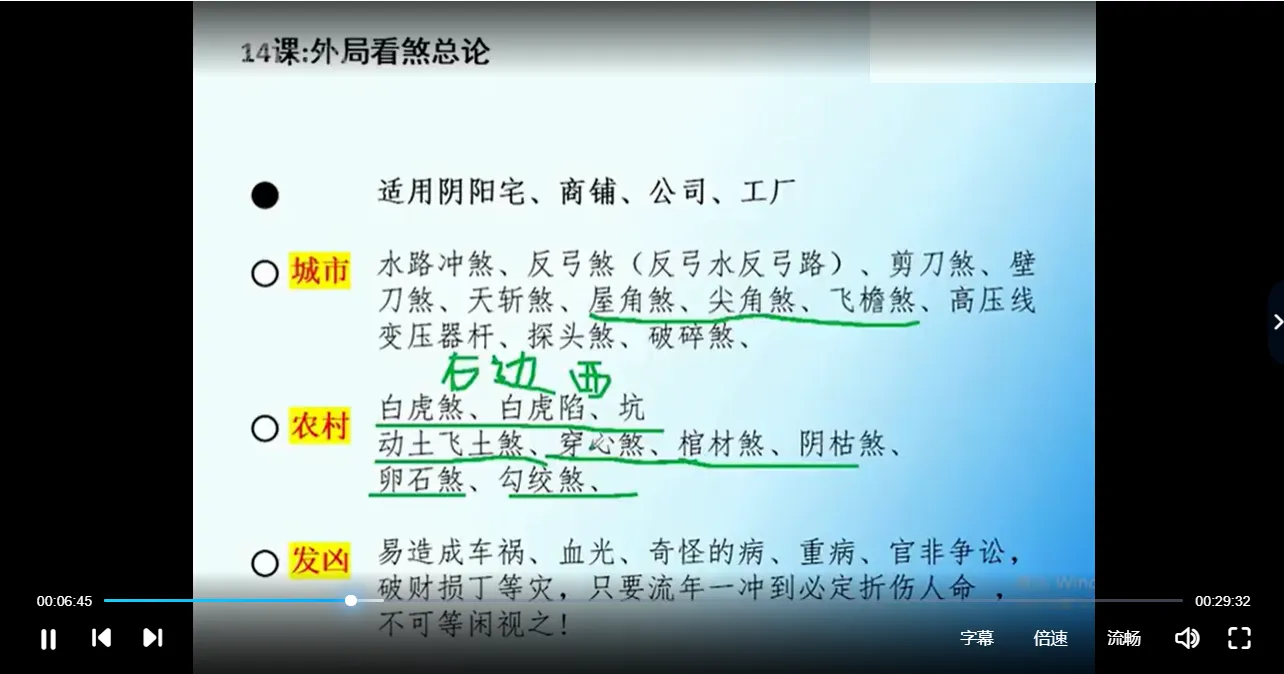
- Identify external form-sha patterns in urban and rural settings and study traditional response approaches.
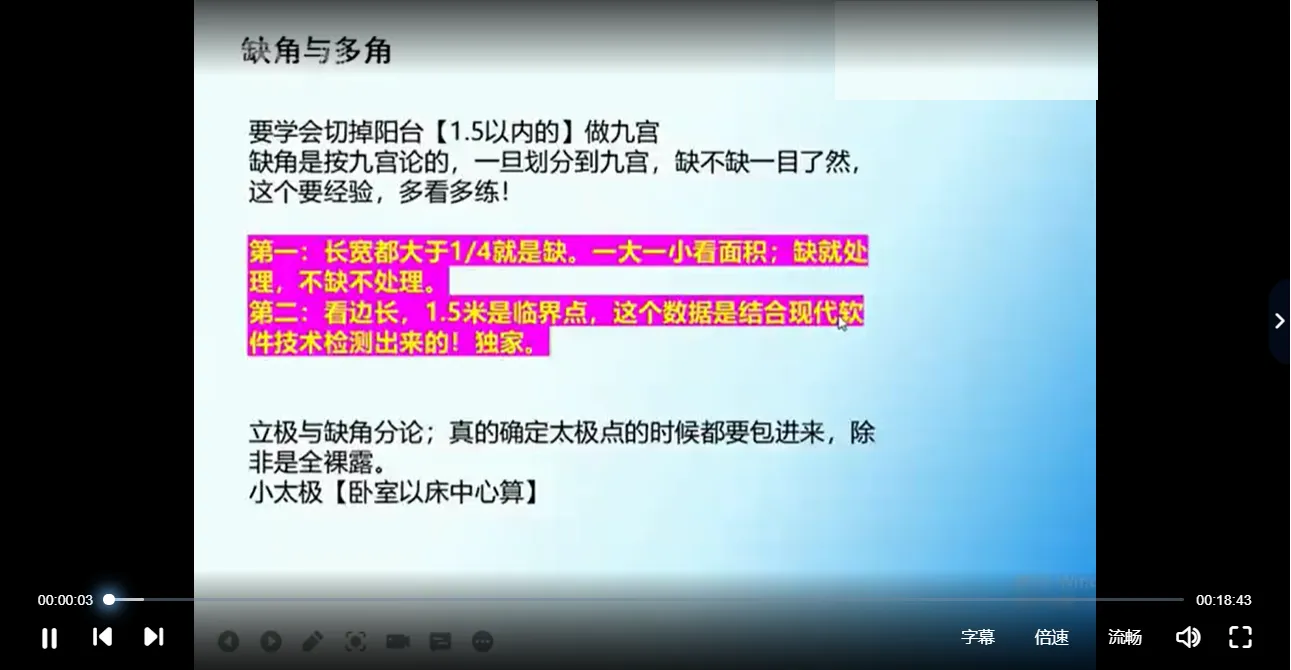
- Analyze missing and multiple corners of houses using two quantification methods and study related interpretations.
- Explore professional practitioner topics including timing rules, useful gods, disease analysis, career, health, and marriage analysis.
Course Contents
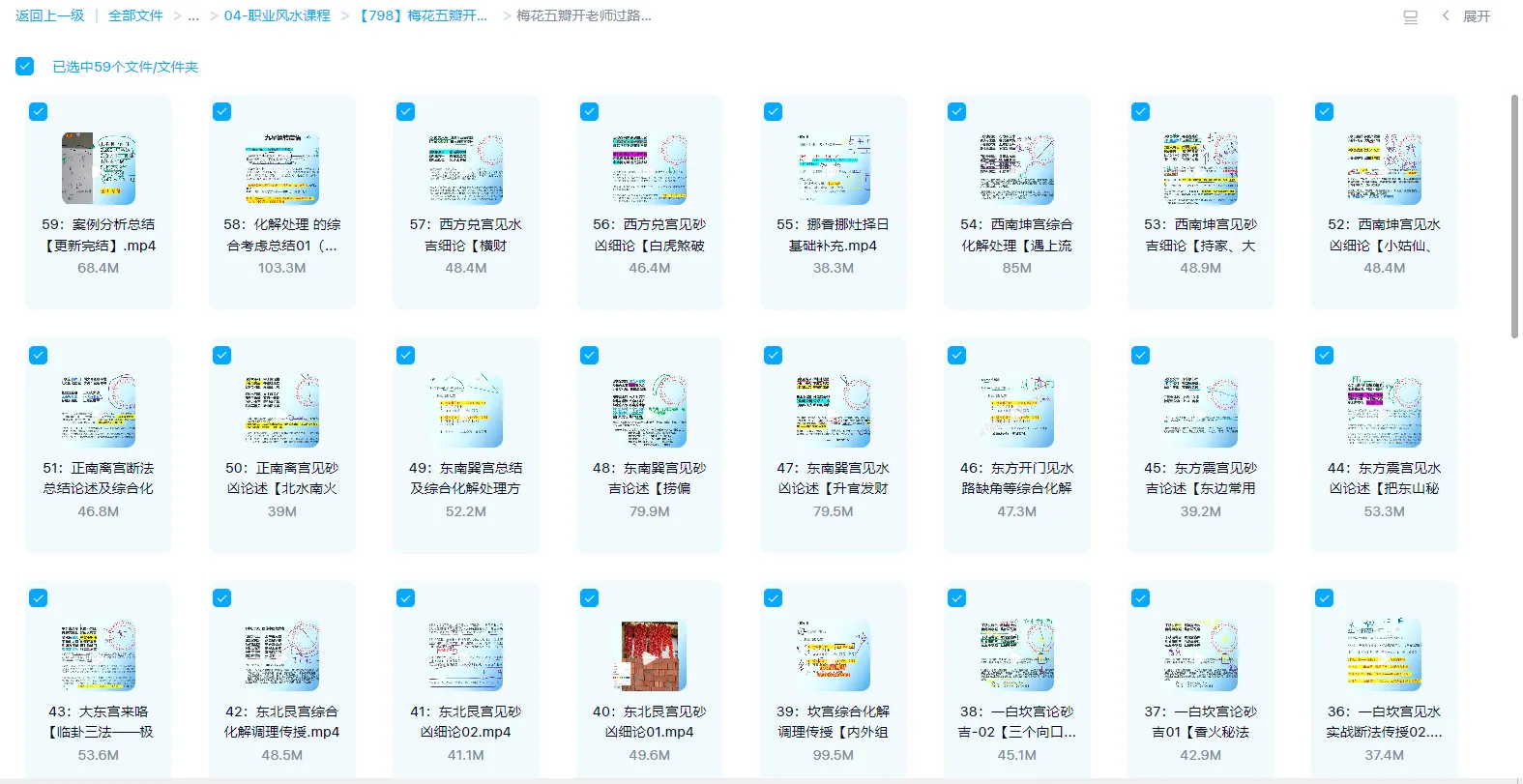
- 01–02: Introduction to Feng Shui and recognition of Feng Shui schools
- 03–04: Secrets of Hetu and Luoshu, including the origin of Golden Lock sand-water configuration theory
- 05–06: Heavenly stems, earthly branches, five elements, earlier and later heaven trigrams, and combined theory
- 07–08: Nine stars coverage, characteristics, and eight trigram correspondences
- 09–11: Luopan twenty-four mountains, establishing the pole, and preliminary measurement of home object directions
- 12–14: Sand-water formulas, eight palace sand-water configuration, center point issues, and original destiny position
- 15–18: External煞 overview, urban and rural case analyses
- 19–20: Yin dwelling grave orientation, bright hall and facing opening, and four symbols requirements
- 21–26: Landform supplements, traditional form-sha responses, Feng Shui object study, and case timing
- 27–29: Two quantification methods and detailed views on missing and multiple corners of houses
- 30–33: Qian palace sand and water analysis and comprehensive remedy methods
- 34–39: Kan palace water and sand analysis, practical judgment methods, and comprehensive remedies
- 40–42: Gen palace sand inauspiciousness and comprehensive remedies
- 43–46: Zhen palace water and sand analysis, opening door facing water, missing corners, and remedies
- 47–49: Xun palace water and sand analysis and comprehensive remedies
- 50–51: Li palace sand inauspiciousness and comprehensive remedies
- 52–54: Kun palace water and sand analysis and comprehensive remedies
- 55: Basic date selection supplement for moving incense and stove
- 56–57: Dui palace sand inauspiciousness and water auspiciousness
- 58–59: Comprehensive consideration of remedies, nine star movement, and case analysis summary
- Professional Practitioner Series: Timing rules (NO1–NO5)
- Professional Practitioner Series: Useful gods, disease analysis, and work methods
- Professional Practitioner Series: Career, resignation, and unemployment analysis
- Professional Practitioner Series: Marriage quality, spouse zodiac, and parents' death or divorce
- Professional Practitioner Series: Academic qualifications, following patterns, and wealth analysis
- Professional Practitioner Series: Sibling count, climate adjustment, and other eight-character topics
Original Course Images
The verified course images are retained in their recorded order for material reference.
Who This Course Is For
This course is intended for Feng Shui enthusiasts and practitioners who want a structured, video-based study of traditional Chinese metaphysical concepts. It suits learners seeking to understand sand-water theory, luopan operation, external form-sha analysis, and eight-character prediction topics from a cultural and educational perspective. It may also interest professionals in related cultural fields who wish to review systematic curriculum content. No prior credential is required, but an open, critical, and culturally respectful attitude is recommended. The material is for study and reference only and does not guarantee any specific life outcome.
Learning Format and Digital Delivery
Virtual, downloadable course with no physical shipping. The store administrator will add or confirm the digital delivery link separately.
Frequently Asked Questions
How many videos are included in this course?
The course includes 90 videos in total: 59 videos in the Passing Road Yin Yang Golden Lock Jade Pass series and 31 videos in The Professional Feng Shui Practitioner series.
What topics does the curriculum cover?
Topics include foundational Feng Shui theory, Hetu and Luoshu, heavenly stems and earthly branches, five elements, nine stars, eight trigrams, luopan and twenty-four mountains, sand-water configuration, external form-sha patterns, missing corners, yin dwelling orientation, and professional practitioner subjects such as timing rules, useful gods, career, health, and marriage analysis.
Is this course suitable for beginners?
The first series begins with foundational theory and progresses to practical techniques, so beginners can follow the sequence. The professional series is more advanced and may be better understood after studying the foundational material.
Related Feng Shui Courses and Guides
Editorial Note
Karma Kismet translated and organized the verified course record for English-speaking learners. Traditional Feng Shui is presented as cultural and educational study, not as a promise of wealth, health, relationship or other outcomes.
Disclaimer
For cultural and educational study only. This course does not provide medical, legal, financial or other professional advice and does not guarantee results.
More Feng Shui Courses
- Qin Genlin Zero-Basis Residential Feng Shui Course: 41 Videos
- Zeng Li Interior Feng Shui Advanced Course: 20 Lessons
- Teacher Gao Home Environment Feng Shui Course: 100 Videos
- Ni Ke Office Furniture Feng Shui Course: 52 Videos
- Si Yu Eight Mansions Feng Shui Case Course: 275 Videos
- Zhang Zhengxi Xuan Kong Feng Shui Course: 75 Videos
- Teacher Zhulin Feng Shui Luopan Course: 24 Videos
- Zhao Wanyou Residential Feng Shui Case Analysis: 82 Videos
- Chongyang Yang Gong Feng Shui Four-Classics Bundle: 90 Videos
Two Series, Two Study Questions
This 90-video training combines 59 Passing Road Yin Yang Golden Lock Jade Pass lessons with 31 Professional Feng Shui Practitioner lessons. The first series builds a vocabulary for directions, Luopan use, and traditional sand-water classification. The second introduces further practitioner topics, including timing rules and eight-character interpretation. Treating these as two related but distinct lines of study will make the curriculum easier to navigate.
The word “professional” appears in the course title, but studying a video series does not itself establish a professional qualification. A careful learner can use the title as a description of the intended depth of discussion while examining each claim on its own terms. Topics concerning disease, career, marriage, or family events are best read as examples of traditional interpretation, not as dependable assessments or advice about real people.
Build a Directional Vocabulary First
In the Golden Lock Jade Pass portion, Hetu, Luoshu, stems, branches, five elements, nine stars, and eight trigrams appear before detailed palace discussions. Create a glossary with a short definition and an example of how each term is used in a lesson. When the Luopan and 24 mountains are introduced, sketch the direction labels yourself. Mark the center point assumed in an example before trying to classify surrounding features. A shifted center can change the description being discussed, so it deserves explicit attention in your notes.
How to Study the Palace Examples
- Identify the palace and the feature under discussion, such as a door, surrounding form, or water feature.
- Record what is visibly described, without adding an outcome claim.
- Trace the course’s sand-water rule and note each assumption it uses.
- Compare another example from the same palace to see whether the rule is applied consistently.
- Write down what the example cannot tell you about a different property.
This method is useful for the sections on Qian, Kan, Gen, Zhen, Xun, Li, Kun, and Dui. It also helps when the lessons discuss missing or multiple corners. A diagram may simplify an irregular building; the simplification should be recognized before applying a categorical label.
Approaching Traditional Remedies
Some lessons cover external form-sha and traditional responses. Study these as part of the tradition’s vocabulary and history. Any real alteration to a home still needs to make sense for its occupants and the physical space. Do not let a symbolic interpretation override safe access, ordinary maintenance, building requirements, or sound professional guidance.
Questions About This Training
Should the two series be studied in order?
The Golden Lock Jade Pass sequence establishes many terms used in directional and landform discussion, so it offers a sensible starting point. The practitioner series can then be approached with a clearer understanding of the course’s broader language.
Are sand and water always literal landscape features?
The answer depends on the specific lesson and example. Record how the instructor uses each term before transferring it to a room, street, or outdoor site.
Can the eight-character topics be used to assess someone’s health or future?
They can be studied as traditional cultural material. They should not replace medical care, career planning, or personal conversations with the people affected.