Study Yang Gong feng shui with 90 videos covering Hanlong Jing, Dutian Baozhao Jing, Qingnang Xu, and Qingnang Aoyu. A classical cultural course bundle.
Course Overview
This bundle presents a structured study of Yang Gong feng shui through four classical texts, taught by Chongyang across 90 video lessons. It covers the Hanlong Jing (Greedy Wolf Star) in 10 episodes, the Dutian Baozhao Jing in 38 episodes, the Qingnang Xu in 23 episodes, and the Qingnang Aoyu in 19 episodes. Lessons move from dragon vein identification and star peak forms to direction setting, water methods, flying star techniques, and practical case analysis. The course is designed as cultural and educational study of traditional Chinese feng shui, emphasizing classical source material and applied interpretation. No specific outcomes, credentials, or guarantees are implied. All lesson counts and text titles are preserved from the source directory.
What You Will Learn
- Identify dragon vein features and the twelve forms of the Greedy Wolf star peak
- Understand the nine star types and traditional patterns of dragon movement and site formation
- Study direction setting, water reception, and site-positioning methods from the Dutian Baozhao Jing
- Study the Qingnang Xu theories of male-female interaction, golden dragon movement, and flying star transmission
- Analyze the Qingnang Aoyu methods including Kun-Ren-Yi formula, earth luck calculation, and 24 mountain jewel-pit identification
- Examine classical case examples for dragon termination, mingtang cross patterns, and generating/overcoming relationships
Course Contents
- Hanlong Jing · Greedy Wolf Star Part One (10 episodes): introduction, Greedy Wolf rising like bamboo shoots, twelve forms, nine star types, and dragon falling from the waist
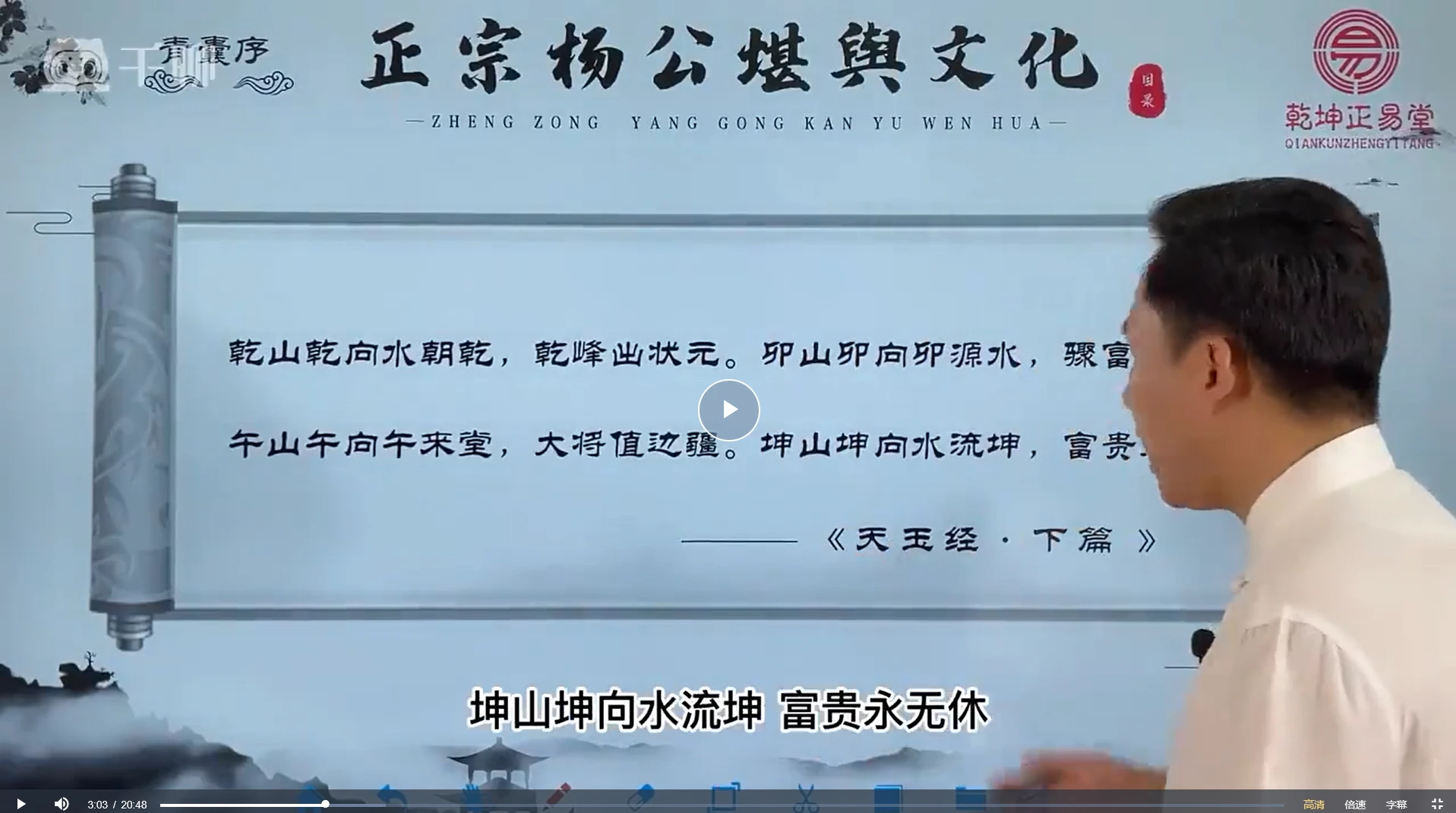
- Dutian Baozhao Jing (38 episodes): introduction, Yang Gong's concise responses, true dragon escaping to flat plains, great rivers and seas, military prefectures, and child characters emerging from the pulse
- Dutian Baozhao Jing continued: heavenly origin palace, earthly origin dragon, establishing dwelling and grave must match the dragon, and true direction branch mountains seeking ancestral veins
- Dutian Baozhao Jing continued: five stars and one formula, the precious illumination tradition, yin-yang formation, and three wonders with six instruments
- Dutian Baozhao Jing continued: yin-yang movement and stillness, true dragon tiger flight, wide embrace bright hall water gathering, and straight water shooting inauspiciously
- Dutian Baozhao Jing continued: water wrapping the head, every grave and dwelling high behind, original mountain dragon establishing original direction, and three stars five auspicious directions
- Dutian Baozhao Jing continued: seeking dragon passing qi through three joints, flat plains great water collecting small water, Qian Kun Gen Xun pulse crossing hollows, and timely masters forcing action
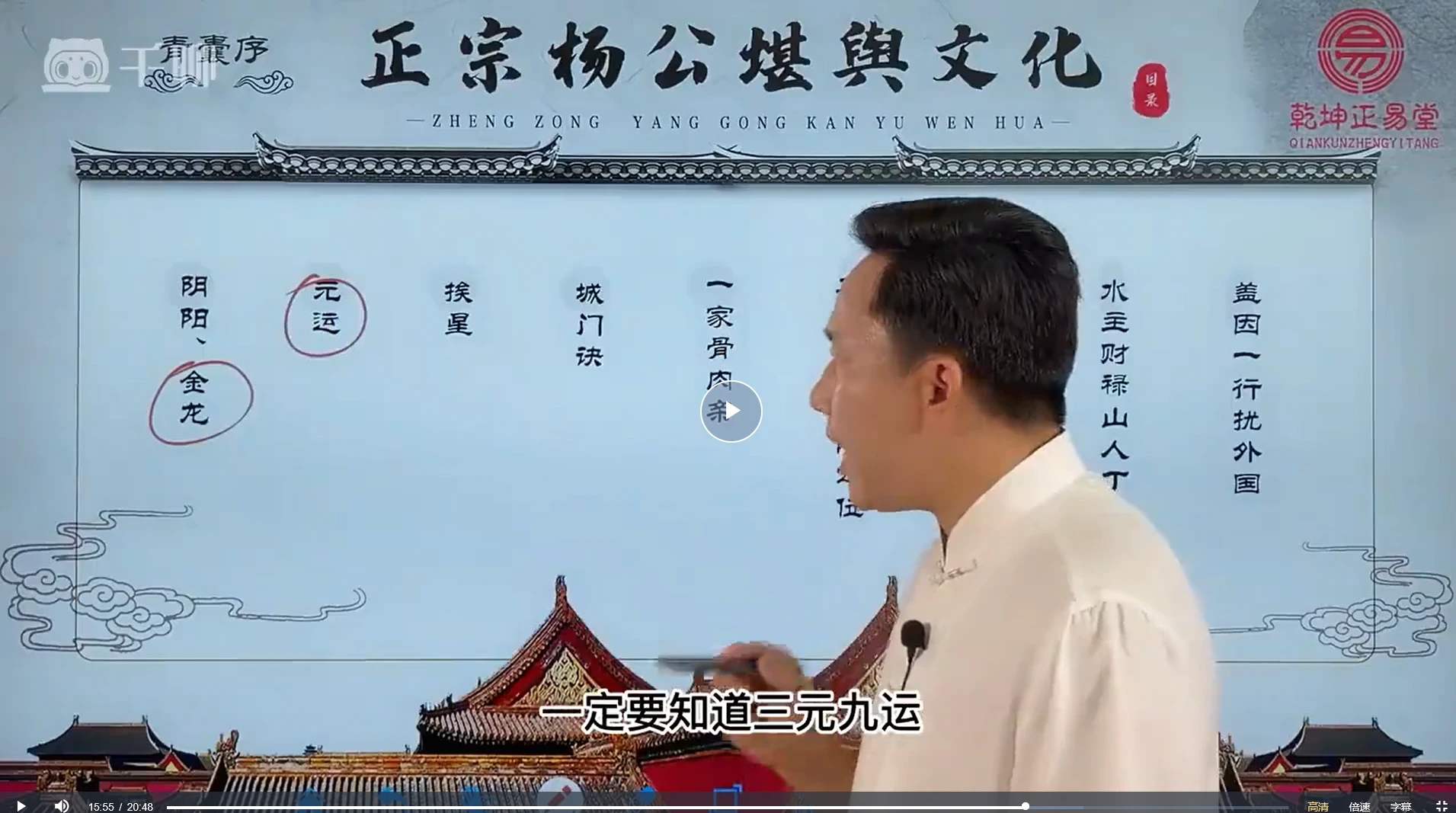
- Qingnang Xu (23 episodes): introduction, basic knowledge parts one and two, Yang Gong looking after the aged to observe male-female, and first seeing whether the golden dragon moves
- Qingnang Xu continued: dragon divided into two pieces yin-yang taking, Yang Gong flying star parts one and two, water facing three forks carefully recognizing traces, and sage divining the He Luo
- Qingnang Xu continued: Jin dynasty Jing Chun transmitting this art, one gives birth to two and two to three, recognizing yin-yang mysterious principle, and dragon divided into two pieces yin-yang taking
- Qingnang Xu continued: yang turns from the left in circles, if one can penetrate the inner principle, mountain dragon spirit does not descend into water, and pure yin pure yang method
- Qingnang Xu continued: heavenly stars like woven net, wealth honor poverty lowly depend on water spirit, Qian Kun Gen Xun called imperial street, and Qingnang Xu summary
- Qingnang Aoyu (19 episodes): introduction, Kun Ren Yi giant gate emerging from the head, calculating earth luck, and case explanations one and two
- Qingnang Aoyu continued: left is yang from Zi Gui to Hai Ren, upside down twenty-four mountains have jewels, first meaning must recognize dragon body movement and stopping, and second saying incoming pulse bright hall must not be biased
- Qingnang Aoyu continued: third method transmission officers not high pressure, fourth wonder bright hall cross has mystery, fifth marvel front and back green dragons shine on each other, and ninth spirit regardless of flat ground or blue clouds
- Qingnang Aoyu continued: clarifying inverted staff hexagram sitting yin-yang why think, knowing transforming qi generating and overcoming must be memorized, twenty-four mountains divided into five elements, and from outside generating inward named advance
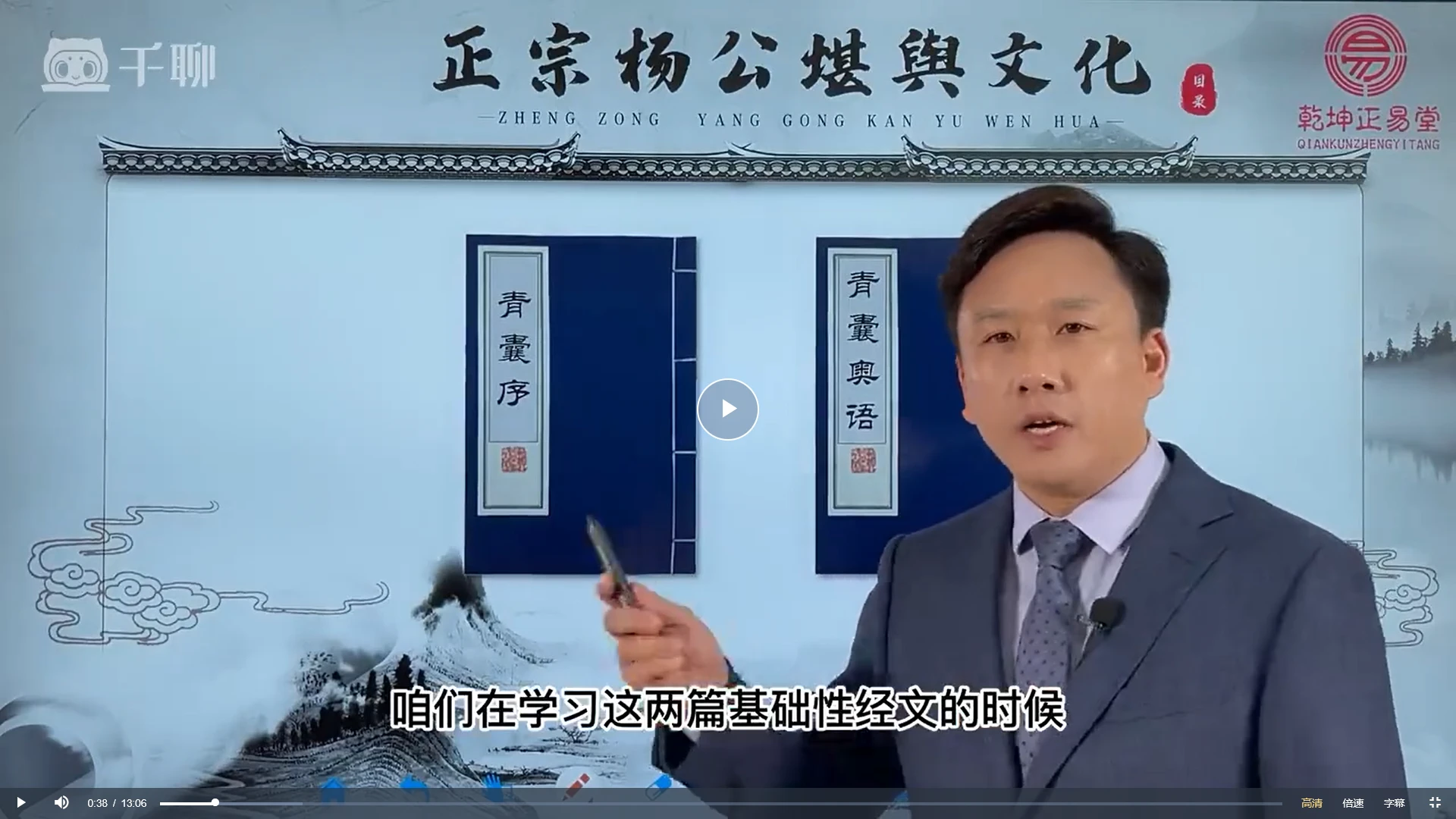
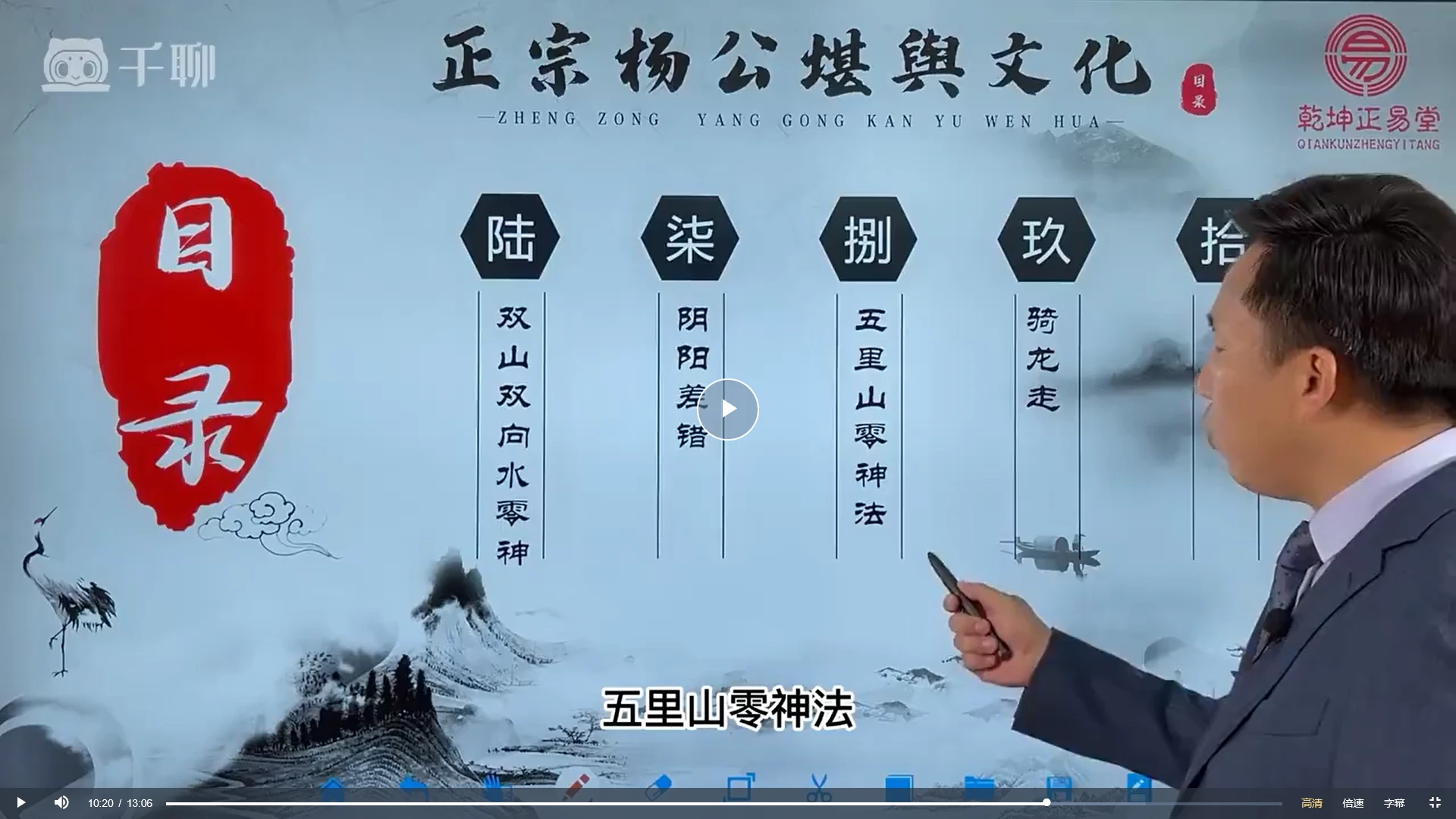
Original Course Images
The verified course images are retained in their recorded order for material reference.

Who This Course Is For
This bundle is intended for students of traditional Chinese feng shui who wish to study Yang Gong classical texts in a structured video format. It suits learners with an interest in cultural and historical feng shui theory, including dragon vein analysis, direction setting, water methods, and flying star calculation. It may also benefit practitioners seeking to review classical source material and case examples. The course is educational and cultural in nature, not a promise of specific life outcomes.
Learning Format and Digital Delivery
Virtual, downloadable course with no physical shipping. The store administrator will add or confirm the digital delivery link separately.
Frequently Asked Questions
What is included in this Yang Gong feng shui course bundle?
The bundle includes four video courses totaling 90 episodes: Hanlong Jing · Greedy Wolf Star Part One (10 episodes), Dutian Baozhao Jing (38 episodes), Qingnang Xu (23 episodes), and Qingnang Aoyu (19 episodes).
Are the lessons based on classical feng shui texts?
Yes. The curriculum follows four classical Yang Gong texts: Hanlong Jing, Dutian Baozhao Jing, Qingnang Xu, and Qingnang Aoyu, with lessons covering their key theories and applications.
Is this course suitable for beginners?
The course begins with introductory and basic knowledge lessons, but it covers advanced classical concepts. It is best suited for learners with some prior interest in feng shui theory or willingness to study systematically.
Related Feng Shui Courses and Guides
Editorial Note
Karma Kismet translated and organized the verified course record for English-speaking learners. Traditional Feng Shui is presented as cultural and educational study, not as a promise of wealth, health, relationship or other outcomes.
Disclaimer
For cultural and educational study only. This course does not provide medical, legal, financial or other professional advice and does not guarantee results.
More Feng Shui Courses
- Qin Genlin Zero-Basis Residential Feng Shui Course: 41 Videos
- Zeng Li Interior Feng Shui Advanced Course: 20 Lessons
- Teacher Gao Home Environment Feng Shui Course: 100 Videos
- Ni Ke Office Furniture Feng Shui Course: 52 Videos
- Si Yu Eight Mansions Feng Shui Case Course: 275 Videos
- Zhang Zhengxi Xuan Kong Feng Shui Course: 75 Videos
- Teacher Zhulin Feng Shui Luopan Course: 24 Videos
- Zhao Wanyou Residential Feng Shui Case Analysis: 82 Videos
- Meihua Wubankai Golden Lock Jade Pass Professional Training: 90 Videos
Four Texts as a Reading Map
Chongyang’s 90-video bundle is organized around four named classics: Hanlong Jing, Dutian Baozhao Jing, Qingnang Xu, and Qingnang Aoyu. That organization offers a useful way to study dense traditional language. Keep the text title attached to every note, even when two lessons use similar words such as dragon, water, direction, or star. A term may take its meaning from the passage and method being explained, so a single glossary definition may be too broad.
The 10 Hanlong Jing episodes introduce forms associated with the Greedy Wolf star and broader dragon-vein vocabulary. The 38 Dutian Baozhao Jing episodes provide a longer space for direction, landform, and water discussions. Qingnang Xu receives 23 episodes, including yin-yang and flying-star ideas, while the 19 Qingnang Aoyu episodes include formulas, 24 mountains, and case explanations. These counts help a learner plan attention: the longest series may call for more intermediate review, while the shorter ones should not be treated as mere introductions.
A Close-Reading Routine
- Write down the passage or topic named in a lesson, followed by the instructor’s plain-language explanation.
- List any directional, numerical, or landform terms that the explanation relies on.
- Sketch the described relationship when a diagram would clarify movement, orientation, or the position of water.
- Mark where the discussion shifts from explaining a classical phrase to applying it to a case.
- Summarize what the example illustrates, then note what information would be needed to examine another example fairly.
Translations of classical terms can be awkward or inconsistent. Keeping the original transliterated title beside an English explanation can reduce confusion when revisiting a lesson. It also prevents a vivid phrase from being mistaken for a literal description of every landscape.
Comparing Ideas Without Flattening Them
The bundle crosses several kinds of reasoning: identifying forms, setting direction, interpreting water, and following star or Five Elements relationships. Build a comparison page with one column in your notes for the observed feature and another for the traditional rule used to discuss it. If a lesson combines several rules, trace their order. This makes the instructor’s argument easier to examine and gives you a place to record uncertainty.
Case material can be valuable for seeing how a teacher moves from a classical line to an interpretation. It does not prove that a method predicts outcomes. Descriptions of wealth, status, or other fortunes in classical language should be understood in their historical and textual setting. For present-day decisions about land or buildings, practical constraints and qualified advice remain essential.
Who May Enjoy the Bundle
This collection may suit readers who like working slowly through classical sources and comparing related texts. Prior familiarity with basic Bagua, Five Elements, and compass terminology may make the advanced passages easier, but a determined beginner can build a glossary and revisit foundational concepts as needed. The four-part structure is particularly useful for someone who wants to see where an idea is discussed rather than attributing every Yang Gong concept to one undifferentiated source.
Questions About the Four Classics
Must I finish all 90 videos before comparing the texts?
No. You can make a brief summary after each text’s series and compare those summaries as you progress. Keep tentative conclusions open until later lessons add context.
Does a dragon-vein description mean there is a physical dragon?
No. In this study context, dragon language is part of a traditional way of describing and interpreting landforms.
Will the case lessons tell me what to do with a property?
They illustrate the methods presented in the course. They cannot substitute for an on-site review of practical conditions or advice from relevant qualified professionals.