Zhao Gong Yuzhu's geography and Feng Shui collection is identified as a San Yuan course. Its 45-video format and original previews provide a method-specific entry point for learners comparing traditional Feng Shui schools.
Course Overview
Zhao Gong Yuzhu San Yuan Feng Shui: 45 Videos is a digital study resource in the San Yuan Feng Shui collection. This English product guide explains the listed material; the original recordings and documents are in Chinese. English subtitles or translated full lessons are not included unless separately stated.
Course Contents and Learning Focus
- San Yuan geography as the named subject
- The 45-video recorded collection
- Original course charts and previews
- Method-specific notes for comparing traditional schools
What You Will Learn
Use the listed topics to identify the scope of this resource, follow its recorded sequence and compare the original diagrams with your study notes. Where individual lesson names are not supplied, the preview images are provided instead of an invented syllabus.
Original Course Previews


Who This Course Is For
For learners who can follow Chinese-language material and want to study San Yuan Feng Shui. Check the format and previews before buying. Intermediate or continuation courses assume familiarity with the relevant foundations and do not imply that prerequisite courses are included.
Learning Format and Digital Delivery
Format: 45 recorded video lessons. Price: USD 9.00. This is a virtual, downloadable product; no physical shipment is required. The download link has not yet been attached to this listing and will be added by the store. Contact us before ordering if you need to confirm delivery timing; immediate automatic file access is not promised.
Frequently Asked Questions
Is the course taught in English?
No English-language recording or subtitle track is confirmed. This description is in English; the underlying course material is Chinese.
What is included?
45 recorded video lessons. Review the course contents and original previews for the stated scope.
Will a physical item be shipped?
No. This is a digital learning resource.
Is a certificate or personal consultation included?
No certificate, accreditation or individual consultation is promised by this listing.
Editorial Note and Disclaimer
Karma Kismet has organized the course listing and available directory into this English guide. Lesson counts refer to the supplied listing, not an independent review of every recording. For traditional and cultural study, not guaranteed predictions, financial advice or assured personal outcomes.
Related Courses
- Yi Qinglan Form School Feng Shui: 45 Video Lessons
- Teacher Liu Yuan Xing Form School Feng Shui: 56 Videos
- Qingyuan Eight Mansions Feng Shui: 12 Lessons
- Huo Yixun Eight Mansions Feng Shui: 10 Videos
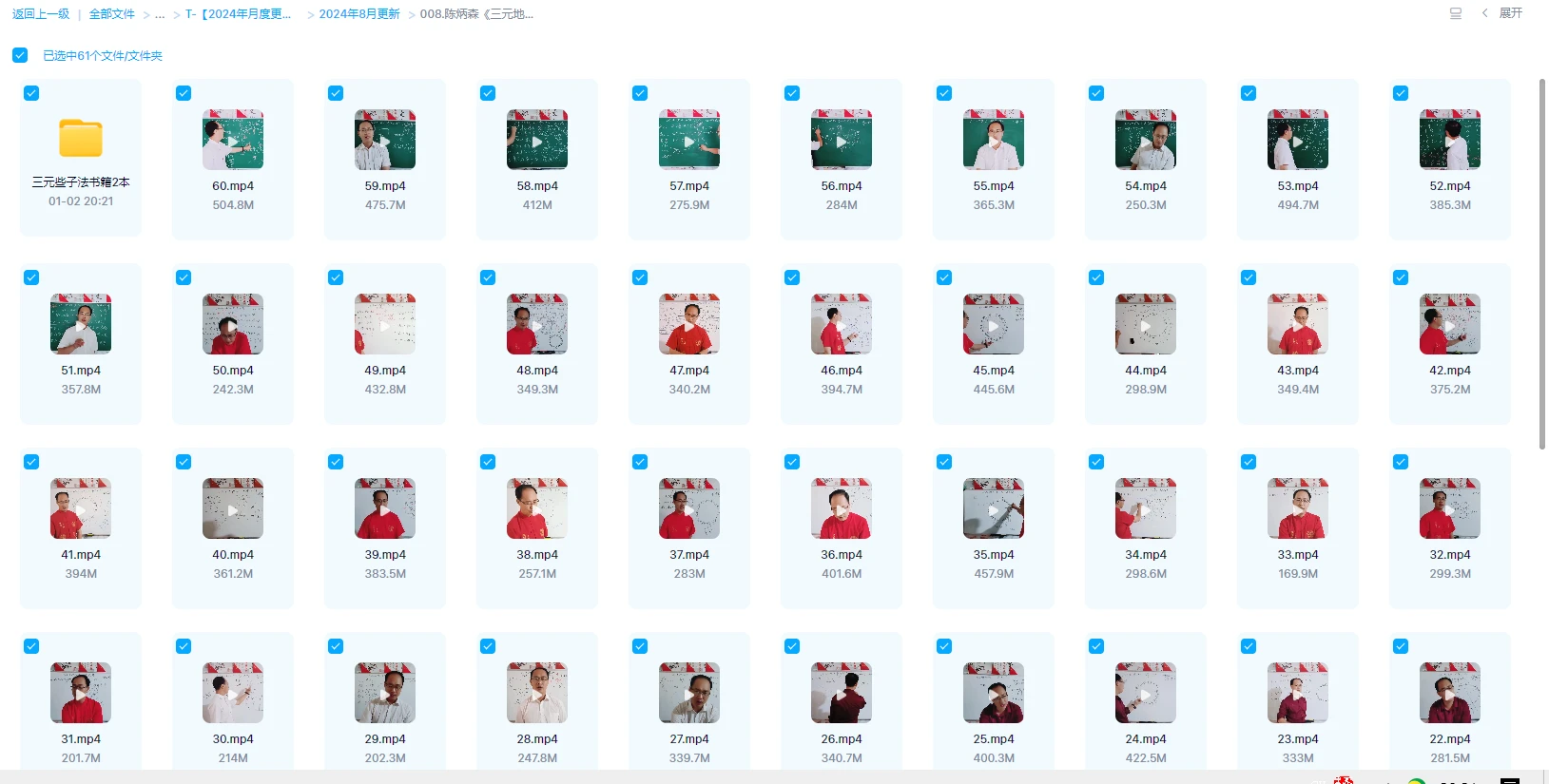
- Chen Bingsen San Yuan Xie Zi Fa: 60 Videos
Browse San Yuan Feng Shui, review course and delivery questions, or learn about Karma Kismet.
Reading Zhao Gong Yuzhu’s San Yuan collection
The product is presented as a 45-video San Yuan Feng Shui collection. Its source material names topics associated with Da Xuan Kong, including historical context, foundational ideas, earlier and later heaven bagua, the 24 mountains, star arrangements, spatial reference points and examples. The source also contains a conflicting prose statement that calls it a 27-video course. Because those figures do not agree, the sensible reading is to retain the product’s stated 45-video format while checking the actual directory when planning study. The conflict should not be hidden by inventing a neat lesson sequence.
San Yuan material often asks a learner to track both spatial labels and a time-related framework. Within this collection, begin by asking what each recorded example takes as its reference: a diagram, a direction, a building or a named period. A conclusion within a traditional system depends on those starting assumptions. Writing them down makes the speaker’s steps easier to follow and makes it less likely that a symbolic interpretation will be mistaken for an observable property of a place.
Historical and foundational material
The directory opens with Da Xuan Kong history and basics before moving into applications of bagua and other specialized terms. Historical context can explain why a method uses a particular vocabulary, but it should not be treated as independent validation of the method’s predictions. In your notes, distinguish a statement about the tradition’s development from a rule used in an example. If a historical claim lacks a cited source in the material you have, leave it as the teacher’s account rather than presenting it as established scholarship.
The earlier and later heaven bagua are different arrangements in traditional Chinese cosmology. A good study exercise is to copy each arrangement separately, label its positions and then identify which one the instructor uses in a given example. Do not assume that a directional label has the same role in both diagrams. That simple separation can prevent confusion as the course moves into denser material.
Diagrams, stars and reference points
The listed topics include star charts, arranging charts, cases in which stars are discussed in relation to palaces, and locating a spatial center. These subjects require attention to the diagram’s origin and orientation. Before following a calculation or interpretation, mark the center, directional reference and any period or cycle stated in the recording. If a screenshot omits one of those elements, the screenshot may still illustrate the topic, but it cannot carry the entire argument by itself.
The directory also names the 24 mountains of the compass. Those divisions belong to a traditional directional vocabulary. Learn the names as labels before trying to apply them to a plan. A real building may have more than one plausible facing reference, and a screen image cannot settle every measurement question. A classroom example is most useful when you can reproduce its internal steps while clearly stating what information it assumes.
Case studies without assumed outcomes
Several files are labeled as case analyses. Read them as examples of how the instructor reasons from a set of stated inputs. Keep a two-column notebook page in ordinary prose: first describe what the image or case actually shows, then describe the interpretation given. If a case asserts that a symbolic pattern explains someone’s fortunes or health, record that as an assertion within the case. The case does not establish causation, and it should not be used to make a promise about another person or place.
Some titles use terms traditionally translated as harmful or beneficial influences. These are labels in the course’s system. Do not turn them into a diagnosis of a home, a person or a neighborhood. If you are considering changes to a real space, ordinary safety, structural, accessibility and maintenance needs deserve direct attention. Course diagrams are a way to study a tradition, while practical decisions require relevant professional and factual checks.
A study route for the stated collection
- Start a glossary for the terms appearing in the history and foundation recordings.
- Draw the bagua arrangements and note which one each later example invokes.
- Learn the directional labels used in the 24-mountain discussion without assuming a real-site measurement.
- For each chart, write down its center, orientation and any time condition shown.
- Use the case recordings to test whether you can restate the reasoning and identify missing information.
As you progress, review the original previews against the video you are studying. A preview can remind you which chart or compass image appears in the collection. It cannot confirm every spoken qualification. Where the source prose and file directory differ, keep both observations in your notes and verify the relevant item directly instead of selecting whichever version seems more attractive.
Who may find it suitable
This material may suit a Chinese-reading learner interested in San Yuan terminology, particularly someone who enjoys tracing a chart from its stated starting point through an example. A learner from a different Feng Shui school may use it for comparison, provided the schools’ terms remain clearly attributed. A person looking for an English-only course, an individualized site report or an assured outcome should recognize that a recorded traditional course serves a different purpose.
The series can invite thoughtful study of how a cultural framework organizes space and time. Its examples do not remove uncertainty about a real location, and they do not replace evidence about a building’s physical condition. Slow, explicit notes are more useful here than memorizing a favorable or unfavorable label detached from the conditions that produced it.
Questions about the Zhao Gong Yuzhu listing
Why does the source mention both 27 and 45 videos?
The source prose and the product’s stated format differ. Check the available directory for the exact set relevant to your study, and avoid assuming that the shorter figure describes the full listing.
Are the 24 mountains literal terrain features?
Here the term names traditional compass divisions. It should not be confused with a count of physical mountains around a site.
What should I record before following a star chart?
Identify the chart’s center, direction and any stated time condition. Without those reference points, copied symbols can be misleading.
Can a recorded case establish that an arrangement caused an event?
No. A case can illustrate the teacher’s interpretation, but it does not by itself establish cause or predict what will happen elsewhere.