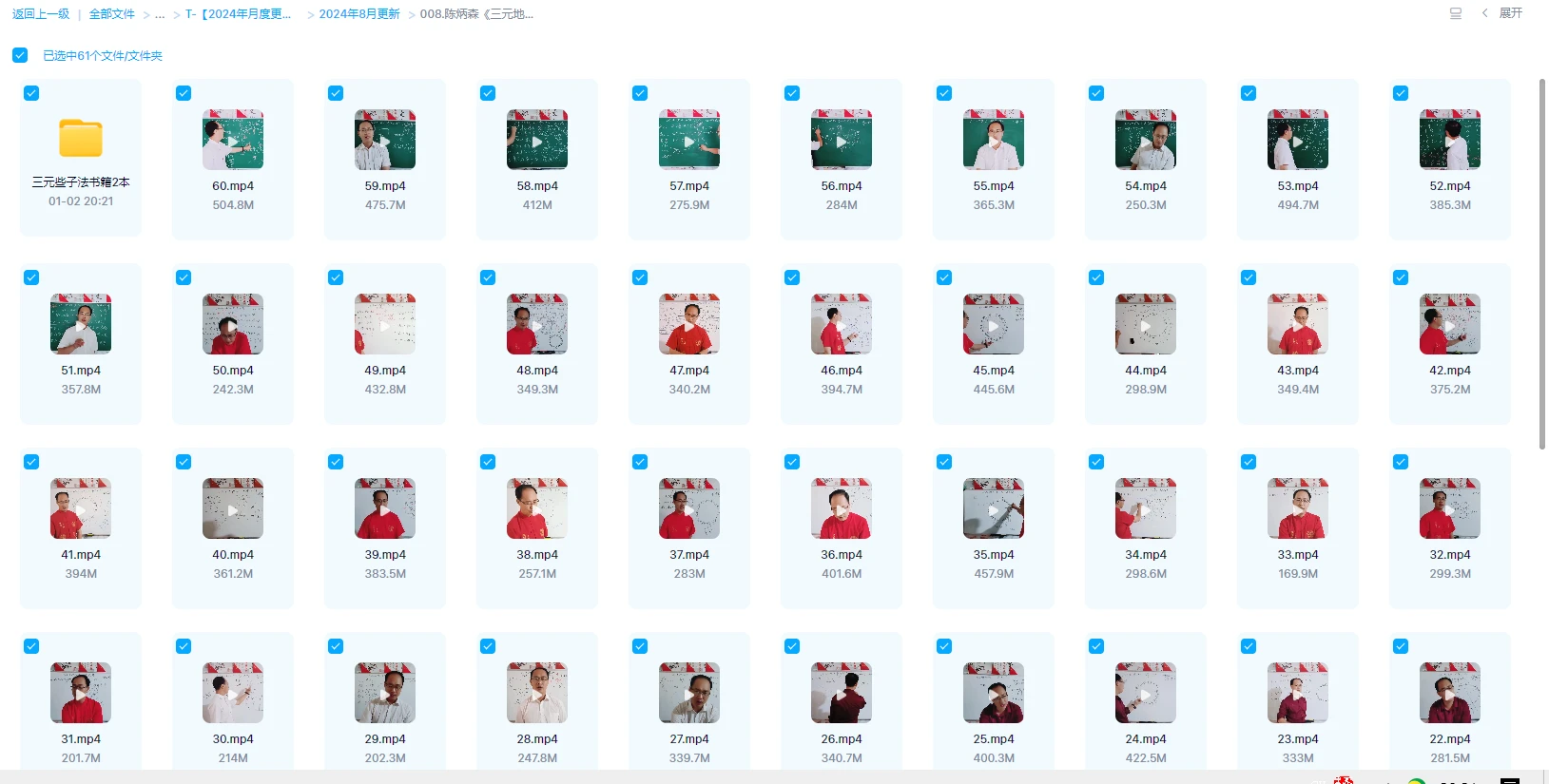
Qingyuan's course is a focused Ba Zhai, or Eight Mansions, learning resource. Twelve teaching videos and accompanying handouts are identified in the listing, with original previews for checking the material.
Course Overview
Qingyuan Eight Mansions Feng Shui: 12 Lessons is a digital study resource in the Eight Mansions Feng Shui collection. This English product guide explains the listed material; the original recordings and documents are in Chinese. English subtitles or translated full lessons are not included unless separately stated.
Course Contents and Learning Focus
- Ba Zhai / Eight Mansions as the named system
- The twelve-video course sequence
- Supporting handouts
- Comparing the original diagrams with course explanations
What You Will Learn
Use the listed topics to identify the scope of this resource, follow its recorded sequence and compare the original diagrams with your study notes. Where individual lesson names are not supplied, the preview images are provided instead of an invented syllabus.
Original Course Previews


Who This Course Is For
For learners who can follow Chinese-language material and want to study Eight Mansions Feng Shui. Check the format and previews before buying. Intermediate or continuation courses assume familiarity with the relevant foundations and do not imply that prerequisite courses are included.
Learning Format and Digital Delivery
Format: 12 recorded video lessons with handouts. Price: USD 9.00. This is a virtual, downloadable product; no physical shipment is required. The download link has not yet been attached to this listing and will be added by the store. Contact us before ordering if you need to confirm delivery timing; immediate automatic file access is not promised.
Frequently Asked Questions
Is the course taught in English?
No English-language recording or subtitle track is confirmed. This description is in English; the underlying course material is Chinese.
What is included?
12 recorded video lessons with handouts. Review the course contents and original previews for the stated scope.
Will a physical item be shipped?
No. This is a digital learning resource.
Is a certificate or personal consultation included?
No certificate, accreditation or individual consultation is promised by this listing.
Editorial Note and Disclaimer
Karma Kismet has organized the course listing and available directory into this English guide. Lesson counts refer to the supplied listing, not an independent review of every recording. For traditional and cultural study, not guaranteed predictions, financial advice or assured personal outcomes.
Related Courses
- Yi Qinglan Form School Feng Shui: 45 Video Lessons
- Teacher Liu Yuan Xing Form School Feng Shui: 56 Videos
- Huo Yixun Eight Mansions Feng Shui: 10 Videos
- Wang Yajun San He Feng Shui: 47 Videos
Browse Eight Mansions Feng Shui, review course and delivery questions, or learn about Karma Kismet.
Trace the Structure of Qingyuan’s Eight Mansions Lessons
Qingyuan’s listed resource consists of twelve teaching videos with accompanying presentation and PDF documents. The directory names opening lessons on understanding and transmission, followed by foundations, the luopan and layout, Nine Stars and life trigram terminology, a two-part discussion of the three essentials, a process lesson, three lessons titled Yao Bian Duan Zhai, and a final Daoist-method title. That sequence gives a learner a route through the material without implying that every topic is covered in equal depth.
Eight Mansions, or Ba Zhai, is a traditional way of classifying orientations and relationships within a dwelling. The words used in this field can sound like ordinary descriptions of a building, but many function as technical labels. Write the Chinese term next to any English rendering, particularly for palace, star, house trigram, and life trigram. If two handouts use different wording for a concept, check the accompanying lesson before deciding they are interchangeable.
Use the Handouts to Check the Videos
The listed files include presentations for several lessons and a PDF associated with life trigram material. Use a handout as a navigation aid: mark its heading, locate the corresponding explanation in the recording, and add the steps that the presenter actually describes. A slide may display a finished diagram while the spoken explanation supplies the reasoning behind it. Conversely, a recording may use an example that does not appear on the slide. Note both instead of assuming that one format completely reproduces the other.
A useful exercise for the foundation and compass sections is to draw a plain floor plan for study. Label only visible facts first: the position of the entrance, major rooms, and the direction reference used by your drawing. Then, in a separate layer, reproduce the classifications as the lesson presents them. If the directional reference is uncertain, leave the classification unfinished. This is preferable to inventing a bearing or treating a rough drawing as a precise survey.
Follow the Move from Terms to Procedure
The directory places Nine Stars and life trigram terminology before the three essentials and process lessons. That order invites a specific study question: what information must be known before each later step can be carried out? List the input, the rule, and the resulting label for every worked example. If an input is missing in a preview, record the gap. A confident-sounding conclusion is difficult to assess without the steps that produce it.
The three Yao Bian Duan Zhai titles occur near the end. Their repeated title suggests a continuing topic, but the file list does not tell a reader precisely how the three recordings divide their examples. Work through them in sequence and create an index of concepts as they appear. When a term returns, ask whether the presenter is reviewing an earlier definition, extending it, or applying it to a new situation. This avoids building an imagined syllabus from the names alone.
A Measured Study Routine
- Read the relevant slide or document heading before watching its related video.
- Pause whenever a new classification appears and write the stated basis for it.
- Recreate a diagram from the explanation, then compare it with the displayed version.
- Describe one worked example in ordinary language before using specialist labels.
- Keep a list of unclear translations and return to the original Chinese wording.
- After several lessons, write a short explanation of the full procedure and mark any step you cannot support from the material.
This routine may suit a learner who enjoys comparing a spoken lesson with written visual aids. Someone new to Ba Zhai can move slowly through the foundation terms. A learner who already recognizes the vocabulary may focus on how Qingyuan arranges the steps. In either case, proficiency with the Chinese recordings is relevant; an English description of the resource does not replace the lessons themselves.
Keep Cultural Interpretation and Household Decisions Distinct
Traditional labels for a direction or room express relationships within a system of interpretation. They do not establish a person’s health, character, fortune, or future. Some source discussions of Feng Shui describe improved luck or well-being as an expected result. Treat such statements as claims made within the tradition rather than verified effects. A house also has conditions that can be checked directly: airflow, light, moisture, safe movement, accessibility, and how people actually use each room.
For a real home, start with those observable conditions and the needs of its residents. Do not make costly changes because a single chart appears to assign an unfavorable label. An incomplete floor plan, uncertain orientation, or missing building context can change even the internal logic of a traditional reading. Structural work and safety concerns call for qualified assessment. The course is best approached as a study of concepts and reasoning, with room for uncertainty.
Questions About the Twelve-Lesson Resource
Do the handouts replace the recordings?
They are useful references, but a file title or slide may not contain the full explanation. Check the relevant video for definitions and worked steps.
Why record the direction reference?
Directional classifications depend on what the presenter treats as the reference. Without that information, copying a completed diagram onto a different plan is unreliable.
Does the life trigram lesson describe a person’s fixed destiny?
No such conclusion should be drawn. Study its terminology as part of the Ba Zhai system without treating a category as a prediction about an individual.
How should I approach the three Yao Bian Duan Zhai lessons?
Read them as a connected series, noting where examples and definitions continue across recordings. Avoid assuming their exact division from the repeated title.
Can the course certify that a room is safe or suitable?
No. Traditional diagrams do not replace building inspection, accessibility review, or the judgment of the people who use the space.
The most useful final exercise is to explain one complete example while pointing to the lesson and handout that support each step. Anything you cannot trace remains a question for further study, not a rule to apply with confidence.