
Yi Qinglan's two-part Feng Shui collection begins with landscape vocabulary and compass basics, then expands into rooms, Eight Mansions, Flying Stars, water methods and case examples. Form School is its starting point, not the entire scope of the bundle.
Course Overview
Yi Qinglan Form School Feng Shui: 45 Video Lessons is a digital study resource in the Form School Feng Shui collection. This English product guide explains the listed material; the original recordings and documents are in Chinese. English subtitles or translated full lessons are not included unless separately stated.
Course Contents and Learning Focus
- Foundation: four symbolic animals, compass and eight palaces
- Landforms, bright hall, door, courtyard and walls
- Bedroom, living room, kitchen and office examples
- Eight Mansions stars and palace relationships
- Flying Star charts and traditional star combinations
- San Yuan water methods and date-selection material
What You Will Learn
Use the listed topics to identify the scope of this resource, follow its recorded sequence and compare the original diagrams with your study notes. Where individual lesson names are not supplied, the preview images are provided instead of an invented syllabus.
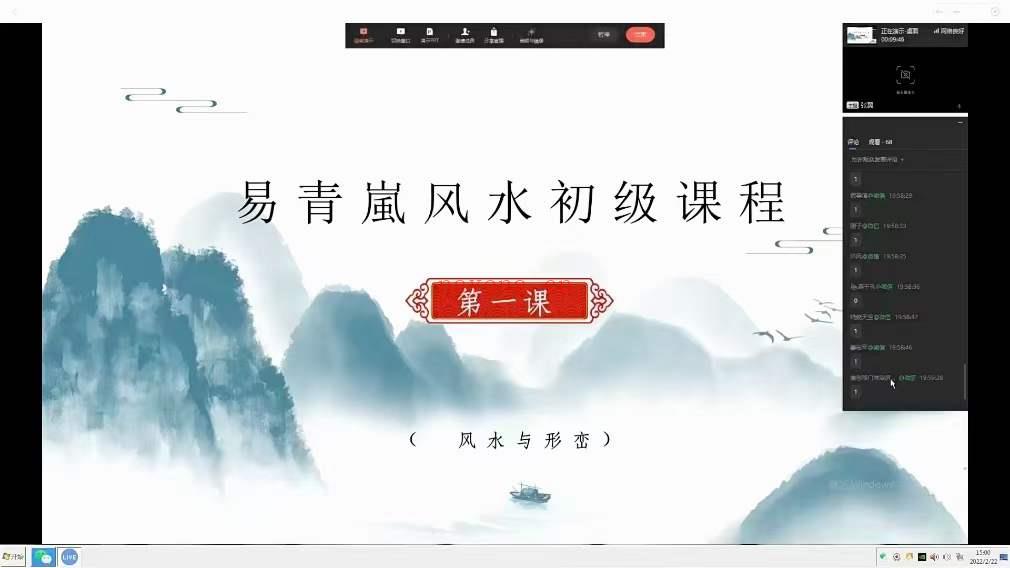
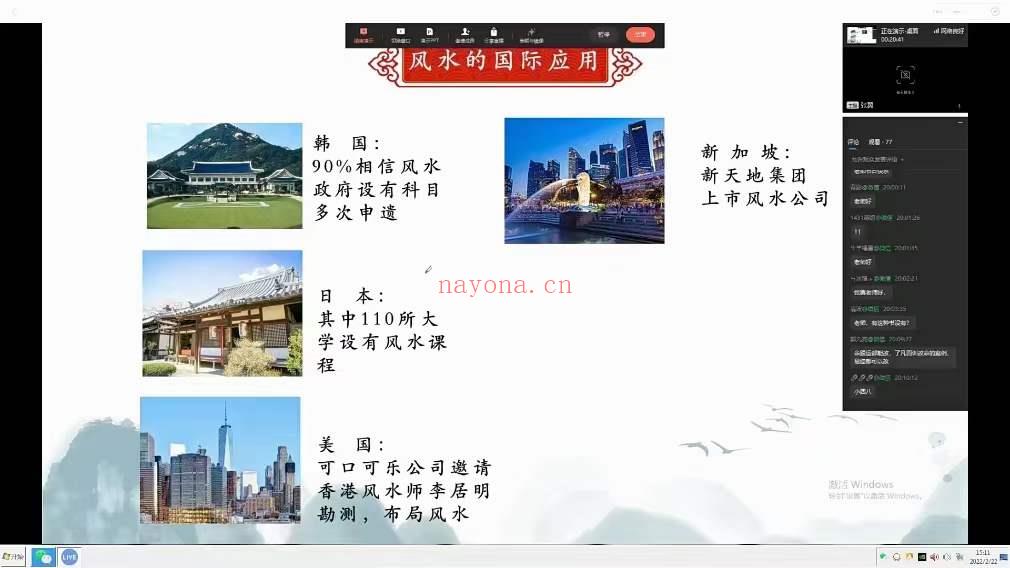
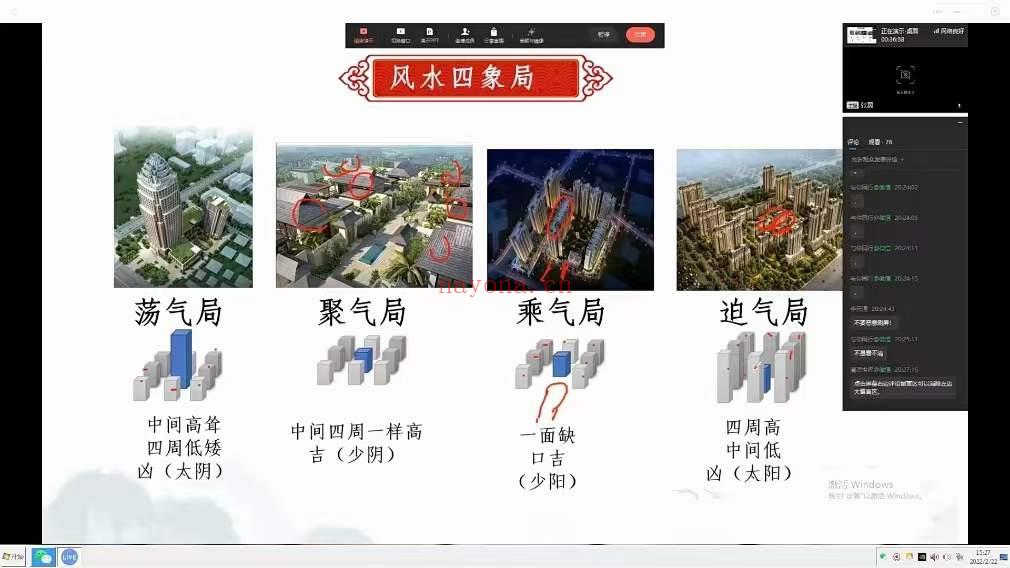
Original Course Previews


Who This Course Is For
For learners who can follow Chinese-language material and want to study Form School Feng Shui. Check the format and previews before buying. Intermediate or continuation courses assume familiarity with the relevant foundations and do not imply that prerequisite courses are included.
Learning Format and Digital Delivery
Format: Six foundation videos and 39 advanced videos, with foundation handouts. Price: USD 9.00. This is a virtual, downloadable product; no physical shipment is required. The download link has not yet been attached to this listing and will be added by the store. Contact us before ordering if you need to confirm delivery timing; immediate automatic file access is not promised.
Frequently Asked Questions
Is the course taught in English?
No English-language recording or subtitle track is confirmed. This description is in English; the underlying course material is Chinese.
What is included?
Six foundation videos and 39 advanced videos, with foundation handouts. Review the course contents and original previews for the stated scope.
Will a physical item be shipped?
No. This is a digital learning resource.
Is a certificate or personal consultation included?
No certificate, accreditation or individual consultation is promised by this listing.
Editorial Note and Disclaimer
Karma Kismet has organized the course listing and available directory into this English guide. Lesson counts refer to the supplied listing, not an independent review of every recording. For traditional and cultural study, not guaranteed predictions, financial advice or assured personal outcomes.
Related Courses
- Teacher Liu Yuan Xing Form School Feng Shui: 56 Videos
- Qingyuan Eight Mansions Feng Shui: 12 Lessons
- Huo Yixun Eight Mansions Feng Shui: 10 Videos
- Wang Yajun San He Feng Shui: 47 Videos
Browse Form School Feng Shui, review course and delivery questions, or learn about Karma Kismet.
Follow the Transition from Form to Other Feng Shui Methods
Yi Qinglan’s listed collection joins six foundation videos with 39 advanced videos. Its Form School emphasis provides an entry point, but the directory then moves into Eight Mansions, Flying Stars, water methods, and date selection. Treating the entire sequence as one undifferentiated set of layout rules would obscure that change of method. A better reading identifies the question each part asks and the evidence it uses.
Form study begins with visible surroundings: the shape of land, the approach to a site, built structures, openings, and relationships between spaces. Traditional names such as the four symbolic animals and bright hall are part of a descriptive vocabulary. They can help a learner recognize what a diagram is pointing to, but they should not be mistaken for literal animals or a measured force. When the directory reaches compass and eight palaces, it introduces a different kind of classification. Later sections add still more rule sets. Keep a separate glossary for each stage.
Read the Foundation Material Closely
The listed foundation handouts include the four symbolic animals, a discussion of traditionally unfavorable forms, recognition of a luopan, and division into eight palaces. These titles indicate subjects for study; they do not establish that every possible compass technique is covered. For each handout, identify the diagram labels, the position from which a direction is measured, and the exact words used for a feature. If the same English word appears in two places, compare its Chinese wording and context before treating it as one concept.
A useful exercise is to draw a simple plan of an imaginary room and describe it first in ordinary terms: doors, windows, circulation, daylight, and neighboring structures. Then annotate only the features named in the relevant lesson. This keeps observation distinct from interpretation. It also reveals when a course example depends on a feature absent from the plan. There is no need to propose a change to a real home to complete the exercise.
Make Sense of the Advanced Directory
The advanced list begins with review and study guidance, then returns to form, entrances, courtyards, walls, and rooms. It subsequently names Eight Mansions stars and palace relationships. Later recordings introduce Xuan Kong, Flying Star charts, combinations, cases, San Yuan water methods, and date selection. This order matters: a charting exercise requires a different set of inputs from a visual description of a doorway. When you move between sections, write a one-sentence statement of the method now being used.
- For a form example, record the physical features the presenter identifies and the viewpoint used.
- For a palace or star example, record the classification and its calculation steps as presented.
- For a case discussion, distinguish what is shown, what the presenter infers, and what remains unknown.
- For water or timing terminology, note whether the recording supplies a definition before applying the term elsewhere.
- At the end of a section, list claims you can explain and claims that still depend on translation or missing context.
Case recordings can be particularly useful for checking whether a learner can follow a complete explanation. Pause before the presenter’s conclusion and try to reconstruct the steps already shown. If your account differs, find the first step where the two readings separate. That exercise teaches more than memorizing a favorable or unfavorable label.
Who May Find This Sequence Useful
The collection may suit a learner who wants to see how several traditional approaches appear within one course directory and who can work with Chinese-language recordings. Someone focused only on landforms should be aware that the later lessons extend well beyond Form School. A learner seeking only Flying Star calculation may need to review the earlier vocabulary to understand how the examples are framed. The previews and listed handouts are the best starting points for judging whether the language and level are workable.
Use the lessons as a record of a teaching approach, not as proof that a symbolic classification causes an outcome. Statements about a room’s likely effects should be read in the context of the tradition that produced them. Real spaces also involve accessibility, structural conditions, lighting, ventilation, cost, and the needs of their occupants. These practical factors can be checked directly and should guide consequential changes. The course is not a substitute for qualified advice where safety or health is involved.
Questions Specific to the Yi Qinglan Collection
Is every video about Form School?
No. The listed sequence starts with form and basic vocabulary, then names Eight Mansions, Xuan Kong Flying Stars, water methods, cases, and date selection. Follow the directory when choosing a section to study.
Why keep different glossaries?
A visible landform, an eight-palace category, and a Flying Star chart are not the same type of information. Separate notes make it easier to see when an explanation changes its method or assumptions.
What can the foundation handouts establish?
Their listed titles identify topics and offer a place to check terminology. A title alone cannot confirm how extensively a subject is explained, so compare the handout itself with the related recording.
How should a learner use the two case recordings?
Track the observations and calculation steps before reading the conclusion. Note missing facts and avoid transferring the final judgment to a different property without the context that supported it.
Does an unfavorable traditional label mean a room is unsafe?
No. A label within a traditional interpretive system is not a building inspection. Assess physical safety through direct observation and appropriate professional help.
As you finish the sequence, write a short comparison of what Form School observes, what the compass-based sections classify, and what information each approach leaves out. That comparison provides a clearer understanding of the collection than a single list of prescriptions.



