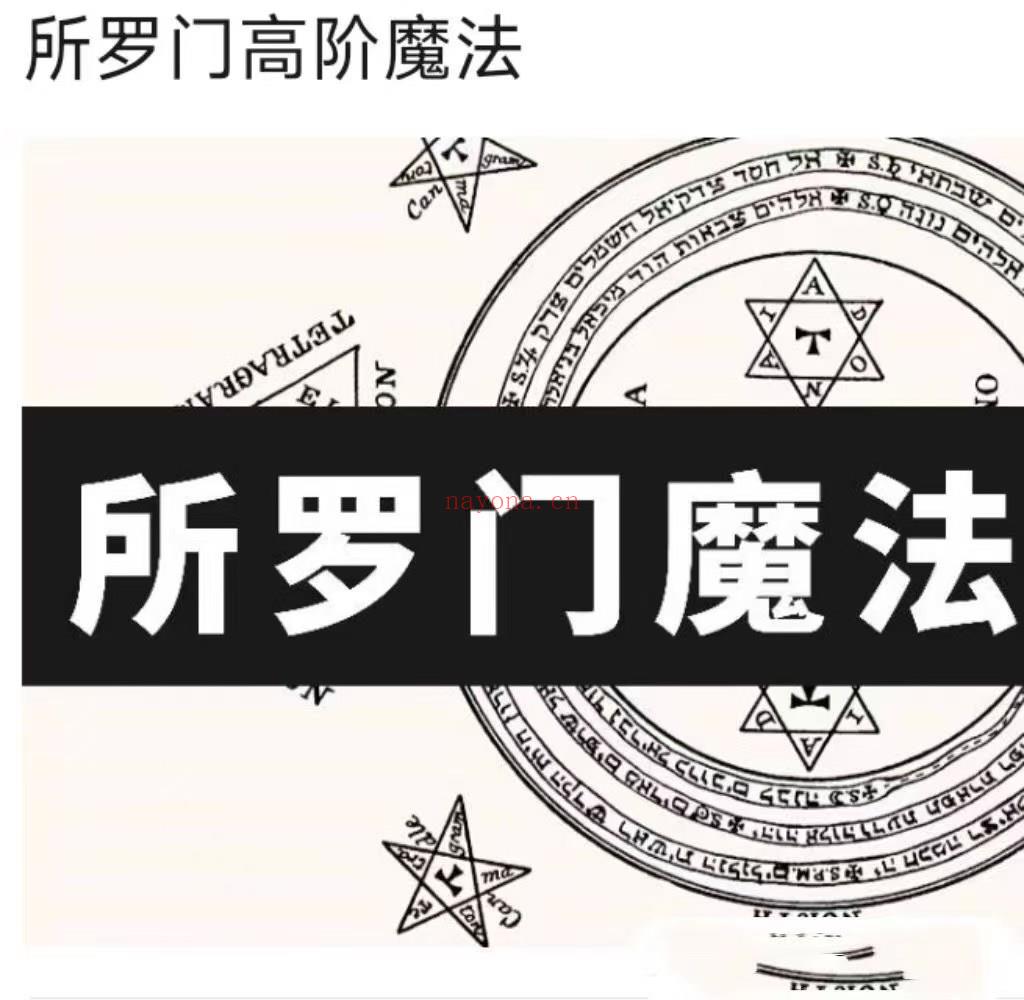

A Chinese-language full-level course introducing Rune history, symbols, interpretation, divination and modern cultural applications.
Course Overview
This Karma Kismet page organizes the verifiable facts from the original nayona.cn listing. The source material is in Chinese; a complete English translation, subtitles, certification, and unlisted instructor credentials are not claimed.
What You Will Learn
- Origins and historical development of Rune culture
- Rune symbols and their cultural meanings
- Interpretive and divination approaches
- Insight and protection as course themes
- Modern study and reflective practice
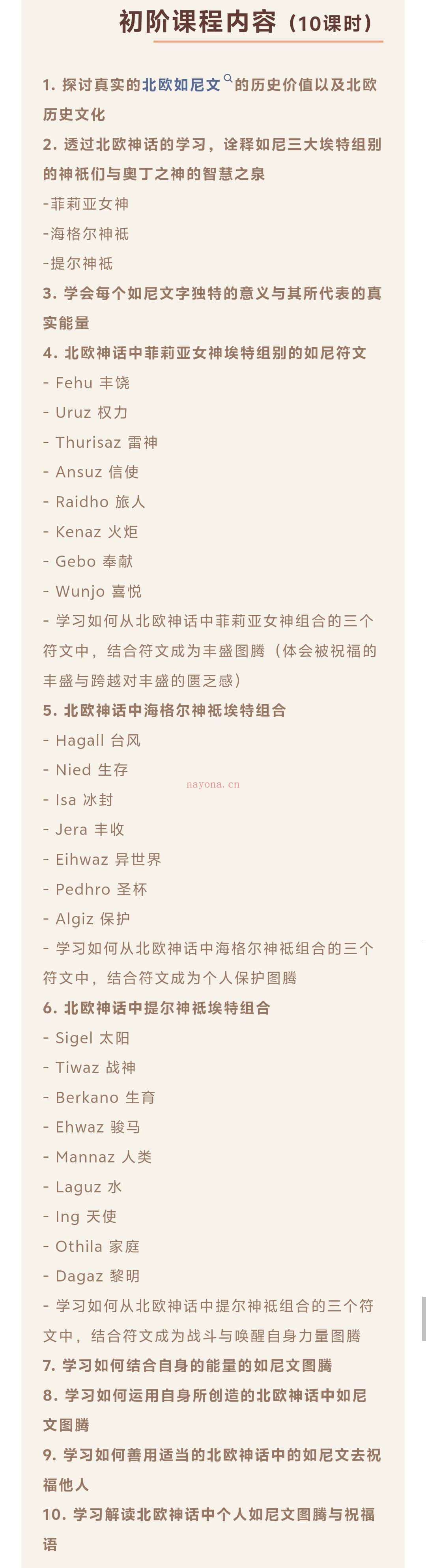
Course Contents
Chinese-language digital course; the exact lesson count and file format are not confirmed in the source listing.
Original Course Images

Who This Course Is For
This resource is for learners who can use Chinese-language materials and want a structured introduction to Rune & Norse Symbol Studies. Review the original images and stated format before ordering.
Learning Format and Digital Delivery
Chinese-language digital course; the exact lesson count and file format are not confirmed in the source listing. This is a virtual, downloadable product with no physical shipment. A download file is not yet attached. Please review the digital delivery policy and contact Karma Kismet to confirm delivery arrangements before ordering; immediate automated access is not promised.
Frequently Asked Questions
Is the complete material in English?
No. The product description is in English, but the source learning material is Chinese-language unless a specific translated component is stated.
Does this resource guarantee a result?
No. It is offered for educational, cultural, and reflective study. It does not guarantee personal, financial, spiritual, or health outcomes.
Is professional advice included?
No personal consultation, medical care, legal advice, or financial advice is included.
Disclaimer
Use this material responsibly and within its educational scope. Symbolic, spiritual, contemplative, and wellness traditions are not substitutes for qualified professional care.
Related Courses and Site Links
Rune symbols in cultural and interpretive study
This resource names Rune history, symbols, interpretation, divination and modern cultural applications. Its insight-and-protection framing should be read as the course’s symbolic theme, rather than as a guarantee of foresight or protection. A productive study preserves the distinction between a written sign, an account of its history and a meaning assigned by a contemporary interpreter. The surrounding source article contains broad chronological claims, so avoid repeating precise dates or origin assertions without inspecting dependable references. The listing supports the named subject, but does not by itself establish every historical claim in the article.
Writing and symbolic meaning
Begin with the visible sign and any name or sound value actually supplied. A symbol’s use in writing is a different question from its association in a divinatory framework. Keep separate fields for form, label, textual function and attributed symbolic meaning. If the course does not supply one of those fields, leave it open rather than borrowing it from a different system.
A useful exercise compares two symbols shown in the material. Describe how their forms differ before discussing meanings. Then identify whether the explanation links the shape to an association or merely assigns an association. The distinction matters: a visible resemblance can motivate an interpretation without proving it. A reader should be able to tell which part of the account concerns the sign itself and which part concerns the teaching’s reading of the sign. This approach keeps Rune study grounded in particular examples instead of a generalized claim that every mark encodes one universal message.
Historical questions and evidence
The source’s reference to old Norse culture is an invitation to ask about evidence, period and location. A broad cultural label cannot establish the date or function of every sign. If the material identifies an inscription, manuscript or object, preserve that reference. If it offers a general origin narrative without a source, record it as a narrative to investigate.
Avoid assigning a historical age to a modern interpretation merely because the symbol has an old history. The age of a script and the age of a particular meaning are separate questions. A timeline can include the date of an identified object, the date of a publication and the date of a contemporary explanation in different fields. This makes changes and gaps visible. The result can acknowledge continuity of interest while avoiding a claim that every modern divinatory practice is documented by every historical instance of writing.
Interpretation as a framework
When studying a symbolic meaning, ask how the resource explains it and whether the meaning changes with context. A single sign might be discussed alone, beside another sign or within a reading arrangement. Record these settings separately. Do not assume that a glossary definition fully determines every use.
For a comparison exercise, take one passage interpreting a sign and write the reasoning in ordinary language. Identify the premise, the association and the conclusion. Then ask whether the conclusion is a question for reflection or a factual claim. A reflective association can be useful without establishing a prediction. If the interpretation seems to make a factual claim, identify what independent evidence would be needed to support it. This keeps the teaching’s framework understandable while making clear where the reader’s agreement with an association differs from verification of an external outcome.
Divination and uncertainty
Divination should be studied as a method of interpretation within the resource, rather than as an established means of obtaining hidden facts. If a reading arrangement is explained, note the role assigned to each position and the way signs are combined. Those rules describe a framework. Their clarity does not by itself demonstrate predictive accuracy.
Keep a record of the original question, the signs considered and the explanation offered before looking back at later events. Retrospective recollection can favor details that appear to fit while forgetting ambiguous or unsuccessful interpretations. A record makes that selectivity easier to notice. For personal reflection, use a question about your choices or assumptions and keep decision responsibility with you. A symbolic reading may help formulate a concern, but it should not be presented as proof about another person’s intentions or as a substitute for reliable information in a consequential decision.
Protection as a cultural theme
The protection theme can be analyzed through the kind of boundary or support the source describes. Does the passage use an image, an object, a phrase or a narrative? Identify the stated role before assuming how it operates. A sign associated with protection can be studied for its cultural meaning without being described as a dependable barrier against danger.
An editorial reflection might ask what ordinary boundary you wish to maintain: privacy, time, respectful communication or the ability to decline. Explain how the symbolic image helped you articulate that boundary and what practical action supports it. Keep that reflection separate from the source’s metaphysical claims. This makes the theme meaningful without promising a protective effect. If the material discusses a physical object, its practical suitability remains a different question from its symbolism; a design’s meaning does not establish that it is safe or effective equipment.
Modern use and a study portfolio
Modern cultural applications can include interpretation and design only to the extent actually discussed in the material. Do not invent craft modules or historical workshops to expand the listing. If a contemporary use is shown, describe what has changed from the historical context identified by the source and what has been retained. A shared sign does not make the contexts identical.
A final portfolio can contain a careful transcription, an attributed meaning, a historical question and a reflection on interpretation limits. Each entry should identify its source. Review the portfolio for statements that accidentally turn a belief or association into a verified fact. A clear Rune study record can preserve cultural interest and personal resonance while acknowledging that dates, lineages and efficacy claims require evidence beyond a commercial description. The goal is better understanding of the resource’s named frameworks, not an unsupported claim of insight, protective power or professional standing.
When copying a Rune sign, preserve its orientation and any variation visible in the material. A familiar-looking mark is not enough to settle its identity. If a source uses a different form from another reference, keep both forms with their labels rather than silently standardizing them. The difference can become a focused question about the resource’s terminology or reproduction, without requiring an immediate historical conclusion.