A bundle of five planetary-magic courses described as spanning introductory to advanced study. The listing does not confirm a total video count.
Resource Overview
Planetary Magic from Introductory to Advanced: Five Courses is a digital learning resource about Planetary Magic & Correspondences. The English description summarizes the available source listing; the underlying recordings or books are in Chinese. An English translation of the full material is not confirmed.
What You Will Learn
Use the sequence and preview material below to identify the course’s scope, terminology and teaching approach. Check each topic against the original lesson rather than treating a short listing as a complete transcript.
Course Contents
- Planetary-magic themes
- Introductory-to-advanced bundle
- Five-course format
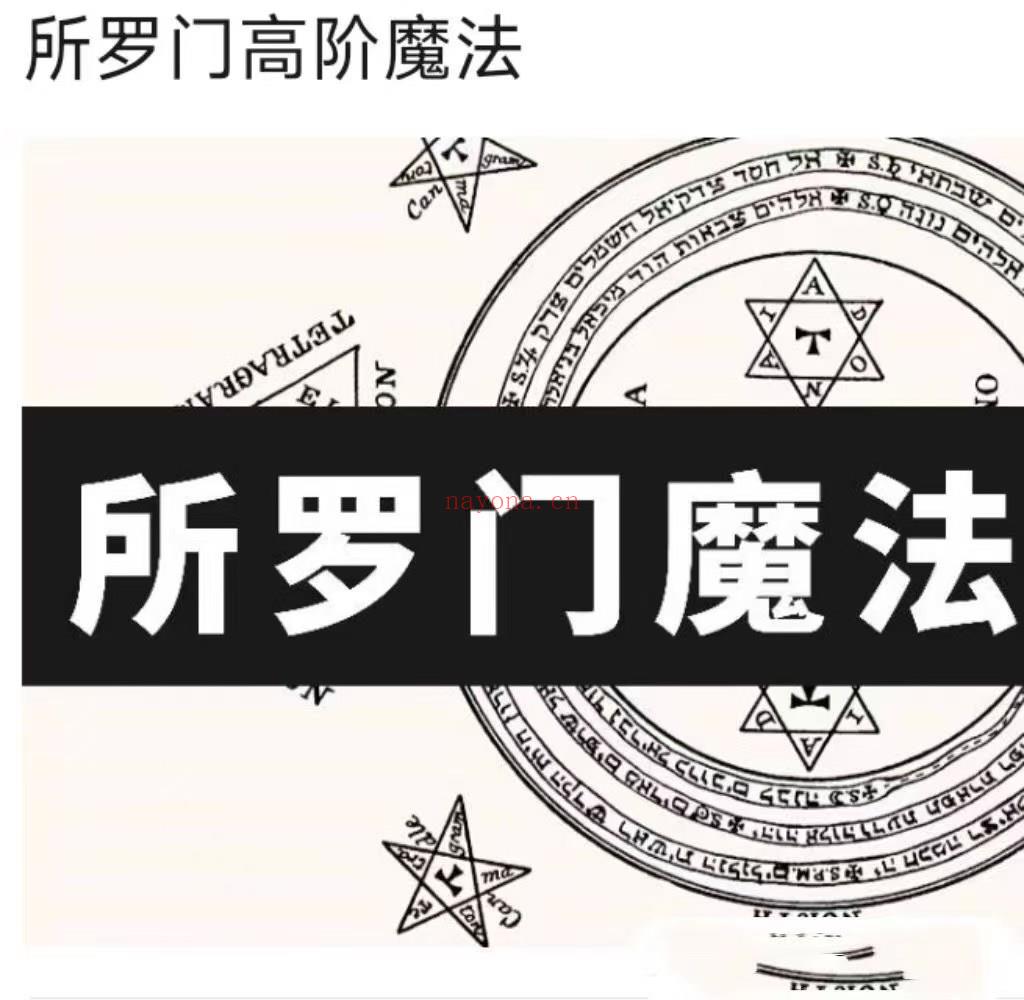
Original Course Images


Who This Resource Is For
This resource is for readers or learners who can use Chinese-language materials and want a named resource on Planetary Magic & Correspondences. Compare the stated scope and previews before ordering; a fixed level of prior experience is not assumed unless the source directory says so.
Learning Format and Digital Delivery
Five Chinese-language courses according to the source title Virtual and downloadable; there is no physical shipment. Price: USD 9.00. A file link is not yet attached to this product. Please contact Karma Kismet before ordering to confirm delivery arrangements; immediate automated access is not promised.
Frequently Asked Questions
Is the full material in English?
No English edition, recording or subtitle track is confirmed. The source material is Chinese-language.
Is a personal consultation included?
No individual consultation is listed with this resource.
Does this resource guarantee an outcome?
No. It is for educational and cultural study, not a guaranteed result or substitute for professional advice.
Editorial Note
Karma Kismet translated and organized the course facts and original previews for English readers. Lesson counts and formats follow the available source listing; unspecified contents, certificates and instructor credentials are not asserted.
Related Courses
Browse Planetary Magic & Correspondences and read digital delivery information.
A source-based study approach
This bundle is described as five planetary-magic courses spanning introductory to advanced study. A bundle count does not establish a total video count or a common teaching sequence. The editorial goal is to compare the available parts without inventing the contents of any part.
Five parts and scope
Create five inventory entries only when the actual bundle identifies them. Record the name and available format of each part. Introductory-to-advanced wording suggests a range, but does not tell you how many files or hours belong to that range.
A five-course bundle needs an inventory before it needs a study timetable. Identify each part by the name supplied with the actual files and record which items belong to it. If a part is unclear, preserve the uncertainty rather than dividing the folder into five arbitrary groups. The source’s introductory-to-advanced wording gives a broad range but does not establish total hours, lesson counts or assessment requirements. A reading plan can remain useful without those details. It should tell you where to find a topic and which part you have inspected. A claim that all five courses form a single ordered curriculum would require evidence beyond the bundle label, so keep your personal route separate from the original structure.
Question for review: What identifies each part of the bundle?
An introductory question
Begin with a narrow question about a planetary term or correspondence. Look for its definition before collecting associated objects. This prevents a beginner from memorizing a list without understanding which symbolic framework the list belongs to.
An introductory question can be as small as asking what the resource means by a planetary correspondence. Find a definition or an example that illustrates the word. Write the definition in ordinary language, then check whether it explains the example without adding assumptions. If a list of associations is provided without a rationale, record it as a list rather than pretending it is a fully explained theory. This approach keeps early study manageable. You do not have to memorize every symbol before understanding the basic relation being described. A concise glossary entry tied to one passage provides a stronger foundation than a long chart assembled from several sources whose frameworks have not yet been distinguished.
Question for review: What does this basic term mean in this particular part?
Progression through comparison
Progression can mean comparing more complex explanations rather than accumulating more rituals. Revisit a term in two parts of the bundle and note whether its meaning changes. A difference may be intentional, contextual or simply unresolved.
To study progression, revisit a concept rather than merely moving to a later title. Compare the first explanation you found with an explanation in another part of the bundle. Does the later passage add a rule, introduce a qualification or use the term differently? Identify the actual change. A more elaborate passage may be harder to read without being a more authoritative version. If the accounts disagree, note the disagreement and ask whether the parts identify different frameworks. This is a substantive advanced task because it requires evaluating relationships between explanations. It avoids treating the label advanced as a promise of greater power, a recognized qualification or an assurance that every beginner’s question will be resolved by the bundle.
Question for review: What additional assumption appears in the later explanation?
Correspondence systems
A correspondence links a planetary category with another symbol in a teaching. Record both ends of the link and its stated rationale. Similar symbols in another course may belong to a different system and should not be merged automatically.
A correspondence record should include both the planetary category and the associated symbol, along with the source location. Add a rationale only if the material provides one. Then compare a second correspondence from the same part before making comparisons across parts. This reveals whether the teaching uses one organizing principle consistently. A symbol can have several associations in different contexts, so the record should preserve its local meaning. Do not replace a surprising association with the one you remember from another course. The surprise may be a real difference, a translation issue or a point that needs checking. An accurate notebook can retain all three possibilities until the actual material supplies a reason to narrow them.
Question for review: What justifies this correspondence within the source?
Timing and interpretation
If timing appears in the material, write the rule as a conditional statement with its required information. Preserve any missing assumptions. Symbolic scheduling does not remove uncertainty about an ordinary project, relationship or financial decision.
If a passage prescribes timing, inspect its required information before attempting to summarize the rule. A symbolic timing method may depend on conventions that are not obvious from a short description. List those conventions only when identified in the source, and keep unprovided details open. You can study the rule’s internal structure without choosing a date or predicting a result. For an ordinary project, planning factors such as availability and preparation remain relevant regardless of symbolic scheduling. A reflection should state that distinction plainly. The timing instruction can be understood as part of the presented system while claims about its ability to improve outcomes remain separate questions requiring evidence that a bundle title does not provide.
Question for review: What information is required to follow this timing statement?
Choosing a study route
Select a route according to the question you can answer, not the word advanced in a title. A learner interested in history may use a different route from one interested in visual symbols. State your route and review it as evidence accumulates.
A personal route through the bundle should be linked to a question. If you want to understand how symbols are grouped, select the parts that actually address that grouping. If your interest is textual history, identify passages that name historical sources. The route can change as you inspect the files. Keep a short note explaining why you changed it, since that makes the process more transparent than declaring a fixed ideal order. At the end of a study session, record what the selected part answered and what still needs another source. This turns a broad five-course grouping into a manageable research path without inventing modules, deadlines or achievements that the listing does not establish.
Question for review: Does my route serve the question I began with?