An advanced course on the Solomonic tradition. The source listing does not establish a complete English syllabus or guaranteed practical effects.
Resource Overview
Advanced Solomonic Magic Course is a digital learning resource about Ceremonial Magic. The English description summarizes the available source listing; the underlying recordings or books are in Chinese. An English translation of the full material is not confirmed.
What You Will Learn
Use the sequence and preview material below to identify the course’s scope, terminology and teaching approach. Check each topic against the original lesson rather than treating a short listing as a complete transcript.
Course Contents
- Solomonic tradition
- Advanced-course scope
- Source-listing limitations
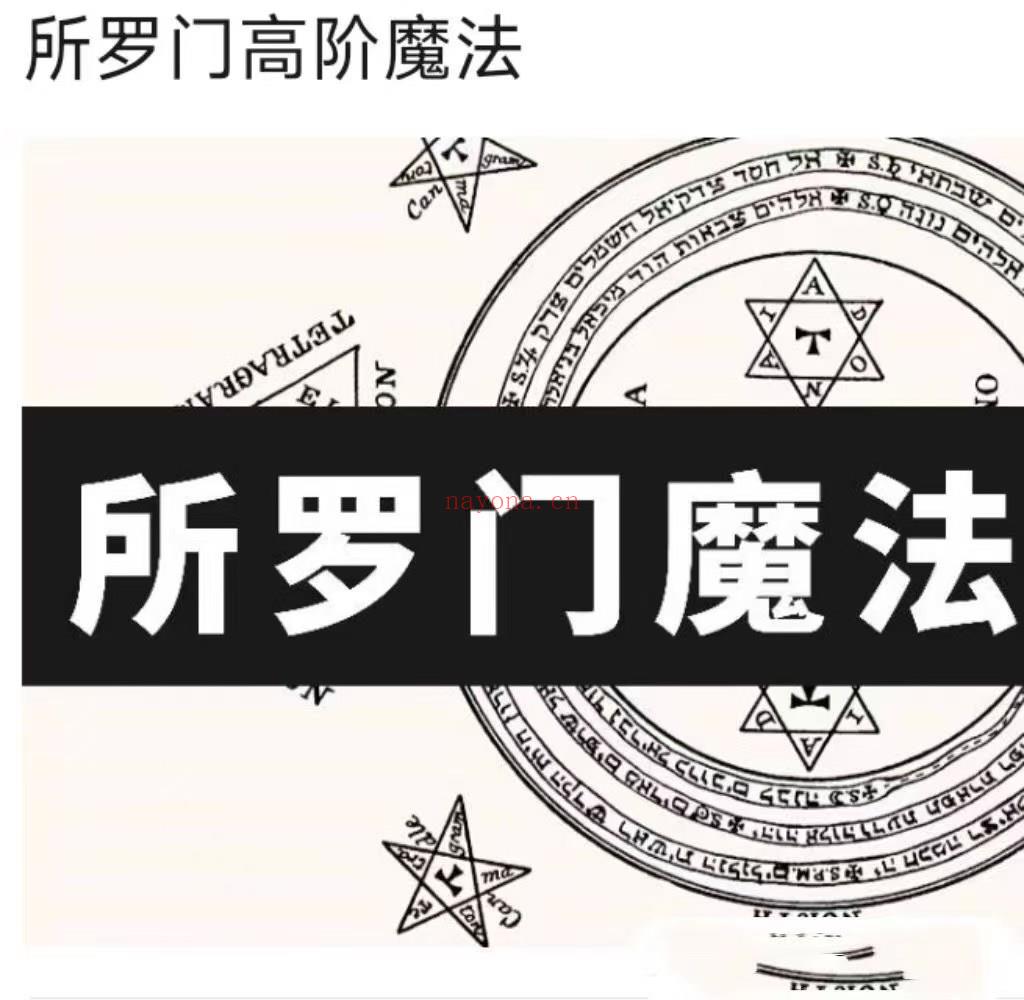
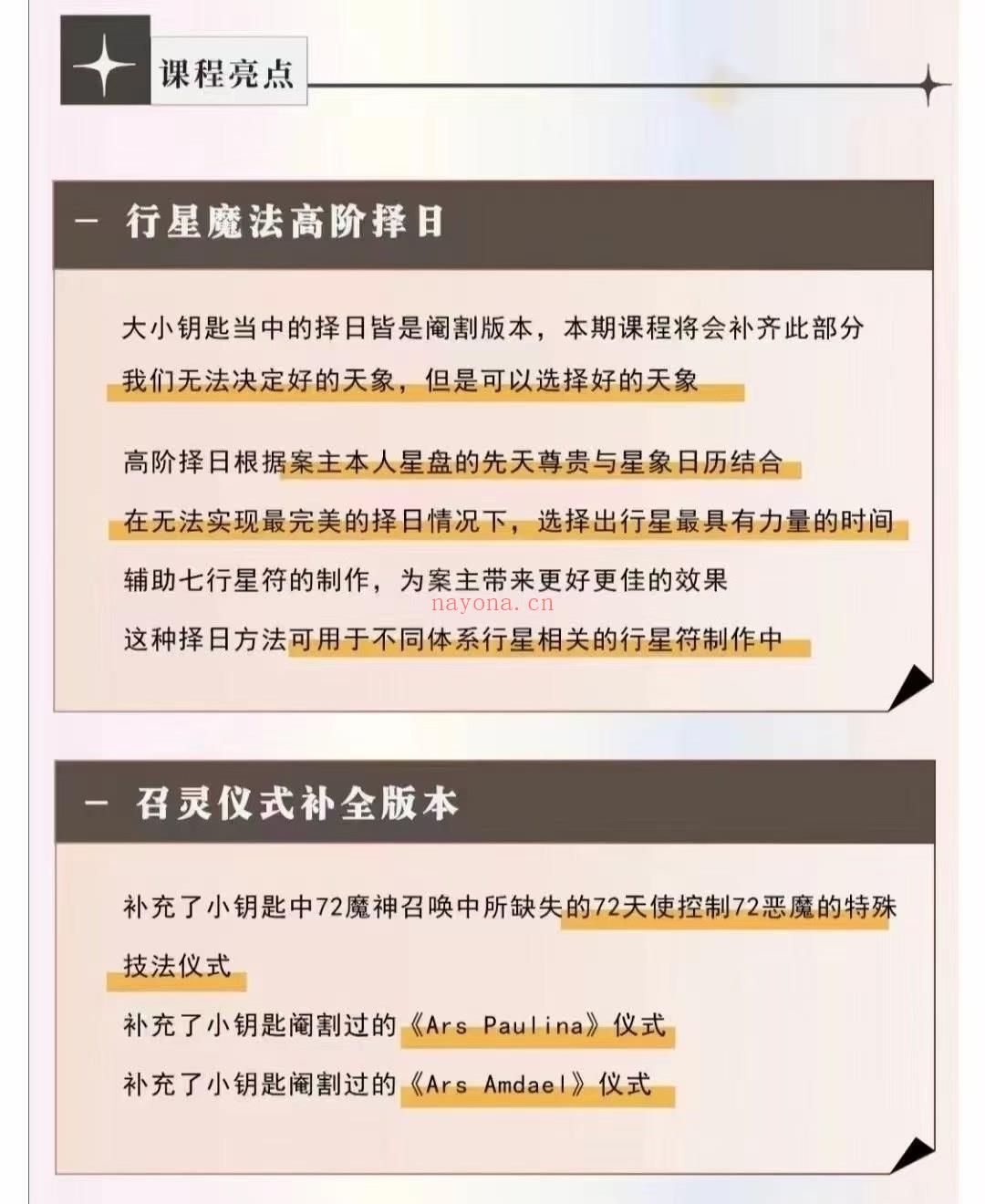
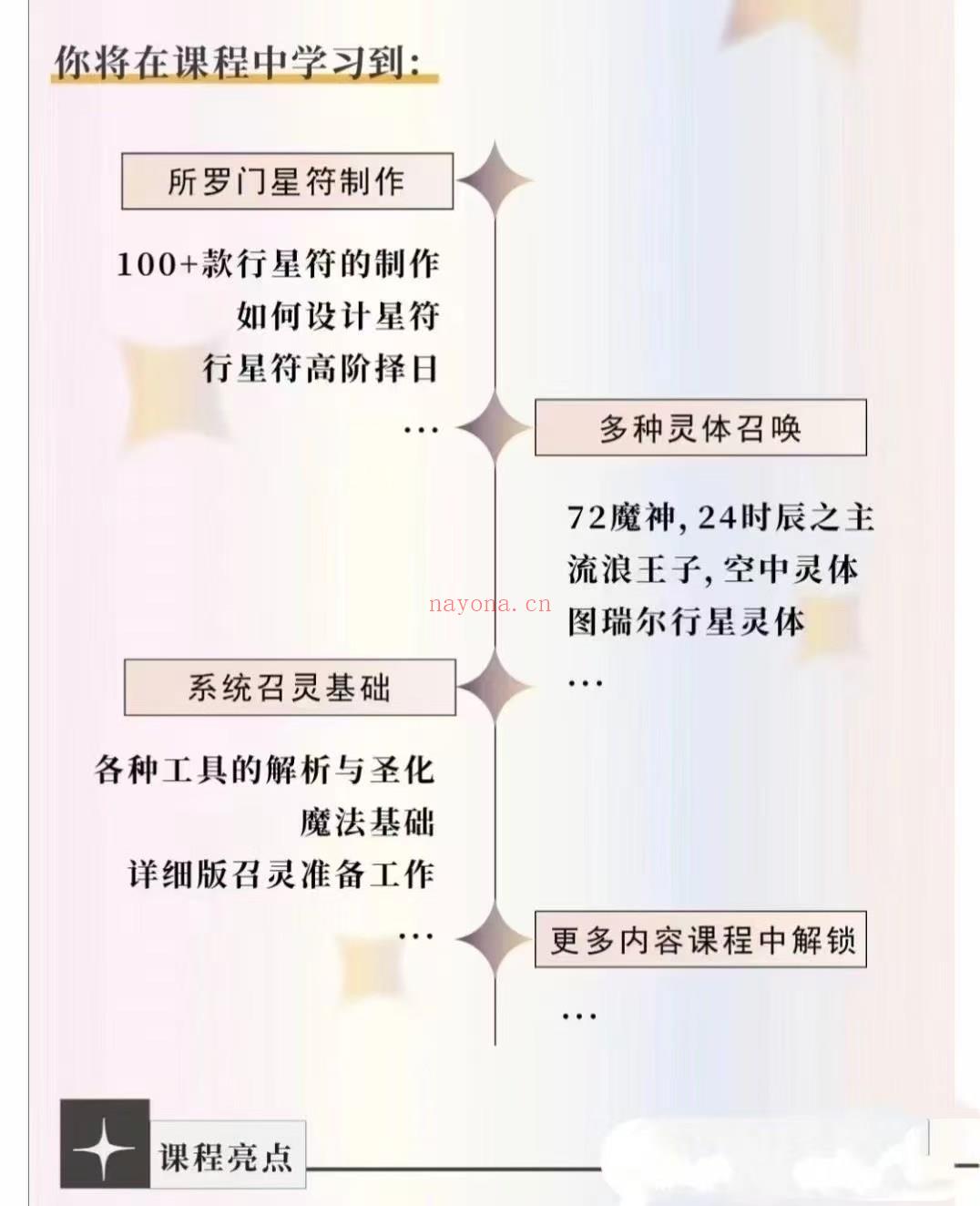
Original Course Images

Who This Resource Is For
This resource is for readers or learners who can use Chinese-language materials and want a named resource on Ceremonial Magic. Compare the stated scope and previews before ordering; a fixed level of prior experience is not assumed unless the source directory says so.
Learning Format and Digital Delivery
Chinese-language course; complete lesson count not confirmed Virtual and downloadable; there is no physical shipment. Price: USD 9.00. A file link is not yet attached to this product. Please contact Karma Kismet before ordering to confirm delivery arrangements; immediate automated access is not promised.
Frequently Asked Questions
Is the full material in English?
No English edition, recording or subtitle track is confirmed. The source material is Chinese-language.
Is a personal consultation included?
No individual consultation is listed with this resource.
Does this resource guarantee an outcome?
No. It is for educational and cultural study, not a guaranteed result or substitute for professional advice.
Editorial Note
Karma Kismet translated and organized the course facts and original previews for English readers. Lesson counts and formats follow the available source listing; unspecified contents, certificates and instructor credentials are not asserted.
Related Courses
- Apollo Ritual Studies: 16 Videos
- Candle Magic Ritual Course: 26 Lessons
- Wushuang Solomonic Ceremonial Magic: Four Videos
- Witch Market Hoodoo Studies: 14 Videos
- Witch and Oak Celtic Knot Magic: Ten Videos
- Magical Herbs and Potions: Two Video Courses and E-Books
- Cat Witch Herbal Magic Video Course
Browse Ceremonial Magic and read digital delivery information.
Reading this resource closely
The advanced Solomonic listing mentions timing, planetary talisman composition and ceremonial processes, but does not establish a full dependable English syllabus. Advanced study here is best approached as closer textual comparison and clearer reasoning, not as a promised attainment.
Advanced as a reading goal
Define advanced work through the complexity of a question. Explaining why two interpretations differ is more demanding than memorizing labels. The course title alone does not establish prerequisites, assessment standards or a recognized professional credential.
An advanced reading question should require an explanation, not merely a larger vocabulary. For example, if two passages arrange the same symbols differently, ask what assumptions make each arrangement coherent. Identify those assumptions in the material and describe what would change if one were removed. This exercise may reveal a disagreement that cannot be settled from the listing. Keeping that disagreement is a sign of precise reading. The source describes several possible audiences, but that does not establish what level any individual reader has reached. Progress can be judged through a written comparison that another person can inspect: does it distinguish the systems clearly, cite the relevant passages and avoid claiming expertise beyond the evidence? Those are practical standards for deeper study.
Question for review: What can I explain now that a simple glossary could not explain?
Timing rules
Treat timing instructions as rules within the described symbolic framework. Record inputs, exceptions and the source of each rule. A prescribed date is not evidence that a practical outcome is more likely, and uncertainty should remain visible.
Timing material is easier to analyze when rewritten as an input-and-rule statement. List what the instruction asks the reader to know, what operation it performs and what conclusion it gives. Do not add a missing location, calendar convention or interpretive rule from memory. An incomplete rule should remain incomplete in your notes. Compare a timing instruction with its explanation to see whether the explanation supplies the missing assumption. If the passage calls a time favorable, identify favorable for what purpose and within which framework. This attribution keeps the symbolic account clear. It also prevents the language of precision from being mistaken for evidence that a practical undertaking is likely to succeed because a particular time was selected.
Question for review: What information does this timing rule require?
Talisman composition
Analyze a talisman as a designed combination of marks, names and symbolic relationships. Separate the elements visibly present from meanings added by the explanation. A paper diagram can support this analysis without asserting that the object possesses causal power.
A talisman analysis can proceed from the visible whole to its individual components. Start with the arrangement, then record lettering, shapes and any stated planetary connections. Do not assume that a component has the meaning you encountered in another resource. Ask how this presentation explains it. If the object is said to be personalized, identify which component changes and why. A claim of personal suitability should not be expanded into a promise of personalized results. A paper sketch can make these relationships visible while allowing several versions to be compared safely. The educational question is how the design organizes symbolic meaning, not whether making the sketch has produced a special object with a verified power.
Question for review: Which component carries which stated association?
Procedure and commentary
A ceremonial procedure and an explanation of its purpose are different kinds of writing. Place them in separate note columns. This helps you see where an instruction ends and a speculative or theological account begins.
Separating procedure from commentary helps reveal hidden assumptions. Number only the instructions actually present. Under each, place the explanation the text gives for that action. If an action has no explanation, mark the gap. If a broad metaphysical statement has no corresponding action, keep it in a separate note. This prevents a reader from treating everything in a paragraph as operational instruction. It also shows when the presenter changes genre, moving from description to exhortation or from practical order to theological claim. Such changes are worth studying because they affect how a statement should be evaluated. A carefully annotated procedure can preserve cultural interest while making clear that a narrated mechanism and a demonstrated outcome are not the same thing.
Question for review: Where does the text change from instruction to explanation?
Personalization and limits
The source discusses tailoring symbolic objects to purposes. In study, compare the reasoning behind two purposes rather than promise bespoke results. Another person should not be assigned an intention without their participation or consent.
Personalization involves choices about a purpose as well as choices about a design. A study exercise can compare two hypothetical purposes and ask which symbolic elements the source would change, without claiming to create an effective object for either purpose. If the material refers to helping clients, retain that as source context rather than as a service included with the digital resource. There is no basis here to promise individual guidance or a professional qualification. Where another person is involved, their own wishes and consent matter. A useful reflective question is whether the intended purpose can be expressed as an action within the participant’s control. This shifts analysis toward clear responsibility and away from claims of control over someone else’s decisions.
Question for review: Who chose this purpose and what assumptions does it contain?
Comparative synthesis
An advanced synthesis should preserve disagreements between traditions instead of flattening them into one rule. State what texts share, where they diverge and what evidence is missing. This makes a comparison useful even when it ends without a single conclusion.
For a comparative synthesis, write one paragraph explaining a shared feature and another explaining a difference. The shared feature should be supported by passages from both sources; the difference should not be dismissed as an error simply because it complicates the comparison. You might discover that a symbol is similar while its rationale differs, or that a sequence resembles another sequence while serving a different purpose. Preserve the source labels and explain the limits of the comparison. An advanced conclusion can be modest: these passages share a design feature, but their explanations cannot be merged from the evidence available. That kind of conclusion gives a future reader a concrete route for further inquiry and avoids the unsupported claim that one course resolves the whole tradition.
Question for review: What difference would be lost if I merged these explanations?