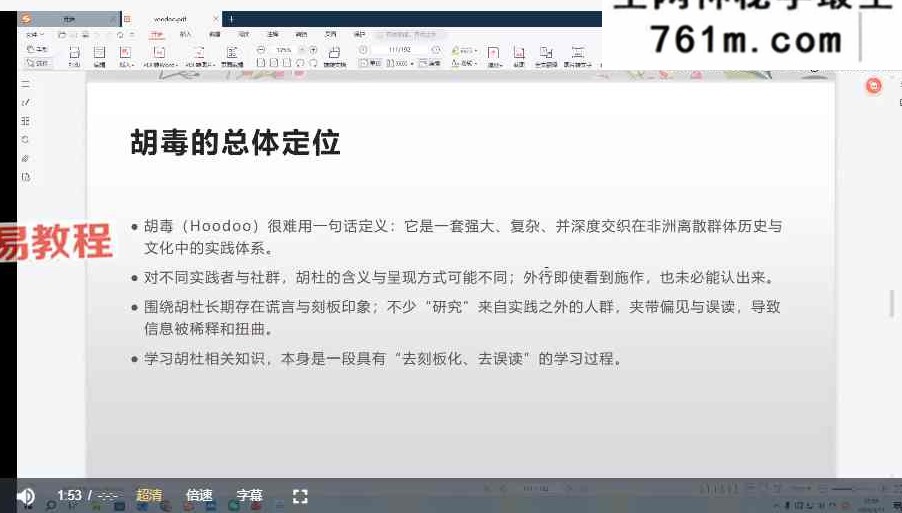
A folk-witchcraft cultural course on Hoodoo attributed to Teacher Orange. Hoodoo is treated as a specific tradition, not a generic label for all magic.
Resource Overview
Hoodoo Folk Witchcraft Culture: Full Course is a digital learning resource about History of Magic & Witchcraft. The English description summarizes the available source listing; the underlying recordings or books are in Chinese. An English translation of the full material is not confirmed.
What You Will Learn
Use the sequence and preview material below to identify the course’s scope, terminology and teaching approach. Check each topic against the original lesson rather than treating a short listing as a complete transcript.
Course Contents
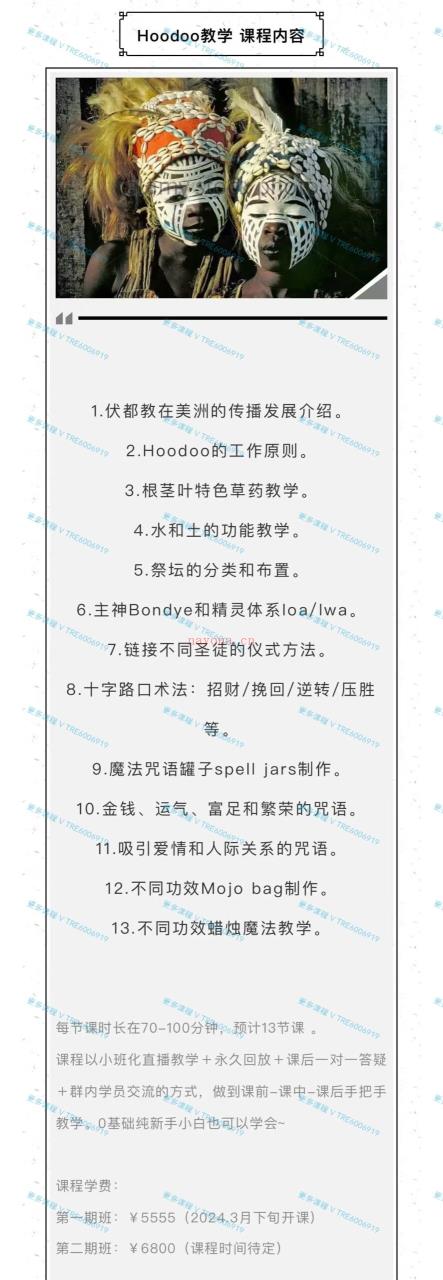
- Hoodoo cultural context
- Folk-witchcraft tradition
- Interpretation and historical limits
Original Course Images
Who This Resource Is For
This resource is for readers or learners who can use Chinese-language materials and want a named resource on History of Magic & Witchcraft. Compare the stated scope and previews before ordering; a fixed level of prior experience is not assumed unless the source directory says so.
Learning Format and Digital Delivery
Chinese-language course; exact lesson count not confirmed Virtual and downloadable; there is no physical shipment. Price: USD 9.00. A file link is not yet attached to this product. Please contact Karma Kismet before ordering to confirm delivery arrangements; immediate automated access is not promised.
Frequently Asked Questions
Is the full material in English?
No English edition, recording or subtitle track is confirmed. The source material is Chinese-language.
Is a personal consultation included?
No individual consultation is listed with this resource.
Does this resource guarantee an outcome?
No. It is for educational and cultural study, not a guaranteed result or substitute for professional advice.
Editorial Note
Karma Kismet translated and organized the course facts and original previews for English readers. Lesson counts and formats follow the available source listing; unspecified contents, certificates and instructor credentials are not asserted.
Related Courses
Browse History of Magic & Witchcraft and read digital delivery information.
A source-based study approach
The Teacher Orange listing identifies Hoodoo folk practice and specifically mentions mojo bags and magic jars. Its broad full-course label does not supply a complete verified directory. Study the named objects in context rather than filling the gap with an imagined curriculum.
A specific tradition
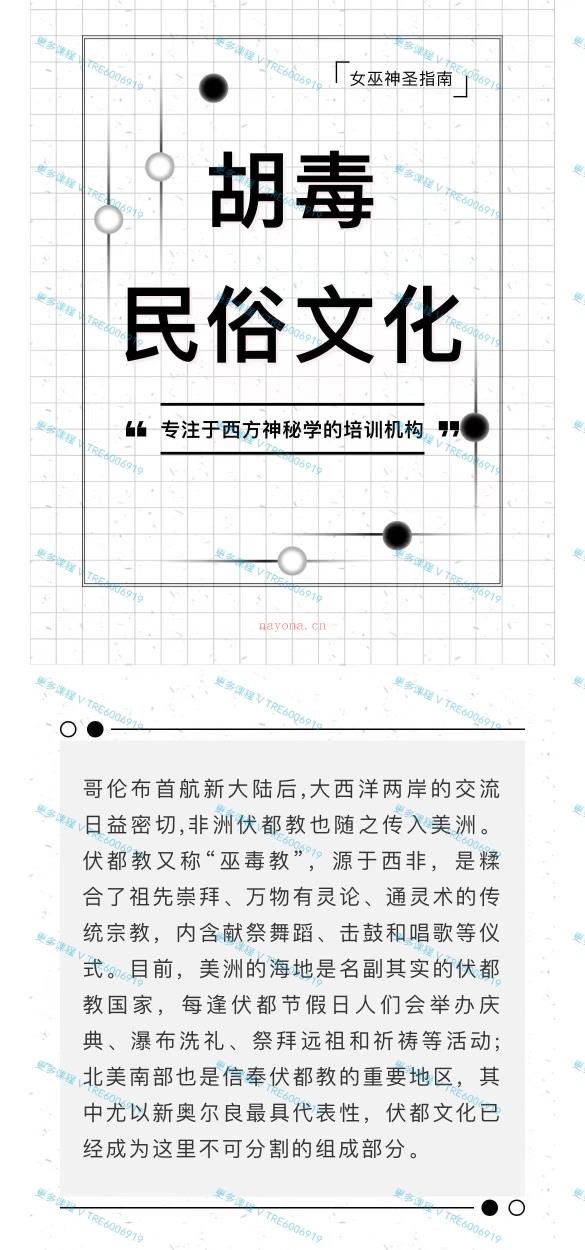
Use Hoodoo as the tradition label provided by this resource. Record any regional or cultural account the actual material supplies. Do not treat the word as a synonym for all witchcraft or merge it casually with a different religious tradition.
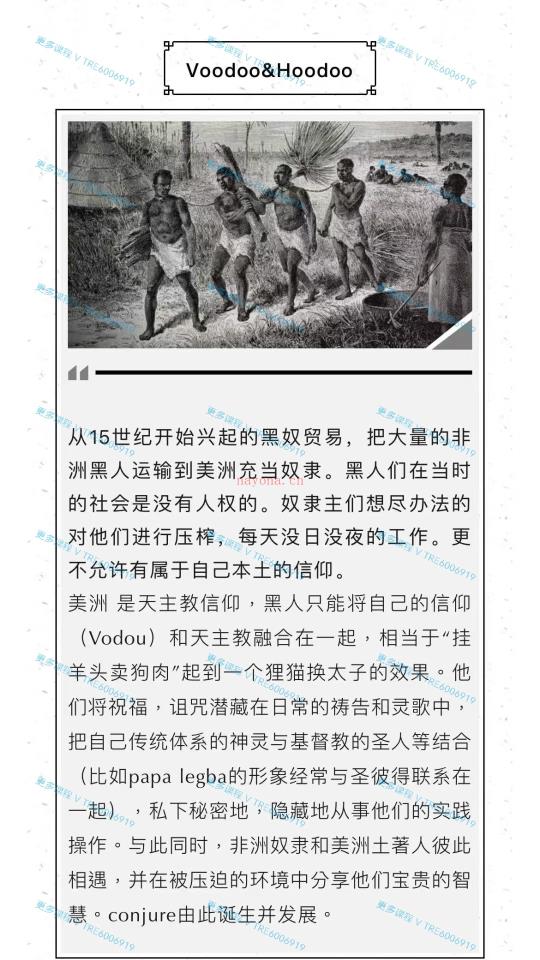
The resource’s cultural label is important because a general description of magic would lose the subject it names. Begin with the account of Hoodoo given in the actual material, keeping any places, communities and terminology attached to their source passages. Do not convert the surrounding article’s broad statements about cultural blending into a complete historical account. A tradition can include diverse influences while remaining a specific tradition, and a short listing cannot establish every relationship. Your notes can identify the account presented here and the questions it leaves unanswered. This makes the study more respectful and more useful: a reader can understand the resource’s perspective without being told that it speaks for every practitioner or supplies a universal definition of folk witchcraft.
Question for review: What context does the material give for the word Hoodoo?
Mojo bag as an object
Study a mojo bag description through its materials, arrangement and stated purpose. The listing’s mention establishes a topic, not its complete contents. A source-based diagram is preferable to a guessed list of ingredients or a promised effect.
A mojo bag entry can start with the description of the object, followed by a list of components actually named. If the listing only mentions mojo bags as a theme, the components remain unknown until the material is inspected. Keep the distinction between a topic and a verified example. When an example is available, ask how the arrangement relates to the purpose assigned to it. A container may organize a collection of meanings, but that interpretation must be supported by the passage. Do not supply a recipe from another course to complete the entry. A source-based sketch with several unanswered fields is more accurate than a confident illustrated instruction assembled from unrelated information. Its value is in showing how this particular resource presents the object.
Question for review: Which contents are actually specified in this description?
Jar symbolism
A magic jar can be read as a container of an intention or a grouping of symbolic items. Ask how enclosure contributes to the interpretation. Do not assume that a sealed object controls another person or changes an external event.
For a jar theme, distinguish the physical arrangement from the desired result attached to it. Describe what is inside, how the text groups it and whether the container is discussed as a boundary, a repository or something else. If the explanation does not identify a function for enclosure, leave that as a question. A personal reflection can ask why a contained image is appealing, perhaps because it gives a wish a visible form. That response does not establish control over another person or event. If a passage directs an intention toward someone else, examine the ethical assumption rather than treating the object as permission to influence them. The commentary can study the rhetoric of the wish while preserving the other person’s autonomy.
Question for review: What does enclosure symbolize in the passage?
Rootwork terms
Keep rootwork vocabulary connected to the passage that defines it. A plant reference may serve cultural or symbolic purposes. The term does not make an unidentified root suitable for ingestion, skin use or medicinal treatment.
Rootwork language should be recorded carefully because the same familiar English word can suggest botanical handling, cultural practice and claims about effects. Ask which meaning is active in the passage. A reference to a root may identify a material, symbolize a quality or refer to a broader practice. These uses should have separate notes. If an ingredient is not identified precisely, a cultural discussion does not resolve that practical uncertainty. Do not turn a symbolic description into a recommendation to consume or apply a substance. A useful glossary entry includes the original term, a contextual explanation and the limits of the translation. It can then support comparison with other passages without pretending that every appearance of the word belongs to one identical procedure.
Question for review: What role does the root have within this explanation?
Full-course claims
Full-stage wording is a description from the listing, not evidence that every traditional practice is covered. Define a bounded study question and inspect the available files. A reader’s focused question can be useful even when the directory is incomplete.
Full-stage wording should be approached as a scope claim to inspect, not a guarantee of completeness. The available listing does not supply a reliable itemized curriculum for every stage. Begin with the concrete topics it does name and formulate a bounded question, such as how the resource distinguishes bags from jars. Then record which files help answer that question. If a stage label appears in the material, identify what the presenter places under it rather than assuming a standard progression used elsewhere. Your study route can be selective and still be serious. The quality of the route depends on whether it answers the chosen question with identifiable passages, not on whether it reproduces an imagined comprehensive training sequence or promises a professional attainment.
Question for review: What can this resource answer based on the material I can inspect?
Respectful comparison
Compare the bag and jar as object forms while keeping their specific meanings separate. Note similarities in arrangement and differences in the explanation. Respectful comparison does not require borrowing objects, entering private spaces or asserting authority over the tradition.
A comparison of bags and jars can examine form, named materials, arrangement and attributed meaning in separate fields. Start with one actual example of each if available. A shared feature, such as containment, does not erase a difference in purpose or context. Explain the difference before proposing a general relationship. If the material only supplies one example, state that the comparison is limited rather than fabricating the other side. A concluding note can identify what the resource’s named objects reveal about its presentation and what further information would improve the analysis. This is a practical cultural learning result. It does not require producing an object, borrowing a practice from its community or claiming that a symbolic design will cause an external outcome.
Question for review: Which differences matter more than the shared container idea?