A twenty-video divination course attributed to Lihua in the Witch Market series. It is described as an interpretive tradition, not a guaranteed prediction service.
Resource Overview
Lihua Witch Divination Practice: Twenty Videos is a digital learning resource about Divination in Magical Traditions. The English description summarizes the available source listing; the underlying recordings or books are in Chinese. An English translation of the full material is not confirmed.
What You Will Learn
Use the sequence and preview material below to identify the course’s scope, terminology and teaching approach. Check each topic against the original lesson rather than treating a short listing as a complete transcript.
Course Contents
- Divination method
- Witch Market series
- Interpretive limits
Original Course Images


Who This Resource Is For
This resource is for readers or learners who can use Chinese-language materials and want a named resource on Divination in Magical Traditions. Compare the stated scope and previews before ordering; a fixed level of prior experience is not assumed unless the source directory says so.
Learning Format and Digital Delivery
20 Chinese-language videos Virtual and downloadable; there is no physical shipment. Price: USD 9.00. A file link is not yet attached to this product. Please contact Karma Kismet before ordering to confirm delivery arrangements; immediate automated access is not promised.
Frequently Asked Questions
Is the full material in English?
No English edition, recording or subtitle track is confirmed. The source material is Chinese-language.
Is a personal consultation included?
No individual consultation is listed with this resource.
Does this resource guarantee an outcome?
No. It is for educational and cultural study, not a guaranteed result or substitute for professional advice.
Editorial Note
Karma Kismet translated and organized the course facts and original previews for English readers. Lesson counts and formats follow the available source listing; unspecified contents, certificates and instructor credentials are not asserted.
Related Courses
Browse Divination in Magical Traditions and read digital delivery information.
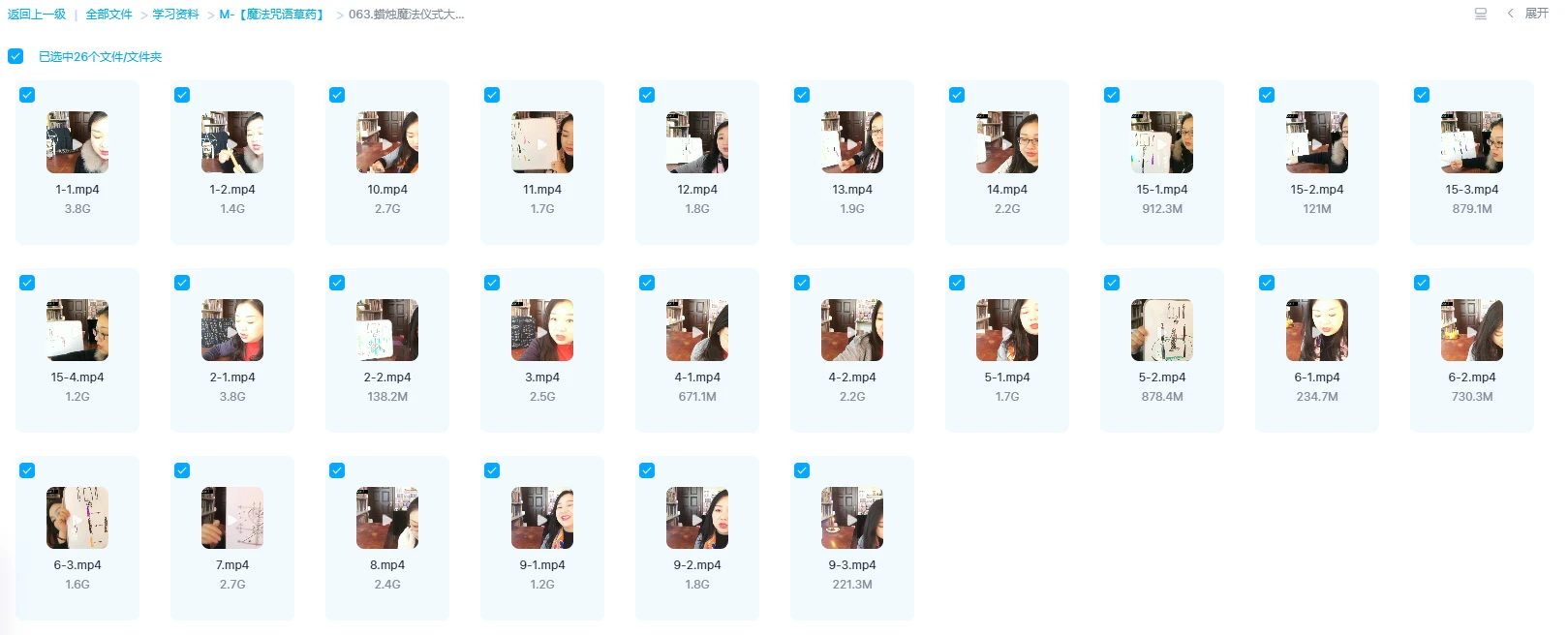
Reading the visible divination directory
The Lihua listing presents a broad divination course, but the visible directory is more specific than the surrounding description. It names tarot foundations, groups of major cards, minor-card number and element themes, suits, court cards, reversed-card interpretation, questioning, spreads, oracle cards, mirror divination and a meditation recording. These are the concrete anchors for study. The directory also includes an MP3 among the numbered items, so the twenty-item presentation should not be expanded into a claim that every listed item is a separate video lesson. A careful reader can preserve the published product title while noting the mixed format in a study index. The following guidance concerns those named themes, rather than an invented complete transcript.
Major-card groups and narrative
The directory separates a group running from the Fool to the Chariot from another running from Strength to the World. It also names the Fool’s journey as a topic. Begin by asking how the material distinguishes individual-card interpretation from a narrative sequence. A card can be analyzed through its image, the explanation given and its role within a story. These are related but different tasks. Do not assume that a narrative sequence supplies one fixed meaning for every appearance of a card. If the recording connects two images, identify the connection it actually explains.
A useful note can contain a visual detail, the presenter’s interpretation and the narrative role assigned to that detail. Then compare the note with a second card. Does the sequence emphasize a contrast, a development or a recurring theme? Keep the answer attributed to the resource. Your own reading may suggest another connection, but place it in a separate sentence. This method lets you discuss the Fool’s journey as an interpretive structure without treating it as a universal account of a person’s life or a prediction of what must happen next.
Minor-card numbers and elements
Separate recordings are named for number themes and four-element themes in the minor cards. Study them independently before combining them. A number-based explanation may organize progression or repetition, while an element-based explanation may group images or qualities. Record the definitions actually given rather than importing a familiar chart from another tarot course. If the same card appears in both discussions, it can become a focused comparison example.
Write two short accounts of that example, one using only the number explanation and the other using only the element explanation. Identify what each account highlights and what it leaves out. Then ask whether the presenter explicitly combines the approaches. If the relationship is not explained in the inspected passage, preserve that question. Combining vocabularies can create a fluent reading while concealing incompatible assumptions. A transparent comparison is more useful than a polished statement that appears to explain everything but cannot show where its individual claims came from.
Suits and court-card descriptions
The visible list names Cups, Pentacles, Swords and Wands, followed by a court-card introduction. These headings give a route for comparing classifications. Start with the resource’s explanation of a suit, then examine how a particular card is placed within it. Avoid describing the suit with a universal personality label unless the material makes and explains that claim. A suit category can organize symbolic themes without diagnosing anyone’s character.
For court cards, distinguish a textual role from an assertion about a real person. If a reading uses a court card to represent someone, note the reasoning and the uncertainty. It should not become evidence that you know another person’s hidden motives. A study exercise can compare two court-card descriptions and identify their contrast within the teaching. Keep the comparison about the images and explanations. If you apply it reflectively, frame it as a question about a role you are considering, rather than a fixed judgment imposed on yourself or someone else.
Questions, reversals and spreads
The directory includes a supplemental topic combining reversed-card interpretation with how to ask questions, followed by a spread introduction. These subjects can be studied as tools for structuring a reading. Begin with the question: does it ask for a fact, an interpretation or a reflection? A card arrangement cannot establish an unknown fact merely because the question is phrased clearly. For a reflective exercise, use a question within your own sphere of action, such as what aspect of a choice you have not considered.
When studying reversals, record the particular rule the presenter uses. Do not assume that every reversed image simply means the opposite of an upright image. Compare a stated rule with an example to see how the rule is applied. For spreads, preserve the meanings assigned to positions separately from card meanings. A position is part of the reading structure; a card supplies another interpretive layer. Your notes should make those layers visible and mark any place where the source leaves their relationship unexplained.
Oracle cards and mirror themes
An oracle-card introduction and a mirror-divination recording appear as separate directory items. Do not assume that they follow the same symbolic grammar as tarot. Identify how each item defines its object, its method of interpretation and its limits. If the material recommends an oracle deck, a recommendation is not evidence that the deck is included in the digital resource. Keep the topic label distinct from physical contents or delivery claims.
Mirror imagery can be examined as a prompt for interpretation without treating a visual impression as verified information. Record what is actually perceived, what meaning is assigned and which ordinary conditions might affect the impression. A subjective image is a report of experience, not proof of a message from an external agent. The numbered meditation audio likewise identifies a recording theme, not a demonstrated ability to access hidden facts. Study the language used to explain the state and retain the distinction between an attributed belief and an independently established outcome.
A bounded interpretation record
For a final study record, choose one actual example from the material. Note its source location, the question used, the images or positions discussed and the explanation given. Then identify which statements are observations and which are interpretations. This makes the reading reviewable without requiring another reader to accept its conclusions. A retrospective success story should not substitute for that record, since selective recall can leave out unsuccessful or ambiguous readings.
The resource can be approached as an interpretive tradition and a collection of cultural learning materials. It does not establish a guaranteed prediction service, a personal consultation or a method for verifying another person’s thoughts. Preserve the useful distinction between an image that helps you formulate a question and evidence that answers a factual question. The strongest outcome of the study is clearer reasoning about the named frameworks, supported by concrete passages and honest limits.