A Witch Market collection listed as 14 videos on Hoodoo, with supporting materials. Hoodoo is treated as a distinct folk tradition, not a synonym for all witchcraft.
Resource Overview
Witch Market Hoodoo Studies: 14 Videos is a digital learning resource about Witchcraft & Folk Traditions. The English description summarizes the available source listing; the underlying recordings or books are in Chinese. An English translation of the full material is not confirmed.
What You Will Learn
Use the sequence and preview material below to identify the course’s scope, terminology and teaching approach. Check each topic against the original lesson rather than treating a short listing as a complete transcript.
Course Contents
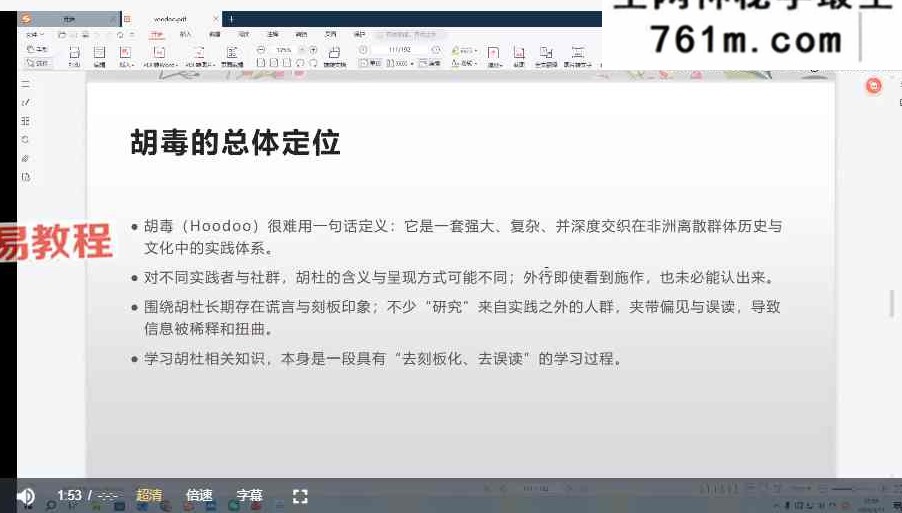
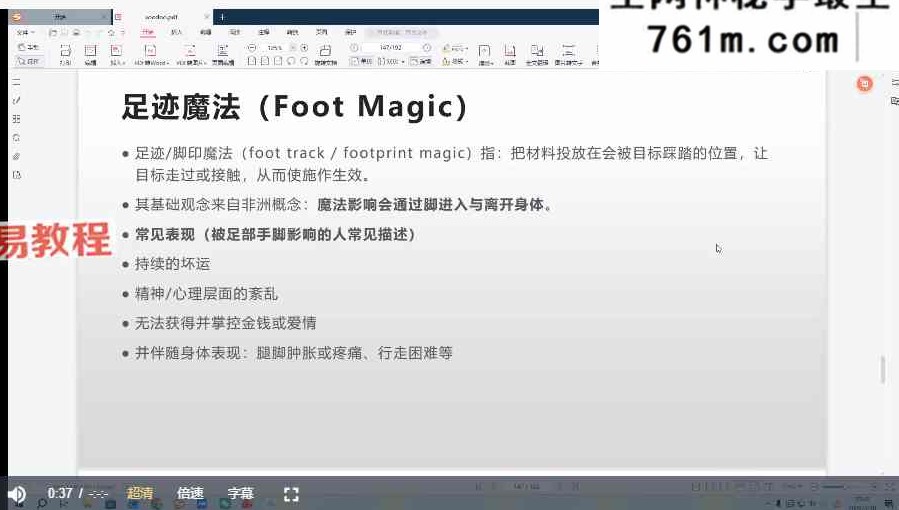
- Hoodoo folk traditions
- Fourteen-video listing
- Cultural context and limitations
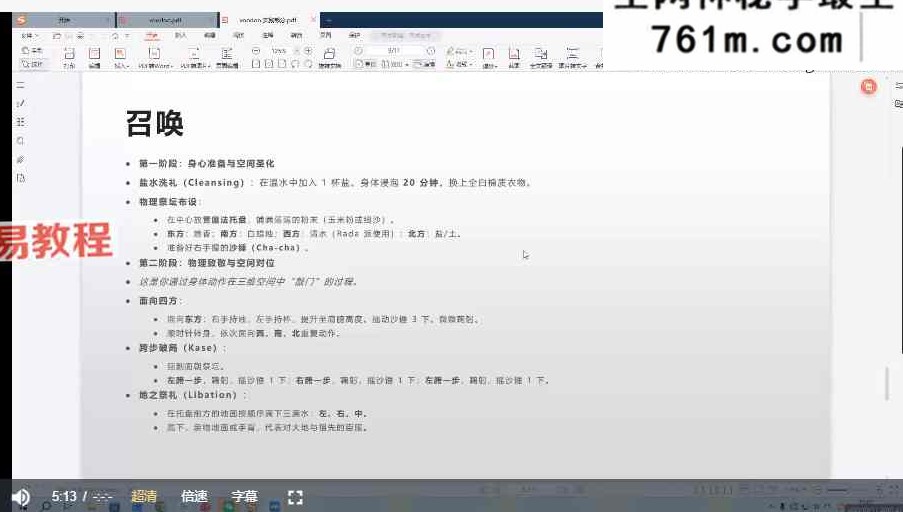
Original Course Images
Who This Resource Is For
This resource is for readers or learners who can use Chinese-language materials and want a named resource on Witchcraft & Folk Traditions. Compare the stated scope and previews before ordering; a fixed level of prior experience is not assumed unless the source directory says so.
Learning Format and Digital Delivery
14 Chinese-language videos and supporting materials Virtual and downloadable; there is no physical shipment. Price: USD 9.00. A file link is not yet attached to this product. Please contact Karma Kismet before ordering to confirm delivery arrangements; immediate automated access is not promised.
Frequently Asked Questions
Is the full material in English?
No English edition, recording or subtitle track is confirmed. The source material is Chinese-language.
Is a personal consultation included?
No individual consultation is listed with this resource.
Does this resource guarantee an outcome?
No. It is for educational and cultural study, not a guaranteed result or substitute for professional advice.
Editorial Note
Karma Kismet translated and organized the course facts and original previews for English readers. Lesson counts and formats follow the available source listing; unspecified contents, certificates and instructor credentials are not asserted.
Related Courses
- Apollo Ritual Studies: 16 Videos
- Candle Magic Ritual Course: 26 Lessons
- Wushuang Solomonic Ceremonial Magic: Four Videos
- Advanced Solomonic Magic Course
- Witch and Oak Celtic Knot Magic: Ten Videos
- Magical Herbs and Potions: Two Video Courses and E-Books
- Cat Witch Herbal Magic Video Course
Browse Witchcraft & Folk Traditions and read digital delivery information.
Understanding the named themes
The Witch Market directory mixes Hoodoo labels with document and lesson names using Voodoo-related language, including loa and veve. That mixture makes careful terminology especially important. File naming is evidence about this collection, not proof that distinct traditions are interchangeable.
Hoodoo and other labels
Keep Hoodoo, Voodoo-related document names and the presenter’s terminology distinct in your notes. If the teaching connects them, record the stated reasoning. Do not turn a mixed folder into a general definition of every tradition mentioned.
The directory creates a terminology problem that should be addressed openly: some filenames use Hoodoo, others use Voodoo, and a lesson label mentions loa and veve. A responsible English note can report that mixture without claiming that the terms are equivalent. Create a term ledger showing the exact label, the file in which it appears and the definition given by that file if any. If a definition is missing, leave a question. This method keeps the collection’s wording available while preventing a mixed commercial folder from becoming a cultural authority. It also makes later comparison possible: another reader can see whether a difference arises from translation, from the presenter’s classification or from an actual distinction acknowledged in the material.
Question for review: Which label belongs to the file and which to the explanation?
History as a research question
Start with what the history recording actually says. Identify names, places and dates that would require further corroboration. A broad story about origins is a starting point for inquiry rather than a complete account of a living community.
When examining the history lesson, pay attention to whose account is being told. Does it name a community, period or place, and does it identify the evidence for those details? Extract a small number of claims rather than reproducing a sweeping origin narrative. A statement about cultural influence is not the same as a statement that two practices are identical. Similarly, a present-day teaching may interpret older material without documenting every stage of its transmission. A useful historical note can preserve the source’s account and place a verification question beside it. This respects the importance of historical context without presenting every sentence surrounding a course listing as a dependable historical finding.
Question for review: Whose historical perspective is represented here?
Psalms and interpretation
A spreadsheet concerning psalm uses appears among the supporting materials. Treat it as a correspondence list within this resource. Reading a biblical passage in its textual setting and reading its ritual association are separate tasks that should remain distinguishable.
The psalm spreadsheet is particularly suitable for a comparison between text and assigned use. Record a psalm reference exactly as listed, then identify whether the spreadsheet gives an explanation or only a practical association. If you also read the cited passage, distinguish its wording from the use assigned by the course. These are two different textual settings. A familiar religious passage can acquire another role in a ritual framework, and the study question is how that role is justified. Do not turn a correspondence row into a claim that the passage guarantees a result. If the row lacks context, your note should say so. The absence of explanation is a reason to investigate, not an invitation to invent one.
Question for review: How does the assigned use relate to the passage itself?
Recipe documents
Powder, oil and rootwork recipe filenames describe document topics. They do not establish ingredients, proportions or safety. Analyze the classification and symbolic purpose in writing before considering any practical handling of substances.
A recipe file can be analyzed through the relationship between title, ingredients and purpose. First check whether it actually identifies ingredients clearly. A filename about powders or oils does not establish what substance is inside a recipe, its concentration or its safe handling. Record unknowns explicitly, especially where a common name might refer to several materials. There is no requirement to prepare a mixture in order to compare its symbolic categories. A written chart can show which ingredients the text groups together and what explanation it gives for that grouping. Keep claims about bodily effects out of the cultural summary unless you are quoting them as claims requiring independent evidence. The file’s presence verifies a resource type, not the safety or efficacy of a preparation.
Question for review: What is explicitly specified, and what remains unknown?
Ancestral and cemetery themes
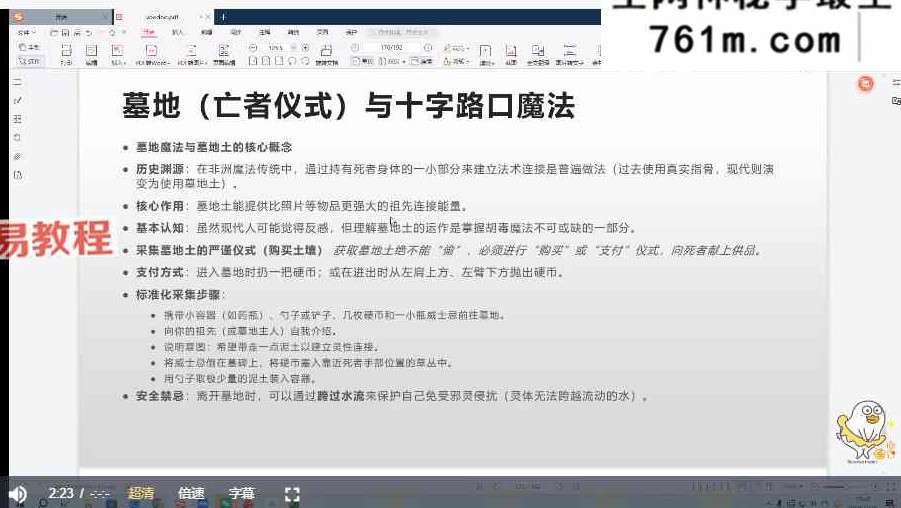
A directory item names cemetery and ancestral ritual. Study the vocabulary, ethical context and symbolism without treating a recording as permission to enter restricted places, disturb graves or use another community’s objects. Respectful analysis can remain entirely textual.
Cemetery and ancestral themes can be examined through setting and permission. Identify whether the material describes remembrance, invocation, a location-based action or an object associated with ancestry. Each has different implications, and the directory name alone does not specify the full procedure. A textual study can consider why a place or object is meaningful without visiting the place or taking anything from it. Do not infer permission from a recording. Cemeteries, graves and personal memorials involve the rights and wishes of living communities as well as the cultural significance described by a presenter. A respectful commentary can acknowledge those dimensions directly. Its aim is to understand the theme in context, not to convert a lesson label into a license for reenactment.
Question for review: What permissions would the described setting require?
Supporting file formats
The resource lists videos, PDFs and spreadsheets. A useful index records format and purpose separately. A spreadsheet may summarize correspondences while a video explains context; neither should be assumed to validate every claim in the other.
Organize the collection so that a topic can be traced across formats without losing the distinctions between them. For example, a video may discuss a broad principle, a PDF may give a longer account and a spreadsheet may reduce the idea to a row of associations. Compare what information is retained and what is lost at each stage. The compact row may be convenient for retrieval but insufficient for interpretation. If the formats disagree, keep both source locations and describe the difference. Do not assume that the spreadsheet corrects the recording or that the recording authorizes every document included in the folder. A well-organized study index supports questions about relationships; it does not confer a single authority on an assortment of files.
Question for review: What does this format help me inspect accurately?