A 29-lesson advanced Six Yao seminar centered on interpretive theory and practical case analysis.
Course Overview
This English guide organizes the supplied traditional Chinese learning material around a clear course sequence. The underlying recorded lessons or documents may be in Chinese; review the stated format and curriculum before purchase.
What You Will Study
- Advanced Six Yao interpretive principles
- Evidence and reasoning in complete cases
- Reviewing difficult examples systematically
Course Scope and Format
A 29-lesson advanced Six Yao seminar centered on interpretive theory and practical case analysis. The course title and description identify the lesson count or page length when stated in the supplied curriculum. This is a digital educational product; no physical item is shipped.
Original Course Preview Images
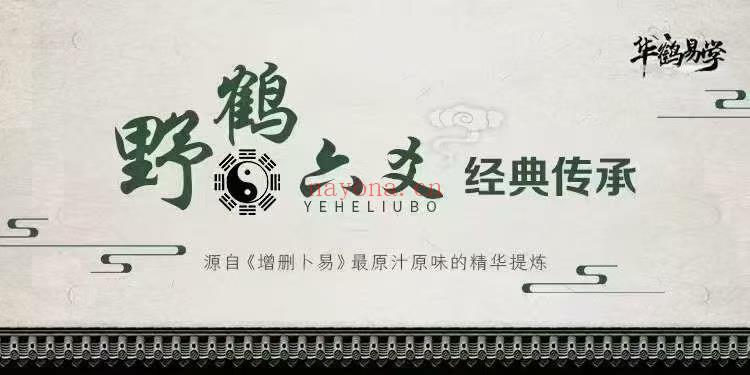
These images come from the original course listing and help show the supplied material.


Who This Resource Is For
This resource is for learners of traditional Chinese metaphysics who want to study the named method and compare the recorded examples with the stated rules. Beginners should start with terminology and basic procedures before moving to advanced cases.
Study Approach
Follow the lessons in order, keep a glossary of Chinese terms, and document the steps used in every example. Distinguish a traditional interpretation from an evidence-based claim or a guaranteed personal outcome.
Digital Delivery
This product is virtual and downloadable. No physical shipment is required. Check the product and order details for the available delivery format.
Frequently Asked Questions
Is the material in English?
The product guide is in English. Original lessons and documents may be in Chinese.
Is this a physical product?
No. It is a digital study resource.
Does the method guarantee a result?
No. Traditional interpretations are presented for cultural and educational study, not as guaranteed predictions or professional advice.
Related Learning
Browse the Advanced Chinese Divination Training collection and the full course library.
- I Ching Applied Practice: 80 Video Lessons
- Plum Blossom Numerology and Trigram Practice: 89 Lessons
- I Ching for Beginners: Casting and Reading Hexagrams
- The 64 Hexagrams Explained: Video and Study Guide
For course questions, contact Karma Kismet.
What Advanced Six Yao Case Study Adds
At an advanced level, studying Six Yao means following the reasoning that connects a constructed six-line figure to an interpretation. Recognizing individual terms is only part of the task. A case may require the reader to identify the question being considered, track the relevant lines and relationships, notice what changes, and understand why an interpreter gives some features more weight than others. This 29-lesson seminar is presented around interpretive theory and case analysis, making it most useful when those basic elements are already familiar.
The source description associates the seminar with detailed walkthroughs of complete examples and discussion of theory in relation to classical writing. That makes the cases worth reading as arguments rather than as isolated conclusions. An advanced learner can ask, at every stage, what information the interpreter had at that point, which rule was invoked, and whether the conclusion depends on a choice that another practitioner could reasonably make differently. Reconstructing the sequence is more revealing than memorizing the final judgment.
Keep the Case Question in View
Six Yao examples can become difficult when a reader begins collecting symbolic details before stating the question. Write the question in neutral language at the top of your notes. Then distinguish the information given in the example from the interpreter’s assumptions and from the eventual interpretation. If the source does not provide a detail, mark it as unavailable. Do not fill gaps with a likely scenario and later treat that scenario as if it came from the recorded case.
This separation matters particularly in advanced material, where several relationships can appear relevant at once. A line may be prominent for one reason while a different line bears on another part of the discussion. Compare the stated reason for selecting a focal point with the alternatives you first noticed. The learning opportunity lies in understanding the selection process, including where the procedure leaves room for judgment.
Build a Transparent Case Record
- Summarize the question and the known circumstances without adding details.
- Copy or redraw the six-line figure exactly as it appears. Preserve the order of lines and any marked changes.
- List the interpretive terms used in the lesson, and define them from the course’s own usage before consulting another school.
- Write the reasoning as a series of steps: observation, rule or convention, inference, and conclusion.
- Identify any step that seems underexplained. Return to the recording or compare it with the stated theoretical principle.
- After completing the case, write a brief alternative reading and explain precisely where your reasoning diverged.
A record in this form lets you revisit a difficult example without relying on memory of the speaker’s tone or confidence. It also makes it possible to distinguish a genuine disagreement about a rule from a simple copying mistake. The source emphasizes instance-based training, so the most productive use of a case is to examine how theory is applied under the constraints of that particular example.
Theory, Texts, and Interpretation
The source description refers to the classical work Zeng Shan Bu Yi in discussing the seminar’s theoretical background. A reference to a traditional text can provide a useful comparison point, but it does not mean every rule in a contemporary explanation appears there in exactly the same form. When a lesson connects a rule to a historical text, note whether it is quoting, paraphrasing, extending, or challenging that text. Keeping those moves distinct supports a more accurate view of the method’s development.
Terminology may also vary between teaching lineages. Before importing a definition from another book, check how the current lesson uses the term in its own examples. If two explanations appear to disagree, compare the conditions under which each is applied. A disagreement may concern the initial setup, the selection of a relevant line, or the priority assigned to competing indicators. Naming the point of disagreement is better than assuming that one entire system must be mistaken.
How to Review Difficult Examples
Pause a recording before the interpretation is disclosed, if the format allows it. Make a short prediction of the instructor’s next analytical step, then resume and compare. The point is to test whether you understand the procedure, not whether you can foresee a real-world result. If the explanation takes a route you did not expect, ask which observation justified that route. Repeat the comparison with cases that differ in structure so that one striking example does not become your default rule.
Keep a separate list of unresolved cases. For each one, write a single precise question: for example, why a particular relationship was treated as central, or why another factor was set aside. Revisiting a focused question after studying more theory is much more useful than merely marking a case as confusing. Advanced study often consists of narrowing uncertainty, checking the recorded evidence, and learning when the available information cannot support a confident reading.
Who May Find This Seminar Useful
The seminar is suited to learners who already know the basic layout of a Six Yao figure and want to examine interpretive choices through extended examples. Someone new to yin and yang lines, hexagram construction, or the vocabulary used in Six Yao will likely need an introductory reference first. The 29-lesson scope indicates room for sustained study, but lesson count alone does not establish a particular level of personal mastery. Progress depends on how carefully the learner can reconstruct and question the reasoning.
The original teaching material may be in Chinese. If language access is important, check the product’s previews and available format before relying on the English listing alone. Keep a glossary of the terms as used in these lessons, with the Chinese expression beside any English rendering. That practice is especially helpful when one translated word can refer to several related ideas.
Six Yao is a traditional divination practice. Studying its cases can illuminate a historical and cultural approach to symbolic interpretation, but the seminar does not establish a reliable way to predict events or solve consequential personal problems. Avoid presenting a case conclusion as a proven forecast. If you discuss another person’s situation, respect privacy, avoid claiming certainty, and do not let a reading displace professional or evidence-based guidance where it is needed.
Questions About Advanced Case Training
Can a beginner start with these 29 lessons? A motivated beginner can inspect the material, but the advanced focus assumes comfort with Six Yao notation and common relationships. Foundational study will make the cases easier to follow.
Should I memorize each case’s final answer? The more useful exercise is to reconstruct the chain of observations and interpretive choices. A remembered conclusion tells you little about how the method was applied.
What if I reach a different interpretation? Compare the exact step where your reasoning changes. Determine whether the difference comes from a copied figure, a different rule, or a different priority assigned to the same feature.
Does reference to a classical text prove an interpretation correct? No. It provides a context for study. Check how the lesson uses the text and what additional assumptions connect the text to the case.
Can case analysis guarantee accurate predictions? No. The cases can support critical study of a traditional interpretive practice. They should not be treated as a guarantee of future outcomes.